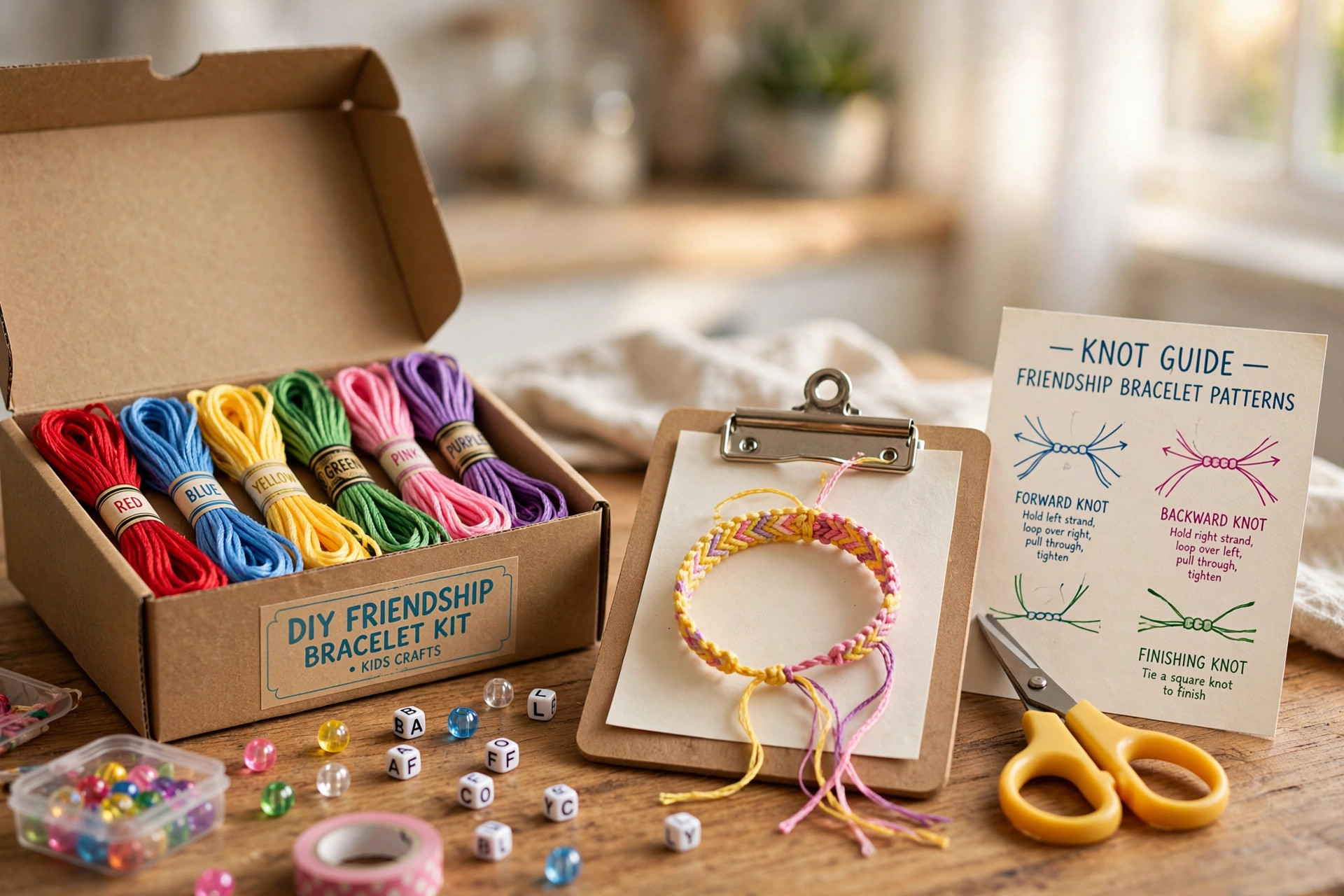

A diy friendship bracelet kit for kids crafts is one of the simplest gifts you can give a child who loves to make things with their hands. It comes in a small box with colored thread, a few beads, and clear steps that turn plain string into a bracelet a child can wear or give to a friend. For many families, this little kit is a first step into the world of crafts. It costs little, needs no special tools, and keeps kids busy for hours in a way that builds real skill. This guide explains what these kits are, why they matter for young minds, how to choose the right one, what you should expect to pay, how to keep the craft safe, and how to help your child enjoy every part of the process.
Why a Friendship Bracelet Kit Matters for Kids
Making things by hand teaches a child more than a skill. It teaches patience. A diy friendship bracelet kit for kids crafts gives a young crafter a clear goal, a set of steps, and a finished piece they can hold at the end. That feeling of finishing something on your own builds pride. Teachers have long used simple hand crafts in classrooms because the work uses both hands, trains the eyes to follow patterns, and asks the mind to count, sort, and plan.
Friendship bracelets carry a meaning that goes past the craft itself. A child makes one, then ties it on a friend’s wrist. The gift is small, but the act is big. It says, “I spent time on you.” In an age when many gifts come from stores, a handmade bracelet stands out. Children learn that giving something made by hand can mean more than giving something bought.
Kits also work well for parties. A table of kids, each with a bracelet kit, is a party activity that runs itself, and each child takes home a favor they made.
What to Look For When You Choose a Kit: Diy Friendship Bracelet Kit for Kids Crafts
Not all kits are built the same. A good diy friendship bracelet kit for kids crafts should suit the age and skill of the child. Here are the points that matter most.
Thread Quality
The heart of any kit is the thread. Good kits use soft cotton embroidery floss that is easy to knot and gentle on young fingers. Poor kits use rough string that frays, tangles, or snaps. Look for words like “embroidery floss” or “cotton thread” on the box. Kits with at least 15 colors give a child room to make many bracelets without repeats.
Clear Steps
A child cannot enjoy a kit if the steps confuse them. The best kits include a small booklet with large pictures that show each knot, one at a time. If the box says “for ages 6 and up” but the steps are long paragraphs with no pictures, the kit may frustrate a young beginner. Many craft stores show the instruction booklet on the back of the package, so you can check before you buy.
Age Range
Most kits are marked for ages 6 to 12, but the range is only a guide. A five-year-old with good fine motor skills may do well with a simple braid kit, while an eight-year-old may still find a complex knotting pattern hard. For the youngest crafters, pick kits labeled “easy start” or “first bracelet,” which use fewer threads and simple braids. Older children can handle kits with bead weaving or multi-strand patterns. When in doubt, choose the easier kit. A child who finishes a simple bracelet with pride will ask for a harder one next time.
Beads and Extras
Many kits add beads, charms, or clasps. Check that bead holes are wide enough for the thread to pass through twice, since many patterns loop back through each bead. Letter charms let a child spell a name. A clip board, storage tray, or small safety scissors keeps the work neat.
How Many Bracelets It Makes
A kit that makes only two bracelets may leave a child wanting more after a single afternoon. Look for kits that promise ten or more bracelets. Larger kits cost more at first, but the price per bracelet is lower, and the kit lasts through many craft sessions. This matters for families with more than one child or for birthday party gifts, where several kids will each want to make more than one piece.
Types of Friendship Bracelet Kits
Kits come in several styles, and each suits a different kind of young crafter.
Classic Knotting Kits
These are the standard kits most people picture. They hold bundles of embroidery floss and a chart of stripe or chevron patterns. The child ties forward and backward knots in rows to make designs. These kits teach real knotting skills and produce the classic woven bracelets many parents remember from their own youth. They suit ages 8 and up.
Braiding Kits
Braiding kits use fewer strands and simple three-strand braids. They are the easiest type and suit the youngest crafters, often ages 5 and up. Some use a round foam disc with slots that guide the threads, so the child braids without losing track of the strands. These discs are sometimes called kumihimo discs, and they make braiding nearly foolproof.
Bead and Charm Kits
These kits mix thread with beads, letter beads, and small charms. The child strings beads onto thread in patterns or spells out names and words. Beading is simpler than knotting, so these kits work well for beginners, though small beads need care with young children.
Loom Kits
Loom kits come with a small plastic frame that holds the threads taut while the child weaves. The loom keeps the work straight and the tension even, which helps children who get frustrated when threads tangle. A bead loom kit for bracelet making beginners is a close cousin of this style and is worth a look if your child enjoys weaving patterns with beads.
All-in-One Craft Sets
Some large sets include bracelet making alongside other crafts, such as paper mache kit for kids art projects home style projects or simple jewelry sets. These big boxes suit gift giving and give a child many crafts to try. The trade-off is that each single craft gets fewer supplies, so a child who loves bracelets alone may finish the bracelet parts fast.
How Much Do These Kits Cost
A diy friendship bracelet kit for kids crafts is one of the least costly crafts you can buy. Basic kits with thread and a pattern chart often sell for five to ten dollars. Mid-range kits with beads, charms, a work tray, and enough thread for a dozen or more bracelets run from ten to twenty-five dollars. Large deluxe sets with hundreds of pieces, storage cases, and multiple craft types can reach thirty to fifty dollars.
When you compare prices, count what you get. A seven-dollar kit that makes twenty bracelets costs less per bracelet than a fifteen-dollar kit that makes five. Thread refills are cheap, often sold in large packs at craft stores, so a child who loves the craft can keep going long after the first kit runs out. Buying during holiday sales or with store coupons brings the price down further.
If you plan a party, buying kits in multi-packs lowers the cost per child. Many stores sell sets of six or twelve small kits meant for party favors. These often lack the fancy extras of a single gift box but hold enough for each child to make one or two bracelets.
Setting Up a Craft Space at Home
You do not need a craft room to make bracelets. A kitchen table with good light works well. Cover the table with a sheet of newspaper or an old tablecloth to catch thread snips. Give each child a small tray or a zip bag to hold their thread and beads so pieces do not roll away.
Good light matters more than people think. Bright daylight or a desk lamp helps a child see the thread and follow patterns. A small clip board or a strip of tape can hold the top of the bracelet still while the child knots, which makes the work much easier for beginners. Keep a small trash bowl nearby for thread ends.
Care and Upkeep of Supplies
Thread lasts a long time if you store it right. Keep floss in a dry place away from direct sun, which fades bright colors. Small plastic boxes with dividers keep colors sorted and stop tangles. Zip bags work well too.
Beads should stay in their trays or in small jars with lids. Teach children to pour only a few beads into a shallow dish at a time and to return the rest to the jar when they finish.
If a bracelet gets dirty, most cotton thread bracelets can be washed by hand in cool water with a drop of mild soap. Lay them flat to dry. Beaded bracelets with metal charms should be wiped with a damp cloth rather than soaked, since metal parts may tarnish in water.
Safety Tips for Young Crafters
Bracelet kits are safe for most children, but a few simple rules keep craft time worry-free.
First, check the age label. Kits with small beads or charms can be a choking hazard for children under three, and some parts are not meant for children under five. Keep small pieces away from toddlers and babies in the house. The U.S. Consumer Product Safety Commission offers plain guidance on choosing age-suitable toys and craft products, and it is worth a quick read before you buy for very young children.
Second, watch the scissors. For young children, use blunt-tip safety scissors and teach them to cut away from their fingers. An adult should handle any sharp craft knife or heavy shears.
Third, check for allergies. Some kits include latex bands or metal clasps that contain nickel. If your child has skin allergies, look for kits marked nickel-free or latex-free, or stick to pure cotton thread bracelets with no metal parts.
Ideas to Make Bracelet Time More Fun
Once a child learns the basic knots, there are many ways to keep the craft fresh. Try a color theme week, where each bracelet uses only shades of one color. Spell names or short words with letter beads. Make matching bracelets for the whole family, or for a grandparent who lives far away, and mail one as a surprise.
Older children can try harder patterns, such as diamonds, hearts, or zigzags. Many free pattern charts exist online, and craft books at the library hold hundreds of designs.
Bracelets also make sweet gifts. A child can make one for a teacher at the end of the school year, for a neighbor who helped them, or for a friend who feels sad. Homemade gifts teach children that thought counts more than money. When a child outgrows simple bracelets, a macrame cord kit for wall hanging diy uses the same knotting skills on a larger scale.
Where to Buy and What Else to Explore
Most large craft stores carry a wide range of bracelet kits, from basic starter boxes to deluxe sets. Michaels and JOANN both stock kids’ craft kits in stores and online, with frequent sales that bring prices down. Dick Blick carries art supplies of good quality, including embroidery floss in every color, which is handy when the kit thread runs out. For advice on setting up a home craft area, This Old House and Family Handyman offer plain, practical tips on workspaces, storage, and lighting. Bob Vila covers home project basics that help when you build simple shelves for the craft space. The Home Depot sells storage boxes that keep thread and beads sorted.
FAQ
What age is best for a diy friendship bracelet kit for kids crafts?
Most kits are marked for ages 6 and up, but the right age depends on the child. Simple braid kits suit ages 5 to 7. Knotting kits with patterns suit ages 8 and up. Watch your child try one bracelet; if they finish it with a smile, the kit is right for them.
How long does it take a child to make one bracelet?
A simple braided bracelet takes 20 to 30 minutes. A knotted stripe or chevron bracelet takes one to two hours for a beginner. Children often work in short sittings, which is fine.
Are the materials in these kits safe?
Kits sold by known brands meet U.S. safety rules for children’s products. Still, keep small beads away from children under three, check for nickel or latex if your child has allergies, and have an adult handle sharp scissors for young kids.
Can a beginner child follow the patterns alone?
Many can, if the kit has picture steps. Sit with your child for the first bracelet and learn the knots together. After that, most children work on their own.
What do I do when the thread runs out?
Buy embroidery floss refills at any craft store. A full skein costs little and makes many bracelets. Keep a small stock of favorite colors so the craft never has to stop mid-project.
Are handmade bracelets a good party activity?
Yes. They are quiet, low-mess, and each child leaves with a favor they made. Choose simple braid kits for parties with young guests, and allow about 45 minutes.
A Short Final Word
A diy friendship bracelet kit for kids crafts is a small box with a big promise: time spent making something real, by hand, for someone you care about. It teaches patience, builds fine motor skill, and ends with a gift a child can give with pride. Choose a kit that fits your child’s age, set up a simple work space with good light, keep safety in mind, and let them create. The bracelets they make this year may fade, but the habit of making things with care will stay with them.
References
Blick Art Materials. (n.d.). Art and craft supplies. https://www.dickblick.com Bob Vila. (n.d.). Home improvement advice. https://www.bobvila.com Family Handyman. (n.d.). DIY home repair and maintenance. https://www.familyhandyman.com JOANN. (n.d.). Fabric and craft supplies. https://www.joann.com Michaels. (n.d.). Arts and crafts supplies. https://www.michaels.com The Home Depot. (n.d.). Home improvement products. https://www.homedepot.com This Old House. (n.d.). Home renovation guidance. https://www.thisoldhouse.com U.S. Consumer Product Safety Commission. (n.d.). Product safety information. https://www.cpsc.gov
Was this guide helpful?

About Michael Thompson
The My Garden US editorial team writes practical, in-depth home and garden guides for American homeowners — tested advice, no fluff.
You May Also Like
Felt Craft Kit for Kids Sewing Projects Home: A Parent’s Guide
August 29, 2026 0 views
Best Craft Wire for Jewelry and Sculptures: A Plain Guide for Makers
April 12, 2026 0 views
The Best Scroll Saw for Woodworking Crafts Home Makers Trust
May 11, 2026 0 views