
A small craft room can hold a large amount of joy. It can also hold a large amount of clutter. If you are looking for the best craft storage for small craft room ideas, you are not alone. Many crafters work in a spare corner, a closet, or a room no larger than ten feet by ten feet. Paper stacks up. Yarn rolls away. Scissors vanish. The craft itself stops being fun when you cannot find your tools. Good storage changes all of that. When every item has a home, you start projects faster and finish them with less stress. This guide walks you through the best craft storage for small craft room ideas, from wall shelves to rolling carts. It covers what to look for, how much to spend, how to keep supplies safe, and how to keep the room clean. Everything here is written in plain language for real homes.
Why Good Storage Matters in a Small Craft Room
A small room punishes waste. Every square inch counts. Without a plan, a craft room fills with bags, boxes, and piles. You lose time hunting for a ruler or a spool of thread. You buy duplicates of items you already own. Some supplies spoil. Glue dries out. Fabric fades in sunlight. Paint settles and hardens. The best craft storage for small craft room ideas does more than hide mess. It protects your supplies and your money.
Good storage also protects your time. When bins are labeled, you grab what you need in seconds. When tools hang within reach, you keep your hands on the work. Many crafters say a tidy room makes them want to craft more often. That is not a small thing. A hobby you avoid because the room is a mess is a hobby wasted.
There is also a safety angle. Small rooms with clutter on the floor are easy to trip in. Sharp tools left in open boxes are a hazard. Loose cords invite accidents. A well-planned room keeps walkways clear and sharp items put away. For families, that matters a great deal. Storage is not only about looks. It is about keeping the room a place you enjoy entering.
How to Choose Storage for a Small Space: Best Craft Storage for Small Craft Room Ideas
Measure First, Then Shop
Do not buy a single bin until you measure. Take a tape measure to the room. Note the width of each wall, the height of the ceiling, and the depth of any closet. Note the size of the table or desk. Note where the door swings and where the window sits. Write the numbers down. Most storage fails because it is too deep, too tall, or blocks a door. In a small craft room, an inch matters. Shelf units deeper than twelve inches can eat floor space fast. Slim units, often six to eight inches deep, hold plenty of craft supplies while leaving room to move.
Sort Your Supplies Before You Buy
Pull everything out and group it by type. Paper with paper. Fabric with fabric. Paint with paint. Tools in one pile. This sorting tells you what storage you truly need. A crafter with forty spools of thread needs a thread rack. A crafter with bins of yarn needs cubbies. Buying first and sorting later leads to bins that do not fit the goods. The best craft storage for small craft room ideas always starts with knowing what you own.
Think Vertical
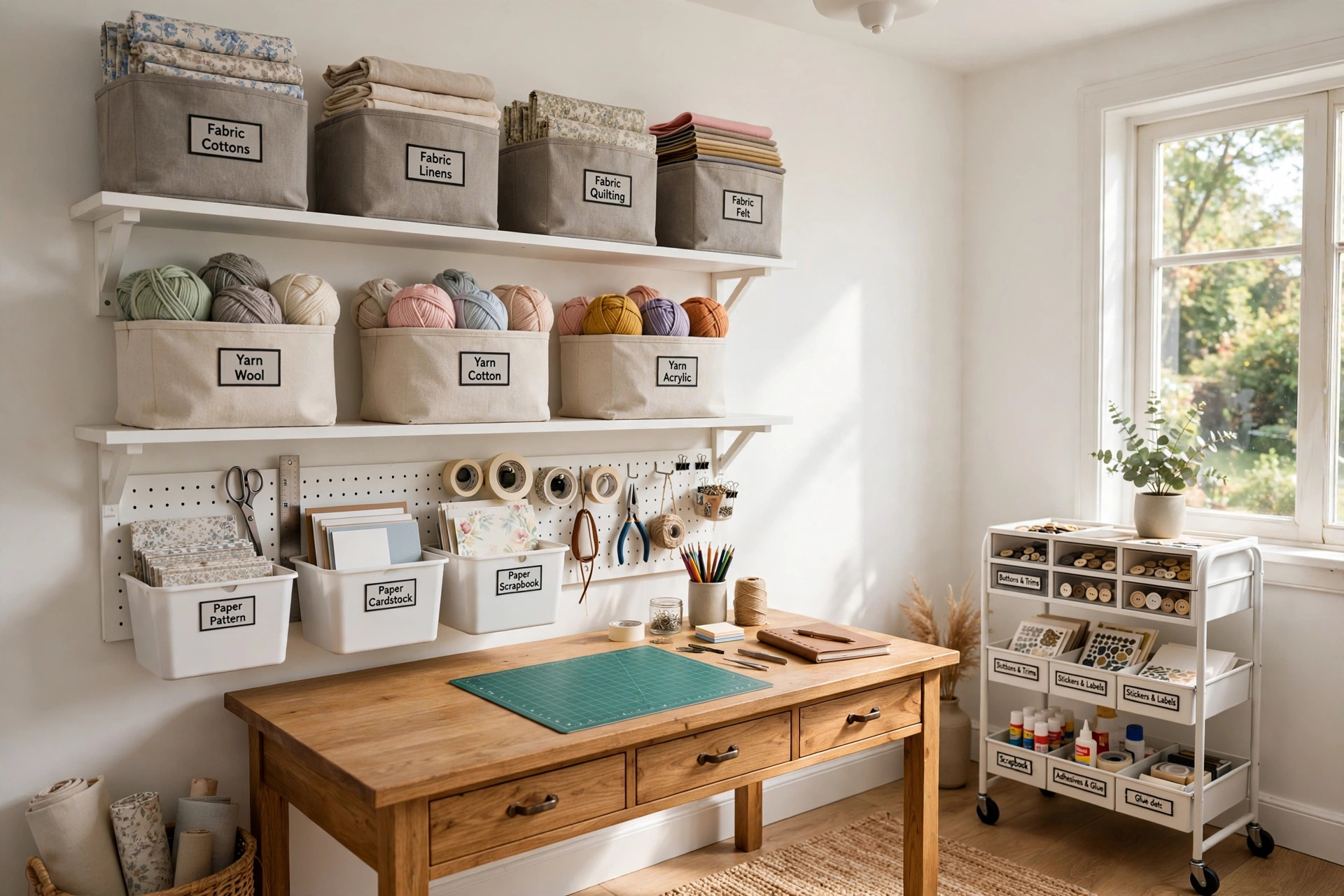
Small rooms have little floor space but plenty of wall space. Walls and doors are your best friends. Pegboards, wall shelves, hanging pockets, and over-the-door racks add storage without touching the floor. The back of a door can hold scissors, rulers, and tape. A pegboard above the work table keeps tools at eye level. When you think vertical, a ten-by-ten room can feel twice as large.
Types of Craft Storage That Work in Small Rooms
Wall Shelves and Pegboards
Wall shelves are the backbone of small craft room storage. A set of simple white shelves along one wall can hold jars of buttons, stacks of paper, and small baskets. Open shelves work best because you can see what you have. Closed boxes hide things, and hidden things get forgotten. Add labels to every shelf and bin. A pegboard takes this one step further. Hooks hold scissors, pliers, and rolls of tape. Small cups clipped to the board hold pens and brushes. The board keeps tools visible and off the table. Retailers like Michaels and JOANN carry pegboard hooks and baskets made for craft rooms.
Rolling Carts
A rolling cart is one of the best craft storage for small craft room ideas because it moves. Use it at the table while you work, then roll it into a corner when you are done. Three-tier metal carts are a classic. The top holds the tools for the current project. The middle holds paper or fabric. The bottom holds a project box. Some crafters keep one cart per hobby: one for sewing, one for painting, one for paper crafts. A rolling craft cart from IKEA is a popular choice and comes in several colors to match the room.
Cabinets and Cube Cubbies
Cube cubbies are squares of open storage, often thirteen inches on a side. Fabric bins slide in and out. They fit yarn, fat quarters of fabric, and stacks of paper. A unit of six or nine cubes against one wall can hold a surprising amount. Cabinets with doors work for items you want hidden, such as works in progress or supplies that fade in light. The Container Store sells cube bins in many sizes, and home guides like The Spruce show how crafters arrange them. If you want a tidy look from across the room, mix open cubes for daily tools with closed bins for the rest.
Desks and Tables with Built-In Storage
The work table is the heart of the craft room, so it should store as well as hold. A drop-leaf table gives you a large work surface that folds down when guests arrive. A desk with drawers keeps rulers, cutters, and pens under the work surface. A craft table with storage built in can replace a separate dresser. One strong option is a table with cubbies on each end and drawers in the middle. Pair it with a stool that tucks fully under the table to save floor space. For sewing rooms, a craft table with storage for a sewing room leaves space for a machine on top and fabric below. Internal guides on sewing-room layouts can help you plan this; see our piece on a best craft table with storage for sewing room for layout tips.
Storage Ideas by Supply Type
Different supplies need different homes. Paper does best flat or upright in a file sorter. Stacks of card stock warp if they lean for months. Fabric folds neatly in cubes or hangs on a wall-mounted rod by type and color. Yarn stays cleanest in closed bins or cubbies with fabric drawers. Small items like buttons, beads, and eyelets belong in clear jars or tackle-style boxes with latches. Label every jar. You will thank yourself later.
Paint and ink need upright storage away from heat. A wall-mounted spice-style rack holds small paint bottles perfectly. Markers store best on their sides so the tips stay wet. Keep these in a tray or a drawer organizer. Tools such as rotary cutters, craft knives, and a good hot glue gun for home craft projects need a fixed home where blades and hot tips cannot harm hands. A magnetic strip on the wall holds metal tools safely. For general cutting and measuring tools, our guide to a best craft storage organizer for small rooms lists organizers that fit in a drawer.
Fabric scraps, ribbon, and trim wind neatly onto cards or dowels. A wall-mounted dowel rack turns ribbon into decoration. Wrapping paper and large rolls stand upright in a tall corner bin or a wall-mounted holder. Finished projects need a shelf of their own so they are not crushed under new work. Give each supply type a zone. Zones keep the room logical even when it is busy.
Cost and Price
The best craft storage for small craft room ideas does not have to cost much. A full setup can run from under fifty dollars to several hundred. Simple wall shelves and a pegboard often cost less than forty dollars at stores like Home Depot. A three-tier rolling cart usually runs between thirty and sixty dollars. Cube cubby units range from forty to one hundred fifty dollars depending on size and material. Fabric bins for cubes cost a few dollars each.
Start with the cheapest fixes first. Clear jars from the kitchen, shoe boxes wrapped in paper, and binder clips for bag tops cost almost nothing. Then spend on the pieces that earn their keep: the work table, the main shelf unit, and one good cart. Buy the rest over time. Sales at craft stores are common in January and August. That is a fine time to add pieces. Spend the most on items you touch every day. A wobbly table or a cart with bad wheels will annoy you for years.
Care and Upkeep
Storage only works if you keep it up. Build a small habit of putting tools back when a project ends. Ten minutes of tidying after each session beats a full day of cleaning once a month. Wipe shelves twice a year. Dust settles on fabric and paper and dulls colors. Check paint and glue dates once a year and throw out dried bottles. Old markers that no longer write should go. Keep a small trash bin and a donation box in the room. The donation box takes supplies for crafts you no longer do. Passing them on frees space and helps another crafter.
Watch for damp. Basements and garages can grow mold on paper and fabric. A small dehumidifier or a few packets of silica gel in closed bins helps. Keep paper away from direct sun, which fades ink and weakens fibers. Rotate stock so old supplies get used first. Simple upkeep guides from This Old House and Family Handyman cover room ventilation and moisture control in plain terms. A dry, dusted room keeps supplies fresh for years.
Safety in the Craft Room
Safety deserves its own plan. Sharp blades, hot glue, and small parts each need rules. Store craft knives and rotary cutters in sheaths or locked drawers. Keep a good hot glue gun for home craft projects on a heat-proof stand, unplugged when not in use. Never leave it heating on a pile of paper. Keep small beads, buttons, and pins in lidded containers, high up if small children visit the room. Sprays and solvents need fresh air. Open a window or run a fan when you use them, and store them upright in a closed cabinet.
Electrical safety matters too. Do not overload one outlet with a glue gun, a lamp, and a sewing machine. Use a power strip with a switch and turn it off at night. Keep cords off the floor where feet can catch them. Clip cords along the table edge instead. A small fire extinguisher near the door is wise if you use heat tools often. Advice from Bob Vila on workshop safety applies just as well to craft rooms. A safe room is a room you relax in, and relaxed crafters do their best work.
Frequently Asked Questions
What is the cheapest way to add storage to a small craft room?
Start with the walls. A pegboard, a few wall shelves, and an over-the-door pocket organizer cost little and add a lot. Reuse jars, boxes, and baskets you already own. Many crafters build a fine room for under fifty dollars before they buy any furniture.
How do I store fabric in a small room?
Fold fabric into uniform rectangles and stand them upright in cube bins like files. You can see every color at a glance. Small scraps go in clear bags by color. Large bolts can hang on a wall-mounted rod. Keep fabric out of direct sun to stop fading.
What is the best small storage unit for paper crafts?
A rolling cart with shallow drawers works well for paper, card stock, and tools. Shallow drawers stop paper from curling. Pair the cart with an upright file sorter for twelve-by-twelve paper. Keep the paper you use most at waist height.
Should craft storage be open or closed?
Use both. Open shelves and pegboards suit tools and supplies you grab daily. Closed bins and cabinets suit items that collect dust, fade in light, or look messy. A mix keeps the room useful and pleasant to look at.
How do I keep a small craft room from getting messy again?
Give every item a fixed home and put things back after each session. Sort new supplies into their zones the day they arrive. Keep a donation box for items you stop using. A ten-minute tidy after each project stops clutter from growing.
Can one room hold two different crafts?
Yes. Give each craft its own zone or its own rolling cart. A sewing zone can sit at the table while a paper zone lives on the wall shelves. Shared tools stay in the middle. Clear zones stop the two crafts from mixing into one pile.
A Short Final Word
The best craft storage for small craft room ideas is the storage that fits your room, your supplies, and your habits. Measure first. Sort what you own. Build upward with shelves and pegboards. Roll with a cart. Label everything. Keep the floor clear and the tools close. You do not need a large room to make large things. You need a room where every supply has a home. Start with one wall this weekend. You will feel the difference the first time you sit down to work and everything is exactly where it should be.
References
Blick Art Materials. (n.d.). Art and craft supplies. https://www.dickblick.com Bob Vila. (n.d.). Home improvement advice. https://www.bobvila.com Family Handyman. (n.d.). DIY home repair and maintenance. https://www.familyhandyman.com IKEA. (n.d.). Home furnishings. https://www.ikea.com JOANN. (n.d.). Fabric and craft supplies. https://www.joann.com Michaels. (n.d.). Arts and crafts supplies. https://www.michaels.com The Container Store. (n.d.). Storage and organization products. https://www.containerstore.com The Home Depot. (n.d.). Home improvement products. https://www.homedepot.com The Spruce. (n.d.). Home and garden advice. https://www.thespruce.com This Old House. (n.d.). Home renovation guidance. https://www.thisoldhouse.com
Was this guide helpful?

About David Wilson
The My Garden US editorial team writes practical, in-depth home and garden guides for American homeowners — tested advice, no fluff.
You May Also Like
Pom Pom Maker Kit for Yarn Crafts Kids: A Simple Guide for Parents
May 27, 2026 0 views
DIY Candle Warmer Kit for Home Fragrance Crafts: A Complete Guide
May 15, 2026 0 views
A Candle Wick Kit for Soy Candle Making Home Candle Makers
September 25, 2026 1 views