
Buying leather cord for jewelry making crafts bulk is a smart move for anyone who makes necklaces, bracelets, and chokers at home. When you buy in bulk, the cost per yard drops. You also keep enough cord on hand for large orders, craft fairs, and gifts. But not all leather cord is the same. Thickness, finish, and quality vary a great deal. This guide walks through what matters so you can buy with care.
Why It Matters
Leather cord gives jewelry a warm, natural look. It suits simple pendant necklaces. It suits braided bracelets. It suits rustic chokers. Many crafters prefer it to metal chain because it is light and soft against the skin.
When you buy leather cord for jewelry making crafts bulk, you plan for volume. A single necklace may need 18 to 30 inches of cord. A bracelet may need 8 to 12 inches. If you sell at a craft show, one weekend can use up many yards. Bulk spools of 50, 100, or even 250 yards keep your work moving.
Bulk buying also helps your budget. A short retail cut of five yards may cost several dollars. A 100-yard spool of the same cord may cost much less per yard. For a home craft business, that difference adds up fast. A craft store like Michaels often stocks smaller cuts, while larger spools are common from bulk suppliers.
What to Look For When You Buy: Leather Cord for Jewelry Making Crafts Bulk
Cord Type
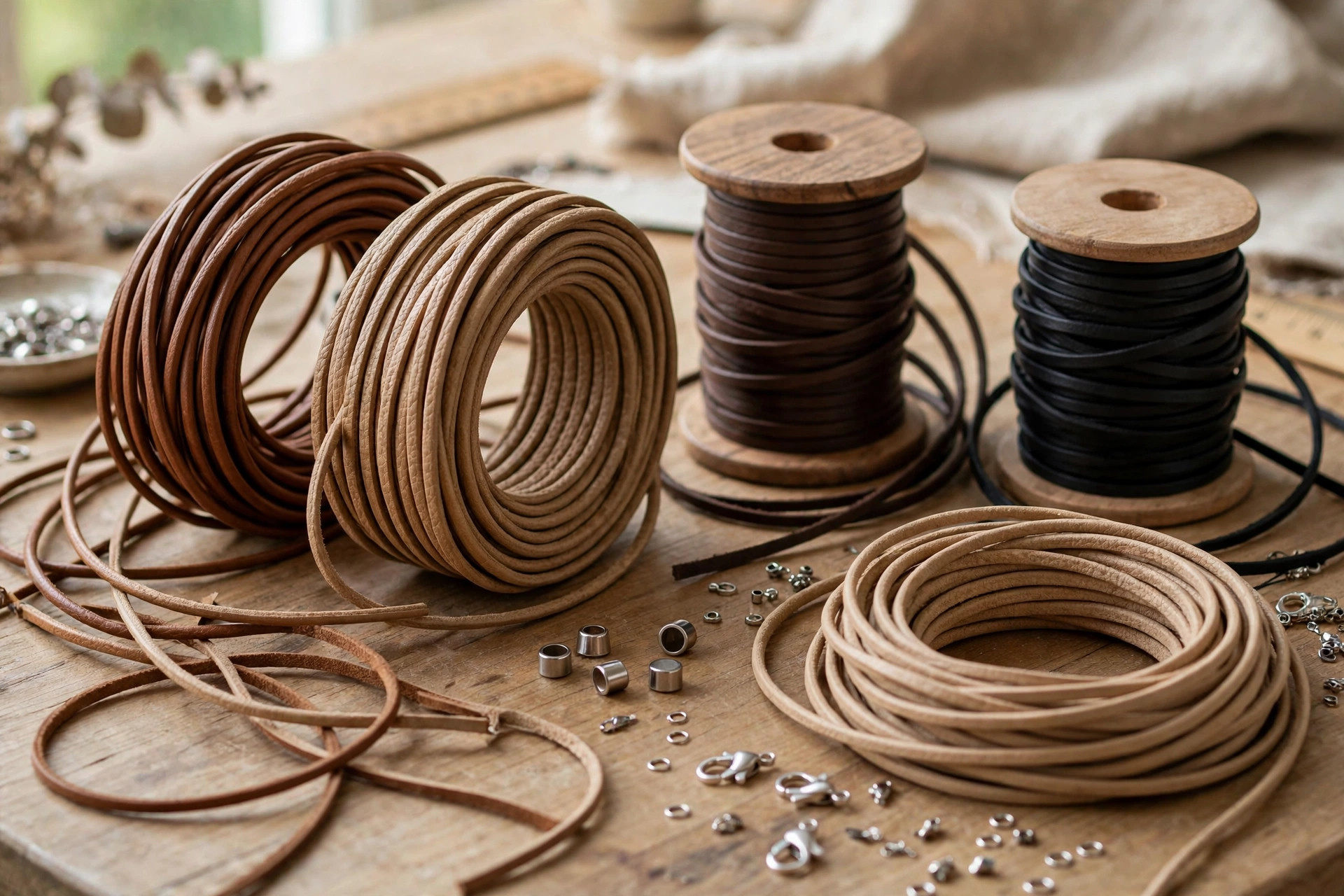
Round leather cord is the most common choice for jewelry. It slides through beads and pendants with ease. Braided leather cord has a woven look. It feels a bit more casual. Flat leather cord is wide and smooth. It works well for wide bracelets and chokers.
Greek leather is soft and light. It comes in many colors. Indian leather cord tends to be stiffer. It holds its shape well. Bolo cord is thick, often used for heavy pendants. Choose the type that fits your design.
Thickness
Leather cord is measured in millimeters. Thin cord of 1 mm or 1.5 mm suits delicate necklaces. A 2 mm cord is the most common size for general jewelry work. A 3 mm cord feels sturdy and works well for men’s bracelets. A 5 mm or 6 mm cord is bold and best for statement pieces.
Check the clasp and end cap sizes you plan to use. A 2 mm end cap will not fit a 3 mm cord. Buy your findings to match your cord.
Finish and Color
Natural brown and black are the classic colors. They match almost any outfit. But leather cord comes in red, turquoise, tan, white, and many dyed shades. Dyed cord can bleed color onto skin or cloth when it gets wet. Before a big project, test a short piece in water. Let it dry. Check for dye transfer.
A leather crafting tools kit for beginners usa often includes sample cords in several colors. This is a low-cost way to see which colors you like before you buy in bulk.
True Leather vs. Faux
Genuine leather cord has a natural grain and a soft smell. It bends without cracking. Faux leather cord, sometimes called leatherette, is made from plastic. It costs less but wears out faster. For jewelry you plan to sell, genuine leather gives a better result. Read the product label with care. Terms like “leather look” or “leather style” usually mean faux.
Types and Options
Round Cord
Round cord is the workhorse of leather jewelry. It knots well. It braids well. It threads through most beads. If you buy only one type in bulk, make it round cord in 2 mm. It covers the most projects.
Braided Cord
Braided cord has texture and grip. It is a good choice for simple designs where the cord itself is the star. Many crafters use it for wrap bracelets. It is also kind to beginners because knots hold fast in the braid.
Flat Cord
Flat cord lies smooth against the wrist. It is popular for wide cuff bracelets. It needs flat end caps and slider beads made for flat stock. Make sure your findings match before you commit to a bulk spool.
Suede Lace
Suede lace is thin, flat, and soft. It ties into bows and knots with ease. It suits friendship bracelets and light necklaces. It frays at the ends, so seal the tips with glue or clear nail polish.
For crafters who mix media, pairing leather cord with beads or resin pieces opens new design doors. A resin art kit for beginners jewelry making can supply pendants that hang well from a simple leather cord.
Cost and Price
Bulk leather cord is sold by the yard, the spool, or the roll. As of recent years, small retail packs of 5 to 10 yards often cost a few dollars. A 50-yard spool may cost around ten to twenty dollars, depending on quality. A 100-yard spool usually brings the per-yard price down further.
Genuine leather costs more than faux. Dyed and specialty colors cost more than plain brown and black. Braided cord often costs a bit more than smooth round cord because it takes more work to make.
Watch for these extra costs. Findings such as clasps, end caps, and crimp beads are not always included. Glue and cord cutters may be needed. A basic best jewelry making kit for beginners adults often bundles these small tools with sample cord, which can be a fair value for a first project.
To save money, compare the per-yard price, not the total price. A big spool that looks cheap may cost more per yard than a smaller one. Do the math before you buy.
How to Work With Leather Cord
Cutting
Use sharp scissors or a craft knife. Dull blades crush the cord and leave ragged ends. Cut on a cutting mat to protect your table. Measure twice. Leather cord cannot be rejoined once it is cut too short.
Knotting and Gluing
An overhand knot is the simplest stop for beads. A lark’s head knot attaches cord to a ring or bail with no glue. For end caps, add a drop of strong craft glue inside the cap, push the cord in, and let it cure overnight. Do not tug on fresh glue joints.
A home improvement store like Home Depot carries strong glues and fine craft knives in its tools aisle, which many crafters use for this kind of work.
Braiding
Three-strand braiding is the easiest braid. Cut three cords of equal length. Tape the top ends to a table. Cross the outer strands over the middle in turn. Keep the tension even. For a four-strand or fishtail braid, practice with short pieces first.
Adding Beads and Pendants
Slide beads onto the cord before you tie the final knots. Use beads with holes of 2 mm or more for 2 mm cord. Heavy pendants need thicker cord so the necklace hangs right. A jewelry supply source like Rio Grande lists bead hole sizes and clasp sizes that help you match parts to cord.
Care and Upkeep
Leather cord lasts longer with simple care. Keep finished jewelry dry. Water makes leather stiff and dull. If a piece gets wet, blot it with a soft cloth and let it air dry. Never use heat to dry leather.
Store leather jewelry flat or loosely coiled. Hanging long necklaces can stretch the cord over time. Keep pieces out of direct sun. Sunlight fades dyed colors and dries out the leather.
A light coat of leather conditioner, applied with a soft cloth once or twice a year, keeps the cord supple. Test the conditioner on a scrap piece first. Some conditioners darken light-colored leather.
Sweat and perfume also wear leather down. Put jewelry on after lotion and perfume have dried. Wipe pieces with a dry cloth after wear. With this care, a leather cord necklace can last for years.
An art supply shop like Dick Blick carries sealers and conditioners that work on small leather craft pieces.
Setting Up a Small Work Space
You do not need a large shop to make leather cord jewelry. A clean table, good light, and a few small bins will do. Keep cord spools in a drawer or box so they stay dust free. A bead board with curved channels helps you lay out necklace designs before you cut.
Good light matters more than most beginners think. A desk lamp with a daylight bulb shows true colors. This helps when you match cord to beads. A DIY site like Family Handyman offers simple tips for setting up small craft work areas at home.
Keep a small trash bin nearby for cord scraps. Sharp tools should live in a case, away from children and pets. A basic first aid kit is wise. Craft knives slip.
Safety
Leather work is safe, but a few rules help. Always cut away from your body. Keep craft knives capped when not in use. Some strong glues give off fumes, so work near an open window or use a small fan.
Dust from cutting or sanding leather can irritate lungs. A simple dust mask is enough for home craft work. The U.S. Consumer Product Safety Commission is not a craft site, but its guidance on glue fumes and small parts is worth a look for home crafters.
Keep small beads, clasps, and cut cord bits away from small children and pets. They are choking hazards. A craft retailer like JOANN labels its small parts with age guidance, which is a good habit to follow at home too.
Wash your hands after handling dyed cord. Some dyes can stain skin. If you have a latex or chemical allergy, check glue labels with care.
FAQ
How many yards of leather cord do I need for 50 necklaces?
A simple 20-inch necklace uses about two-thirds of a yard, counting knots and trim. For 50 necklaces, plan on 35 to 40 yards. Buy a 50-yard spool to leave room for mistakes.
What is the best cord size for beginners?
A 2 mm round cord is the best first choice. It is easy to knot. It fits most beads. It works with common end caps and clasps. Buy it in brown or black.
Can I wash leather cord jewelry?
No. Do not soak leather cord. Wipe it with a slightly damp cloth if it must be cleaned. Let it dry in open air. Water and soap dry out the leather and dull its color.
Does leather cord stretch over time?
A little. Thin cord stretches more than thick cord. Braided cord stretches less than smooth cord. To limit stretch, do not hang heavy pendants on thin cord, and store necklaces flat.
How do I stop the ends from fraying?
Dip the cut end in clear craft glue or clear nail polish. Let it dry fully before you thread beads. For suede lace, a tiny knot at the tip also works.
Is bulk cord as good as small retail cuts?
Often it is the same cord. The difference is packaging. Buy a small test length first if you can. Check the color, thickness, and feel. Then order the bulk spool of the same product.
A Short Final Word
Leather cord for jewelry making crafts bulk is a plain, honest material. It asks little and gives much. Buy genuine leather in the size your designs need. Test color and quality on a small piece first. Keep your tools sharp and your work area tidy. With those habits, a bulk spool of cord will turn into dozens of necklaces and bracelets that look and feel made by hand. For more project ideas, the project pages at This Old House and Bob Vila often show simple home craft builds that pair well with handmade jewelry gifts.
References
Blick Art Materials. (n.d.). Art and craft supplies. https://www.dickblick.com Bob Vila. (n.d.). Home improvement advice. https://www.bobvila.com Family Handyman. (n.d.). DIY home repair and maintenance. https://www.familyhandyman.com JOANN. (n.d.). Fabric and craft supplies. https://www.joann.com Michaels. (n.d.). Arts and crafts supplies. https://www.michaels.com Rio Grande. (n.d.). Jewelry making tools and supplies. https://www.riogrande.com The Home Depot. (n.d.). Home improvement products. https://www.homedepot.com This Old House. (n.d.). Home renovation guidance. https://www.thisoldhouse.com U.S. Consumer Product Safety Commission. (n.d.). Product safety information. https://www.cpsc.gov
Was this guide helpful?

About Sarah Mitchell
The My Garden US editorial team writes practical, in-depth home and garden guides for American homeowners — tested advice, no fluff.
You May Also Like
DIY Lantern Kit for Patio Decor Crafts USA: A Simple Guide
January 21, 2026 0 views
Best Craft Cutting Mat for Rotary Cutters
June 18, 2026 0 views
How to Choose the Best Heat Gun for Embossing and Crafts
October 4, 2026 1 views