A well-kept lawn is a source of quiet pride for a homeowner. It frames the house. It gives children a place to play. It invites neighbors to stop and talk. Few things spoil that picture like crabgrass. This coarse, pale weed spreads in bare spots and thin turf, and once it takes hold it is hard to remove. The good news is that prevention works better than cure. Finding the best crabgrass preventer for established lawns is the single most reliable way to keep crabgrass out of a mature yard. An established lawn, one that is at least a year old with dense, rooted turf, can take products that a new lawn cannot. This guide explains why crabgrass appears, what to look for on the label, the types of products on the shelf, what they cost, how to care for the lawn through the season, and how to keep people and pets safe.
Why Crabgrass Matters in an Established Lawn
Crabgrass is a summer annual. It sprouts in spring when soil warms, grows fast in heat, and dies with the first hard frost. Before it dies, each plant drops thousands of seeds. Those seeds wait in the soil for next spring. A lawn that looks fine in May can be full of crabgrass by August if nothing stops the seeds from sprouting.
An established lawn has a natural advantage. Thick turf shades the soil. Shade keeps the soil cool. Cool soil stops crabgrass seed from sprouting. But even a good lawn has weak spots. A dog runs the same path and wears the grass thin. The edge along the driveway gets baked by heat off the concrete. Crabgrass finds those spots first.
Many homeowners make the mistake of fighting crabgrass only after they see it. By then the battle is half lost. Hand pulling works when plants are young, but it leaves bare soil where new seed can sprout. Prevention changes the whole picture. A pre-emergent barrier in the soil stops the seed before it ever becomes a plant. That is why gardeners call spring the season that decides August. The best crabgrass preventer for established lawns does not kill visible weeds. It makes sure you never see them.
How to Choose: What to Look For on the Label: Best Crabgrass Preventer for Established Lawns
Reading a label takes only a few minutes and saves real money. Start with the active ingredient. The most common pre-emergent chemicals for crabgrass are prodiamine, dithiopyr, and pendimethalin. All three form a thin barrier in the top layer of soil. Prodiamine is known for long control with a single spring application. Dithiopyr has a useful trait: it can stop very young crabgrass that has already sprouted, giving a short window of early rescue. Pendimethalin is an older, widely used option that works well when applied on time. Corn gluten meal is the common organic choice. It is less consistent, and studies of its results are mixed.
Next, check whether the product is made for your grass type. Most preventers list the grasses they suit: Kentucky bluegrass, fescue, ryegrass, Bermuda, zoysia, and St. Augustine are the usual names. An established lawn of St. Augustine or centipede grass can be sensitive to certain products, so the label must name your grass. If your grass is not listed, choose another bag.
Look at the coverage figure. Bags state how many square feet they cover, often 5,000 or 10,000. Measure your lawn first. A rough measure is enough. Buying too little leaves gaps in the barrier. Buying too much tempts a homeowner to apply extra, which the label forbids.
For advice on timing your spring application, see our pre emergent weed killer application timing guide.
Granular Versus Liquid
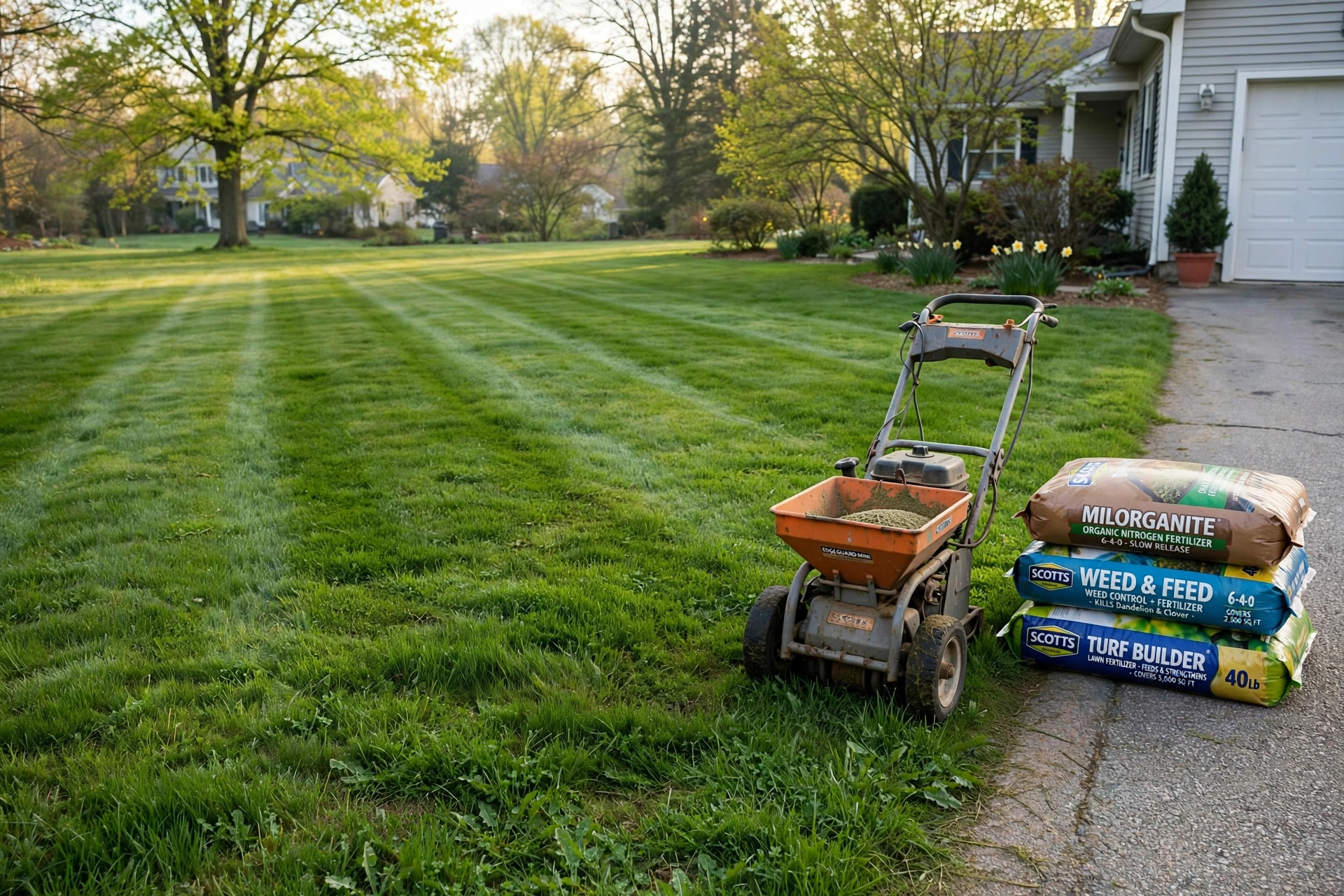
Granular products are small pellets spread with a rotary or drop spreader. They are the most common choice for homeowners. They are easy to apply evenly, and watering moves the pellets into the soil.
Combination Products
Some bags pair a crabgrass preventer with fertilizer, insect control, or grub control. These can be a fair value when the second job needs doing at the same time. Grub control in late spring, for example, may pair with a second split application of preventer. Read the label date range for each part. If the parts want different timing, buy them separately. Homeowners with dogs should check our pet safe lawn weed killer reviews before choosing any combination product.
Types and Options on the Store Shelf
Walk the lawn aisle and you will find four broad types.
First, the plain pre-emergent preventer. It does one job: stop crabgrass and other annual weeds before they sprout. This is the cleanest choice for an established lawn that is already well fed.
Second, the preventer plus fertilizer. This feeds the grass while the barrier forms. It suits lawns that need spring feeding. Check the nitrogen number. A heavy feed too early can push weak top growth that suffers in summer heat.
Third, the extended-control preventer. These use higher rates of long-lasting ingredients to promise several months of control from one application. They are handy where spring is short and summer is long. They cost more per bag but may save a second application.
Fourth, organic and natural options. Corn gluten meal is the main one. It adds some nitrogen as it breaks down. Its weed control is weaker and less certain than synthetic options, and it needs precise timing and heavy rates. It may suit a homeowner who accepts some weeds in exchange for no synthetic chemicals.
No single type is the best crabgrass preventer for established lawns in every case. The right pick depends on your grass, your soil, and your region. Match the product to the yard, not the advertisement.
Cost and Price: What to Expect
Prices move with bag size, brand name, and ingredient. A small bag that covers 5,000 square feet often sells for 20 to 35 dollars. A large bag covering 15,000 square feet may run 50 to 80 dollars. Store brands with the same active ingredient as the national names often cost 20 to 30 percent less and work the same way. Compare the active ingredient and its percentage, not the picture on the front.
Think in cost per application. Divide the bag price by the square feet it covers, then multiply by your lawn size. A typical quarter-acre suburban lot has 5,000 to 8,000 square feet of actual lawn. One spring application may cost 25 to 50 dollars in product. Add a spreader if you do not own one. A basic rotary spreader costs 40 to 70 dollars and lasts many years.
Labor is the other cost. Applying a granular preventer takes an hour or two on a Saturday, including watering it in. A lawn service will do the job for 50 to 100 dollars per visit in many markets, often as part of a seasonal plan. For a homeowner who values time, a service can be worth it. For one who enjoys yard work, doing it yourself cuts the cost in half and builds familiarity with the lawn.
Watch for false economy. A cheap bag applied late is money wasted. The barrier must be down before seeds sprout. A full-price bag applied on time beats a sale bag applied in June. Timing, which we cover below, matters more than brand.
Care and Upkeep Through the Season
A preventer is not a one-day job. It is the first step in a season of care.
Water the product in. Most granular preventers need a quarter inch of rain or irrigation within a few days of application. The water moves the chemical into the soil where seeds sit. If the forecast shows no rain, run the sprinklers. A dry bag sitting on the grass does little.
Mow high. Set the mower to cut at three to four inches for cool-season grasses. Tall grass shades the soil and helps the chemical barrier. It also grows deeper roots. Never cut more than a third of the blade at once. Sharp blades matter too. Dull blades tear grass and open wounds where weeds enter.
Feed on schedule. An established lawn usually needs two to four feedings a year, depending on grass type and region. Spring feeding pairs naturally with preventer application. Fall feeding builds roots for winter. Skip the urge to feed in the heat of summer.
Overseed in fall, not spring. This is a point many homeowners miss. A pre-emergent barrier stops all seeds, including grass seed. If you spread grass seed in spring after applying preventer, the seed will not sprout. Plan overseeding for early fall, when the spring barrier has worn off. Our overseeding lawn in fall step by step walks through the full process. If the lawn is thin, fall overseeding plus a spring preventer is the classic one-two plan for a thick yard.
Watch the edges. The strips along sidewalks and driveways heat up first and break the barrier early. Walk these edges in midsummer. If you spot young crabgrass, pull it by hand while the soil is moist. A few minutes of pulling in July saves hours of regret in September.
Keep records. Note the date you applied the product, the brand, and the rate. Next spring you will know exactly when to act. Lawns improve year over year when the same good steps repeat.
Safety for People, Pets, and the Yard
Every preventer carries a label, and the label is the law. Read it before you open the bag. Wear gloves. Wear long sleeves and closed shoes. Keep children and pets off the lawn until the product is watered in and the grass is dry. Most labels give a specific waiting time. Follow it.
Store bags where children cannot reach them, in a dry place off the floor. A garage shelf in a sealed container works well. Do not pour leftover product down drains or into ditches. It can harm ponds and streams. If you have extra, save it sealed for fall or next spring, within the dates the label allows.
Keep the product out of garden beds and vegetable plots unless the label says it is safe there. Most crabgrass preventers are not labeled for food crops. Sweep any pellets off the driveway and sidewalk back onto the lawn.
For the lawn itself, respect the rate. More is not better. Over-application can thin the grass, stain it, or leave bare patches. Calibrate the spreader using the setting on the bag. Walk at a steady pace. Overlap wheel marks slightly so no strip is missed and none is doubled. If you hire a service, ask what product they use and at what rate. A good company will tell you plainly.
The federal Consumer Product Safety Commission publishes general guidance on safe use of home chemical products. Equipment makers like Toro and Deere offer spreader guides that help homeowners apply granular products evenly.
Frequently Asked Questions
When should I apply crabgrass preventer in spring? Apply when soil temperatures reach about 55 degrees for several days in a row. In much of the country that means when forsythia bushes bloom or when you first mow the lawn in spring. A soil thermometer pushed two inches into the ground gives a sure reading. Too early wastes product life. Too late lets seeds sprout first.
Can I use crabgrass preventer on a new lawn? No, not on newly seeded grass. The barrier stops grass seed as well as weed seed. Most labels say to wait until the new grass has been mowed at least two or three times. For a new lawn, hand weed and wait. The best crabgrass preventer for established lawns is meant for turf at least a year old.
Will it kill crabgrass that is already growing? Standard pre-emergent products will not kill established plants. They stop seeds. One ingredient, dithiopyr, can stop very young crabgrass in its first few leaves, but it is not a cure for a full outbreak. If crabgrass is already up and spreading, pull it or use a labeled post-emergent product, then plan prevention for next spring.
Is crabgrass preventer safe for dogs and cats? When used as labeled, most products are considered safe once watered in and dry. Keep pets off the lawn during application and until the label’s waiting period passes. Store bags out of reach. If your pet eats pellets, call your veterinarian. Households with pets may want to compare options in our pet safe lawn weed killer reviews.
How long does one application last? Most products give eight to twelve weeks of control. Heavy rain, sandy soil, and hot weather shorten the life of the barrier. In long-season regions, a second split application eight weeks after the first extends control through summer.
Can I seed in the fall after using preventer in spring? Yes. By early fall the spring barrier has broken down in most soils. That is the right time to overseed thin areas. Do not apply preventer again in fall if you plan to seed, unless the label of a specific product allows it. See our overseeding lawn in fall step by step for the full schedule.
A Short Final Word
Crabgrass wins when a lawn is thin, bare, or neglected in spring. It loses when the soil is shaded, the turf is thick, and a timely barrier stops its seed. The best crabgrass preventer for established lawns is not a secret formula. It is the right product, matched to your grass, applied at the right rate on the right day, and watered in. Do that each spring, mow high, feed on time, and overseed each fall. Year by year the lawn grows thicker, the bare spots close, and crabgrass finds no place to land. A fine lawn is built in small steps, and this is the most important one.
References
Consumer Reports. (n.d.). Product ratings and reviews. https://www.consumerreports.org Deere. (n.d.). Lawn and garden equipment. https://www.deere.com The Toro Company. (n.d.). Lawn care equipment. https://www.toro.com U.S. Consumer Product Safety Commission. (n.d.). Home product safety information. https://www.cpsc.gov
Was this guide helpful?

About David Wilson
The My Garden US editorial team writes practical, in-depth home and garden guides for American homeowners — tested advice, no fluff.