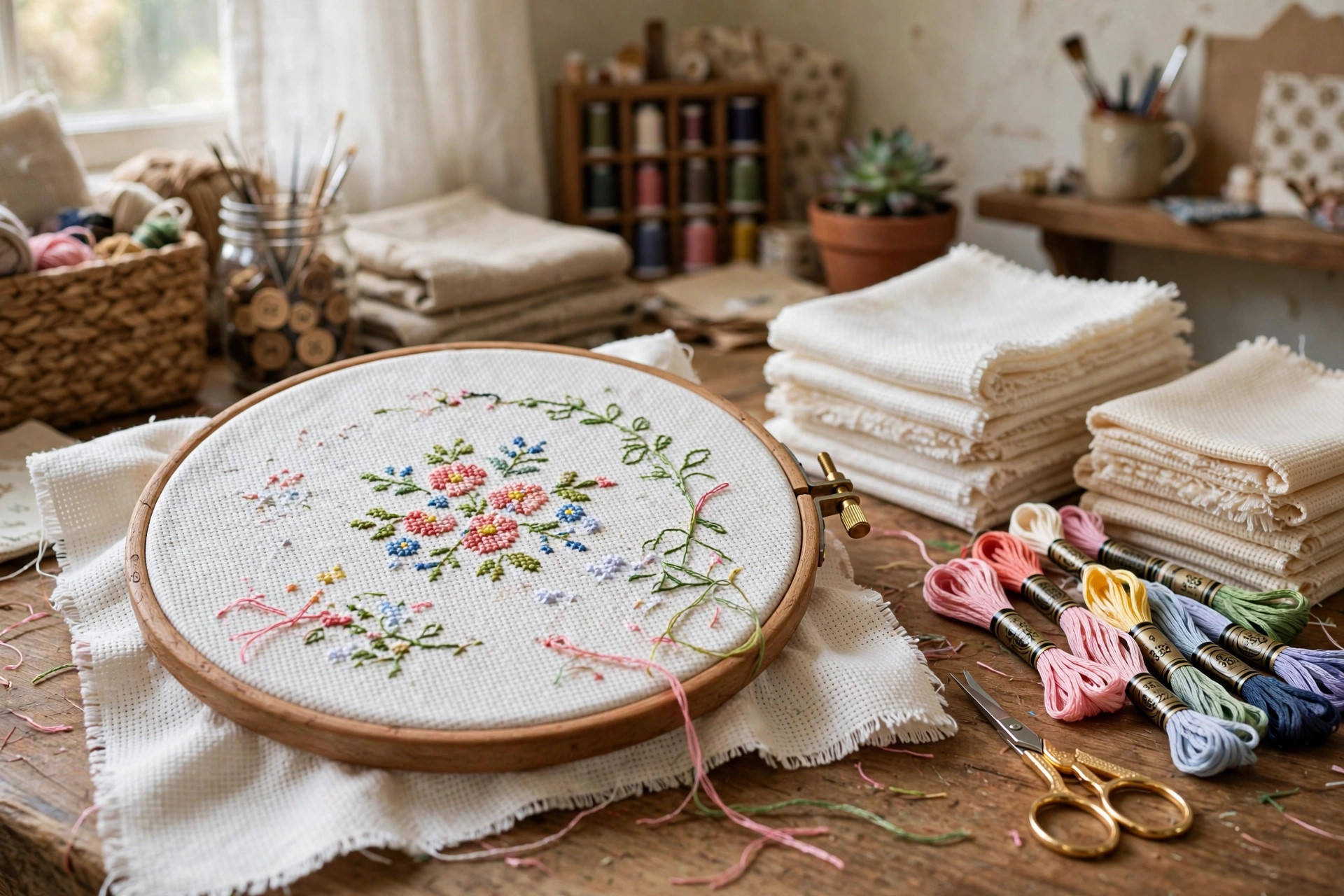

Cross stitch fabric aida cloth for beginners is the best starting point for anyone who wants to learn this craft. Aida cloth is a stiff, even-weave fabric made for counted cross stitch. Its open grid of small holes makes every stitch easy to place. A beginner can count the squares, push the needle through, and watch a picture grow with each row.
Cross stitch is one of the oldest forms of needlework. It appears in folk art from many lands. In America, it has been a quiet home pastime for over two hundred years. Samplers hung on farmhouse walls. Wedding records were sewn with care. Today the craft is back in craft stores and on kitchen tables across the country.
The fabric matters more than the thread in the early weeks. A poor fabric will frustrate a new stitcher. A good one will make the first project a joy. This guide explains how cross stitch fabric aida cloth for beginners works. It covers fabric counts, sizes, colors, prices, care, and safety. By the end, you will know exactly what to buy for your first project.
Why Aida Cloth Is the Standard for Beginners
Aida cloth was made for counted work. It is woven with pairs of threads that form neat square blocks. Each block is one stitch. The holes between the blocks are easy to see. A beginner does not need to split threads or guess where the needle goes.
Other fabrics exist. Linen is smooth and fine. Evenweave is soft and even. Both are lovely. But both demand sharper eyes and steadier hands. Aida forgives small errors. Its stiff finish holds a hoop without sagging. For a first piece, that firmness is worth a great deal.
Aida also comes in many counts and colors. A new stitcher can find white, cream, black, and pastels in most craft shops. Many brands sell pre-cut pieces sized for small projects. This saves the trouble of cutting yardage. A fat quarter cut, about 18 by 22 inches, is a popular size for medium projects.
The Michaels craft store chain stocks a wide range of aida for new stitchers. Shoppers can also compare options at Joann. Both carry beginner kits that pair the cloth with floss and needles.
Understanding Aida Counts: Cross Stitch Fabric Aida Cloth for Beginners
The count of aida cloth tells how many stitches fit in one inch. The most common counts are 11, 14, 16, and 18. The lower the number, the larger each stitch is.
11-Count Aida
Eleven-count aida has large, open squares. It is the easiest count to see and to handle. Children and true beginners often start here. A finished piece is larger for the same pattern. Thick yarn or six strands of floss may be needed to cover the ground well.
14-Count Aida
Fourteen-count aida is the standard choice for beginners. The squares are small enough to look neat but large enough to count without strain. Most beginner patterns are charted for 14-count. It works well with two or three strands of cotton floss. If you buy only one fabric, buy this.
16-Count and 18-Count Aida
Sixteen-count aida gives finer detail. Eighteen-count is finer still. These counts suit stitchers with good near vision or a magnifier lamp. A beginner can move to them after one or two small projects. The finished work looks delicate and precise.
A useful rule: hold the fabric at arm’s length. If you can see the holes clearly, the count suits you. If you squint, choose a lower count for now.
For price comparison on fabric by the yard or by the cut, Amazon lists many brands and counts. Walmart also carries basic aida cuts in its craft aisle.
Choosing the Right Size and Color
Aida cloth is sold in cuts, such as 12 by 18 inches or 15 by 18 inches. Patterns give a stitch count, like 60 wide by 60 high. Divide each number by the fabric count to find the finished size in inches. Then add at least three inches on every side for the hoop and for framing.
For example, a pattern of 70 by 70 stitches on 14-count aida makes a piece five inches square. Add three inches of margin on each side, and you need a cut at least eleven inches square. A 12 by 18 inch cut leaves room to spare.
Color matters too. White is the classic ground. Cream or ivory flatters warm designs. Black makes bright threads pop, but it is hard on the eyes for a beginner. Soft blues, greens, and pinks suit nursery and kitchen pieces. Start with white or cream until your counting feels sure.
Check dye lots when you buy colored aida. Cut from the same bolt if you need two pieces to match. Wash colored cloth before stitching if the pattern uses pale thread. Some dark dyes bleed.
Handmade goods sellers on Etsy offer dyed aida in many colors. Large hardware and craft retailers like Home Depot stock basic stitching supplies and storage for finished work.
Types and Options Beyond Plain Aida
Plain white aida is only the start. Several options exist for beginners who want variety.
Stitched-edge and pre-cut pieces. Many shops sell aida in neat, finished cuts. The edges are bound or serged so they will not fray. This is the simplest way to buy for a first project.
Kits. A beginner kit bundles fabric, floss, needle, chart, and hoop. The fabric is already sized to the chart. Kits remove guesswork. They cost a little more than loose parts but save time and errors.
Printed aida. Some cloth comes with the design printed on the grid. The stitcher follows the printed colors instead of counting. It is not true counted work, but it teaches stitch form. Many beginners enjoy it.
Waste canvas. Waste canvas is a grid cloth basted onto another fabric. You stitch through it, then pull the threads out. It lets a beginner cross stitch on a shirt or tote bag. It comes in 14-count and 18-count.
Plastic canvas. Plastic canvas is a stiff mesh for three-dimensional items. Beginners make ornaments, boxes, and coasters with it. It uses yarn instead of floss.
For more advanced fabric choices later, Dick Blick carries fine art and needlework supplies. Home project advice from Bob Vila can help with framing finished pieces.
Cost and Price Guide
Cross stitch fabric aida cloth for beginners is one of the cheapest crafts to start. A pre-cut piece of 14-count aida, 12 by 18 inches, often costs between two and six dollars. Larger cuts and hand-dyed colors cost more.
A full beginner kit with fabric, floss, needle, chart, and hoop usually runs from eight to twenty dollars. Small kits under ten dollars make good gifts.
Brand matters less than weave quality at the beginner level. Hold the cloth to the light. The grid should look even. The holes should be square, not pulled out of shape. Stiff fabric is easier to hoop than limp fabric. A common brand sold in the United States is sold under names like Charles Craft and Wichelt. Store brands from large craft chains are fine for first projects.
Buy a little extra. A second cut lets you practice tension before you start the real piece. It also gives room if you miscount and need to restart.
Practical home and craft guides at This Old House cover framing and hanging finished needlework. Family Handyman offers tips on making simple wooden frames.
Care and Upkeep of Aida Cloth
Aida cloth needs little care, but a few habits will protect your work.
Store uncut fabric rolled, not folded. Fold lines can be hard to press out of stiff aida. Keep it in a clean drawer away from dust.
Wash your hands before you stitch. Skin oils can mark light cloth over time. Avoid eating while you work on pale fabric.
When the piece is done, wash it if the cloth or floss is colorfast. Use cool water and a drop of mild soap. Do not wring the cloth. Roll it in a clean towel and press out the water. Dry it flat.
Press the finished work from the back side. Lay it face down on a thick towel. Use a warm iron, not a hot one. This keeps the stitches plump and the cloth flat.
Frame or mount the piece behind glass. This keeps dust out and colors bright. Keep finished work out of direct sun. Sunlight will fade both cloth and floss over years.
Safety Tips for New Stitchers
Cross stitch is safe, but sharp needles demand respect.
Use a needle minder or a pincushion. Never hold a needle in your mouth. Store needles in a case when you are not stitching. Count your needles before and after each session if children are near.
Work in good light. A bright lamp near your shoulder beats overhead light alone. Poor light causes eye strain and miscounts. Take breaks every half hour. Stretch your neck and hands.
Keep small scissors sharp and capped. Store them out of reach of young children.
Some people are sensitive to fabric sizing or dyes. Wash new cloth before use if your skin reacts. Work in a ventilated room when you press finished pieces.
If you stitch with children, start them on plastic canvas or 11-count aida with a blunt tapestry needle. Blunt needles will not prick small fingers.
Frequently Asked Questions
How much aida cloth do I need for my first project?
Add three inches of margin on all four sides of the finished design size. For a small sampler, a 12 by 18 inch cut is plenty. Buy one extra cut for practice.
What is the best count of cross stitch fabric aida cloth for beginners?
Fourteen-count is the best all-round choice. The holes are easy to see. Most beginner charts are written for it. Eleven-count is easier still if your eyesight is weak.
How many strands of floss should I use on 14-count aida?
Two strands of six-strand cotton floss give smooth coverage on 14-count aida. Three strands give a fuller look but can crowd the holes. Test a few stitches first.
Can I wash aida cloth before stitching?
Yes. Wash colored aida to check for dye bleed. Pre-washing also softens stiff cloth. Press it while slightly damp to restore a crisp finish.
Why does my fabric pucker in the hoop?
The hoop may be too loose, or you may be pulling stitches too tight. Tighten the hoop screw until the cloth drums lightly. Keep stitch tension even and gentle.
How do I keep the edges of aida from fraying?
Run a line of masking tape along the raw edges. Or use pinking shears. Or stitch a quick zigzag on a sewing machine. Pre-cut bound pieces need no treatment.
A Short Final Word
Cross stitch fabric aida cloth for beginners opens the door to a calm and rewarding craft. Start with 14-count white or cream. Choose a small chart. Keep your tension light and your light bright. The first row of stitches may feel slow. By the tenth row, your hands will know the rhythm.
Crafts pair well together. Many stitchers also enjoy fiber work such as the best yarn for crochet blankets soft usa. Others wrap finished pieces as gifts with a best ribbon set for gift wrapping and crafts. And for stitching on garments, a best heat press machine for home t shirts can help you add pressed designs alongside your needlework.
Buy good cloth, treat it with care, and enjoy the quiet work. Your first finished piece will be worth every stitch.
References
Amazon. (n.d.). Online shopping. https://www.amazon.com Blick Art Materials. (n.d.). Art and craft supplies. https://www.dickblick.com Bob Vila. (n.d.). Home improvement advice. https://www.bobvila.com Etsy. (n.d.). Handmade and craft marketplace. https://www.etsy.com Family Handyman. (n.d.). DIY home repair and maintenance. https://www.familyhandyman.com JOANN. (n.d.). Fabric and craft supplies. https://www.joann.com Michaels. (n.d.). Arts and crafts supplies. https://www.michaels.com The Home Depot. (n.d.). Home improvement products. https://www.homedepot.com This Old House. (n.d.). Home renovation guidance. https://www.thisoldhouse.com Walmart. (n.d.). Everyday low prices. https://www.walmart.com
Was this guide helpful?

About Jennifer Lee
The My Garden US editorial team writes practical, in-depth home and garden guides for American homeowners — tested advice, no fluff.
You May Also Like
Best Sewing Machine for Quilting at Home
August 7, 2026 0 views
DIY Wreath Making Kit for Front Door Decor: A Complete Guide
January 25, 2026 0 views
Best Craft Wire for Jewelry and Sculptures: A Plain Guide for Makers
April 12, 2026 0 views