
Introduction
Every crafter knows the same small heartbreak. You buy a beautiful skein of yarn, and two weeks later it is crushed under a pile of fabric. You fold your cotton prints with care, and a month later the edges are dusty and limp. The answer is not to buy less. The answer is to find the best craft storage bins for yarn and fabric, boxes built to protect soft supplies while keeping them easy to reach.
Yarn and fabric have real enemies. Dust settles into fibers. Sunlight fades colors. Moths chew through wool. Moisture breeds mildew. A plain cardboard box or an open shelf offers no defense. A good storage bin does three jobs at once: it blocks dust, it controls light, and it lets you see what you own so you use it instead of rebuying it.
This guide walks through the types of bins that work best, what to check before you buy, what to expect to pay, and how to keep your stash safe for years. It is written for knitters, crocheters, quilters, and anyone whose sewing room has grown past the spare drawer.
Why Proper Storage Matters for Yarn and Fabric: Best Craft Storage Bins for Yarn and Fabric
Yarn and fabric are not like tools. They are soft, they breathe, and they age. A bin that suits a pile of paint tubes may be all wrong for a stack of wool sweaters waiting to be knitted. When you look for the best craft storage bins for yarn and fabric, you are really looking for a small system that respects the nature of fiber.
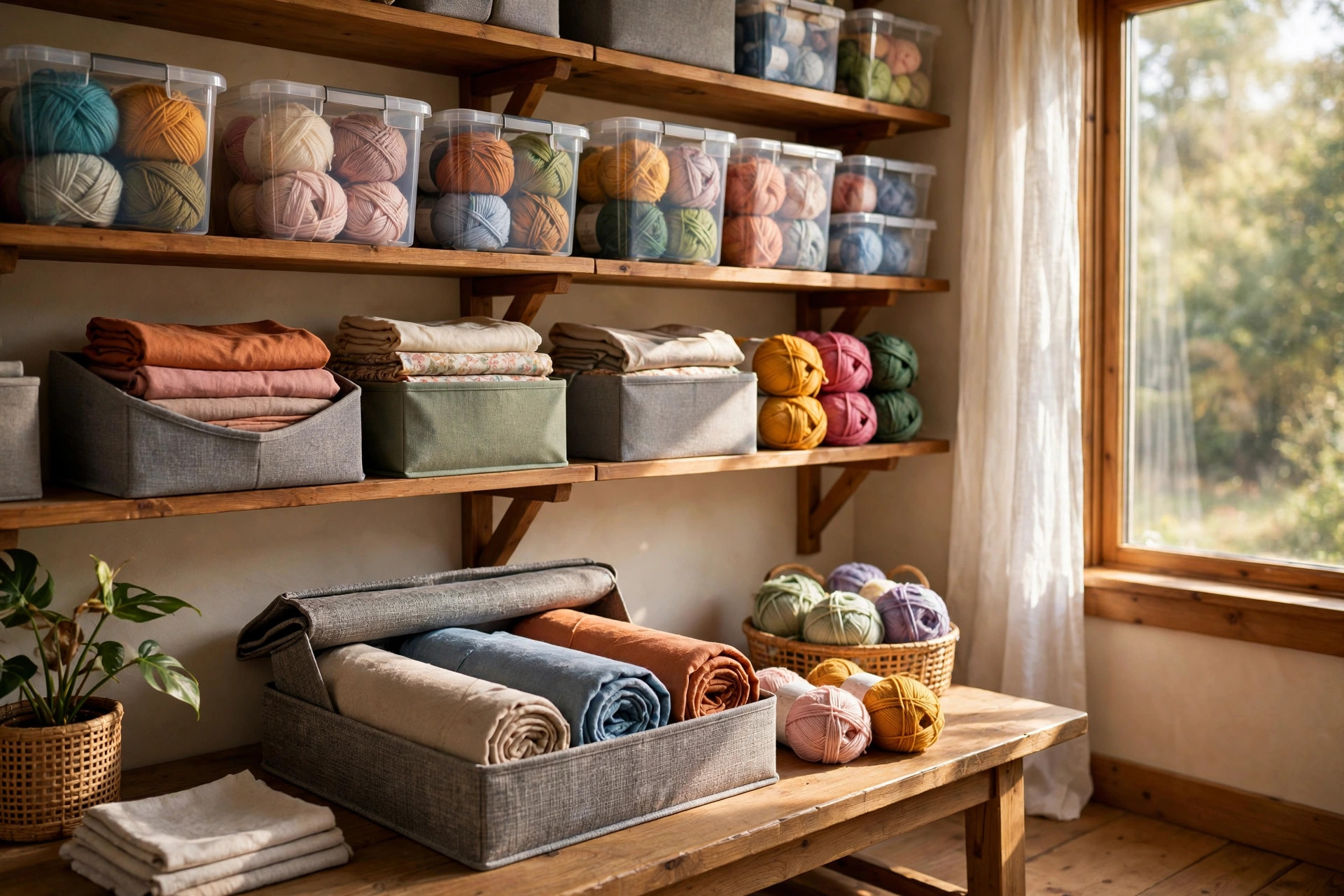
Dust is the first problem. Open shelves look lovely in photos, but in a real home they collect a fine film in days. That film sinks into yarn and dulls fabric. A bin with a fitted lid cuts dust to almost nothing. Clear storage bins for yarn organization go one step further: they block dust while still letting you spot the right color without opening every lid.
Light is the second problem. Sunlight fades dyed fibers fast. A red cotton left near a window can turn pink in a single summer. Storage bins keep light off the fibers most of the time, and if the bins sit near a window you can choose opaque fabric boxes instead of clear plastic.
Pests are the third problem. Wool yarn draws clothes moths. Cotton and linen draw silverfish in damp rooms. Sealed fabric storage bins with lids stop most of this damage before it starts. Cedar rings or lavender sachets add a mild scent that pests dislike, though they are a helper, not a cure.
Finally there is the cost of disorganization. Crafters often buy the same yarn twice because the first skein is buried somewhere. Bins with labels end that habit. When you can see your stash, you plan projects from what you have. The best craft storage bins for yarn and fabric pay for themselves in supplies you stop rebuying.
What to Look for When You Choose
Shopping for bins is simple if you know the five points that matter. Check each one before you spend.
Size and depth
Yarn cakes and skeins are bulky. Fabric bolts are long. Measure your shelf or closet first, then pick bins that fit the space with a little room to spare. A bin that is too deep becomes a black hole; you will forget what is at the bottom. For most shelves, bins 12 to 16 inches deep work well. For fabric, look for boxes that hold folded cuts without hard creases. Stackable craft storage bins for small spaces should lock together so a tall stack stays steady.
Lid quality
A lid that warps or gaps lets in dust and pests. Snap-on lids are fine for light use. Latching lids are better for bins stored in a garage or basement. For fabric you plan to keep for years, gasket lids give the tightest seal. Press the lid corners in the store if you can. If it rocks, skip it.
Material
Plastic bins are the workhorse. They resist moisture, wipe clean, and last for years. Food-grade polypropylene is a safe choice for fiber. Fabric bins, the soft collapsible cubes, look warmer and weigh less, but they do not seal out dust as well. Many crafters use both: hard plastic for long-term stash and fabric bins for current projects. Cardboard belongs in the trash pile; it attracts pests and falls apart in damp air.
Visibility
You cannot use what you cannot find. Clear bins win for stash storage because one glance tells you what is inside. Opaque bins need labels, and labels need to stay current.
Handles and portability
If you carry bins to a quilting circle or a weekend class, weight matters. Full bins of fabric are heavy. Handles molded into the plastic are sturdier than rope pulls. For heavy loads, bins with wheels save your back. Check the weight rating on the label; cheap bins crack when lifted full.
Types of Bins That Work Best
There is no single winner. The best craft storage bins for yarn and fabric depend on what you store and where you store it.
Clear plastic tote bins. The classic choice. They come in every size, seal well, stack neatly, and let you see your yarn at a glance. They are also the cheapest option per quart. Their one weakness is looks; a wall of clear totes is more practical than pretty. Craft supply stores like Michaels carry them in dozens of sizes.
Fabric cube bins. Soft collapsible cubes slide into cube shelving units and look tidy in a living room. They suit current projects better than deep stash because they do not seal tight. They fold flat when empty, which is handy in a small apartment. Large retailers such as Target stock them in many colors.
Stackable drawer units. Narrow plastic drawers on wheels fit beside a desk or under a table. They are ideal for small notions, but wide units also hold folded fat quarters and small yarn cakes. The drawers slide out, so you never dig from the top. Home improvement retailers such as Home Depot sell sturdy versions.
Fabric storage boxes with lids. These are the middle ground: softer than plastic, tighter than open cubes. Many have a fabric shell over a cardboard frame with a zippered lid. They protect fabric from light and dust while looking like furniture. Fabric retailers such as JOANN offer them in craft room sizes.
Specialty yarn bins. Some bins are made just for knitters, with holes or slots that feed yarn out while the ball stays inside. These are wonderful for a project in progress. They keep the yarn clean and stop it rolling across the floor. Art supply stores such as Blick sometimes carry them.
Underbed storage boxes. Low, wide boxes use the space under a guest bed or a work table. They hold a large stash without taking up shelf room. Pick ones with a rigid lid so the weight above does not crush the contents. Stores like Walmart sell them at low prices.
For a mixed stash, most crafters combine two types: clear totes for the deep stash and fabric cubes or drawers for active projects.
Cost and Price
Prices vary by size, brand, and store, but the ranges are steady across the country. Small fabric cubes often run a few dollars each when bought in multi-packs. Medium clear totes, the 12 to 20 quart range, usually cost under ten dollars apiece. Large storage bins for quilting fabric, the 30 to 66 quart sizes with latching lids, can run from ten to twenty-five dollars each.
Specialty yarn bins cost more. A well-made yarn caddy with feed holes may cost fifteen to forty dollars. Cedar-lined boxes and canvas-lined bins sit at the top of the range. They are worth it only if you store wool or fine fabric for years.
Buying in sets saves money. Most stores sell bins in packs of four or six at a discount. Watch seasonal sales, since storage goes on sale in January and again in late summer when students head back to school. Before you buy a whole wall of bins, buy one and test it on your shelf.
Set a budget for the whole project. A modest craft corner can be organized for under fifty dollars. A full sewing room with a large fabric stash may take a hundred dollars or more in bins alone. Compare that to the cost of one ruined bolt of good quilting cotton, and the bins win every time. If you also stock wood craft blanks for painting and signs, the same tote bins work well for those supplies too.
Care and Upkeep
Bins protect your supplies, but the bins themselves need a little care. Wash plastic bins with warm soapy water before first use to remove factory dust and smell. Let them dry fully before you load yarn or fabric inside.
Air out the stash twice a year. Open every bin, check for moths or damp, refold fabric along new lines to avoid permanent creases, and rotate the stock so old yarn gets used first. This small ritual takes an afternoon and adds years to your supplies.
Keep bins out of direct sun and away from heat vents. Heat dries out natural fibers and can warp plastic lids. A closet or an interior wall is ideal. In a damp basement, add a small desiccant pack to each bin and check them each season. Replace desiccants when they feel full.
Labels are part of upkeep. A piece of masking tape and a marker is enough. Write the yarn weight or fabric type and the date you bought it. When the tape fades, rewrite it. An unlabeled bin becomes a mystery box, and mystery boxes get ignored. If you keep acrylic paint set for beginners canvas art supplies in the same room, label those bins too so craft types never mix.
Wipe fabric bins with a damp cloth when they look dusty. Do not machine wash them; the inner frame can bend. If a plastic bin cracks, retire it. A cracked bin lets in pests and is not worth the risk to a hundred dollars of wool.
Safety
Storage bins are simple, but a few safety points deserve attention. Tall stacks of heavy bins can tip. Anchor a tall shelving unit to the wall stud with a strap, especially if children visit the room. Keep the heaviest bins on the lowest shelves so the stack stays bottom-heavy.
Do not stack bins higher than you can safely lift. A large bin of fabric can weigh thirty pounds or more. Bins with wheels are the safest choice for heavy loads.
Check that plastic bins are free of strong chemical smells. Very cheap bins can off-gas, and those fumes settle into fibers. Wash new bins and air them outside for a day if they smell strongly. Look for bins labeled BPA-free or food-grade for extra peace of mind.
Keep mothballs out of the craft room. They contain chemicals that can harm people and pets and leave a smell that never leaves the yarn. Cedar, lavender, and regular airing are safer answers to moths. Home organization guides from sites like This Old House and Family Handyman repeat the same advice.
Frequently Asked Questions
How many bins do I need for a yarn stash? Count your skeins and estimate the volume. A medium tote of about 16 quarts holds roughly 20 to 30 skeins of worsted yarn, depending on how tightly you pack them. Buy one extra bin beyond your count. Stashes grow.
Should I choose clear or opaque bins? Clear bins are best for stash you use often, since you can find colors fast. Opaque bins are better for bins stored in a sunny room, since they block light. Many crafters use clear for yarn and opaque fabric boxes for fabric.
Can I store yarn and fabric in the same bin? Yes, if both are clean and dry. Some crafters separate animal fibers from plant fibers to make moth checks easier. If you do mix them, add a cedar ring to the bin for extra protection.
Do I need airtight bins? Airtight is ideal for long-term storage in damp rooms. For a dry craft room, a tight snap lid is enough. Do not seal damp yarn in an airtight bin; let everything dry first, or mildew will grow in the dark.
What is the best way to organize inside a bin? Sort by color, then by fiber type. Put a small card in each bin listing the contents and the date. Some crafters bag small leftover balls in zip bags inside the bin so they do not tangle.
How do I store fabric so it does not crease? Fold fabric around a stiff core, such as a comic book board or a cut piece of cardboard wrapped in tissue. Store the folded pieces standing upright like files in a box. Refold along new lines every six months. Large fabric storage bins with lids work well for this method, and advice on home storage projects from Bob Vila supports the upright filing approach.
A Final Word
The best craft storage bins for yarn and fabric are the ones that fit your space, seal out dust, and let you find what you own. Start with a few clear totes, add fabric boxes for the pretty shelf, and label everything. Your yarn will stay bright, your fabric will stay crisp, and your next project will begin with a glance instead of a dig. If you also keep a diy lip balm making kit for beginners in your craft room, the same small drawer units will keep those tiny jars sorted too.
References
Blick Art Materials. (n.d.). Art and craft supplies. https://www.dickblick.com Bob Vila. (n.d.). Home improvement advice. https://www.bobvila.com Family Handyman. (n.d.). DIY home repair and maintenance. https://www.familyhandyman.com JOANN. (n.d.). Fabric and craft supplies. https://www.joann.com Michaels. (n.d.). Arts and crafts supplies. https://www.michaels.com Target. (n.d.). Retail store. https://www.target.com The Home Depot. (n.d.). Home improvement products. https://www.homedepot.com This Old House. (n.d.). Home renovation guidance. https://www.thisoldhouse.com Walmart. (n.d.). Everyday low prices. https://www.walmart.com
Was this guide helpful?

About Robert Taylor
The My Garden US editorial team writes practical, in-depth home and garden guides for American homeowners — tested advice, no fluff.
You May Also Like
How a DIY Wind Chime Kit for Garden Decor Crafts Brings Music to Your Yard
June 14, 2026 0 views
The Best Watercolor Brush Pens for Lettering Art
February 12, 2026 0 views
Embroidery Kit for Kids Beginners Easy Patterns: A Simple Guide for Parents
July 30, 2026 0 views