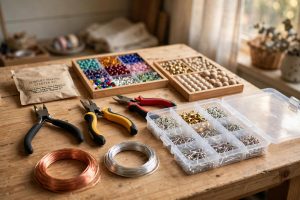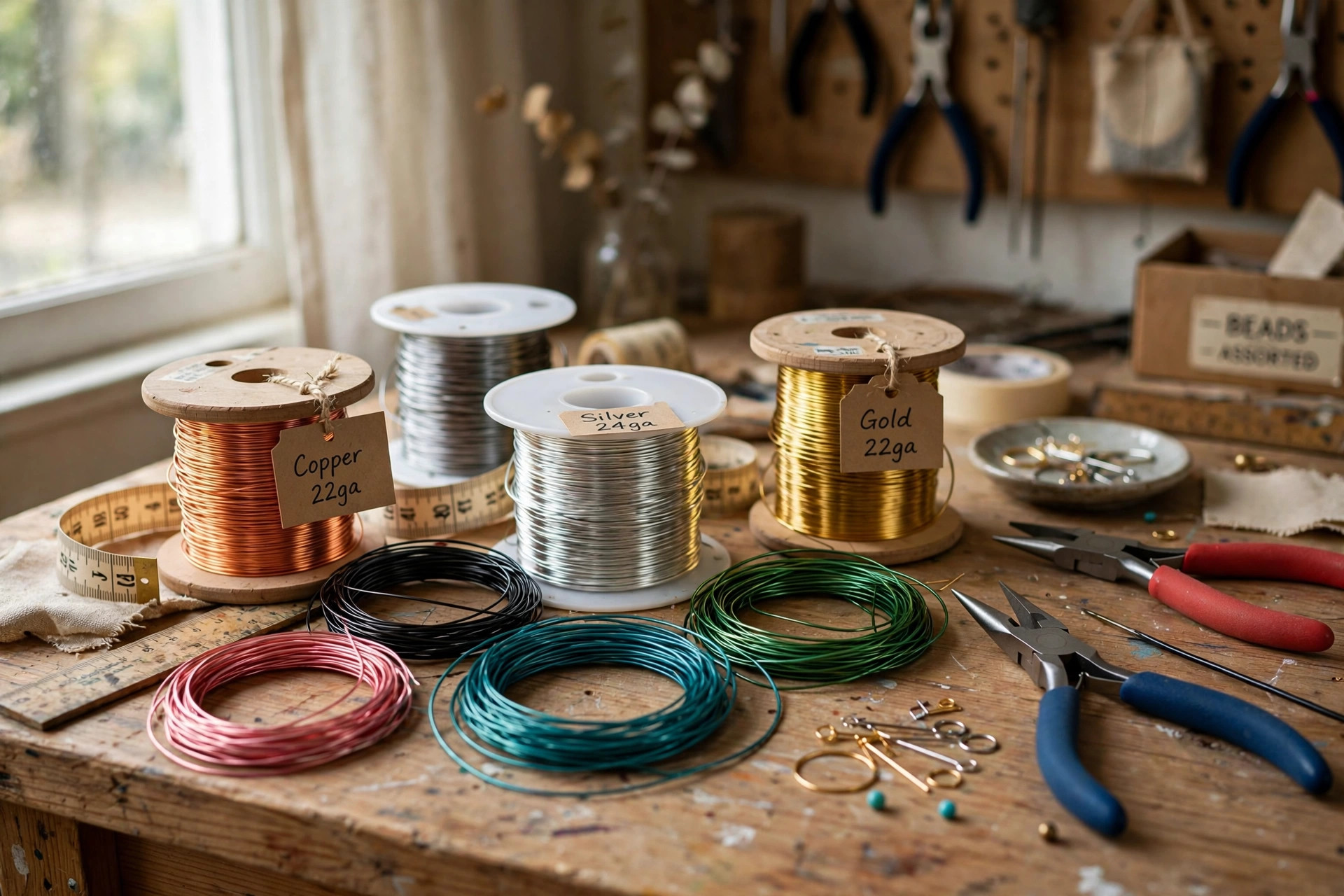

A spool of wire is one of the simplest tools a maker can own. Yet finding the best craft wire for jewelry and sculptures takes more care than most beginners expect. Wire comes in many metals, thicknesses, and tempers. Each one bends, holds, and tarnishes in its own way. A wire that works well for a necklace may fail in a sculpture. A wire that suits a sculpture may ruin a pair of earrings. This guide explains the differences in plain terms. It will help you choose the right wire for the work you want to do.
Why the Right Wire Matters
Wire is the frame of many handmade pieces. In jewelry, wire holds beads in place, forms clasps, and shapes ear hooks. In sculpture, wire builds armatures, supports weight, and gives form to the final shape. When the wire is wrong, the work suffers. Soft wire bends under pressure. Stiff wire breaks when bent too far. Some metals darken the skin. Some metals react with each other and cause corrosion.
The right wire saves time and money. It lets you work at a steady pace. It holds its shape after years of wear. Many makers start with the cheapest wire on the shelf. They soon learn that a few extra dollars buys wire that is far easier to use. The Michaels site lists hundreds of wire options, and the variety can feel daunting at first. A short list of facts will clear the confusion.
What to Look for When You Choose Wire: Best Craft Wire for Jewelry and Sculptures
Metal
The metal sets the color, strength, and price. Copper is soft, warm in color, and cheap. It is a fine choice for practice and for casual jewelry. Aluminum is light, bends with ease, and does not tarnish. It suits large sculptures where weight is a concern. Steel is strong and springy. It holds heavy work but is hard on the hands. Sterling silver is the standard for fine jewelry. It is soft to work, polishes to a bright shine, and sells at a higher price. Gold-filled wire has a thick layer of gold over a brass core. It looks like solid gold and lasts far longer than plain plated wire.
Gauge
Wire thickness is measured in gauge. The numbers run in reverse. A low number means thick wire. A high number means thin wire. Wire of 16 gauge is sturdy and holds shape in a bracelet frame. Wire of 24 gauge is fine and suits bead weaving. For most jewelry work, 18 to 24 gauge covers the need. For sculpture armatures, 12 to 18 gauge gives the right mix of strength and bend. Always check the gauge before you buy. Two spools can look alike and differ by a great deal.
Temper
Temper describes how soft or hard the wire is. Dead soft wire bends with a light touch. It suits wire wrapping and curved designs. Half hard wire holds its shape well. It suits hooks, clasps, and frames. Full hard wire is stiff and resists bending. Most craft stores sell dead soft and half hard wire. Beginners do well with half hard. It bends without force and still holds its form.
Finish and Coating
Some wire has a colored coating. Craft wire often comes in enamel colors. The coating lets makers add color without enamel paint. Check the coating with care. Cheap enamel can chip when the wire is bent. Look for wire rated for repeated bending. Silver and copper wire can be bought bare. Bare metal will change color over time. That change is normal. It can be polished away with a soft cloth.
Types of Wire and What They Suit
Copper Wire
Copper is the best place to begin. It costs little. It bends with ease. It takes a fine polish. Copper wire in 18 and 20 gauge serves for most jewelry frames. Thicker copper, around 14 gauge, works for small sculpture armatures. One fault of copper is tarnish. It darkens in the air. Some makers like the dark look. Others seal it with a clear coat. When you buy tools for wire work, a good best jewelry pliers set for wire wrapping makes copper far easier to shape.
Sterling Silver Wire
Sterling silver is the choice for jewelry meant to last. It is an alloy of silver and copper. It works with ease and takes a bright shine. Round wire is the most common form. Square and half round forms serve for special designs. Sterling silver costs far more than copper. Buy it after you have practiced with copper. That way your mistakes cost less.
Gold-Filled Wire
Gold-filled wire has a layer of gold bonded to a brass core. The gold layer is thick. It will not wear off with normal use. Gold-filled wire works much like brass. It costs more than copper but far less than solid gold. It suits earrings and clasps. It suits any part of a piece that touches the skin. Skin oil can harm cheap plated wire. Gold-filled wire resists that harm.
Aluminum Wire
Aluminum is the lightest common wire. It bends with very little force. It never tarnishes. These traits make it the top pick for large sculptures. An armature of aluminum holds plaster and paper mache with ease. It also suits outdoor garden sculptures that face the rain. The fault of aluminum is softness. It dents and bends out of shape with a knock. Keep finished pieces where they will not be bumped.
Steel and Memory Wire
Steel wire is strong and springy. It suits frames that must carry weight. It suits stone-set pieces and heavy pendants. Steel is hard to bend. It needs strong pliers and a firm hand. Memory wire is a steel alloy shaped into coils. It springs back to its coil form. It is made for bracelets and rings. You do not bend it to shape. You cut a loop, add beads, and turn the ends. Memory wire is a fine project for a child or a beginner.
Beading Wire
Beading wire is a thin steel cable with a nylon coat. It is made for stringing beads. It is sold by the number of strands. More strands mean more flex and a smoother drape. Seven strands suit light necklaces. Nineteen or forty-nine strands suit heavy beads. Beading wire is not bent into shape. It is strung and crimped. For more on this kind of wire, see our guide to bead stringing wire for necklace making crafts.
How to Choose for Your Project
Start with the job at hand. A necklace of heavy glass beads needs strong wire. A wire tree sculpture needs wire that bends in loops with ease. A pair of ear hooks needs wire that is safe for the skin.
Match the gauge to the load. Heavy loads need thick wire. Thin loads can use fine wire. When in doubt, go one gauge thicker than you think. It is easier to hide thick wire than to repair a broken piece.
Match the metal to the use. Pieces worn on the skin need skin-safe metal. Sterling silver and gold-filled wire are the safe choices. Pure copper is safe for most people. Some people react to nickel. Avoid cheap wire with unknown plating for anything worn close to the skin.
Match the temper to the work. Wire wrapping needs dead soft wire. Hooks and clasps need half hard wire. Frames for sculpture need half hard or full hard wire. Many stores, such as Home Depot and JOANN, label temper on the package. If the label is missing, ask a clerk.
Keep a small stock of common sizes. A maker who does jewelry by hand does well with 18, 20, 22, and 24 gauge in copper. A sculptor does well with 12, 14, and 16 gauge in aluminum and steel. This small stock covers most daily work.
Cost and Price: What You Should Pay
Wire is sold by the spool, the coil, or the ounce. Copper craft wire is the cheapest. A spool of 20 gauge copper wire often costs between two and five dollars. Sterling silver wire is priced by the ounce. It follows the price of silver. It can cost ten to forty times as much as copper. Gold-filled wire sits between the two.
Do not judge wire by price alone. Cheap wire with thin enamel can chip. Cheap silver plate can wear through in a week. Read the label. Look for the metal, the gauge, and the temper. A fair price for good wire beats a low price for poor wire. The price ranges on this site are estimates for the United States market.
Buy in bulk when you find a wire you like. A large spool costs less per foot than a small one. Wire does not spoil if it is kept dry. A cool, dry drawer keeps wire in fine form for years.
Care and Upkeep
Wire needs little care. Keep it dry. Keep it out of direct sun. Store spools in their own bags or boxes. Loose wire can kink. A kink weakens the metal and shows in the work.
Clean metal wire with a soft cloth. A polishing cloth made for silver works well. Do not use harsh cleaners on coated wire. Harsh cleaners can strip the color coat. Do not use steel wool on silver. It will scratch the shine.
Check finished pieces once a year. Look for thin spots where wire has rubbed. Look for loose ends. A small repair early saves a large repair later. Store finished jewelry in soft bags. Keep pieces apart so they do not scratch each other. Advice on craft upkeep from Bob Vila and This Old House covers many home projects, and the same habit of plain care applies to handmade work.
For larger sculpture armatures, check the joints. Wire can loosen where it is twisted. A firm twist with pliers keeps the frame tight. If a sculpture stands outdoors, choose aluminum or sealed steel. Bare steel will rust in the rain.
Safety in the Workroom
Wire work is safe when done with care. Still, a few rules apply. Wear safety glasses when you cut springy wire. Cut ends can fly. A short end of steel wire can scratch the eye. Many shop safety guides, such as those from Family Handyman, stress eye care in any craft that cuts metal.
Cut wire with the right tool. Use flush cutters for jewelry wire. Use heavy cutters for steel. Do not use household scissors. They will dull and fail. Never bite wire with your teeth. That is an old habit and a poor one.
Bend wire away from your face. Hold the piece with pliers, not with bare fingers, when you make a hard bend. Take breaks. Wire work strains the hands and wrists. A tired hand makes slips more likely.
Keep wire away from children and pets. Short cut ends are sharp. Small coils can be a choke risk. Work in a clear space. Sweep the floor when you are done.
Some people have metal allergies. Nickel is the most common cause. If a wearer gets a rash from a piece, the metal is the likely cause. Use nickel-free wire for skin contact. Sterling silver, gold-filled wire, and pure copper are safe for most wearers.
Frequently Asked Questions
What is the best wire gauge for making earrings?
Most earrings use 20 or 22 gauge wire. Ear hooks use 20 gauge half hard wire. It holds its curve and feels firm in the ear. Dangles and bead links use 22 gauge. That size is fine and still strong enough for beads. Always use skin-safe metal for earrings.
Can I use copper wire for outdoor sculptures?
Yes, with care. Copper stands up to weather well. It will form a green patina over time. Many artists like that look. For a large frame, use thick copper wire or a steel core with copper skin. Sealed wire lasts longer. Bare steel rusts and should be avoided outdoors.
What is the difference between craft wire and jewelry wire?
The words overlap. Craft wire often means coated base metal wire sold for general craft work. Jewelry wire often means higher-grade wire sold for wearable pieces. The real test is the label. Check the metal, the gauge, and the temper. A good craft wire can serve for jewelry. A poor jewelry wire is not worth the price.
How do I keep wire from kinking as I work?
Pull wire from the spool with care. Do not let the free end whip around. Work with short lengths. A length of one to two feet is easy to control. When wire kinks, draw it through a soft cloth with firm, even pressure. That straightens most kinks. Throw away wire that is deeply kinked. It is weakened and will break.
Is gold-filled wire worth the extra cost?
For pieces worn on the skin, yes. Gold-filled wire keeps its color for years. Cheap plated wire can wear through in weeks. The extra cost is small next to the price of your time. For practice pieces and for work that no one wears, copper is the better buy.
Where can I learn more wire techniques?
Craft stores and art suppliers publish free guides. BLICK Art Materials has guides on wire sculpture for students. Jewelry supply houses such as Fire Mountain Gems and Rio Grande publish project sheets with clear steps. General stores such as Walmart sell starter kits for beginners. If you want to go deeper into wrapped designs, read our guide to best jewelry wire for wrapping and beading.
A Short Final Word
The best craft wire for jewelry and sculptures is not one product. It is the right wire for the job at hand. Copper serves the beginner well. Sterling silver serves fine jewelry. Aluminum serves large, light sculpture. Steel serves heavy frames. Buy by metal, gauge, and temper. Keep a small stock of common sizes. Work with care and keep your tools sharp. With those habits, a humble spool of wire can turn into years of fine work.
References
Blick Art Materials. (n.d.). Art and craft supplies. https://www.dickblick.com Bob Vila. (n.d.). Home improvement advice. https://www.bobvila.com Family Handyman. (n.d.). DIY home repair and maintenance. https://www.familyhandyman.com Fire Mountain Gems and Beads. (n.d.). Jewelry making supplies. https://www.firemountaingems.com JOANN. (n.d.). Fabric and craft supplies. https://www.joann.com Michaels. (n.d.). Arts and crafts supplies. https://www.michaels.com Rio Grande. (n.d.). Jewelry making tools and supplies. https://www.riogrande.com The Home Depot. (n.d.). Home improvement products. https://www.homedepot.com This Old House. (n.d.). Home renovation guidance. https://www.thisoldhouse.com Walmart. (n.d.). Everyday low prices. https://www.walmart.com
Was this guide helpful?

About Robert Taylor
The My Garden US editorial team writes practical, in-depth home and garden guides for American homeowners — tested advice, no fluff.
You May Also Like

The Best Craft Table Foldable for Small Apartments: A Practical Guide
February 19, 2026 0 views
DIY Flower Arrangement Kit for Home Decor: A Practical Guide
July 18, 2026 0 views
DIY String Art Kit for Wall Decor Beginners: A Complete Guide
June 1, 2026 0 views