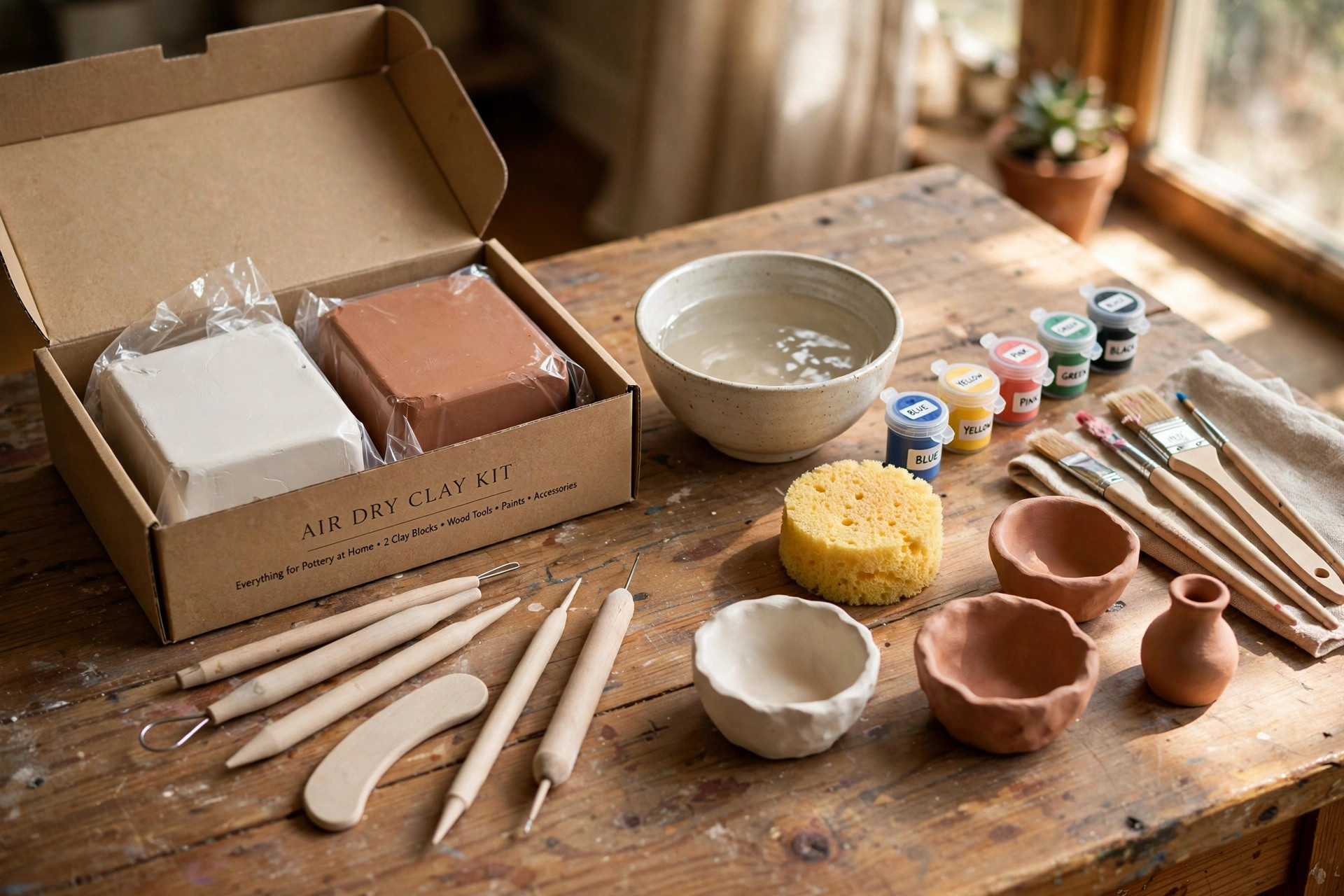

An air dry clay kit for pottery at home is the easiest way to try pottery without a kiln. The clay dries hard in plain room air. You do not need a furnace or special wiring. You do not need a studio. You shape the clay on a table, let it dry for a day or two, and then paint it or seal it. That simple process has made these kits one of the most loved craft sets in American homes.
Many people want to make pottery but feel held back by cost. A kiln costs hundreds or thousands of dollars. Classes cost money every month. An air dry clay kit for pottery at home removes that barrier. A good kit costs less than a family dinner out. It holds enough clay for many small projects. It comes with tools, paints, and clear steps. A child of eight can use it. A retired adult can use it. Anyone with a table and a free afternoon can use it.
This guide will walk you through the whole matter: why an air dry clay kit for pottery at home is worth your time, how to pick a good one, the types on the market, fair prices, and how to keep the clay fresh and your finished pieces strong. Answers to common questions sit at the end.
Why an Air Dry Clay Kit for Pottery at Home Matters
A kit makes the start simple. Buying clay, tools, and paints one by one is confusing. An air dry clay kit for pottery at home puts the right items in one box. The clay is matched to the tools. The paints are matched to the clay. The guide book is matched to the projects. You open the box and you begin.
The kit also helps families spend time together. A parent and child can shape small bowls side by side. The finished pieces become gifts: a hand-made mug for a grandmother, a small vase for a desk. These gifts carry more heart than store-bought goods.
There is also a practical side. Learning to shape clay teaches skill that transfers to real pottery. Many hobby potters started with air dry clay. They learned to center, to pinch, to coil. Later they moved to wheel work and kilns. The kit is a low-risk first step. If you love it, you can go further. If you do not, you have lost little.
What to Look for When You Choose a Kit: Air Dry Clay Kit for Pottery At Home
Not all kits are equal. Some are rich and well made. Some are cheap and thin. A little care in shopping saves disappointment. Read the points below before you buy.
Check the Clay Weight and Type
The heart of the kit is the clay. A good kit should hold at least two pounds of clay, enough for six to ten small projects. Some large kits hold five pounds or more, which suits a classroom or a busy hobbyist.
Air dry clay comes in a few types. Earthen-based clay feels like real pottery clay and dries to a stone-like gray or white. Paper-based clay is lighter, dries faster, and suits ornaments and small figures. Earthen-based clay gives the most true pottery feel. The clay should be soft out of the pack and knead smooth in a minute. If reviews say the clay arrives dry or cracked, choose another brand.
Look at the Tools Included
A solid air dry clay kit for pottery at home includes shaping tools: a wire cutter, wooden shaping sticks, a sponge, a rolling pin or dowel, ribbon tools for fine lines, and a needle tool for scoring joints.
Some kits add molds for even bowls and plates, or stamps for surface texture. Count the tools and weigh them against the price. A kit with twelve to twenty tools is a strong value.
Check Paints, Brushes, and Sealer
Most projects look plain until they are painted. Good kits include acrylic paints made for clay. Twelve colors is a common count. Check that brushes are included in at least three sizes: fine, medium, and flat.
A sealer matters too. Air dry clay is not waterproof on its own. A coat of sealer or varnish protects the surface. Some sealers are matte. Some are gloss. Make sure the kit includes one, or plan to buy one. Stores like Michaels and Joann carry many sealers that work well with air dry clay.
Read the Guide and Project Ideas
The best kits teach. They include a printed guide with photos that shows how to knead, roll, join, and smooth, plus step-by-step plans for three or more projects. A common set is a pinch pot, a coil vase, and a slab plate. These three teach every basic skill. Avoid kits with no guide at all. Beginners need direction.
Types and Options on the Market
Kits differ by user and by purpose. Pick the type that fits your need.
Beginner all-in-one kits. These are the most common. They hold clay, tools, paints, brushes, and a guide. They suit adults and older children trying pottery for the first time. Quality varies, so read reviews.
Kids’ kits. These are made for small hands. The clay is extra soft and the tools are blunt and safe. Projects are simple: animals, beads, small dishes. Parents should still watch young children. Craft experts at Dick Blick note that kids’ clay lines often use non-toxic formulas, which is a key thing to check on the label.
Deluxe and studio kits. These hold more clay, often five to ten pounds, with pro-grade tools and a wide paint range. They suit serious hobbyists and small classes. The price is higher, but the per-project cost is low.
Mini and travel kits. These are small boxes with one or two pounds of clay and a few tools. They suit gifts and travel, and are fine for a first test.
Specialty kits. Some kits focus on one project type. There are mug kits, planter kits, and ornament kits. These are good if you know what you want to make. They often include shaped molds that speed the work.
Cost and Price: What Is Fair
Small starter kits with one to two pounds of clay cost about ten to twenty dollars. Mid-size kits with three to five pounds and full tools cost about twenty to forty dollars. Large deluxe kits can cost forty to seventy dollars.
Price alone does not tell quality. A fifteen-dollar kit with fresh clay and a clear guide beats a forty-dollar kit with stale clay. Read buyer reviews. Look for comments about clay freshness, tool strength, and paint quality. Shoppers often compare value on The Spruce, which tests craft products for home use.
Watch for hidden costs. You will need a work surface cover, a bowl of water, and old towels. You may want extra sealer and refill clay. Refill packs of air dry clay cost about eight to fifteen dollars for two pounds. Retailers such as Home Depot stock refill clay in many stores.
Sales happen often. Craft stores run coupons and holiday sales. Buying during a sale can cut the price by a third or more. For general project planning and home craft budgeting, Bob Vila offers solid cost guides.
How to Use Your Kit: A Simple Method
Open the kit and lay out the parts. Cover your table with a plastic sheet. Fill a small bowl with water. Wash and dry your hands.
Take a lump of clay about the size of an orange. Knead it for two minutes. Press, fold, and turn. This wakes the clay and removes air pockets, which can cause cracks as the clay dries.
Shape your piece. For a pinch pot, roll a ball and press your thumb into the center. Pinch the walls up and around. For a coil vase, roll long snakes of clay, stack them in rings, and smooth the joints. For a slab plate, cut a circle with the cutting tool and press up the edges.
Join pieces with slip and score. Slip is clay mixed with water to a paste. Score means scratching small lines on both surfaces. Paint slip on the scored areas and press together. This joint holds strong when dry.
Smooth the surface with a damp sponge, then let the piece dry slowly. Turn it once a day so all sides dry even. Small pieces dry in one to two days. Thick pieces may need three to five days. Keep the piece out of direct sun and away from heat vents. Fast drying causes cracks.
When the clay is fully dry, paint it and let the paint dry. Then brush on the sealer. Two thin coats are better than one thick coat. Your piece is now done.
Care and Upkeep of Clay and Finished Pieces
Unopened clay keeps for many months in its sealed pack. Store it in a cool room. Keep it away from heat. Once opened, wrap leftover clay tight in plastic wrap. Press out all air. Put the wrapped clay in a zip bag. Use it within a few weeks. If the surface feels dry, knead in a few drops of water.
Clean tools after each use. Rinse them in warm water before the clay hardens on them. Dry them fully. Store them in the kit box so they do not get lost.
Finished pieces need gentle care. Air dry clay is strong but not as hard as kiln-fired pottery. It can chip if dropped. Treat these pieces as decorative. Use them for dry goods, keys, plants, or display. Wipe them with a dry or damp cloth. Do not soak them in a sink. Keep finished pieces out of long sun exposure, since sun can fade paint over time. For advice on long-term care of home craft items, This Old House publishes useful upkeep guides.
Safety First
Air dry clay is safe for most users when used with care. Still, follow these rules.
Buy clay labeled non-toxic. This matters most for children. Check the box for an AP seal or a clear non-toxic claim. Do not let small children eat the clay. Keep small tools away from toddlers. Work in a room with fresh air, and open a window when you paint and seal.
Wash hands after working. Clay dust can dry the skin. A little lotion helps. Keep clay out of eyes. If clay gets in the eyes, rinse with clean water.
Protect your table and floor. Clay stains some wood and cloth. Use a plastic cover every time. Wipe spills fast. Do not use air dry clay pieces for hot food or drink. They are not fired. Heat and moisture can break them down. Label gift pieces as decorative if you are unsure. Home and craft safety overviews from Good Housekeeping echo this guidance for handmade goods.
Frequently Asked Questions
How long does air dry clay take to dry? Most small pieces dry in 24 to 48 hours. Thick pieces can take up to five days. Turn the piece daily for even drying. The clay is done when it feels hard and cool all the way through.
Do I need a kiln for an air dry clay kit for pottery at home? No. That is the main point of the kit. The clay hardens in plain air. A kiln would ruin it. You shape, dry, paint, and seal at home with no special equipment.
Is air dry clay waterproof? Not on its own. It will soften if soaked in water. A coat of sealer or varnish makes it resist splashes and dust. Even sealed, it is best kept dry. Use finished pieces for dry items or display.
Can children use these kits? Yes, with adult watch. Many kits are made for ages six and up. Choose clay labeled non-toxic. Keep small tools and paints away from very young children. Cover clothes and the table, since paint stains.
Why did my piece crack while drying? Cracks come from fast or uneven drying. To stop them, dry the piece slowly away from heat and sun, and turn it each day. If a small crack appears, fill it with fresh slip and smooth it before the piece is fully dry.
Can I paint air dry clay with any paint? Acrylic paint works best. It sticks well and dries bright, and most kits include it. Always let the clay dry fully before painting, and seal the paint after with a clear sealer for best wear.
A Short Final Word
An air dry clay kit for pottery at home is a small box with a big promise. It brings one of the oldest human crafts to your kitchen table. It asks little: a flat surface, some water, a free hour. It gives much: calm hands, a learning mind, and pieces you made yourself.
Start simple. Make a pinch pot. Then a small bowl. Then a vase. Each piece teaches your hands something new. Share the work with family and friends.
Shoppers exploring the wider craft world may also enjoy other hands-on kits. A leather crafting tools kit for beginners usa teaches cutting and stitching. A diy slime kit for kids crafts safe usa brings safe fun for young makers. And for a cozy winter craft, the best yarn for knitting sweaters warm usa is a natural next step. For more craft supply ideas, Crayola offers a wide range of family-friendly products.
Pick a kit with fresh clay, solid tools, and a clear guide. Treat the process with patience. Your hands will thank you.
References
Blick Art Materials. (n.d.). Art and craft supplies. https://www.dickblick.com Bob Vila. (n.d.). Home improvement advice. https://www.bobvila.com Crayola. (n.d.). Creative products for families. https://www.crayola.com Good Housekeeping. (n.d.). Product reviews and home advice. https://www.goodhousekeeping.com JOANN. (n.d.). Fabric and craft supplies. https://www.joann.com Michaels. (n.d.). Arts and crafts supplies. https://www.michaels.com The Home Depot. (n.d.). Home improvement products. https://www.homedepot.com The Spruce. (n.d.). Home and garden advice. https://www.thespruce.com This Old House. (n.d.). Home renovation guidance. https://www.thisoldhouse.com
Was this guide helpful?

About David Wilson
The My Garden US editorial team writes practical, in-depth home and garden guides for American homeowners — tested advice, no fluff.
You May Also Like
The Best Craft Glue for Paper and Cardstock: A Practical Guide
May 26, 2026 0 views
Macrame Wall Hanging Kit Large for Living Room: A Complete Guide to Handmade Wall Art
May 18, 2026 0 views
The Best Craft Paper Pack for Scrapbooking in the USA
August 23, 2026 0 views