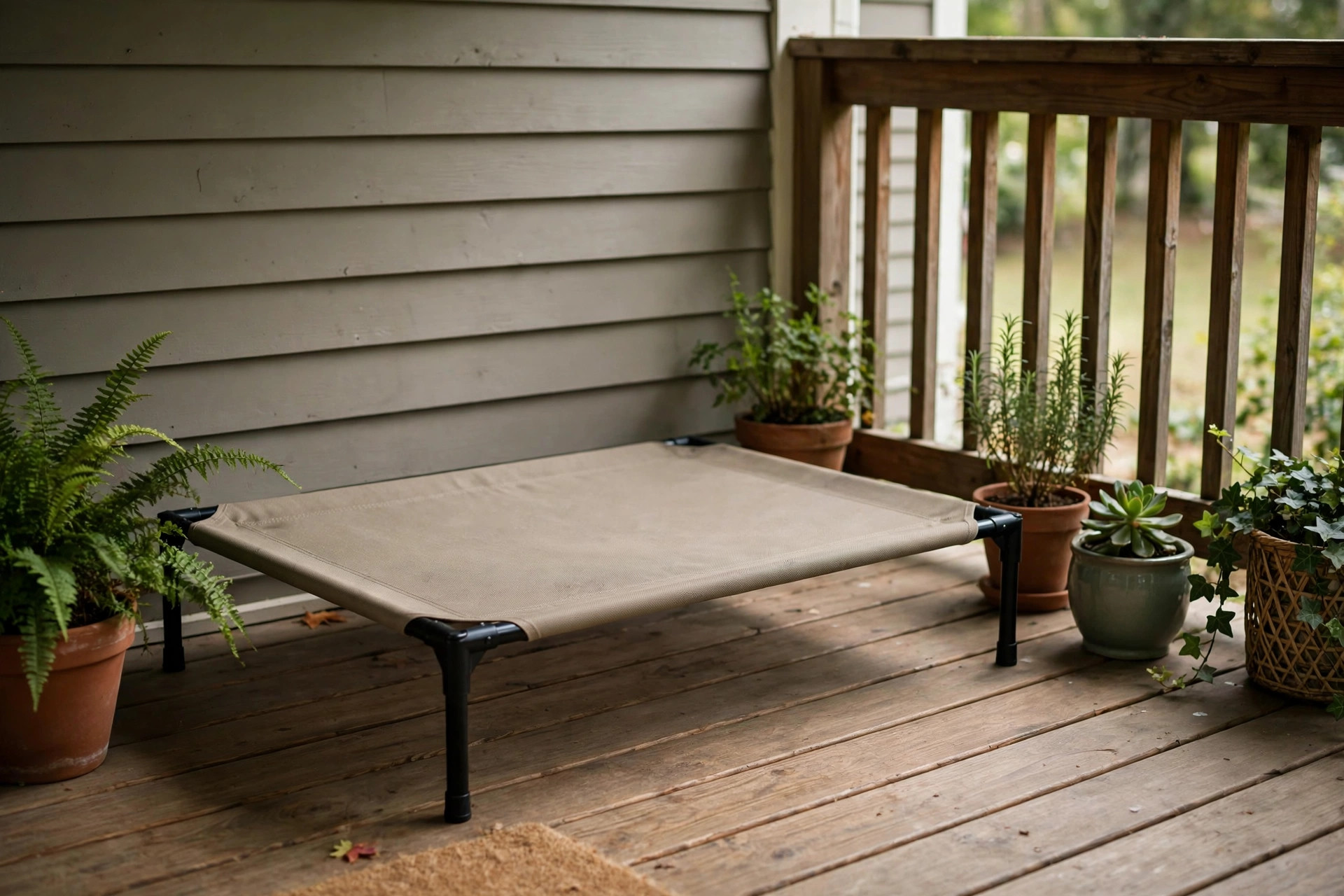

The best outdoor pet bed for porch lounging gives your pet a cool and clean place to rest outside the house. Dogs and cats love to sit on the porch. They watch the street. They feel the breeze. They stay near the family. A good outdoor bed makes that time safe and comfortable. This guide will help you pick the right bed for your pet and your porch.
Why It Matters
Pets spend many hours each day resting. A porch is often their favorite spot. It is close to the house. It has shade and fresh air. But a bare wood or concrete porch floor is hard on joints. It can be hot in summer and cold in spring and fall. A wet floor can leave your pet damp and chilled.
A proper outdoor pet bed solves these problems. It lifts your pet off the hard surface. It keeps them dry when rain blows in under the roof. It stays cool in heat and dries fast after a wash. Older pets with stiff joints feel the difference most of all. A soft, firm bed lets them get up and lie down with less pain.
What to Look for When You Choose: Best Outdoor Pet Bed for Porch Lounging
Choosing the best outdoor pet bed for porch lounging starts with a few simple checks. First, look at the size. Measure your pet from nose to tail while they lie on their side. Add six inches on each side. That is the right bed size. A bed that is too small will curl your pet up. A bed that is too large wastes porch space.
Next, check the material. The best outdoor beds use fabrics that fight water and sun. Look for words like water resistant, weatherproof, and UV stable on the tag. Mesh fabrics work well for summer. Air moves through them. The bed stays cool. Solid canvas fabrics work well for cooler months. They block the wind.
The frame matters too. Many porch beds use a raised cot design. The sleeping surface sits a few inches above the porch floor. This keeps your pet away from damp boards. It also lets air flow under the bed. A raised design is easier to clean. You can sweep or hose under it.
Look at the legs and frame strength. Cheap frames bend under a large dog. Metal or strong plastic frames hold up better. Check the weight limit on the label. Pick a bed rated above your pet’s weight.
Removable covers are a big help. A cover that comes off with a zipper can go in the washing machine. This keeps the bed fresh. It also helps if your pet has fleas or allergies. Wash the cover often in warm water.
Also think about the porch itself. A bed placed near a wall stays drier than one near the open edge. Wind drives rain under a roof edge, so a few extra feet of distance can keep the bed dry. If your porch gets morning sun, place the bed where it will be in shade by noon. Sun wears out fabric faster than almost anything else. Dark fabrics fade and weaken sooner than light ones, so a light gray or tan bed is often the best pick for a sunny porch. Finally, check the underside of the bed each month. Mold and mildew can start where air does not move. A quick wipe with a damp cloth stops the problem early.
Types and Options
There are several common types of outdoor pet beds. Each type fits a different pet and porch.
Raised Cot Beds
A raised cot bed is the most common choice for porch lounging. The fabric is stretched tight across a frame. Your pet sleeps a few inches off the floor. These beds stay cool in hot weather. They dry fast after rain. Many owners choose this style for large dogs because it supports heavy weight without sinking. For more on this style, see our guide to the best elevated dog bed for outdoor patio use.
Pillow and Cushion Beds
Pillow beds look like large flat cushions. They often have a water resistant shell with a soft fill inside. They sit right on the porch floor. They cost less than raised beds. They work well for small pets and for porches with a roof that keeps rain out. The fill can pack down over time. Fluff it often or replace the bed each year or two.
Bolster Beds
Bolster beds have raised sides around part or all of the edge. Pets that like to lean against something while they sleep love these beds. The raised edge gives a feeling of safety. Make sure the bolster is firm enough to hold its shape in heat. Cheap bolsters flatten fast.
Orthopedic Foam Beds
Older pets often need more joint support. An orthopedic bed uses thick foam instead of loose fill. The foam spreads the pet’s weight across the whole bed. This takes pressure off sore hips and elbows. Many orthopedic beds now come with weatherproof covers. Learn more in our guide to the best orthopedic dog bed for senior large dogs.
Cooling Beds
Cooling beds use special materials that pull heat away from the pet’s body. Some use a water filled core. Others use a gel pad. They help most in hot states like Texas, Florida, and Arizona. They are not needed in mild climates. Always read the care label. Some cooling cores cannot be put in the sun.
Cat Porch Beds
Cats like high, warm spots. A small raised bed or a shaded hammock bed on the porch suits them well. Cats also like beds with sides that hide them from view. If your cat spends time outside, a covered option can help. For cold weather shelter ideas, see our guide to a heated cat house for outdoor feral cats.
Cost and Price
Outdoor pet beds come in many price ranges. A simple pillow bed may cost fifteen to thirty dollars. A raised cot bed often costs thirty to sixty dollars. Large and extra large sizes cost more. Orthopedic foam beds run from forty to over one hundred dollars. Cooling beds fall in the middle, often thirty to seventy dollars.
Price is not always a sign of quality. Read the product details before you buy. Check the fabric type. Check the frame strength. Check the weight limit. A mid priced bed with a strong frame often lasts longer than a costly bed with a weak frame. Expect a good outdoor bed to last two to four seasons with regular cleaning.
Watch for sales at large pet stores and home stores. Retailers such as Chewy, PetSmart, Petco, Walmart, and Home Depot often cut prices in late summer and fall. Buying in the off season can save real money.
Care and Upkeep
An outdoor bed needs care to last. Shake or brush off dirt and hair every few days. Most raised beds can be hosed down. Let the bed dry fully before your pet uses it again. Damp fabric can grow mold and smell.
Wash removable covers in the machine once a month, or more often if your pet sheds a lot. Use mild soap and warm water. Skip strong bleach. It can break down weatherproof coatings. Check the label for exact washing rules.
Store the bed under the porch roof during heavy storms if you can. A roof blocks most rain, but wind can blow water sideways. In winter, bring the bed inside or into a shed. Cold and ice can crack plastic frames and stiffen fabric. With care, a good bed will serve your pet for several years.
Check the stitching twice a year. The seams take the most stress, and a small tear grows fast once it starts. If you see a loose seam, sew it or replace the bed before a paw gets caught in the gap. Metal frames may develop rust spots at the joints. Rub the spots with a dry cloth and a little oil to stop rust from spreading. Plastic frames need less care but can crack in freezing cold, so bring them inside before the first hard freeze.
Safety
Safety comes first with any outdoor bed. Make sure the frame has no sharp edges or loose screws. Check the bed once a month for wear. Torn fabric can trap a paw. A bent leg can tip over.
Keep the bed out of full afternoon sun in hot climates. Even a weatherproof bed can get too hot to touch in direct sun. Place it in shade. Make sure fresh water is always near your pet on the porch. A pet can overheat fast on a still, humid day.
Never leave a very young puppy or a very old pet on the porch for long hours alone. Watch for signs of heat stress. Heavy panting, drool, and weakness are warning signs. Bring your pet inside at once if you see them.
Pet health experts note that outdoor rest areas should always be clean, shaded, and free of pests. Groups such as the ASPCA and the American Kennel Club publish general guidance on safe outdoor care for dogs. For advice on joint health and heat, your vet and sites like PetMD and The Spruce Pets are useful starting points.
FAQ
What is the best outdoor pet bed for porch lounging in hot weather?
A raised cot bed with mesh fabric is usually best in heat. Air flows under and through it. The bed stays cooler than a solid cushion. Place it in shade and keep water near.
Can an outdoor pet bed stay outside all year?
Most can, but they last longer with some care. Bring the bed under cover during heavy rain and storms. Store it inside during winter if you live in a cold state. Freezing water can damage fabric and frames.
How do I clean an outdoor pet bed?
Brush off loose dirt first. Hose down the frame and fabric. For deep cleaning, remove the cover and wash it in the machine with mild soap. Let everything dry fully before use.
What size bed does my dog need?
Measure your dog lying flat on one side. Add six inches to the length and width. That gives enough room to stretch. Large breeds need a bed rated for their weight. Check the label before you buy.
Are raised beds good for old dogs?
Yes. A raised bed is easier for a stiff dog to get on and off than a low pillow on the floor. Look for a model with a firm surface and a strong frame. An orthopedic foam bed with a weatherproof cover is another good choice for senior dogs.
Do outdoor beds work for cats too?
Yes. Cats enjoy porch beds, though they often prefer small, raised spots with sides to lean on. Pick a cat sized bed. Keep it in a calm corner of the porch where the cat feels safe.
A Short Final Word
The best outdoor pet bed for porch lounging is the one that fits your pet, your porch, and your climate. Measure first. Pick weatherproof fabric. Choose a strong frame. Keep the bed clean and in the shade. Do that, and your pet will have a safe, cool spot to rest while the family enjoys the porch together. A small effort now pays back in comfort for years.
References
American Kennel Club. (n.d.). Dog care and training resources. https://www.akc.org ASPCA. (n.d.). Pet care and animal welfare resources. https://www.aspca.org Chewy. (n.d.). Pet supplies. https://www.chewy.com Petco. (n.d.). Pet supplies and services. https://www.petco.com PetMD. (n.d.). Pet health information. https://www.petmd.com PetSmart. (n.d.). Pet supplies and services. https://www.petsmart.com The Home Depot. (n.d.). Home improvement products. https://www.homedepot.com The Spruce Pets. (n.d.). Pet care guides and product reviews. https://www.thesprucepets.com Walmart. (n.d.). Everyday low prices. https://www.walmart.com
Was this guide helpful?

About David Wilson
The My Garden US editorial team writes practical, in-depth home and garden guides for American homeowners — tested advice, no fluff.
You May Also Like

Heated Outdoor Water Bowl for Winter Pets: A Practical Guide
August 19, 2026 0 views
Best Dog Whistle for Recall Training Hunting: A Plain Field Guide
September 16, 2026 0 views
Best Pet Camera With Treat Dispenser WiFi: A Buyer’s Guide
March 29, 2026 0 views