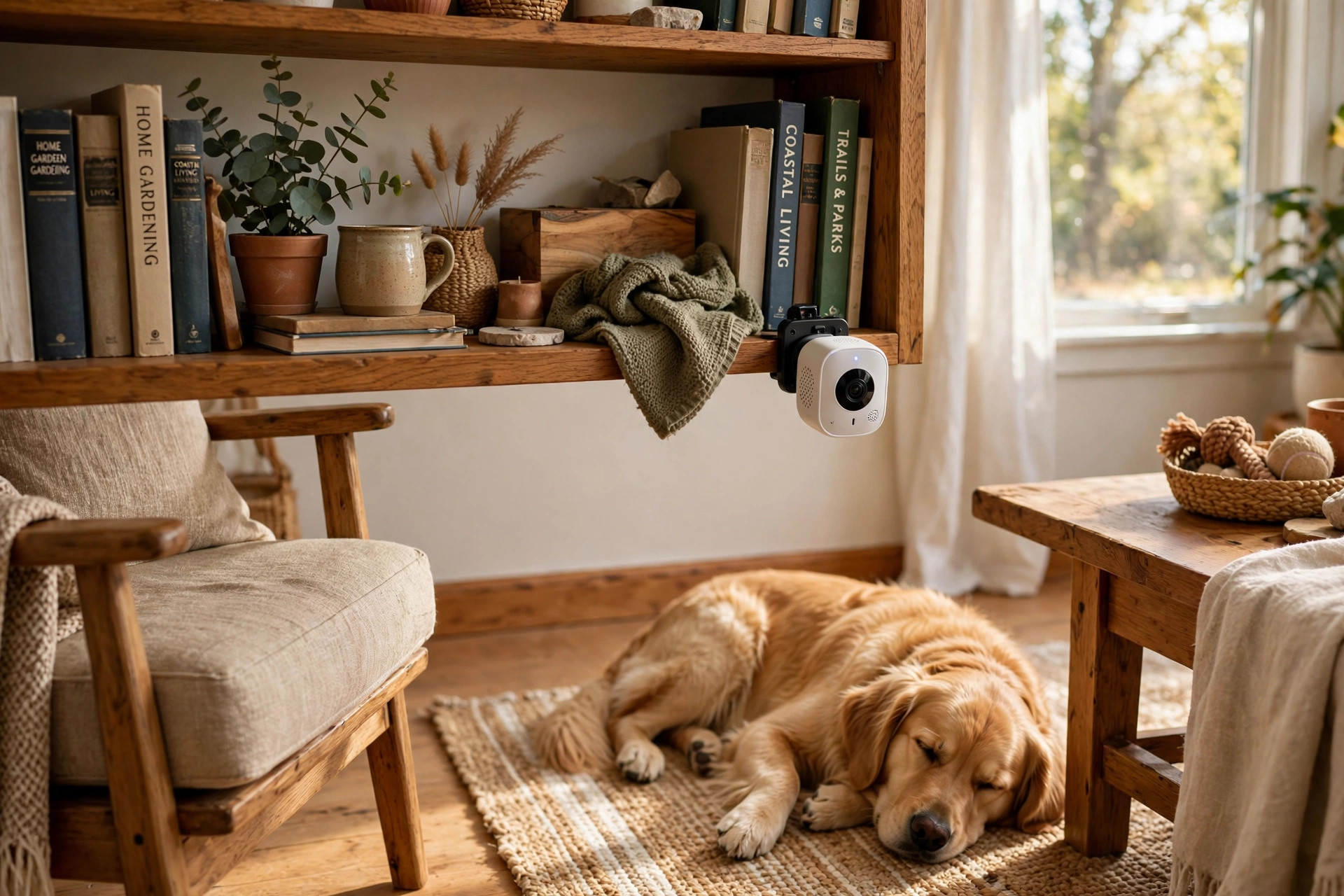

Many working people leave their dogs at home for eight or nine hours a day. The best pet camera for watching dogs at work gives owners a clear window into those long hours. It lets you see your dog from your desk or your phone. You can check on an old dog, a new puppy, or a rescue that is still learning to feel safe at home.
This guide explains what a pet camera does, which features matter most, how much one should cost, and how to set it up well. It is written in plain words. You do not need any technical background to follow it. By the end, you will know how to pick the best pet camera for watching dogs at work for your own house, your own dog, and your own budget.
Why a Pet Camera Matters for Working Dog Owners
A dog left alone can feel restless. Some dogs bark at the door for an hour. Some scratch at the window. Some chew shoes or cushions out of boredom. Others simply sleep the day away with no trouble at all. Without a camera, you only see the result of the day when you come home. With one, you see the day as it happens.
The best pet camera for watching dogs at work does more than show video. It records sound. It can send a motion alert when your dog gets up and moves. Some models let you speak through the camera, so your dog can hear your voice at lunch time. Some toss a small treat to reward calm behavior. These small tools help owners feel close to their dogs even from far away.
A camera also helps you learn your dog’s habits. You may find that your dog naps until noon, then gets restless. That tells you a midday walk or a puzzle toy might help. You may hear barking at the same hour each day and find that the mail truck passes at that time. Small facts like these help you solve problems instead of guessing at them.
There is a deeper value too. Many owners worry while they are at work. They wonder if the dog is lonely or scared. A quick look on the phone settles that worry. As veterinary guidance on PetMD notes, keeping stress low matters for a dog’s health, and a calm routine is one of the best ways to do it. A camera cannot replace a walk or a cuddle, but it can confirm that the day is going well.
What to Look for When You Choose a Dog Camera: Best Pet Camera for Watching Dogs At Work
Not all cameras are built for dogs. A plain security camera shows video, but a true pet camera is made for animal watching. Look for the features below before you buy.
Clear Video, Day and Night
The best pet camera for watching dogs at work shows a clear picture in full daylight and in a dark room. Dogs move fast. A camera with at least 1080p resolution and a wide lens keeps up with them. Night vision matters too. In winter, your dog may spend the late afternoon in a dim house. Infrared night vision lets you see clearly without turning on every lamp. Some cameras switch to night mode on their own when the light fades.
Two-Way Sound
Two-way audio means the camera has both a microphone and a speaker. You hear your dog, and your dog hears you. A calm word through the speaker can settle a barking dog. It can also backfire: some dogs get more upset when they hear your voice but cannot find you. Test this on a quiet day first. Watch the reaction. If your dog relaxes, use it often. If your dog paces or whines, keep voice use rare and short. Pet behavior experts at The Spruce Pets suggest that short, calm cues work better than long streams of talk.
Motion Alerts and Smart Notices
Motion alerts are messages sent to your phone when the camera sees movement. Good pet cameras tell the difference between a dog walking past and a shadow moving on the wall. Some even mark barking sounds as separate alerts. You can set quiet hours too, so the camera does not ping you during the hours your dog always naps. Look for an app that lets you draw zones, so the camera only watches the couch area and ignores the hallway.
Treat Tossing
Some pet cameras hold small treats and toss one when you press a button in the app. This is a simple reward for calm behavior. It also gives a nervous dog something good to look forward to during the day. Check the treat size the camera takes. Hard round biscuits often jam. Soft small chews work best. If your dog needs meals on a schedule, an automatic pet feeder for dogs with camera can serve food and record video at the same time.
A Steady, Simple App
The camera is only as good as its app. Before you buy, read reviews of the app on the phone store. Look for recent updates. Old apps crash. New ones get fixed. The app should open the live view in a few seconds. It should let you save short clips. It should not force you to buy a monthly plan just to see the basic live feed. Many well-reviewed cameras let you watch live for free and charge only for cloud recording.
The Main Types of Pet Cameras
Pet cameras fall into a few clear groups. Each group suits a different kind of owner and dog.
Basic Indoor Cameras
These are small cameras made for one room. They cost the least. They show video and record sound. Many have night vision and two-way talk. They are a good start for a owner who only needs to watch one room. Place one in the room where your dog spends most of the day. A small camera on a shelf costs far less than you might expect, and many smart home products at Home Depot come from well-known camera brands.
Treat-Dispensing Cameras
These cameras hold and toss treats. They cost more than basic cameras. They are built for owners who want to reward calm behavior during the day. Some can sense barking and toss a treat only when the dog is quiet. Others let you press a button in the app. They are popular with owners of puppies and young dogs who are still learning house rules.
Feeder-Camera Combos
These are food bowls with a camera built in. They serve meals on a timer and record video at the same time. They suit owners who work long days and want their dog to eat on a set schedule. Some models let you watch your dog eat in real time and talk to the dog during the meal. For owners who like this idea, see our guide to the automatic pet feeder for dogs with camera for more detail.
Panning Cameras
A panning camera turns its lens left, right, up, and down. You can follow your dog from the couch to the door with one finger swipe. These cost more than fixed cameras. They are worth the money if your dog roams through several rooms. One panning camera can replace two fixed cameras in a small house.
Cameras With Tracking
Some newer cameras can lock onto a moving dog and follow it on their own. This is called auto tracking. It is helpful if you check in rarely and want to catch the key moments. Technology review sites such as CNET and PCMag test these tracking features and compare how well each model follows a fast-moving pet.
Cost and Price: What You Should Expect to Pay
Pet cameras cost less than most people think. Basic indoor cameras sell for about 30 to 80 dollars. They cover video, sound, night vision, and a simple app. Treat-dispensing cameras sell for about 100 to 200 dollars. Feeder-camera combos sell for about 150 to 250 dollars. Panning cameras with auto tracking sell for about 100 to 200 dollars.
The sticker price is only part of the cost. Some brands charge a monthly fee for cloud recording. The fee is often 3 to 10 dollars a month. Without the plan, you can still watch live, but saved clips may be limited to a few seconds. Other brands give free cloud storage for a short rolling window, such as the last three days of clips. Read the fine print before you buy. Consumer Reports often notes that the true cost of a smart device includes its monthly plan, not just the price on the box.
You can also buy a camera from a large pet store. Sites like Chewy stock many pet cameras with clear return policies, which helps if your dog knocks the camera off the shelf on the first day. Keep the box for two weeks. If the app fights with your phone, return the camera and try another model.
Do not pay for features you will not use. A single fixed camera is enough if your dog stays in one room. A panning camera is wasted if your dog only sleeps on the couch. Start simple. You can add a second camera later.
Care, Setup, and Upkeep
Setting up a pet camera takes about twenty minutes. Plug it in. Download the app. Connect the camera to your home Wi-Fi. Name the camera by the room it watches. Test the live view from outside the house before you trust it for a full workday.
Place the camera high enough that your dog cannot chew it. A shelf, a bookcase, or a wall mount works well. Aim the lens at the spot where your dog sleeps and plays. Do not aim it at a bright window. Strong back light turns your dog into a dark shape on the screen.
Keep the lens clean. Dogs shed hair and stir up dust. Wipe the lens once a week with a soft dry cloth. Check the app for software updates once a month. Updates fix bugs and close security gaps. If the camera uses treats, clean the treat chamber each week. Old crumbs can grow mold.
Power matters too. A camera that plugs into the wall never runs out of power, but a chewed cord is a risk. Run the cord along a wall where the dog cannot reach it. Battery cameras are safer from chewing but need recharging every few weeks. The American Kennel Club reminds owners that cords and small parts should always be kept out of a dog’s reach, and a camera is no different from any other appliance in this respect.
If you have more than one dog, or a dog that wanders a large home, plan for two cameras. One watches the main room. One watches the back door or the hallway. Two fixed cameras cost less than one high-end tracking model and give a fuller picture of the day.
Safety and Privacy
A pet camera looks at the inside of your home. That means safety and privacy matter. Buy cameras from brands with a real track record. Set a strong, unique password for the camera app. Do not reuse your email password. Turn on two-step login if the app offers it. These small steps keep strangers out of your live feed.
Think about where the camera points. A camera that watches the living room is fine. A camera that faces a bathroom or a bedroom is not. Tell everyone in the house where each camera sits and what it watches. Guests and roommates have a right to know.
Treat safety matters too. Only use treats made for dogs. Never load the camera with treats made for people. Chocolate, grapes, and many sweet snacks are poison for dogs. The ASPCA keeps a list of foods that are unsafe for pets, and it is worth a look before you fill any treat chamber. If your dog has food allergies, check the treat label against what your vet advised.
Noise is another factor. Some cameras beep or click when they start recording. A sound-sensitive dog may startle. Watch your dog’s first reaction on video. If the dog flinches at the click, pick a model with a silent start. Dogs that panic at home may need more than a camera. An owner with a very anxious dog may want to read our guide to the best dog crate for anxious dogs escape proof as a starting point for a calmer space.
Finally, remember that a camera watches your dog, not your dog’s whole world. Pair it with a solid routine: a morning walk, fresh water, a safe chew toy, and a calm place to sleep. If your dog tends to roam beyond the yard, a best gps dog collar for escape artist dogs can add a second layer of safety when the camera shows the dog slipping out.
Frequently Asked Questions
Can I watch my dog on my phone at work?
Yes. Most pet cameras stream live video to a phone app over your home Wi-Fi. You need a working internet connection at home and a data connection on your phone. The live view opens in a few seconds in most apps.
Do pet cameras work without a monthly fee?
Many do. The basic live view is free on most models. A monthly fee usually buys cloud recording, which saves longer clips and keeps them for more days. If you only want to peek in live during lunch, you may never need a plan.
Will my dog be scared of the camera?
Most dogs ignore a camera after a day or two. A small number of dogs stare at it or bark at first. Let the dog sniff the camera before you turn it on. Keep your first voice check-in short. If the dog stays upset, stop using the speaker and treat the camera as a quiet observer only.
How many cameras do I need for one dog?
One is enough for most homes. Place it in the room where the dog spends most of the day. If the dog uses two or three rooms, either buy a panning camera or add a second fixed camera. More than two is rarely needed for one dog.
Can a pet camera record at night?
Yes. Most pet cameras have infrared night vision. They show a clear black-and-white picture in a dark room. You can check on your dog during a late shift without turning on the house lights.
Is it safe to leave a camera running all day?
Yes, as long as the camera is made by a known brand and the cord is out of the dog’s reach. Unplug it or aim it away when you are home if you want full privacy. Clean it weekly and check for software updates monthly.
A Final Word
The best pet camera for watching dogs at work is the one that fits your dog, your home, and your habits. A basic indoor camera covers most needs. A treat-dispensing model adds fun for young or bored dogs. A feeder combo adds meal timing for long days. Whichever you choose, set it up well, keep it clean, and use it as part of a good daily routine.
A camera cannot walk your dog or keep it company. What it can do is close the gap between you and your dog during the working day. A quick look at lunch, a calm word through the speaker, and the knowledge that the day is going well are small gifts. For most working owners, that is more than enough reason to buy one.
References
American Kennel Club. (n.d.). Dog care and training resources. https://www.akc.org ASPCA. (n.d.). Pet care and animal welfare resources. https://www.aspca.org Chewy. (n.d.). Pet supplies. https://www.chewy.com CNET. (n.d.). Technology news and reviews. https://www.cnet.com Consumer Reports. (n.d.). Product reviews and ratings. https://www.consumerreports.org PCMag. (n.d.). Technology product reviews. https://www.pcmag.com PetMD. (n.d.). Pet health information. https://www.petmd.com The Home Depot. (n.d.). Home improvement products. https://www.homedepot.com The Spruce Pets. (n.d.). Pet care guides and product reviews. https://www.thesprucepets.com
Was this guide helpful?

About Sarah Mitchell
The My Garden US editorial team writes practical, in-depth home and garden guides for American homeowners — tested advice, no fluff.
You May Also Like

The Best Cat Litter for Odor Control in Multi Cat Homes
May 5, 2026 0 views
Dog Pen for Garage and Basement Containment: A Practical Guide
July 4, 2026 0 views
How to Choose the Best Dog Carrier for Airline Travel Approved for the Cabin
June 21, 2026 0 views