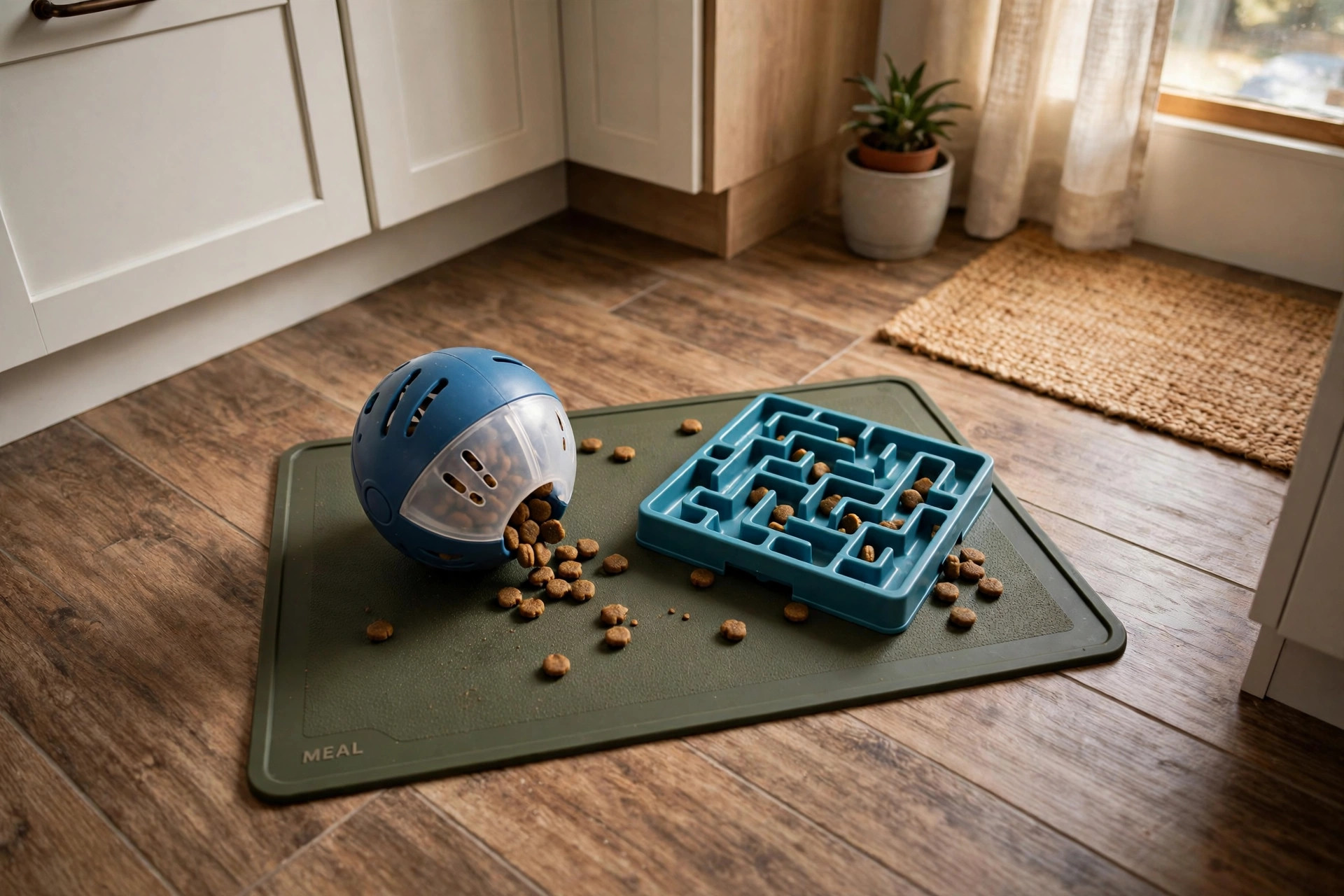

Finding the best cat food puzzle feeder for mental stimulation is one of the smartest moves a cat owner can make. In the wild, a cat spends hours each day hunting. A house cat gets the same food in the same bowl at the same hour. That dull routine can lead to boredom, extra weight, and bad habits. A food puzzle feeder changes the meal into a task. The cat must bat, nudge, roll, or paw at the feeder to earn each bite. This simple change wakes up the hunting brain. It slows down fast eaters. It gives shy cats confidence and restless cats a job. This guide walks through the types, the features, the prices, and the safety rules, so you can pick the best cat food puzzle feeder for mental stimulation with full confidence.
Why Mental Stimulation Matters for Your Cat
Cats are hunters by design. Their brains are built to solve problems, track movement, and plan each pounce. When life gives them nothing to solve, that sharp mind turns inward. Bored cats often overeat, scratch furniture, or wake their owners at night. Animal behavior experts note that enrichment keeps indoor cats mentally healthy. A food puzzle feeder is a form of enrichment that fits into daily life with no extra time on your part. The cat eats, but the cat works for it.
Studies of captive animals have shown for decades that working for food lowers stress and cuts down on idle pacing. The same idea holds in the living room. A puzzle feeder can calm a nervous cat, tire out a wild kitten, and give an older cat a gentle daily challenge. Weight control is another real benefit. Cats that eat too fast often vomit right after. A puzzle feeder slows the pace. Fewer calories get wolfed down in seconds. Many owners report that their cats lose the soft belly within a few months of switching to puzzle feeding.
Mental stimulation also strengthens the bond between cat and owner. When you introduce a new puzzle, you sit with the cat, cheer it on, and watch it learn. The cat learns that new things bring good rewards. That trust carries into vet visits, grooming, and travel.
How a Food Puzzle Feeder Works: Best Cat Food Puzzle Feeder for Mental Stimulation
The idea is plain. Food goes inside the puzzle instead of into an open bowl. Small openings let the kibble fall out one or two pieces at a time, but only when the cat moves the toy in the right way. The cat must think and act. Some feeders roll across the floor. Others sit still and ask the cat to fish out food with a paw.
Most puzzle feeders fall into three styles. Motion feeders roll, wobble, or spin, and food drops out through holes. Stationary feeders stay in place while the cat paws food from cups, mazes, or sliding doors. Slow feeders use raised bumps and ridges that force the cat to eat around obstacles. All three styles serve the same goal: make the meal last longer and make the brain work harder.
Veterinary sources on pet health and feeding behavior stress that any change in feeding should be gradual. Start with an easy puzzle. Let the cat win fast. A cat that gets no reward will walk away and may not try again. Patience at the start pays off for years.
Types of Cat Food Puzzle Feeders
Ball and Wobble Feeders
These are the classic entry point. A hollow ball holds dry kibble. Small holes let pieces fall out as the ball rolls. Wobble toys rock back and forth and drop food through a base opening. They suit cats that love to chase and bat. They are cheap, tough, and easy to clean. The main limit is that clever cats empty them fast, so they work best for beginners and kittens.
Maze Boards and Lick Mats
A maze board is a flat tray with cups, tunnels, and sliding covers. The cat uses its paws to scoop out kibble or treats. A lick mat is a soft mat with ridges that holds wet food or yogurt. The cat licks rather than bites, which stretches a small meal into a long session. These are quiet, stay in one spot, and suit older cats or cats that do not like chasing toys. They need more washing than balls because wet food clings to the ridges.
Multi-Chamber and Box Puzzles
These feeders have several small rooms, doors, or tubes. The cat must move lids, spin wheels, or reach into tubes to find food in each chamber. They offer the highest challenge level. They are ideal for smart cats that solve simple puzzles in minutes. Many have adjustable difficulty, so you can close off chambers as the cat learns. They take up more floor space and cost more than balls.
Electronic and Timed Feeders
A few electronic models combine a timer with a small puzzle task. Food drops at set hours, and the cat must nose a lever or roll a wheel to release it. These help owners who work long hours. They also help in multi-cat homes, where one cat tends to steal the other bowl. Look for models with battery backup so a power cut does not skip a meal. Reviews and buying guides for automatic feeders can help compare features, though you should weigh any electronic feeder against the simpler manual options.
For homes with more than one cat, you may also want a best automatic feeder for two cats portion control to manage meals while the puzzle feeder handles enrichment.
What to Look for When You Choose
Safe, Non-Toxic Materials
The best cat food puzzle feeder for mental stimulation is made from food-safe plastic, silicone, or wood with a non-toxic finish. Cats chew. Chewed plastic can break into sharp bits. Look for BPA-free plastic or natural rubber. If you choose wood, check that the finish is sealed and safe for pets. Avoid feeders with small detachable parts that a cat could swallow. Reputable retailers like Chewy list material details on product pages, which makes comparison easier.
The Right Difficulty Level
A puzzle that is too hard will frustrate the cat. A puzzle that is too easy will bore it in a week. The sweet spot is a feeder the cat solves in five to fifteen minutes. Many owners keep two or three feeders and rotate them. Rotation keeps the challenge fresh. Start easy, then raise the level step by step. Kittens and seniors do best with simple rolling balls. Young, active adults enjoy maze boards and multi-chamber boxes.
Easy to Clean
Food residue breeds germs. A feeder that cannot be washed will start to smell and can harbor bacteria. Choose models that come apart for washing or go in the dishwasher. Silicone lick mats and hard plastic balls are the easiest to keep clean. Wood puzzles look handsome but need hand washing and full drying. Test labs and consumer product reviewers often note cleaning ease as a key buying factor for pet products.
Right Size and Portion Control
Match the feeder size to your cat and its daily ration. A large dog-sized ball will dump too much food for a small cat. Many feeders hold about a quarter cup of kibble, which suits one meal for an average cat. If your cat is on a vet-planned diet, measure portions with a cup before loading the puzzle. Guessing leads to overfeeding.
Stability and Noise
Some cats spook at loud rattling. Hard plastic balls on tile floors can be noisy at 3 a.m. If your cat is shy, pick a quiet stationary puzzle. If the feeder slides across the room, place it on a rug or a feeding mat to hold it in place.
Pet care guides from The Spruce Pets offer solid advice on matching enrichment toys to a cat’s temperament, which is worth reading before you buy.
Cost and Price Guide
Puzzle feeders span a wide price range. Simple rolling balls cost between five and twelve dollars. Maze boards and lick mats run from ten to twenty-five dollars. Multi-chamber wooden puzzles cost twenty-five to sixty dollars. Electronic and timed models start around forty dollars and can pass one hundred.
Price does not always track quality. A ten-dollar ball from a trusted brand often outlasts a thirty-dollar novelty toy. Read reviews before paying a premium. Big home retailers such as Home Depot and IKEA carry pet feeding accessories alongside storage options that keep kibble fresh between puzzle sessions. Household publications like Good Housekeeping regularly round up pet products worth the money.
Set a budget, but plan to buy two feeders at different difficulty levels. Two cheap puzzles beat one expensive puzzle for keeping a cat engaged over time.
Care and Upkeep
Clean every feeder at least twice a week. Wash with hot soapy water, rinse well, and dry fully before refilling. Dishwasher-safe models make this job simple. Throw away any feeder with cracks, loose parts, or worn edges. A cracked plastic edge can cut a tongue.
Store dry kibble in a sealed container. Stale food loses smell, and smell is what draws the cat to the puzzle. Refill puzzles with fresh kibble each day. If you use wet food in lick mats, wash the mat right after the meal. Dried wet food is hard to scrub and invites flies.
Check the difficulty setting once a month. Cats learn. A puzzle that challenged your cat in January may bore it by March. Move up a level or add a new feeder to the rotation. Tech and gadget reviewers note that even simple pet products benefit from fresh features, and the same holds for puzzle rotation.
Safety Tips
Safety comes first with any pet product. The American Kennel Club publishes general pet safety guidance that applies to cats as well as dogs. Watch your cat with a new feeder for the first few sessions. Remove the feeder if the cat tries to chew pieces off it. Never leave a destructive chewer alone with a soft plastic puzzle.
Supervise kittens under six months with small-chamber puzzles, since tiny paws can get stuck. Keep puzzle feeders away from stairs and balconies where a rolling ball could send a chasing cat into danger. Wash hands after handling feeders, and keep the feeding area clean to cut down on pests.
If your cat has a flat face, such as a Persian, pick wide shallow puzzles. Deep narrow tubes can strain their breathing. Cats with arthritis do better with stationary puzzles at floor level rather than toys they must chase.
For owners who like to blend pet gear into home style, a dog crate furniture end table for living room shows how pet products can double as furniture, an idea that works for feeding stations too.
Frequently Asked Questions
Are puzzle feeders good for every cat?
Almost every cat benefits, but the style must fit the cat. Bold young cats love rolling balls. Shy cats prefer quiet stationary mazes. Seniors enjoy lick mats. Cats with medical diets should use puzzles only with the vet’s approval, since portion control matters more than enrichment in some cases.
Can I use wet food in a puzzle feeder?
Yes, in lick mats and shallow maze cups. Do not put wet food in rolling balls or deep tubes. It will clog the holes and spoil fast. Wash wet-food puzzles right after each use.
How long should it take my cat to finish a puzzle?
Five to fifteen minutes is ideal for a full meal. Less than two minutes means the puzzle is too easy. More than thirty minutes with visible frustration means it is too hard. Adjust the difficulty or switch feeders.
Will a puzzle feeder help my cat lose weight?
It can help, because it slows eating and adds light activity. But the feeder alone will not fix overfeeding. Measure every portion. Ask your vet for a daily calorie target. Combine the puzzle with play sessions for the best results.
How many puzzle feeders should I own?
Two or three at different difficulty levels is a good start. Rotate them every week or two. Rotation keeps the novelty alive and stops the cat from memorizing every solution.
Is a puzzle feeder safe to leave out while I am at work?
Simple sturdy puzzles are fine for most cats once you have watched several safe sessions. Remove complex puzzles with small moving parts until you trust the cat with them. When in doubt, supervise.
A Final Word
The best cat food puzzle feeder for mental stimulation is the one your cat will actually use. Start simple. Watch and learn. Raise the challenge as your cat grows smarter. Keep the feeders clean, the portions measured, and the rotation fresh. A small investment in a good puzzle feeder pays back every day in a calmer, leaner, happier cat. And for outings with your dog, do not forget a best dog harness for car safety crash tested to keep every pet in the family safe.
References
American Kennel Club. (n.d.). Dog care and training resources. https://www.akc.org ASPCA. (n.d.). Pet care and animal welfare resources. https://www.aspca.org Chewy. (n.d.). Pet supplies. https://www.chewy.com CNET. (n.d.). Technology news and reviews. https://www.cnet.com Consumer Reports. (n.d.). Product reviews and ratings. https://www.consumerreports.org Good Housekeeping. (n.d.). Product reviews and home advice. https://www.goodhousekeeping.com IKEA. (n.d.). Home furnishings. https://www.ikea.com PetMD. (n.d.). Pet health information. https://www.petmd.com The Home Depot. (n.d.). Home improvement products. https://www.homedepot.com The Spruce Pets. (n.d.). Pet care guides and product reviews. https://www.thesprucepets.com Wirecutter. (n.d.). Product reviews from The New York Times. https://www.nytimes.com/wirecutter
Was this guide helpful?

About Emily Rodriguez
The My Garden US editorial team writes practical, in-depth home and garden guides for American homeowners — tested advice, no fluff.
You May Also Like
Outdoor Dog Kennel with Welded Wire Panels: A Complete Buyer’s Guide
April 2, 2026 0 views
Pet Stairs for High Bed Small Dogs Seniors: A Simple Guide to Safe Climbing
August 3, 2026 0 views
Outdoor Cat House Insulated for Winter Shelter: A Complete Guide
March 19, 2026 0 views