
Pet owners know the problem well. You sit down on the couch and find dog or cat hair stuck to your clothes. You open the car door and see a thick layer of fur on the seat. A pet hair remover brush for couch and car is a simple tool that solves this problem. It lifts loose hair from fabric in a few quick strokes. It needs no power and no bags. This guide explains how the brush works, which types are on the market, what to look for when you shop, and how to keep the tool in good shape. By the end, you will know exactly which brush fits your home and your car.
Why a Pet Hair Brush Matters
Dogs and cats shed hair every day of the year. Some breeds shed more in spring and fall. Others drop a steady stream of hair in every season. The hair lands on the couch, the armchair, the car seat, and the floor mats. It clings to fabric because of static charge. It weaves itself into the weave of the cloth. A quick shake of a cushion does not remove it.
A vacuum cleaner helps, but it is heavy and loud. Many people do not want to drag a vacuum to the couch every evening. A pet hair remover brush for couch and car fills this gap. It is light and quiet. You can keep it in a drawer near the sofa or in the glove box of the car. One or two minutes of brushing gives a clear, clean surface.
Clean fabric also matters for health and comfort. Loose pet hair holds dust and dander. Guests with allergies feel the difference when the couch is free of hair. A clean car seat keeps work clothes neat on the morning drive. The small effort of regular brushing pays back in a tidier home and a tidier car.
Shedding is normal and healthy for most pets. Articles on shedding and coat care at PetMD explain that brushing your animal itself is the first line of defense. Fewer loose hairs on the coat mean fewer hairs on the furniture. Still, no amount of grooming stops shedding entirely. A brush for the furniture is the second line of defense.
How to Choose the Right Brush: Pet Hair Remover Brush for Couch and Car
Not every brush works on every surface. Fabric type decides which tool performs best. A tightly woven couch cushion needs a different touch than the looped pile of a car mat. Before you buy, look at the surfaces you will clean most often. Then match the brush to those surfaces.
Consider the size of the brush head. A wide head covers a sofa cushion fast. A narrow head fits into car door pockets and seat seams. Some buyers keep two brushes: a large one for the house and a small one for the car. Others buy one medium brush and use it in both places.
Check the handle. A long handle gives reach across a deep couch. A short handle fits inside a car without bumping the dashboard. Rubber or textured grips keep your hand from slipping during fast strokes. Comfort matters because you will repeat the motion many times.
Look at how the brush empties. The best designs gather hair into a small chamber. You open a latch and drop the hair into the trash. Some brushes store hair on a roller surface. You peel it off with your hand. Others use a sticky sheet that you throw away after one use. Reusable designs cost less over time and make less waste.
Read the care label on your couch and car seats. Some delicate fabrics warn against rough tools. Home care guides such as The Spruce note that natural fibers like wool and linen need gentle treatment. Test any new brush on a hidden corner first. Press lightly and check for pulled threads or color change.
Types and Options
Shops carry several main designs. Each has its own strengths. Most pet owners do well with one of the first two types below. The others suit special cases.
Double-Sided Bristle Brush
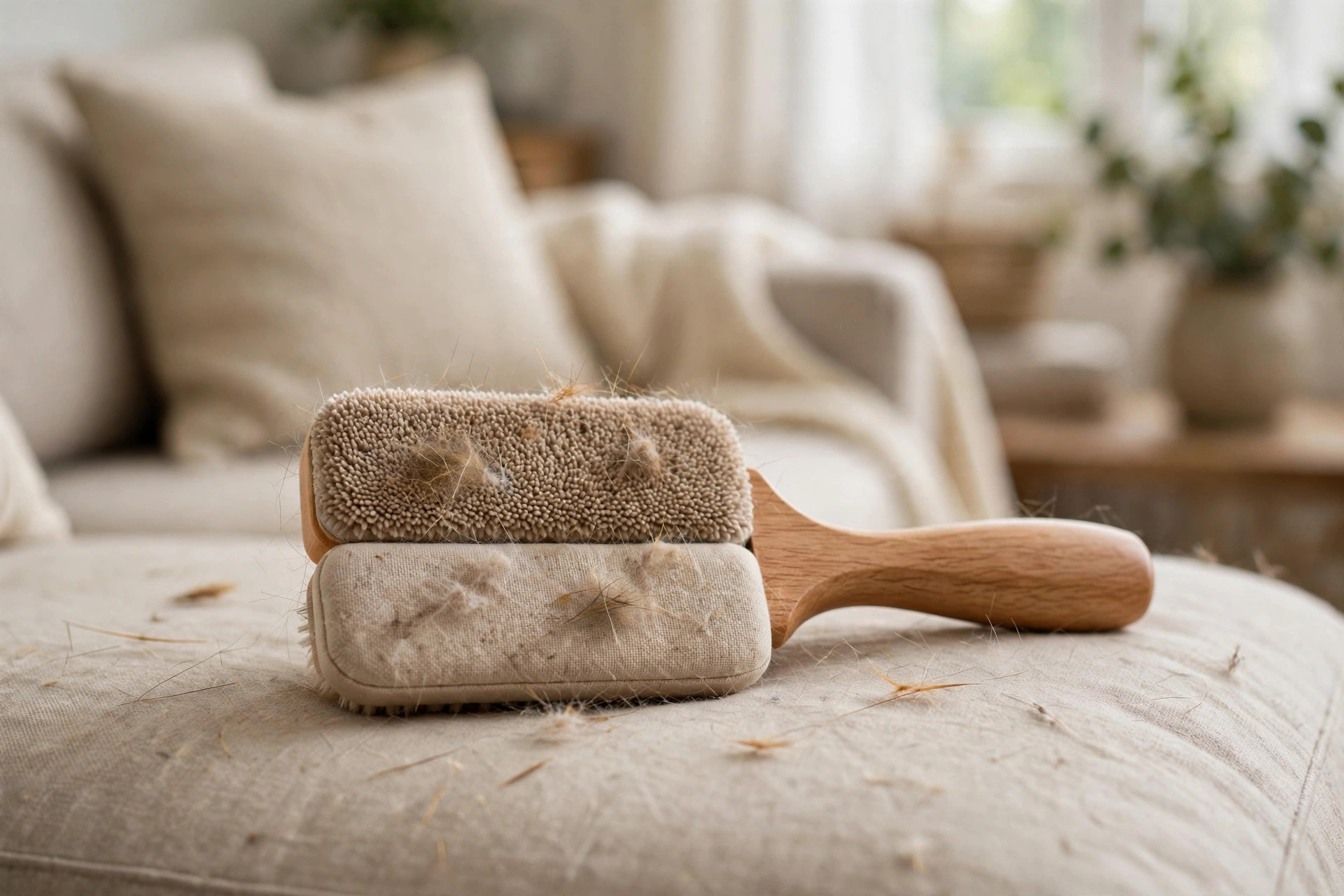
This is the classic pet hair remover brush for couch and car. It has a paddle shape with short bristles on both sides. You brush in one direction. Static and friction lift the hair onto the bristles. Then you press the handle. A sliding plate pushes the collected hair off the bristles and into a small tray.
This type works well on standard couch fabric and car upholstery. It is reusable for years. It costs little. The main limit is that bristles wear down with heavy use. After many months, the lifting power fades.
Microfiber or Electrostatic Pad
These tools use a flat pad with a special surface. You rub it across the fabric. The motion builds a static charge. The charge pulls hair off the seat and onto the pad. You wipe the pad clean with a damp cloth or rinse it under the tap.
Pads are silent and very gentle. They suit fine car interiors and delicate couch fabric. They do not reach deep into thick pile. You may need several passes on heavy shedding days.
Roller with Reusable Sticky Surface
A sticky roller picks up hair with a light touch. You roll it over the couch arm or the car seat. Hair sticks to the surface. You rinse the roller with water. The stickiness returns as it dries. No refills are needed.
Rollers excel on smooth surfaces. They struggle with hair that has worked deep into the weave. They are also slower than a wide brush on large sofas.
Disposable Lint Sheets
Tear-off lint sheets are sold in rolls. They work fast on small areas. You peel a fresh sheet for each job. They are handy for a quick pass before guests arrive.
The drawback is the running cost. A house with two heavy shedders can use many sheets per week. The waste adds up. Many buyers use them only for travel or for clothing, not for daily couch care.
Rubber Grooming Gloves
Some owners prefer a rubber glove for the couch. You put on the glove and run your hand over the fabric. Hair clings to the rubber nubs. You rinse the glove under water.
Gloves are cheap and simple. They are slower than a brush. They suit small spots and curved car seats where a flat brush cannot reach.
Cost and Price
A pet hair remover brush for couch and car is one of the cheapest tools in pet care. Basic paddle brushes often sell for under ten dollars at pet supply retailers such as Chewy and Petco. Microfiber pads and sticky rollers sit in the same price range.
Mid-range models with larger heads or better emptying mechanisms run ten to twenty dollars. The difference shows in build quality. Sturdier latches and thicker bristles last longer. Independent product testing groups like Consumer Reports remind buyers that price alone does not prove quality. Read owner reviews and look for clear return policies.
High-end options above twenty dollars are rare in this category. Most buyers never need them. A ten-dollar brush that lasts two years is a better buy than a twenty-five-dollar brush with no clear advantage.
Running costs stay near zero for reusable designs. You buy the tool once and use it for years. Disposable sheet rolls cost a few dollars per refill. Over one year, a heavy-use household can spend more on refills than on the reusable brush itself.
Compare the total cost of ownership before you decide. A reusable brush wins in almost every case. Keep a small pack of disposable sheets in the car only as a backup.
Care and Upkeep
A brush lasts longer when you clean it after each use. Empty the hair chamber right away. Packed hair blocks the next round of brushing. It also lets odor build up inside the tray.
Wash the bristle head with warm water and a drop of dish soap once a month. Rinse well and let it air dry. Do not use harsh chemicals. Strong cleaners can break down the rubber parts and strip any coating on the bristles.
Store the brush in a dry place. A damp garage or a wet car trunk can warp plastic handles. Keep it away from direct sun on the dashboard. Heat can soften the bristles and bend the frame.
Check the moving parts now and then. Latches and sliding plates wear with use. A drop of dry lubricant on a sticky latch keeps the emptying step smooth. If the bristles lose their spring, it is time for a new brush. Do not press harder with a worn brush. Extra force does not clean better. It only risks the fabric.
Pair the brush with a regular grooming routine for your pet. Grooming guidance from the American Kennel Club shows that brushing the animal weekly removes loose hair at the source. A pet grooming vacuum kit for shedding dogs can handle heavy coat blowout in spring. Less hair on the dog means less hair on the couch and in the car.
Safety
Pet hair brushes are safe tools. Still, a few simple rules protect your furniture and your pet.
Never use the brush on the animal itself unless the maker says it is safe for skin. Couch brushes have stiff bristles meant for fabric. They can scratch a dog or cat.
Keep the brush away from open car windows at speed. A loose tool can fly out of the car. Store it in the glove box or a seat-back pocket.
Test on hidden fabric first. Bright dyes and loose weaves can show damage. Press with light strokes. Let the tool do the work. Heavy pressure shortens the life of both the brush and the upholstery.
Watch for small parts. Some brushes have removable trays and latches. Keep these away from curious pets and small children. Swallowed parts can cause choking.
If you share the car with people who have allergies, clean the brush between uses. A dirty brush spreads dander from one seat to another. The ASPCA’s pet care resources note that regular cleaning of pet tools helps hold allergens down in the home. The same rule applies to the car.
FAQ
How often should I brush the couch and car seats?
Most owners do well with a quick pass every day or two. Homes with heavy shedders may need a daily pass. A weekly deep brush handles the rest. Regular short sessions beat one long monthly session.
Will a pet hair remover brush work on leather seats?
It can help, but leather needs less effort. A damp cloth usually lifts hair from smooth leather faster than a brush. Use the brush only on fabric seats, floor mats, and cloth door panels. Skip stiff bristles on fine leather.
Is one brush enough for both couch and car?
Yes, for many buyers. A medium brush with a comfortable grip works in both places. Heavy shedders may justify two brushes. A large head saves time on the sofa. A small head fits car seams better.
How do I clean hair the brush misses in car crevices?
Use the brush first for the flat areas. Then use a crevice tool or a damp cloth for seams and edges. A best pet hair vacuum for hardwood floors will not help in the car, but a small handheld vacuum with a crevice nozzle does. The brush and the vacuum make a strong pair.
Do these brushes work on cat hair too?
Yes. Cat hair is fine and light, so it clings hard to fabric. A double-sided bristle brush or an electrostatic pad handles it well. Short, quick strokes work better than long sweeps for fine hair.
When should I replace the brush?
Replace it when bristles bend flat or the emptying latch stops working. For most buyers this takes one to three years. A pet hair dryer for dogs low noise grooming or other grooming tools do not extend the brush’s life. Wear is wear. Buy a new one and recycle the old handle if you can.
A Final Word
A pet hair remover brush for couch and car is a small purchase with a large payoff. It keeps the sofa ready for guests and the car ready for the workday. Pick a type that matches your fabric. Use light, steady strokes. Empty and clean the tool after each session. Pair it with regular pet grooming for the best results. Your couch, your car, and your clothes will show the difference. For more pet travel tips, Rover’s pet sitting and travel advice and The Spruce Pets offer useful starting points, and home stores like Lowe’s carry the cleaning supplies that round out your kit.
References
American Kennel Club. (n.d.). Dog care and training resources. https://www.akc.org ASPCA. (n.d.). Pet care and animal welfare resources. https://www.aspca.org Chewy. (n.d.). Pet supplies. https://www.chewy.com Consumer Reports. (n.d.). Product reviews and ratings. https://www.consumerreports.org Lowe’s. (n.d.). Home improvement products. https://www.lowes.com Petco. (n.d.). Pet supplies and services. https://www.petco.com PetMD. (n.d.). Pet health information. https://www.petmd.com Rover. (n.d.). Pet sitting and dog walking services. https://www.rover.com The Spruce. (n.d.). Home and garden advice. https://www.thespruce.com The Spruce Pets. (n.d.). Pet care guides and product reviews. https://www.thesprucepets.com
Was this guide helpful?

About Emily Rodriguez
The My Garden US editorial team writes practical, in-depth home and garden guides for American homeowners — tested advice, no fluff.
You May Also Like
A Practical Guide to the Cat Tunnel Collapsible for Play and Hiding
January 31, 2026 0 views
Best Dog Shampoo for Dry Flaky Skin Relief
August 29, 2026 0 views
Pet Gate Freestanding for Wide Doorways: A Buyer’s Guide for American Homes
May 10, 2026 0 views