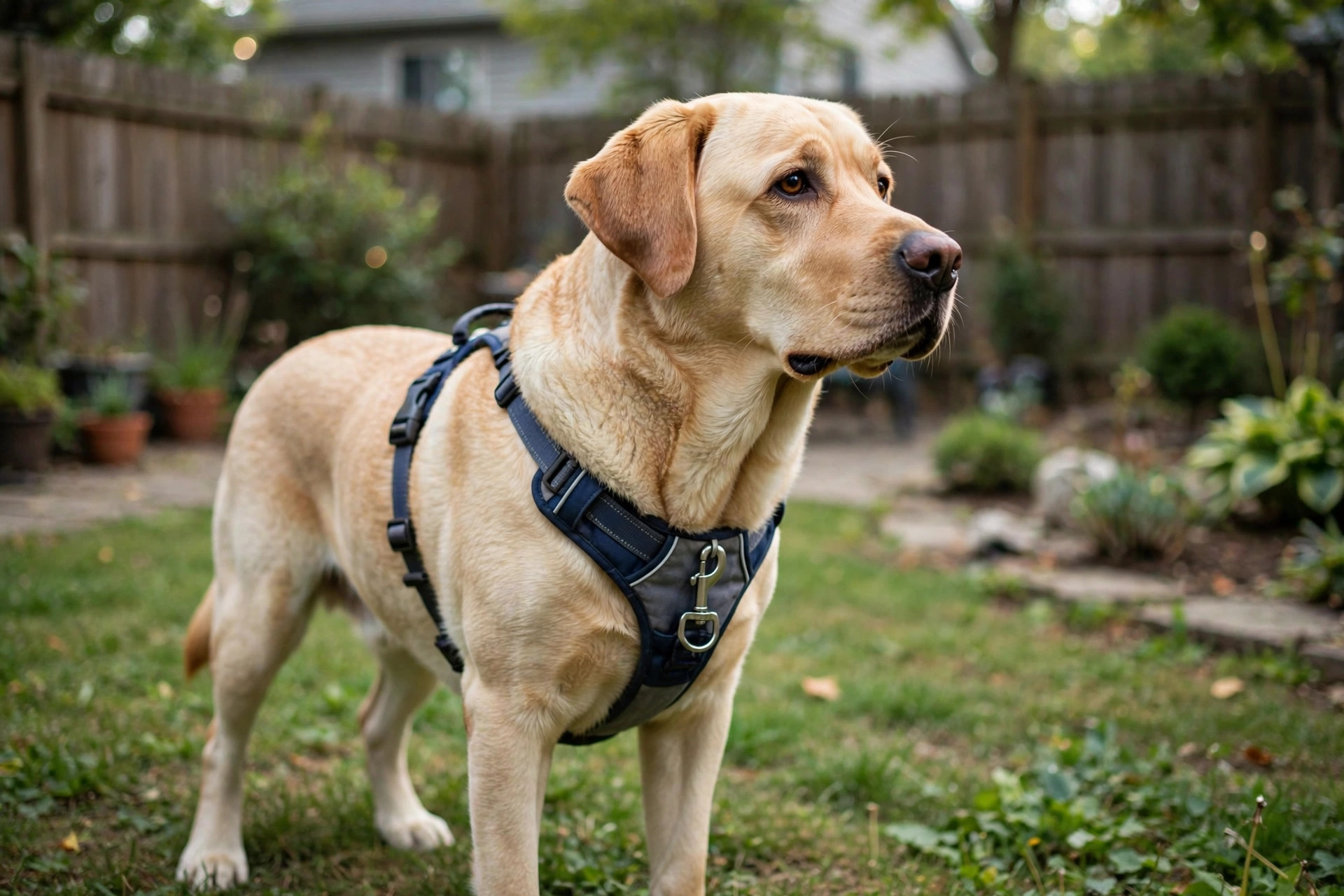

A strong dog can turn a daily walk into a tug of war. Your arm aches, your shoulder burns, and the dog seems to enjoy every minute of it. A leash clipped to a plain collar often makes the pulling worse. Each time the dog pulls toward a smell or another dog and you move forward with it, the dog learns that pulling pays. The best no pull dog harness for strong pullers is made to break that pattern. It changes the direction of the pull, gives you better control of the dog’s chest and shoulders, and keeps pressure off the throat. This guide explains how these harnesses work, what to look for when you shop, how much you should plan to spend, and how to use one with safety in mind.
Why Pulling Is a Problem
Dogs pull because it works for them. Pulling is not an act of rebellion. It is a simple habit built over hundreds of walks. The dog leans into the leash, you follow, and the dog reaches the tree, the fence, or the other dog. The reward is fast and clear. For a small dog, the habit is easy to live with. For a dog that weighs sixty pounds or more, the habit can cause real harm.
A dog that pulls hard can injure its own neck. The collar presses into the windpipe, the eyes, and the soft tissue of the throat. Over time this can lead to coughing, a sore neck, and, in some dogs, damage to the eye from pressure. The owner pays a price too. A hard pull can wrench a shoulder, twist a wrist, or pull a person off balance and down. The ASPCA training pages note that leash manners are one of the most common training concerns for owners of large dogs, and that better equipment is often the first step toward calmer walks.
A no pull harness is not a substitute for training, but it is a fair place to start. It gives you control while you and your dog learn to walk together.
How a No Pull Harness Works: Best No Pull Dog Harness for Strong Pullers
Most no pull harnesses have a leash ring on the front of the chest. When the dog pulls, the leash tightens and the dog’s body is turned gently to the side. The forward drive is interrupted. The dog cannot keep charging ahead because its own pull redirects it. This is very different from a back-clip harness, where the leash attaches behind the shoulders. A back clip lets the dog put its full weight into the pull, like a sled dog.
Some designs use straps around the chest and belly that tighten slightly when the dog lunges. Others use a padded chest plate that spreads pressure across the breastbone. All of them share the same idea: take the force off the neck and give the owner a steering point at the chest. PetMD has published vet-reviewed guides that explain how chest-led control is gentler than collar pressure for dogs that pull.
No harness will train the dog on its own. The tool only works when it is paired with steady walking habits. Stop when the dog pulls, move forward when the leash is loose, and reward calm walking. The harness makes this training easier because the dog is no longer winning every pull.
What to Look for When You Choose One
A harness is only as good as its fit. A poor fit can rub the skin, slip out of place, or even let the dog escape. Walk through these points before you buy.
Fit and Sizing
Measure the dog’s chest just behind the front legs and the neck at the base. Compare both numbers to the maker’s size chart. Do not guess by breed alone. Two dogs of the same breed can differ a great deal in chest depth. The harness should sit snug but not tight. You should be able to slide two flat fingers under every strap. If you can fit your whole hand, it is too loose. If the skin puckers, it is too tight. The AKC publishes fitting advice for walking gear that repeats this two-finger rule, and it is a sound check for any harness.
Front Clip and Back Clip
Look for a front D-ring on the chest. Many good models also include a back ring for trained dogs that no longer pull. A two-point leash, clipped to both rings at once, gives the most control of a very strong dog. Check that the front ring is welded metal, not thin wire, because a strong puller can bend weak hardware.
Straps, Padding, and Buckles
Wide straps spread force over more of the body. Padding on the chest and belly straps keeps the harness from digging in on long walks. Buckles should click shut with a clear snap and stay closed under a hard lunge. Four or five points of adjustment let you tune the fit around an odd-shaped chest. Reflective trim is a plus for evening walks. Retailers such as Chewy list the number of adjustment points in their product details, which makes comparison shopping easier.
The Main Types of No Pull Harnesses
Several designs are on the market. Each has strengths and limits.
Front-clip vest harness. A padded vest wraps the chest and belly. The leash attaches at the front. This is the most common choice for strong pullers because the padding is kind to the skin and the vest is hard to slip out of. It can run warm in summer, so look for mesh panels if you walk in hot weather.
Strap-style front-clip harness. Simple straps form a triangle across the chest and around the belly. It is lighter and cooler than a vest. The trade-off is less padding, so fit must be exact or the straps can rub behind the front legs.
Dual-clip harness. This has rings on both the chest and the back. Owners of very strong dogs often use a leash with clips at both ends, one to each ring. Steering comes from the front, and the back ring adds stability. Guides on The Spruce Pets often point to dual-clip designs as the best all-round choice for powerful breeds.
Head halter. This is not a harness. It loops over the muzzle and behind the ears, and the leash clips under the chin. Where the head goes, the body follows, so pullers find it very hard to drag the owner. Some dogs need a week or two to accept it. It should never be used to yank the dog’s head sideways.
Walking vest with handle. Some models add a top handle. The handle is useful when you must hold the dog close at a crosswalk or past another dog. It should not be used as a lifting handle for a heavy dog.
For a true strong puller, start with a front-clip or dual-clip harness. Move to a simpler back-clip design only after the dog has learned loose-leash manners.
Cost and Price
Most no pull harnesses for large, strong dogs cost between fifteen and sixty dollars. Basic strap models sit at the low end of that range. Padded vest and dual-clip models from well-known makers sit in the middle, around twenty-five to forty-five dollars. Heavy-duty models with thick padding and metal hardware can reach sixty dollars or more.
Price is not the whole story. A fifteen-dollar harness that rubs the dog raw and breaks in three months is no bargain. A forty-dollar harness that fits well and lasts three years is cheap by the walk. Replacement is also part of the true cost. Puppies outgrow harnesses fast. An adult dog’s harness may need replacing every one to two years as straps stretch and padding wears thin.
If you are pairing the harness with a new leash, keep that cost in mind too. A sturdy flat leash runs ten to twenty dollars. Avoid combining a no pull harness with a retractable leash for large dogs, because the thin cord and constant tension work against everything the harness is trying to teach.
Care and Upkeep
A harness lives a hard life. It meets mud, rain, lake water, and the occasional roll in something foul. Most harnesses can be washed by hand in warm water with a mild soap. Scrub the straps, rinse well, and hang them to dry out of direct sun. Strong sun can fade colors and weaken some webbing over time. Do not use bleach, and do not put the harness in a hot dryer, because heat can shrink straps and warp buckles.
Check the hardware once a month. Look at the D-rings for rust or bending. Flex the buckles and make sure they click shut with the same snap as on day one. Run your fingers along the webbing for frayed edges. Pay special attention to the points where straps meet buckles, since that is where wear starts. A harness with any torn strap should be retired at once. A broken strap at the wrong moment can mean a loose dog in traffic. Stores like Home Depot carry pet gear in their outdoor sections, which is handy when you need a replacement in a hurry.
Re-check the fit every few months. Dogs gain and lose weight with the seasons. A coat of winter fur changes the fit too. What was snug in July may be loose in January, and the reverse in spring.
Safety
A harness is a safety tool only when it is used with care. Never tie a dog out on a leash attached to a front clip, because the dog can twist and the leash can wrap the legs. Never leave a harness on an unsupervised dog for long stretches. A loose dog can catch a strap on a crate wire or a fence rail and panic.
The front clip is a steering aid, not a brake. Do not jerk the leash hard. Sharp pulls can twist the dog’s body and strain the shoulders. The AVMA reminds owners that any walking tool should be used with gentle, steady handling, and that pain-based correction has no place in good training.
Watch the skin under the straps. Red marks or bare patches mean the fit is wrong or the padding has worn thin. Some dogs develop sores behind the front legs where straps rub during a long stride. If you see rubbing, adjust the straps, add a padded cover, or try a different design. For dogs that travel by car, remember that a walking harness is not crash protection. For real road safety, look into a harness that doubles for car travel or a dedicated crash-tested car harness.
Frequently Asked Questions
Will a no pull harness stop my dog from pulling right away? It will reduce the force of the pull at once, because the front clip redirects the dog’s body. But it will not teach manners on its own. True change comes when you stop moving every time the dog pulls and reward every step of loose-leash walking. Most owners see real improvement in two to four weeks of steady practice.
Is a no pull harness cruel? A well-fitted front-clip harness is not cruel. It spreads force across the chest and shoulders, which is much kinder than choking pressure on the throat. It becomes unfair only if it fits badly and rubs the skin, or if it is used with harsh jerks. Fit and gentle handling are what make it kind.
Can my puppy wear a no pull harness? Yes, but buy for the puppy’s current size and expect to size up as it grows. Puppies pull hard and learn fast, so this is a good age to start. Keep early sessions short and cheerful. The CDC notes that safe handling habits formed early keep both dogs and people safer for life, and walking gear is part of that habit.
My dog slips out of every harness. What should I do? Escape artists usually slip out when the harness is too loose around the belly or the neck opening is too wide. Measure again and follow the two-finger rule. A vest-style harness with a snug belly strap is hardest to back out of. If the dog still escapes, tighten one hole at a time and test in a fenced yard before trusting it on the street. Rescue groups listed on Petfinder often advise new adopters to double-check harness fit during the first weeks, when a new dog is most likely to bolt.
Can a no pull harness hurt my dog’s shoulders? A poor fit can restrict the shoulder and alter the dog’s stride, which is why fit matters so much. A good harness leaves the front legs free to move. Watch your dog walk toward you and away from you. If the gait looks stiff or the dog shortens its stride, adjust or change the design.
How long should my dog wear the harness each day? Put it on for walks and training only. Take it off at home. All-day wear traps moisture against the skin, invites rubbing, and wears out the straps faster. Make harness-on a signal that a walk is coming. Most dogs learn to love that signal in days.
A Final Word
The best no pull dog harness for strong pullers is the one that fits your dog well, steers from the chest, and holds up under real use. No single model suits every dog. Measure carefully, choose a front-clip or dual-clip design, and pair the tool with patient training. Calm walks are built one loose leash at a time, and the right harness makes every one of those walks easier.
References
American Kennel Club. (n.d.). Dog care and training resources. https://www.akc.org American Veterinary Medical Association. (n.d.). Pet care resources. https://www.avma.org ASPCA. (n.d.). Pet care and animal welfare resources. https://www.aspca.org Centers for Disease Control and Prevention. (n.d.). Cleaning and disinfecting your home. https://www.cdc.gov Chewy. (n.d.). Pet supplies. https://www.chewy.com Petfinder. (n.d.). Pet adoption resources. https://www.petfinder.com PetMD. (n.d.). Pet health information. https://www.petmd.com The Home Depot. (n.d.). Home improvement products. https://www.homedepot.com The Spruce Pets. (n.d.). Pet care guides and product reviews. https://www.thesprucepets.com
Was this guide helpful?

About Sarah Mitchell
The My Garden US editorial team writes practical, in-depth home and garden guides for American homeowners — tested advice, no fluff.
You May Also Like
Best Dog Bed for Crate Washable Insert: A Complete Guide
April 19, 2026 0 views
Pet First Aid Kit for Dogs and Cats: What Every Home Should Keep Close
June 22, 2026 0 views
How to Choose the Best Dog Carrier for Airline Travel Approved for the Cabin
June 21, 2026 0 views