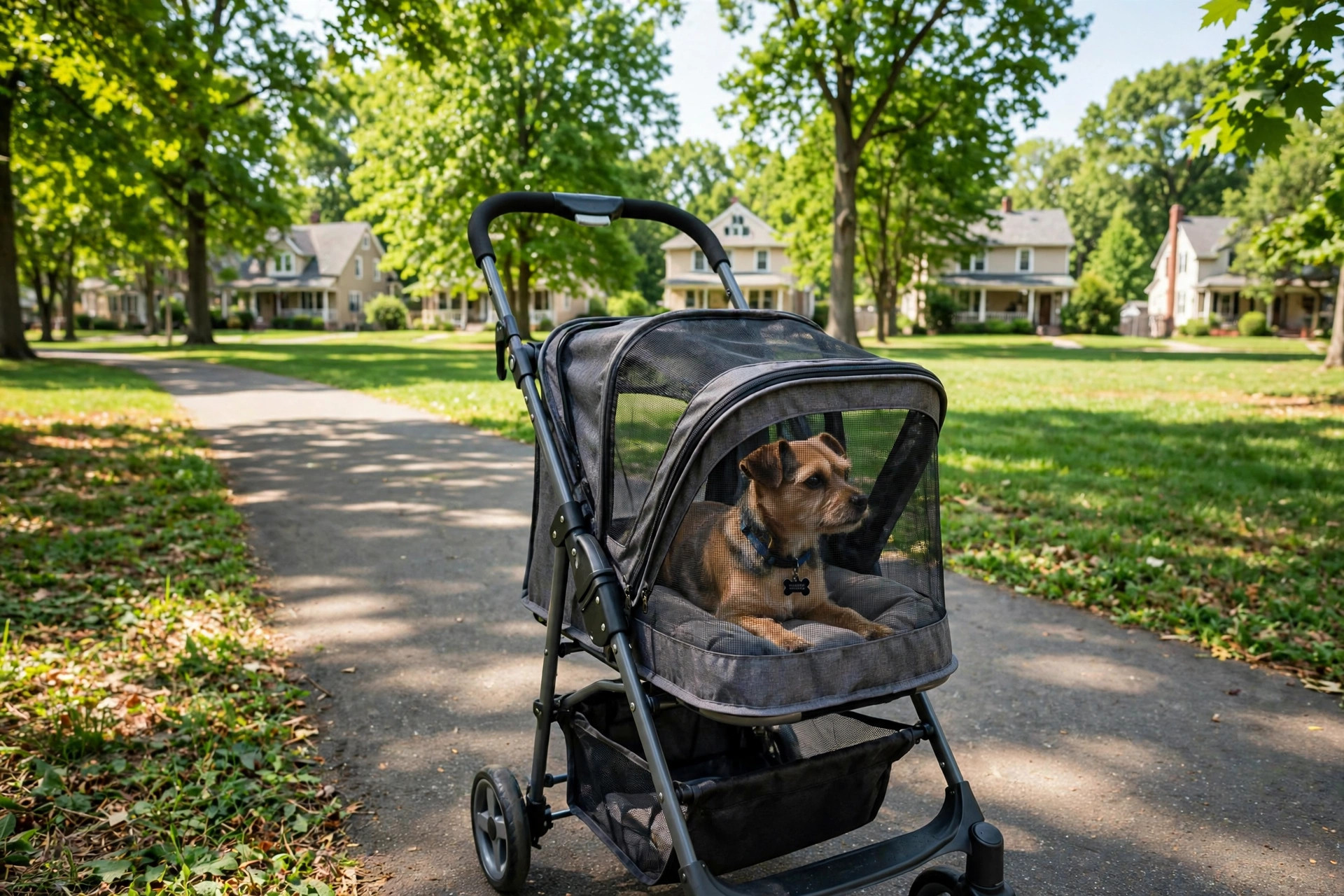

A pet stroller for small dogs and cats travel is a simple tool with a clear job. It carries a small pet while the owner walks, shops, or explores. Some dogs are too small to keep up on long walks. Some cats hate a leash but still enjoy fresh air. Senior pets with sore joints cannot walk far. A stroller solves all three problems at once. This guide explains why a stroller matters, what to look for, the main types, typical costs, and how to keep your pet safe and the stroller in good shape.
Why a Pet Stroller for Small Dogs and Cats Travel Matters
Small dogs tire quickly. A Chihuahua or a Maltese may walk half a mile and then stop. A stroller gives a middle path. The dog rides when tired and walks when fresh. This keeps outings long and pleasant for both.
Cats benefit in a different way. Most cats do not take to a leash. They freeze, pull back, or try to slip the harness. A stroller keeps a cat enclosed and safe while the world rolls past. The cat sees birds and trees from behind a mesh screen. The owner controls every step. For Www.aspca.org, a stroller is often the only safe way to go outside.
Travel is the other big use. Airports, train stations, and busy streets are hard places for a small animal. A stroller keeps the pet off the ground and away from feet, wheels, and other animals. Many pet owners find that a stroller for travel days is as useful as a good carrier.
Senior and ill pets deserve mention too. A dog with arthritis or a cat recovering from surgery should not be left behind forever. A pet stroller for small dogs and cats travel lets them enjoy the air without strain on the joints. Www.petmd.com often support gentle outings for older pets because the mental stimulus helps them.
What to Look for When Choosing a Stroller: Pet Stroller for Small Dogs and Cats Travel
Weight Capacity and Cabin Size
Check the weight limit first. Most small pet strollers carry 25 to 40 pounds. Weigh your pet at home before you shop. Then add a few pounds of margin. A dog that weighs 20 pounds should ride in a stroller rated for at least 30.
Cabin size matters as much as the rating. The pet should be able to sit, stand, and turn around. A cramped cabin makes the ride stressful. Measure your pet from nose to tail and from floor to ear tip. Compare those numbers to the cabin dimensions on the product page.
Wheels and Steering
A stroller used only at the mall can get by with four small wheels. A stroller used on park trails cannot. Larger rear wheels handle grass, gravel, and cracked sidewalks better. Air-filled tires give the smoothest ride but can go flat. Foam-filled tires never go flat and are a fine middle choice.
Front wheels should swivel for easy turning. A lock for the front wheels helps on rough ground. Consumer Reports notes that wheel quality is the most common complaint in budget strollers, so this is not the place to cut corners.
Safety Features
A pet stroller for small dogs and cats travel must keep the animal inside. Look for a zippered or mesh top that closes fully. A canopy is not enough by itself. Inside the cabin there should be a short safety tether that clips to the pet’s harness. This stops a startled pet from leaping out when the top is opened.
Brakes on the rear wheels are essential. A parking brake keeps the stroller from rolling on a slope. Reflective trim is a plus for evening walks.
Fold and Storage
A travel stroller should fold flat. Test this before you buy if you can. Some fold with one hand. Others need two hands and three steps. One-hand folding is worth more when you are holding a pet. A folded stroller should fit in a car trunk with room to spare. Check the folded dimensions against your own trunk.
Comfort Details
A padded liner keeps the ride soft. A mesh window that opens gives the pet a breeze. Cup holders and a basket under the cabin carry treats, water, and waste bags. None of these are luxury items on a long day out. They are the small comforts that make the stroller useful every week instead of sitting in a closet.
Types of Pet Strollers
Standard Four-Wheel Strollers
This is the most common type. Four wheels, an enclosed cabin, a push handle. Standard models suit sidewalks, malls, and paved park paths. They cost less than the specialty types and fold small. For a cat or a small dog under 20 pounds, a standard stroller is usually enough. Many models sold by Www.chewy.com and PetSmart fall in this group.
Jogger and All-Terrain Strollers
Jogger strollers have three large wheels and a sturdy frame. They handle dirt trails, grass, and uneven ground. If you like hiking or long walks in the country, this is the right type. They fold larger and weigh more than standard strollers. They also cost more. But the ride is far smoother for the pet.
Double-Decker Strollers
A double-decker stroller has two cabins stacked one above the other. It suits homes with two small pets. Each animal gets its own space. This is popular with owners of two small dogs or a dog and a cat. The unit is taller and heavier than a single stroller, so it suits car travel more than tight city streets.
Stroller-Carrier Combos
Some products work as both a stroller and a carrier. The cabin unclips from the frame and becomes a soft carrier with a shoulder strap. This is ideal for air travel. The pet rides in the stroller through the terminal, then the carrier goes under the seat on the plane. Check airline rules before you fly. Size limits differ from one carrier to the next, and Www.akc.org advises confirming the rules with the airline before booking.
Cost and Price Ranges
A pet stroller for small dogs and cats travel fits most budgets. Prices cluster in three bands.
Budget, 40 to 80 dollars. Basic four-wheel strollers with small wheels and a simple cabin. They work for short trips on smooth ground. Quality varies. Read reviews with care.
Mid-range, 80 to 160 dollars. Better wheels, stronger frames, one-hand folding, and useful extras like cup holders and a storage basket. This is the sweet spot for most owners. A mid-range stroller can last for years with light care.
Premium, 160 to 300 dollars and up. Jogger models, double-deckers, and stroller-carrier combos. These use better materials and carry more weight. They are built for daily use or rough ground.
Watch for sales at large retailers like Www.homedepot.com and Petco, which discount pet gear in spring and fall.
Training Your Pet to Use the Stroller
Most pets need a few days to accept a stroller. Do not force the issue. Start by parking the stroller in the living room with the cabin open. Let the pet sniff it. Place treats inside. Feed a meal in the cabin for two or three days. Then close the mesh top for a few minutes at a time while the pet is calm.
Next, push the stroller around the house. Keep sessions short. Praise the pet and offer treats. After a few days of indoor practice, take a short walk on a quiet street.
For cats, a familiar blanket inside the cabin helps. Cats like places that smell like home. For dogs, a chew toy in the cabin gives them something to do on long rides. Www.thesprucepets.com suggests keeping training sessions positive and never shutting a frightened animal inside.
Safety Rules for Every Trip
A pet stroller for small dogs and cats travel is safe only when used with care. Follow these rules on every outing.
– Always clip the safety tether to your pet’s harness, never to a collar. A collar can tighten around the neck if the pet jumps. – Always set the parking brake when you stop. A gust of wind or a slope can move the stroller faster than you expect. – Never leave a pet alone in a stroller. Theft and heat are both real risks. – Never use the stroller in extreme heat. A dark cabin in the sun becomes an oven. Walk in the morning or evening in summer. Touch the cabin liner before each trip. If it feels hot, wait. – Keep the mesh top closed in crowded places. It protects the pet from other animals and from hands reaching in. – Do not overload the storage basket. Too much weight under the cabin can tip the stroller when it is empty of the pet.
Care and Upkeep
A clean stroller lasts longer and stays pleasant for the pet. Most liners pull out and wash in a machine. Wash the liner once a month, or after any trip with mud. Wipe the frame with a damp cloth to remove dust and road salt. Check the wheels every few months. Clear hair and thread from the axles. A drop of oil on stiff bearings keeps them turning smooth.
Inspect the mesh before each season of heavy use. Small tears can be patched with fabric tape, but large tears mean a new cabin or a new stroller. Zippers should run smooth. A stuck zipper is a sign the cabin needs cleaning or replacing.
Store the stroller dry. A folded stroller in a damp garage will grow mildew on the liner. A dry closet or trunk corner is fine. If you must store it outside, use a cover.
Traveling With a Pet Stroller
For car trips, a stroller is easy. Fold it, load it in the trunk, and go. Many owners also keep a Dog car seat cover for back seat protection in the back seat so the pet can ride on the stroller cabin lid or on the seat without dirtying the upholstery. A dog that walks part of the way may still need a Best no pull dog harness for strong pullers for the walking portions of the trip.
For air travel, call the airline first. Most airlines allow small pets in the cabin in an approved carrier. Some stroller-carrier combos meet those size limits. You will still need to remove the carrier from the frame at security. Book early, because airlines limit the number of pets per flight.
For long days at outdoor events, pack a small kit. Water, a bowl, treats, waste bags, and a light blanket cover most needs. Senior dogs with joint pain may also appreciate an Best orthopedic dog bed for senior large dogs waiting at home after a long day out. For more travel pet advice, Rover publishes guides written by pet care professionals.
Common Mistakes to Avoid
New owners make a few predictable mistakes. Buying a stroller that is too small is the most common. The pet grows or the owner misjudges the cabin. Always measure first.
Skipping the training step is second. A pet forced into a new stroller will hate it. A week of slow training pays off for years.
Ignoring the weight limit is third. An overloaded stroller steers badly and wears out fast. The frame can fail. Respect the rating printed on the product.
Finally, some owners buy a stroller and never use it because they chose the wrong type for their ground. If you walk trails, buy the jogger. If you shop at malls, buy the standard. Match the tool to the job.
Frequently Asked Questions
Are pet strollers safe for cats?
Yes, when used correctly. A fully enclosed cabin with a zippered mesh top keeps a cat inside. Always attach the safety tether to a harness. Start with short trips so the cat learns the stroller is safe. Most cats settle down after a few outings.
What size stroller does my small dog need?
Measure your dog and add two to three inches in every direction. A dog that weighs under 15 pounds usually fits a small cabin. A dog between 15 and 30 pounds needs a medium cabin. When in doubt, choose the larger size. A roomy cabin is always better than a tight one.
Can I take a pet stroller on a plane?
The stroller frame cannot go in the cabin, but some stroller-carrier combos let you remove the cabin and use it as an airline carrier. Check your airline’s size limits for in-cabin pets before you buy. Rules differ between airlines and even between planes.
How do I clean a pet stroller?
Remove the liner and machine wash it on a gentle cycle. Wipe the frame with a damp cloth. Clear the wheel axles of hair and thread. Let everything dry fully before folding the stroller for storage.
Is a pet stroller worth the money for a healthy dog?
It can be. Even healthy small dogs have limits. A stroller lets you take longer walks without wearing the dog out. It also helps on hot pavement, in crowds, and on travel days. Many owners find they use it far more than they expected.
Can two pets ride in one stroller?
Yes, if the total weight stays under the limit. Double-decker strollers give each pet its own cabin. In a single-cabin stroller, two small pets can share if they get along. Watch their comfort on the first few rides.
A Short Final Word
A pet stroller for small dogs and cats travel is one of those purchases that sounds indulgent and proves practical. It extends the range of small dogs, opens the outdoors to cats, and gives senior pets their dignity back. Choose the right size, respect the weight limit, train the pet slowly, and keep the wheels and mesh in good repair. Do that, and the stroller will serve your pet well for many seasons.
Related guides on this site include best outdoor dog kennel for large breeds usa, heated dog house for winter cold climates, and best cat tree for large cats sturdy tall.
References
American Kennel Club. (n.d.). Dog care and training resources. https://www.akc.org ASPCA. (n.d.). Pet care and animal welfare resources. https://www.aspca.org Best no pull dog harness for strong pullers. (n.d.). Home and garden information. https://www.best-no-pull-dog-harness-for-strong-pullers/ Chewy. (n.d.). Pet supplies. https://www.chewy.com Consumer Reports. (n.d.). Product reviews and ratings. https://www.consumerreports.org Dog car seat cover for back seat protection. (n.d.). Home and garden information. https://www.dog-car-seat-cover-for-back-seat-protection/ Petco. (n.d.). Pet supplies and services. https://www.petco.com PetMD. (n.d.). Pet health information. https://www.petmd.com PetSmart. (n.d.). Pet supplies and services. https://www.petsmart.com The Home Depot. (n.d.). Home improvement products. https://www.homedepot.com The Spruce Pets. (n.d.). Pet care guides and product reviews. https://www.thesprucepets.com Www. (n.d.). Home and garden information. https://www
Was this guide helpful?

About David Wilson
The My Garden US editorial team writes practical, in-depth home and garden guides for American homeowners — tested advice, no fluff.
You May Also Like

Best Dog Paw Balm for Winter Salt Protection: A Complete Guide
June 15, 2026 0 views
The Best Cat Litter for Odor Control in Multi Cat Homes
May 5, 2026 0 views
Pet Food Storage Container Airtight Large: A Complete Guide for American Pet Owners
April 24, 2026 0 views