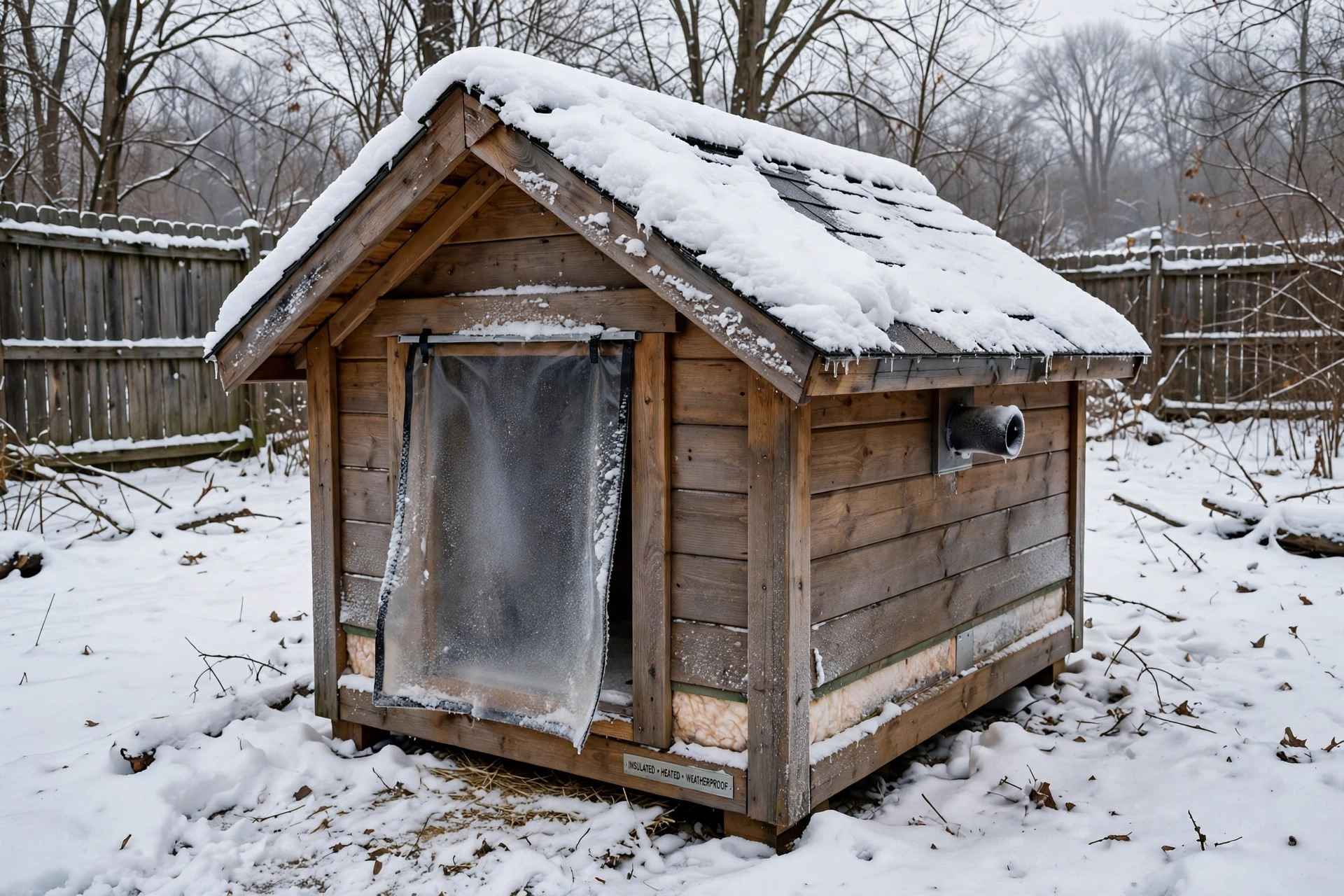

When the snow falls and the wind cuts across the yard, a dog that lives outside needs real shelter. A heated dog house for winter cold climates gives that shelter. It combines thick insulation with a low, steady source of heat. The result is a dry, draft-free den where a dog can rest in comfort while the temperature outside drops far below freezing.
Many owners feel unsure about heated houses. They ask if a regular dog house is enough. They ask if heating is safe. This guide answers those questions in plain terms: why a heated dog house for winter cold climates matters, how to pick one, what kinds are sold, what they cost, and how to keep them safe.
Why a Heated Dog House Matters in Cold Climates
Dogs have fur, but fur alone is not enough in a hard winter. Short-haired breeds, older dogs, small dogs, and dogs with thin coats lose body heat fast. A plain wooden house blocks some wind, but it does little about the cold floor, the frozen air inside, and the damp bedding.
A heated dog house for winter cold climates solves these problems at once. The heater warms the air to a safe level. Insulated walls hold that warmth in. A raised floor keeps the cold ground from drawing heat out of the dog’s body.
There is a health angle too. Long hours in the cold can bring on stiff joints, ear infections, and in bad cases frostbite on the ears and paws. Puppies and senior dogs are at the most risk. The American Society for the Prevention of Cruelty to Animals explains that outdoor pets need solid shelter and care when temperatures fall, and it warns owners to limit outdoor time in severe cold. You can read their winter care advice on the ASPCA site.
Comfort matters as much as health. A dog that is warm and relaxed barks less at night and is less likely to dig or chew out of stress. Owners who install a heated house often say the change in their dog’s mood is clear within a week.
How to Choose the Right Heated Dog House: Heated Dog House for Winter Cold Climates
Start with size. The house should be big enough for the dog to stand, turn, and lie down, but no bigger. A house that is too large wastes heat. Measure from nose to tail and from the top of the head to the ground, then add a few inches. The doorway should be just tall and wide enough for the dog to pass through. A large opening lets warm air escape.
Next, look at insulation. The best heated houses use foam insulation inside the walls, floor, and roof. Foam panels hold heat well and keep the walls thin. Some houses use double-wall plastic with air space between. That helps, but it is not as strong as true foam insulation.
The heating method is the next choice. Some houses have a built-in heater. Others are sold unheated and let you add a heated pad or an electric heater made for dog houses. Either way, the heater should be made for pet use, with a chew-resistant cord cover and a thermostat that holds a steady temperature.
Doors matter in cold climates. A plain open doorway lets heat pour out. A flap door keeps the warmth in while still letting the dog come and go.
Think about power. Almost all heated houses run on standard household current. You will need an outlet within reach of the cord. Use a heavy-duty outdoor extension cord if the outlet is far away. The PetMD library has helpful guidance on keeping outdoor pets safe in winter weather, including tips on shelter and bedding.
Check the build quality. The house should sit off the ground on legs or a raised base. The roof should slope so snow and rain run off. Plastic houses are easy to clean and resist rot.
Types and Options
Heated dog houses for winter cold climates come in several styles. Each suits a different dog and a different yard.
Insulated Plastic Houses with Built-In Heat
These are the most common. A hard plastic shell holds foam insulation, and a heating panel is fitted inside. They are light, easy to hose clean, and do not rot.
Wooden Heated Houses
Wooden houses have a warm, cabin look. Good ones have insulated panels and a heated floor pad. They cost more and need yearly sealing against moisture.
Heated Kennel Pads and Mats
A pad is a flat, electric mat that lies on the floor of a dog house. Pads cost less than a built-in system and are easy to replace. Pair one with a well-insulated house and a flap door for solid winter protection. The Humane Society offers tips on outdoor pet shelter that pair well with this setup; see Humane Society for general guidance.
Thermo-Snug Barrel and Dome Styles
The round shape sheds snow well and has fewer corners where cold air can pool. Many include insulated liners and heat-ready floors. They suit very windy sites.
Heated Duplex and Double Houses
Owners with two dogs can buy a house with two rooms and a shared wall. Each dog gets its own space, and the shared wall helps hold heat.
What to Look for in a Heating Element
Look for a unit that holds a steady surface temperature near the dog’s body heat. Most good pads reach about 100 degrees on the surface when the dog lies on them. That is warm to the touch but not hot enough to burn.
A thermostat or automatic shutoff is a must. It keeps the heater from running wild if the weather turns mild, and it saves power. Chew-resistant cords are a must too. Dogs chew cords. A steel-wrapped cord or a rigid conduit keeps the wiring safe.
Check the wattage. Most heated pads draw 40 to 80 watts. That is less than a light bulb. For most dogs in most cold climates, a 60-watt pad in an insulated house is plenty. The heater should be rated for outdoor use and labeled for pet houses and damp locations.
Cost and Price Guide
Prices vary by size, material, and heating system. A simple insulated house with a heated pad starts around 120 dollars. Mid-range plastic houses with built-in heat run from 150 to 300 dollars. Large wooden heated houses can cost 350 to 600 dollars. Add-on heated pads alone cost 40 to 100 dollars.
Running cost is low. A 60-watt pad that runs all day uses about 1.4 kilowatt-hours per day. At typical electric rates, that is a few dollars per month. A thermostat cuts that further by switching the heat off when the house is warm enough.
Retailers such as Chewy and PetSmart sell heated dog houses in many sizes, and Tractor Supply is a strong choice in rural areas. A flap door kit, a cord guard, and an outdoor thermostat can add 30 to 80 dollars.
Care and Upkeep
Check the house once a week through the winter. Look for ice on the floor, wet bedding, and damage to the flap door. Wet bedding steals heat. Change it at once if it is damp.
Clean the house each month. Take the bedding out. Sweep the floor. Wipe the walls with a mild soap solution. Rinse and let it dry before the dog goes back in. Check the heating pad while you clean. If anything looks wrong, unplug the unit and replace it.
In spring, deep clean the house. Wash all surfaces and air it out in the sun. Check the roof seal and the door flap for wear, and fix small cracks with sealant before the next winter.
For senior dogs that spend long hours in the house, a soft supportive floor helps sore joints. Some owners pair a heated pad with a best orthopedic dog bed for senior large dogs for extra comfort. The pad warms, and the bed supports.
Bedding matters. Use straw or a thick washable bed inside the heated house. Straw traps warm air and drains moisture. Avoid blankets that hold water. The American Kennel Club has notes on winter care for dogs that cover bedding and outdoor safety; visit AKC for more.
Safety First
Safety is the most important part of using a heated dog house for winter cold climates. Electricity and pets mix well only when the gear is right.
Use only heaters made for pet houses. Never put a space heater or a heat lamp inside a dog house. They run too hot and can start a fire.
Keep cords out of reach. Run the cord through a guard or conduit. Plug it into a ground-fault outlet, which cuts power fast if water gets into the circuit. If your outdoor outlet is not a ground-fault type, have an electrician fit one.
Watch the dog for signs of overheating. Panting, restlessness, or a refusal to go inside can mean the house is too warm. Turn the thermostat down. Make sure water is always near the house.
Check the house after storms. Heavy snow can block the doorway or press on the roof. Clear the snow and free the flap so the dog can get in and out.
Never lock a dog in a heated house. The dog must be able to leave if it gets too warm or if the heater fails. The flap door should swing both ways with light pressure.
Keep straw and bedding away from the heater. Do not stack boxes or wood against the house. The National Weather Service publishes cold weather safety guidance that is worth reading alongside pet shelter advice.
Training Your Dog to Use It
Some dogs walk right in. Others need coaxing. Start by placing treats and a favorite toy inside. Let the dog explore with the flap held open. Feed a meal inside the house for a few days. Praise the dog each time it goes in.
Do not force the dog inside. Be patient. Most dogs learn in a week or two. If the dog will not use the flap, remove it for a few days so the dog gets used to the warm house first, then hang it back up.
Clean the house often while training. A dog is more willing to enter a fresh den than a dirty one. A clean dog is a healthier dog; regular bathing with a gentle formula helps the coat stay in good shape through winter, which is why many owners look up the best dog shampoo for dry flaky skin relief when cold weather dries out their dog’s skin.
Buying Tips
Buy before the cold hits. Prices rise and stock runs low in late fall. Measure your dog before you order. Read reviews from owners in climates like yours.
Check the warranty. Good makers back the heater for at least a year. Ask how the heating unit is replaced if it dies. A house with a removable pad is easier to fix than one with heat sealed into the walls.
Look at independent reviews before you buy. The Spruce Pets covers pet products with hands-on testing notes, and Home Depot lists heated dog houses with owner reviews.
Winter Extras Worth Considering
A heated water bowl keeps the dog’s water from freezing. A windbreak fence or a row of shrubs cuts the wind around the house.
If you keep cats too, remember that cats need their own warm spots. An indoor perch near a window is ideal, but if a cat spends time outside, a separate insulated shelter is needed. Many pet owners also shop for a best cat tree for large cats sturdy tall to keep indoor cats active and warm through the long winter months.
Final Word
A heated dog house for winter cold climates is a sound buy for any dog that spends time outside in a hard winter. It keeps the dog warm, dry, and healthy, and it costs little to run. With the right size, solid insulation, a safe heater, and regular care, it will serve for many winters.
Take time to choose well. Measure your dog. Pick a heater made for pet use. Keep the bedding dry and the cords safe.
FAQ
How warm should a heated dog house be? Most experts say the inside should stay well above freezing, near 40 to 50 degrees in deep cold. The heated pad surface can be warmer where the dog lies. The dog should feel cozy, not hot.
Can a heated dog house catch fire? It is very unlikely if you use a heater made for pet houses. These units run at low wattage and have thermostats. The risk rises only with the wrong heater or damaged cords.
Do heated dog houses use a lot of electricity? No. Most draw 40 to 100 watts, about the same as a small light bulb. Monthly cost is usually a few dollars. A thermostat lowers the cost by cycling the heat on and off.
What size heated dog house does my dog need? Measure the dog from nose to tail and from head to ground while standing. Add a few inches each way. The doorway should be just big enough for the dog.
Can I leave my dog outside all winter with a heated house? A heated house helps a great deal, but no dog should live outside through every storm. Bring the dog in during blizzards, ice storms, and extreme cold snaps.
Is straw or a blanket better for bedding in a heated house? Straw is better. It traps warm air and drains moisture. Blankets hold water, which makes the house colder. Change straw when it gets damp.
References
American Kennel Club. (n.d.). Dog care and training resources. https://www.akc.org ASPCA. (n.d.). Pet care and animal welfare resources. https://www.aspca.org Chewy. (n.d.). Pet supplies. https://www.chewy.com National Weather Service. (n.d.). Weather safety. https://www.weather.gov PetMD. (n.d.). Pet health information. https://www.petmd.com PetSmart. (n.d.). Pet supplies and services. https://www.petsmart.com The Home Depot. (n.d.). Home improvement products. https://www.homedepot.com The Humane Society of the United States. (n.d.). Animal protection and care. https://www.humanesociety.org The Spruce Pets. (n.d.). Pet care guides and product reviews. https://www.thesprucepets.com Tractor Supply Co. (n.d.). Farm and ranch supplies. https://www.tractorsupply.com
Was this guide helpful?

About Robert Taylor
The My Garden US editorial team writes practical, in-depth home and garden guides for American homeowners — tested advice, no fluff.
You May Also Like

The Best GPS Dog Collar for Escape Artist Dogs: A Practical Guide
September 25, 2026 0 views
Pet Gate Freestanding for Wide Doorways: A Buyer’s Guide for American Homes
May 10, 2026 0 views
Indoor Dog Potty for Apartment Living Training: A Simple Guide
May 29, 2026 0 views