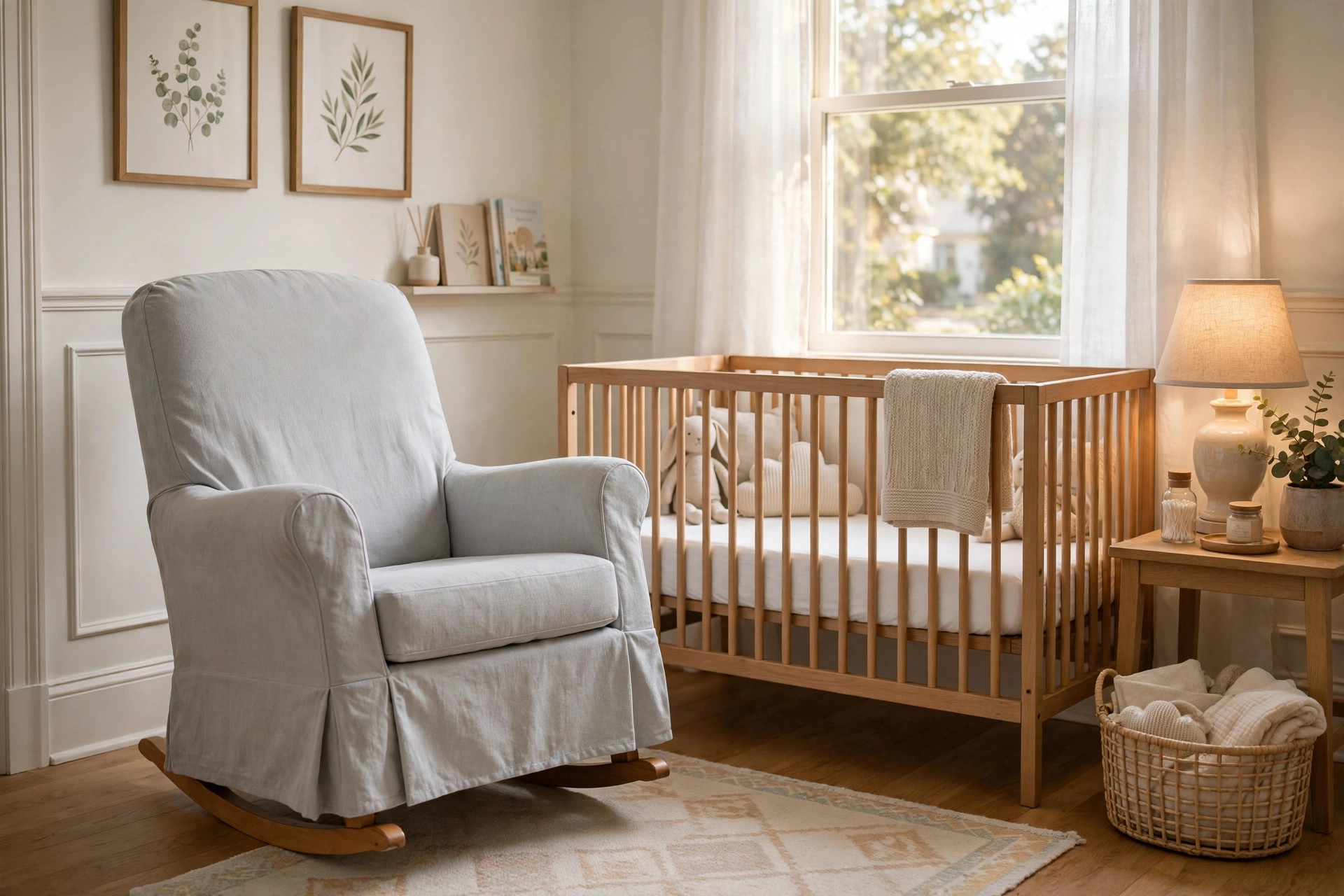

A nursing chair sees more hours of use than almost any other seat in the house. New parents sit in it for night feedings, for naps with the baby, and for quiet moments of rest. Spills are certain. A nursery glider slipcover for easy washing is the simple answer to this problem. It protects the chair, it comes off in seconds, and it goes straight into the washing machine.
This guide covers why a washable cover matters, what to look for when you buy one, and how to wash it so it lasts for years. It also gives tips on safety, cost, and care.
Why a Washable Slipcover Matters
A glider is a long-term piece of furniture. Parents use it for years, first for one child and then for the next. Without protection, the fabric takes the full force of daily life. Milk spills, spit-up, and sticky fingers all leave marks. A fixed cover is hard to clean. Most glider chairs have padding that cannot go in the machine.
A slipcover changes this. It is a separate layer that pulls off the frame and the cushions. When it is dirty, you wash it. When it is clean, the chair looks new again. Parents who pick a nursery glider slipcover for easy washing often say it is one of the best buys they made for the baby room.
There is also the matter of health. A clean seat is better for a newborn. Dust and old milk can cause odor and attract germs. A cover that washes well lets you keep the chair fresh with little work. This is worth much on weeks when sleep is short and time is shorter.
Finally, a slipcover can change the look of the room. If you move to a new home, or if you want a new color, you can buy a second cover. The chair stays the same. The room feels new. This saves money and cuts waste.
How to Choose the Right Slipcover: Nursery Glider Slipcover for Easy Washing
Measure Your Chair First
Gliders come in many sizes. Some are wide. Some are narrow. Some have tall backs and some have low backs. Before you buy, measure your chair. Write down the width of the seat, the height of the back, and the depth from front to back. Compare these numbers with the size chart of the cover.
A cover that is too small will not close. A cover that is too large will bunch and slip. Both are bad. A good fit looks smooth and stays in place when you rock. Many makers sell covers made for one model of glider. These fit best. If you cannot find one for your model, look for a cover with elastic edges or straps.
Pick the Right Fabric
Cotton is the most common choice. It is soft, it breathes, and it washes well. Cotton blends with a small amount of polyester hold their shape longer. They wrinkle less after washing. This makes them good for busy parents.
Linen looks fine and lasts long. But it wrinkles more. It also costs more. Microfiber is soft and resists stains. Some parents like it because spills wipe off fast. Fleece is warm for cold rooms, but it can trap lint.
Whatever fabric you pick, check that it is safe for a baby. Look for covers made without harsh dyes. Soft fabrics are kinder to newborn skin. The American Academy of Pediatrics offers general guidance on safe nursery textiles and sleep spaces.
Check the Closure Style
Slip covers close in different ways. Some use zippers. Some use velcro straps. Some use elastic skirts. Zippers give the cleanest look. They keep the cover tight and smooth. Velcro is fast and easy. It works well for parents who wash the cover often. Elastic skirts drape over the base and hide the frame.
Pick the style that suits your habits. If you plan to wash the cover every week, choose one that comes off in under two minutes. A nursing chair you sit in ten times a day should never have a cover that fights you.
Mind the Color and Pattern
Light colors show every spot. Dark colors hide spots but show lint. Many parents pick medium tones like gray, beige, or soft blue. Patterns like small dots or checks hide small stains well. They also add charm to the room.
A cover in a calm color can make the corner by the window feel restful. If you already have a crib mobile projector with lullaby music, pick a cover tone that does not clash with it.
Types and Options
Model-Specific Covers
Many glider makers sell covers made for their own chairs. These fit best of all. They match every curve of the frame. The arms, the back, and the seat cushions each get a snug piece. The cost is higher than a generic cover. But the fit and the finish are worth it for many buyers. Check the maker of your chair first. Stores like Pottery Barn Kids and IKEA list covers for their own seating lines.
Universal Covers
Universal covers are made to fit many chairs. They use elastic and straps to grip the frame. They cost less than model-specific covers. The fit is not perfect. There may be loose spots at the corners. But for the price, they do the job well. They are a good choice if your glider is old or if the maker no longer sells parts.
Waterproof Options
Some covers have a thin waterproof layer inside. This layer stops milk and spit-up from reaching the foam. It is a real help for night feedings. The waterproof layer keeps the padding dry, though the cover may feel slightly less soft than plain cotton. Most parents find the trade-off is worth it.
DIY Covers
Some handy parents sew their own covers. If you have a sewing machine and a pattern, you can make one for less than store prices. Use soft cotton, and wash the fabric before you cut it to stop shrinkage later.
Cost and Price
Slip covers span a wide price range. A simple universal cover may cost less than a new pair of sheets. A model-specific cover from a known brand can cost as much as a small chair. Most parents pay a middle price and get good value.
Here is a rough guide. Budget covers often cost twenty to forty dollars. They are simple cotton or polyester blends. They work fine for a year or two. Mid-range covers cost forty to ninety dollars. These fit better and wash better. They often carry a name brand. High-end covers cost ninety dollars and up. These may use linen or thick cotton. They last through more than one child.
Buy two covers if you can. While one is in the wash, the other is on the chair. This is the single best tip for night feedings. A spare cover costs less than a new chair. It also means you never have to wait for the dryer.
How to Wash Your Slipcover
Before the First Wash
Always read the care label first. The label tells you the right water temperature and the right dryer setting. Some covers need cold water. Some can take warm water. If the label is missing, use cold water and a gentle cycle. This is the safest choice.
Wash the cover alone the first time. New fabric can release dye. Washing alone stops the dye from marking other clothes. Turn the cover inside out before it goes in the machine. This protects the outer face.
The Regular Wash
For most cotton covers, the routine is simple. Use a mild soap. Pick a gentle or normal cycle. Use warm water, not hot. Hot water can shrink cotton and fade colors. Do not use bleach unless the label allows it. Bleach weakens fabric over time.
Take the cover out of the machine as soon as the cycle ends. Shake it once to smooth wrinkles. Then put it in the dryer on low heat or hang it to dry. Low heat is kinder to elastic and to velcro. High heat can melt velcro and shrink cotton blends.
Stain Treatment
Treat stains fast. Blot milk or spit-up with a damp cloth right away. Do not rub. Rubbing pushes the stain deeper into the weave. For set stains, soak the spot in cold water with a little soap for thirty minutes. Then wash as normal.
For tough spots, a paste of baking soda and water can help. Spread it on the stain. Let it sit for fifteen minutes. Then rinse and wash. Test any treatment on a hidden corner first. This makes sure it will not harm the color.
How Often to Wash
Wash the cover every one to two weeks in normal use. Wash it right away after any big spill. If your baby is sick or has a rash, wash it more often. A fresh cover is one small way to keep the nursery clean. Pair this habit with regular cleaning of the rest of the room. Guides from The Spruce have useful checklists for nursery cleaning routines.
Care and Upkeep
A good cover can last for years with simple care. Rotate between two covers so neither wears too fast. Keep pets off the chair if you can. Pet hair is hard to remove from some fabrics. A lint roller handles daily hair and dust between washes.
Check the seams and straps each month. Look for loose threads or weak velcro. Fix small tears early with a needle and thread. A small repair takes five minutes. A large tear may need a new cover.
Store a spare cover in a dry place. Fold it neatly. Do not store it in a damp closet. Damp storage can cause a musty smell. If the cover smells musty after storage, wash it with a cup of white vinegar in the rinse cycle. This removes the odor.
When the cover no longer fits well, replace it. Elastic wears out over time. A saggy cover is less safe because it can bunch under the baby. It also looks tired. A fresh cover costs far less than a new chair.
Safety Notes
The glider itself must be safe before you add any cover. Make sure the chair is stable. It should not tip when you lean. The gliding motion should be smooth. There should be no pinch points where small fingers can get caught. The U.S. Consumer Product Safety Commission lists safety standards for nursery furniture and recalls.
The cover must not add risk. It should fit tight. Loose fabric can bunch and trap heat. Keep any ties or long straps away from the baby. Short velcro straps are safer than long cords. Never let cords hang where a child can reach them.
Keep the room safe too. Place the glider away from windows with blind cords. Keep small items off the floor near the chair. If you add other nursery gear, like a best kids chair for desk ergonomic support for an older sibling, keep walk paths clear between them.
Also note that a glider is for feeding and rocking, not for sleep. Do not let the baby sleep alone in the chair. This is the guidance of child health experts at HealthyChildren.org. When the baby sleeps, move the child to a safe crib or bassinet.
Frequently Asked Questions
Will any slipcover fit my glider?
Not every cover fits every chair. Model-specific covers fit best. Universal covers fit many chairs but not all. Measure your chair and compare with the size chart. If the numbers match within an inch, the cover should work.
Can I wash the cover in hot water?
It is best not to. Hot water can shrink cotton and fade colors. Use warm or cold water instead. Hot water is fine only if the care label says so. When in doubt, pick cold.
How long does a slipcover last?
A good cover lasts two to four years with normal washing. Cotton blends last longer than thin cotton. Rotating two covers makes each one last longer. Replace the cover when the elastic fails or the fabric thins.
Is a waterproof cover worth the extra cost?
For most parents, yes. Night feedings bring spills. A waterproof layer keeps the foam dry and stops odors. The cover still feels soft enough for daily use. The extra cost is small next to the cost of replacing chair foam.
Can I use fabric softener on the cover?
It is better not to. Fabric softener coats fibers and can cut absorbency. It can also leave a film that irritates baby skin. Use a mild soap alone. If the cover feels stiff, add half a cup of white vinegar to the rinse.
Where can I buy a good slipcover?
Many stores sell them. Large chains like Target and Wayfair carry many styles and price points. Specialty baby stores often stock model-specific covers. Review sites and parent guides, such as those at Babylist and What to Expect, can help you compare brands before you buy.
A Short Final Word
A nursery glider slipcover for easy washing is a small buy with a large payoff. It keeps your chair clean. It saves you time. It lets the nursery look its best with little work. Pick the right size, choose a soft safe fabric, and wash it on a steady routine. If you plan ahead, your glider can serve your family well for years.
As your child grows, the room will change. The glider may move from the nursery to a reading corner. A fresh cover can mark that change. Pair it with new pieces, like a best kids bed with slide for playroom bedroom, and the room grows with your child. Good choices now pay off for a long time.
References
American Academy of Pediatrics. (n.d.). HealthyChildren.org. https://www.healthychildren.org Babylist. (n.d.). Baby registry and gear guides. https://www.babylist.com IKEA. (n.d.). Home furnishings. https://www.ikea.com Pottery Barn Kids. (n.d.). Kids furniture and decor. https://www.potterybarnkids.com Target. (n.d.). Retail store. https://www.target.com The Spruce. (n.d.). Home and garden advice. https://www.thespruce.com U.S. Consumer Product Safety Commission. (n.d.). Product safety information. https://www.cpsc.gov Wayfair. (n.d.). Furniture and home goods. https://www.wayfair.com What to Expect. (n.d.). Pregnancy and parenting guidance. https://www.whattoexpect.com
Was this guide helpful?

About Emily Rodriguez
The My Garden US editorial team writes practical, in-depth home and garden guides for American homeowners — tested advice, no fluff.
You May Also Like

Kids Wall Art Canvas Prints for Girls Room: A Parent’s Guide
January 4, 2026 0 views
The Best Nursery Dresser Changing Pad Combo: A Simple Guide
May 27, 2026 0 views
Nursery Glider Recliner for Small Apartment: A Complete Guide
September 4, 2026 0 views