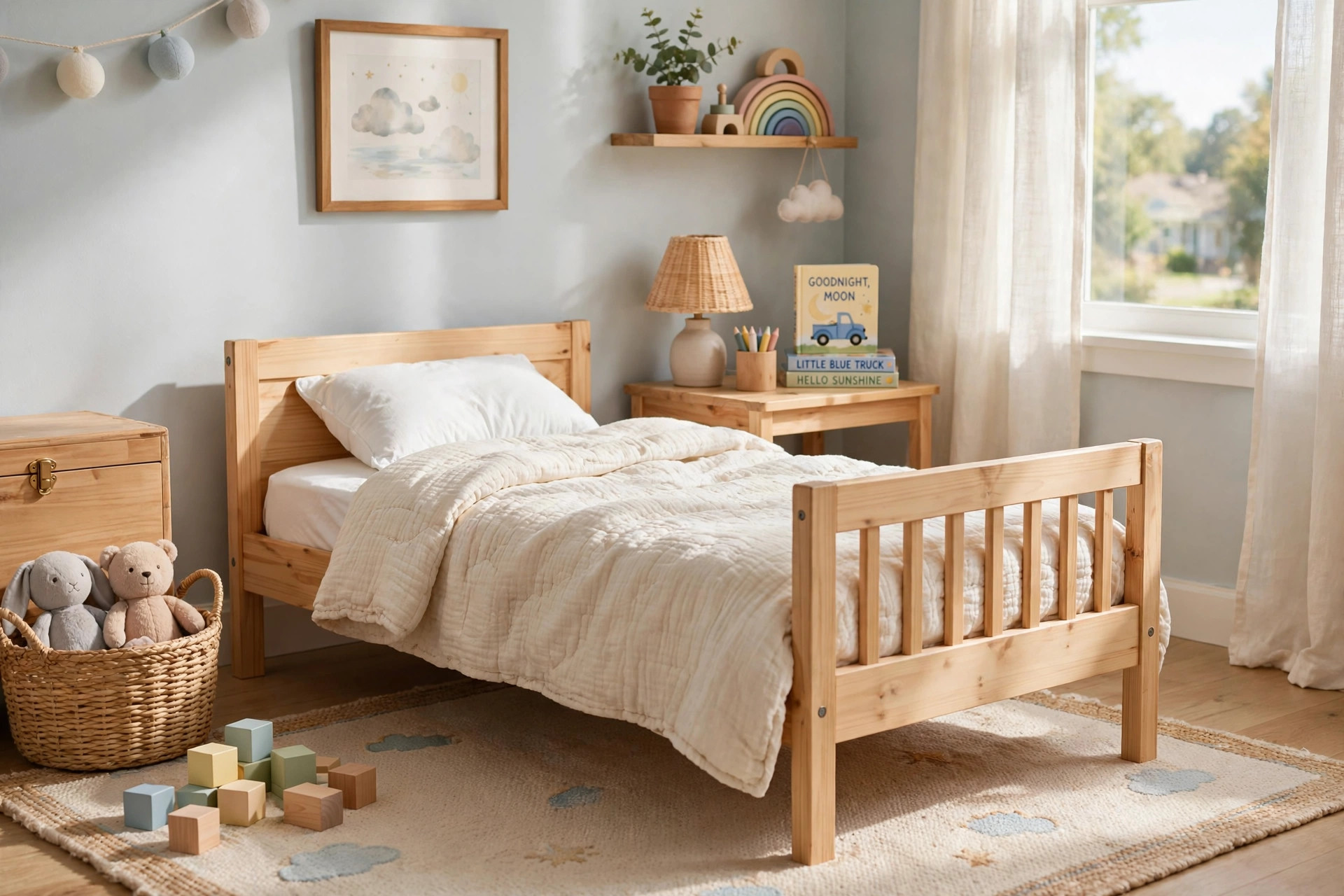

The move from crib to bed is a big step for a small child. Many parents ask what makes a toddler pillow for first bed transition safe. The answer is simple, but the details matter. A pillow that is too big, too soft, or made of the wrong fill can put a young child at risk. A pillow that is small, firm, and washable can make the new bed feel like home. This guide explains how to choose the right pillow, what to avoid, and how to keep your child safe and rested in the new bed.
Why the First Pillow Matters
A crib mattress is bare for a reason. Babies do not need pillows. When a child grows old enough for a bed, a small pillow can help in two ways. First, it gives comfort. A child who is used to the flat crib may feel lost on a bigger mattress. A pillow marks the head of the bed and tells the child where to sleep. Second, it gives support. A thin pillow can keep the head in line with the spine.
But a pillow is never needed for comfort alone. The most important rule is safety. Toddlers move in their sleep. They roll, turn, and push their faces into soft things. A pillow must not fold over the face or trap warm air around the nose and mouth. That is why a toddler pillow is not just a small adult pillow. It is built to a different standard. Parents who learn the basics can shop with confidence and give their child a better night of sleep.
When Your Child Is Ready for a Pillow: Toddler Pillow for First Bed Transition Safe
Most children are ready for a pillow around the age of two. Age alone is not the only guide. Watch for these signs.
The child has moved from a crib to a toddler bed with guard rails. A crib mattress should stay bare, but a toddler bed can hold a small pillow. The child is big enough to move the pillow away from the face on their own. The child sleeps through the night on a flat mattress and seems to want more comfort. The child asks for a pillow, or tries to use a stuffed toy as one.
If your child is under eighteen months, wait. The risk is not worth the comfort. Speak with your pediatrician if you are not sure. Every child is different, and a doctor who knows your child can give the best advice. Guidance on safe sleep for toddlers is published by the American Academy of Pediatrics and is a good place to start.
What to Look For When You Choose
A safe toddler pillow has four traits: the right size, the right firmness, the right fill, and a washable cover. Take each one in turn.
Size
A toddler pillow is much smaller than a standard pillow. Look for a pillow that measures about 13 by 18 inches, or 12 by 16 inches. Some brands make pillows as small as 10 by 14 inches. The pillow should fit the width of the child bed with room to spare. If the pillow hangs over the edge, it is too big. A pillow that is too big can bunch up near the face. A pillow that is too thick can lift the head at a sharp angle and strain the neck. Aim for a pillow that is about two to three inches thick when it lies flat. It should spring back when you press it down.
Firmness
A toddler pillow should be firm, not soft and sinking. Press the center with your hand. It should give a little and then push back. A pillow that keeps the shape of your hand is too soft. The danger of a soft pillow is that a small face can sink into it. Firm fill holds the head up and lets air move around the face. Some makers sell a “first pillow” or “toddler pillow” with a firm core. Read the label and test the pillow in the store if you can.
Fill
The fill decides how the pillow feels and how it washes. The common fills are polyester fiber, cotton, down alternative, and memory foam. Each has pros and cons.
Polyester fiber fill is the most common choice for toddler pillows. It is low cost, it holds its shape, and it washes well. Cotton fill is natural and breathes well, but it can pack down and lose shape over time. Down alternative gives a soft feel, yet many versions are too lofty for toddlers, so check the thickness. Memory foam holds its shape, but it can feel too firm and too warm for a small child, and some pieces are hard to wash. Experts who study toddler sleep habits note that a cool, firm sleep surface helps children sleep longer.
Cover and Fabric
The cover should be soft cotton or a cotton blend. It should feel smooth against the skin. Look for a tight weave that keeps the fill inside. A zipper cover is a good choice because you can take it off and wash it often. Avoid covers with buttons, loose ties, or long ribbons. These are choking hazards for small children. If the pillow has a tag, check what the tag says about washing and about the fill. A clear tag is a sign of a maker who takes safety seriously.
Types and Options
Shops sell several kinds of pillows for small children. Here is what to know about each kind.
Standard toddler pillows. These are the small 13 by 18 inch pillows found in most stores. They are made for the first bed. They are the safest and simplest choice for most families.
Travel and nap pillows. These are even smaller and are made for daycare mats, car seats, and travel cribs. They work well for naps away from home. Do not use them as the main night pillow unless they meet the same size and firmness rules.
Contoured pillows. Some pillows have a dip in the middle or raised edges. These are made for adults with neck pain. They are not made for toddlers. Skip them.
Organic pillows. Some makers sell pillows with organic cotton covers and natural fills. These can be fine if they are the right size and firmness. The word “organic” does not by itself mean safe.
Pillow and toddler bedding set combos. Many sets for toddler beds include a small pillow, a quilt, and a fitted sheet. These sets can be good value. Check the pillow on its own before you buy. If the pillow is too soft or too big, buy the bedding without the pillow and choose a pillow on its own.
You can browse many small pillow styles at large home stores and kids shops, such as the kids department at IKEA, Pottery Barn Kids, and Wayfair. Compare sizes and fills before you choose.
Cost and Price
A safe toddler pillow does not have to cost much. Most good toddler pillows sell for between eight and twenty five dollars. Simple polyester fill pillows are at the low end. Organic cotton pillows cost more. A pillow that costs forty dollars or more is not safer than a ten dollar pillow. Price buys nicer fabric and longer life, not more safety.
Buy one pillow to start, not two or three. Your child needs only one pillow in the bed. Extra pillows are clutter and add risk. When you buy, check the return policy. Your child may reject the pillow, and it is good to be able to take it back.
Care and Upkeep
A toddler pillow needs regular care. Small children drool, sweat, and spill. A clean pillow lasts longer and stays healthier.
Wash the pillow cover every one to two weeks. Use warm water and a mild soap. Wash the whole pillow every one to two months, or as the label says. Most polyester pillows can go in the machine. Dry on low heat with a clean tennis ball or dryer ball to fluff the fill. Air dry foam pillows, since heat can break them down.
Check the pillow every few months. Press it flat and see if it springs back. If it stays flat, the fill is worn out and the pillow should be replaced. Look for thin spots, torn seams, and lumps. A lumpy pillow can push the head at a bad angle. Most toddler pillows last one to two years with normal use. When the child grows into a twin bed, move up to a youth pillow, which is a bit bigger but still thinner than an adult pillow.
Store a spare cover, not a spare pillow. A clean cover takes up little space and keeps the bed fresh between washes.
Safety
Safety comes first, last, and always. Follow these rules and share them with anyone who puts your child to bed.
Keep the bed simple. One pillow, one fitted sheet, and a light blanket are enough. Take out large stuffed animals at night. They can cover the face during sleep. A child can keep a small lovey if it is flat and breathable, but the bed should not be full of toys.
Place the pillow right. Put the pillow flat at the head of the mattress, against the headboard or wall. Do not prop it up like a wedge. A propped pillow can slide and trap the child. If the bed has guard rails, the pillow should sit well inside them.
Mind the room, not just the bed. A safe pillow is one part of a safe room. Keep cords from blinds and shades far from the bed. Cover outlets. Anchor dressers and shelves to the wall. Darken the room with blackout curtains for the nursery so the child sleeps well and does not climb out to play with cords. Room safety guides from the U.S. Consumer Product Safety Commission explain how to check a child’s room step by step.
Watch for recalls. From time to time, a pillow or bedding product is recalled. Check the CPSC recalls page before you buy and once a year after. Keep the brand and model name of your pillow in a note on your phone so you can check fast.
Teach pillow habits. Show your child how to sleep with the head on the pillow. If you find the child asleep under the pillow or with the pillow over the face, calmly move it. Most children learn fast. If your child fights the pillow night after night, take it away for a few weeks and try again later. There is no rush.
Talk to the pediatrician. If your child has breathing problems, allergies, or a flat head shape that needs care, ask the doctor before you add a pillow. A doctor can tell you what fill and thickness fit your child’s needs. Parenting guides such as What to Expect also answer common questions about toddler sleep.
Frequently Asked Questions
What age is safe for a toddler pillow? Most experts say around age two. The child should be out of the crib, able to roll and move well, and able to push the pillow away from the face. If your child is younger than eighteen months, do not use a pillow. When in doubt, ask your pediatrician.
Can I just use a small adult pillow? No. Adult pillows are too thick and too soft for a toddler, even the small travel sizes. An adult pillow lifts the small head too high and can fold around the face. Buy a pillow made for toddlers, with a thin and firm shape.
How thick should a toddler pillow be? Two to three inches is right for most toddlers. The pillow should be thin enough that the head rests almost level with the mattress. A pillow thicker than four inches is too much for a small child.
Is memory foam safe for toddlers? Memory foam is firm and holds shape, which sounds good, but it has downsides. It can trap heat, it is hard to wash, and some pieces are too firm for a small child. A washable fiber fill pillow is a better first choice. If you do use foam, pick a thin piece made for children and check that it stays cool.
How often should I replace the pillow? Replace it every one to two years, or sooner if it goes flat, lumps up, or tears. Children grow fast, and a worn pillow does not support the head well. Mark the buy date on the tag with a pen so you remember.
Does my child even need a pillow? No child needs a pillow for health. Many children sleep fine on a flat mattress for years. A pillow is for comfort. If your child sleeps well without one, there is no need to add one. You can wait until the child asks or until the move to a bigger bed makes a pillow feel natural.
A Short Final Word
The first bed is a milestone. The right pillow makes it a happy one. Pick a small, firm, washable pillow. Keep the bed simple. Check the pillow often and replace it when it wears out. For more ideas on kids rooms, the home section at The Spruce has many simple guides. Research on child health from the American Academy of Pediatrics and the Safe to Sleep campaign can answer deeper questions about safe sleep as your child grows.
References
American Academy of Pediatrics. (n.d.). HealthyChildren.org. https://www.healthychildren.org American Academy of Pediatrics. (n.d.). Child health resources. https://www.aap.org Eunice Kennedy Shriver National Institute of Child Health and Human Development. (n.d.). Safe to Sleep campaign. https://www.nichd.nih.gov IKEA. (n.d.). Home furnishings. https://www.ikea.com Pottery Barn Kids. (n.d.). Kids furniture and decor. https://www.potterybarnkids.com Sleep Foundation. (n.d.). Sleep information and guidance. https://www.sleepfoundation.org The Spruce. (n.d.). Home and garden advice. https://www.thespruce.com U.S. Consumer Product Safety Commission. (n.d.). Product safety information. https://www.cpsc.gov Wayfair. (n.d.). Furniture and home goods. https://www.wayfair.com What to Expect. (n.d.). Pregnancy and parenting guidance. https://www.whattoexpect.com
Was this guide helpful?

About Emily Rodriguez
The My Garden US editorial team writes practical, in-depth home and garden guides for American homeowners — tested advice, no fluff.
You May Also Like

Kids Toy Storage Hammock for Stuffed Animals: A Simple Guide
April 23, 2026 0 views
Nursery Wall Sconce for Soft Ambient Light: A Parent’s Guide
June 11, 2026 0 views
Toddler Potty Chair for Bathroom Training: A Simple Guide for Parents
February 22, 2026 0 views