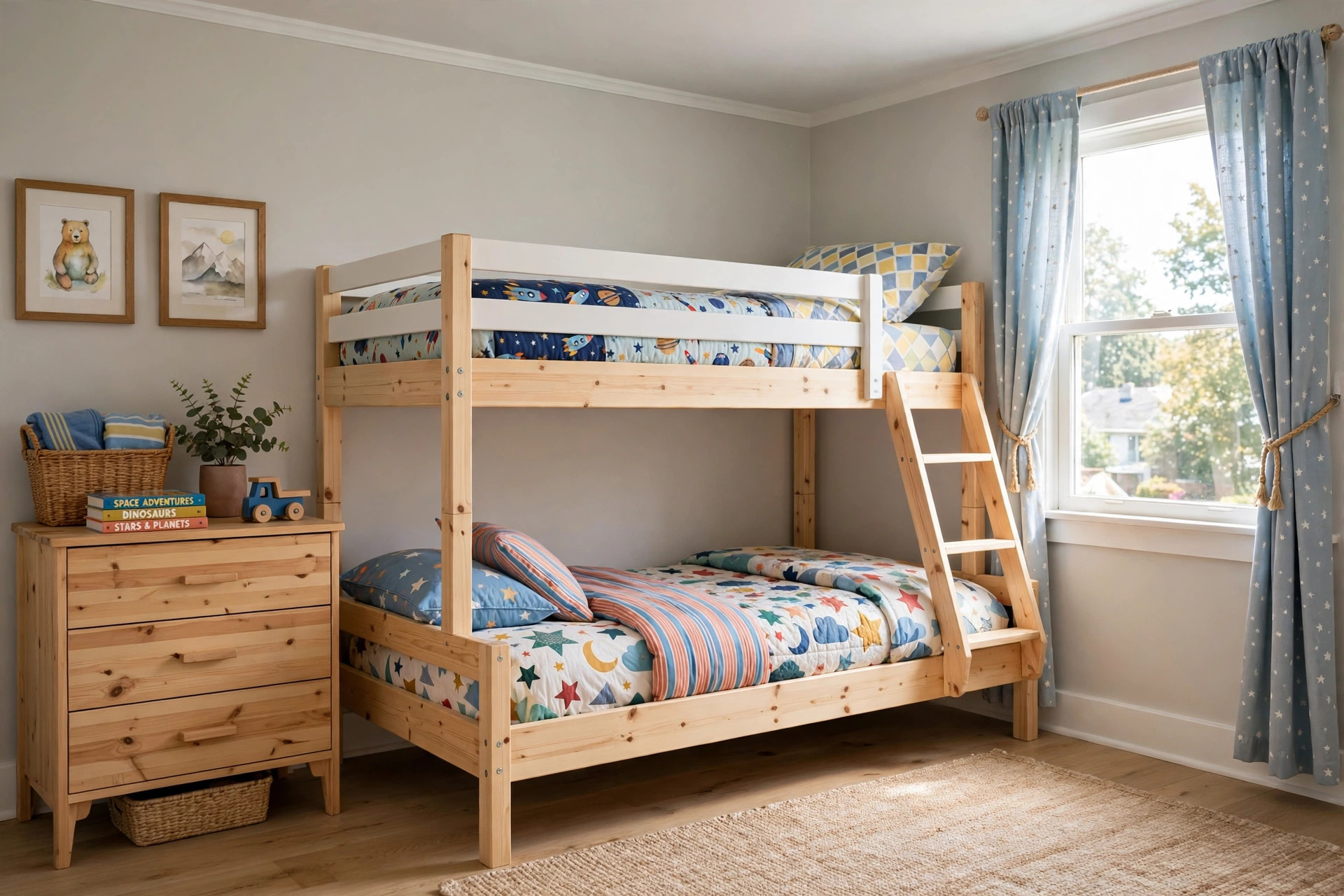

Choosing the best kids bunk bed for low ceilings takes more care than most parents expect. A standard bunk bed can be too tall for a room with an eight-foot ceiling. The child on top may sit too close to the ceiling. That can lead to bumps, poor air flow, and broken ceiling fans. The good news is that many makers now build low-profile bunk beds for just this problem. This guide explains what to measure, which styles work best, what to pay, and how to keep the bed safe for years.
Why the Right Bunk Bed for a Low Ceiling Matters
Most American homes have ceilings between seven and eight feet in bedrooms. Older homes, basements, attics, and farmhouse additions can have even lower ceilings. A standard bunk bed stands 65 to 72 inches tall. In a room with an eight-foot ceiling, that leaves about 30 inches between the top mattress and the ceiling. That is tight. A child who sits up quickly can hit his head.
The Consumer Product Safety Commission sets rules for bunk bed safety. Guardrails on the top bunk must extend at least five inches above the mattress. Parents should also allow room above the top bunk so a child can sit up without striking the ceiling. The best kids bunk bed for low ceilings is designed around these needs. It keeps the total height under 60 inches. That leaves a safer gap between the top mattress and the ceiling.
Low ceilings also change how a room feels. A tall bed in a small room makes the room feel crowded. A low bunk bed keeps the room open. It lets light reach both bunks. It makes changing sheets easier for parents. It also costs less to ship and is often simpler to build.
What to Look for When Choosing a Low Bunk Bed: Best Kids Bunk Bed for Low Ceilings
Total Height
The total height is the most important number. Measure your ceiling first. Then subtract the height of the bed you are considering. A good rule is to keep at least 33 to 36 inches between the top of the top mattress and the ceiling. Many guides suggest 36 inches so a child can sit up with ease.
For an eight-foot ceiling, look for beds 50 to 60 inches tall. For a seven-foot ceiling, look for beds under 55 inches tall. Some brands sell bunk beds as low as 46 inches. These are often called junior or low-loft bunk beds.
Guardrails and Openings
The best kids bunk bed for low ceilings still has full guardrails on the top bunk. Both long sides need rails. The rails must be fixed in place. Check that the gap between rails is narrow enough that a child cannot slip through. The American Academy of Pediatrics advises that children under six should not sleep on the top bunk. This rule matters even more with low beds, because parents may wrongly feel a low bed is safer for small children.
Ladder or Stairs
A bunk bed with stairs for a kids room takes up more floor space than a ladder model. Stairs are easier to climb at night. They work well in low rooms because the climb is short. Ladders save space but can feel steep. Some low bunk beds use angled ladders that are gentler on small feet.
Mattress Thickness
Mattress thickness changes the safe height. A thick mattress raises the sleeping surface closer to the ceiling and eats into the guardrail height. For low bunk beds, choose a top mattress that is six inches thick or less. Many makers state a maximum mattress thickness in the manual. Follow it. Never stack a deep mattress on a low bunk.
Wood, Metal, or MDF
Solid wood bunk beds last the longest. Pine is common and light. Hardwood costs more but resists dings. Metal beds are strong and often cheaper. They can squeak, so check reviews. MDF and particle board are the cheapest option. They can weaken over time if the room is damp. For a low ceiling room, weight matters less than strength, because the bed is short and stable.
Types of Low Bunk Beds
Low-Profile Standard Bunks
These look like classic twin-over-twin bunks but stand 50 to 58 inches tall. The bunks sit closer together. They are the simplest choice and fit most rooms. IKEA and Wayfair carry many low-profile models in wood and metal.
Low Loft Beds
A low loft bed raises one mattress about four feet off the floor. The space under it holds a desk, drawers, or a play area. It works well when only one child needs the top. A kids loft bed with a desk underneath for teens can fit under an eight-foot ceiling where a tall loft cannot.
Trundle Bunk Beds
A trundle bed slides under the lower bunk. It adds a third sleeping spot without adding height. This is a smart pick for sleepovers in small rooms. The trundle rolls out at floor level, so ceiling height is never an issue.
Convertible Bunks
Some bunk beds split into two twin beds. This is useful as children grow. You can use the bunk while the kids are young and space is tight. Later, you can separate the beds. A kids bed with storage drawers underneath is another flexible option when floor space is short.
Bunks with Built-In Storage
Low bunk beds often add drawers in the stairs or under the lower bunk. These cost more but save the cost of a dresser. In a small room with a low ceiling, every square foot counts.
Cost and Price
Prices for low bunk beds follow the same ranges as standard bunks. Expect to pay 250 to 500 dollars for a basic metal or pine twin-over-twin low bunk. Solid wood models with stairs or drawers run 500 to 1,000 dollars. Premium brands like Pottery Barn Kids can charge 1,200 dollars or more for hardwood low bunks.
Do not forget the cost of two twin mattresses. Good bunk mattresses cost 100 to 250 dollars each. Guardrail-safe thin mattresses for the top bunk are widely sold. Delivery and assembly can add 50 to 150 dollars. Some stores, including Home Depot, offer free delivery on larger orders.
Cheap beds are tempting, but check the weight limits. A low bunk should hold at least 200 pounds per bunk. Read the manual for the exact limit. A bed that creaks or wobbles is not worth the savings.
Setting Up the Bed in a Low Room
Start by measuring. Measure the ceiling height at the spot where the bed will stand. Sloped ceilings need extra care. Measure at the lowest point above the bed. Then measure the bed height with the top mattress in place.
Place the bed away from ceiling fans, light fixtures, and windows. A child on the top bunk should not be able to touch a fan. Keep the bed away from cords and blinds. The Spruce offers room layout guides that help with small bedrooms.
Leave the ladder or stairs on the side with the most open floor. Make sure the child can climb in and out without hitting the ceiling with his head. Test this before you tighten all the bolts. Have the child sit on the top bunk and raise his arms. If his hands touch the ceiling, the bed is too tall or the mattress is too thick.
Anchor the bed to the wall if the maker provides a kit. Low beds are stable, but active children can still rock them. Wall anchors add safety at low cost.
Care and Upkeep
Check the bolts every three months. Children climb, jump, and hang on beds. Bolts loosen over time. Tighten them with the tool that came in the box. Keep the tool in a drawer so you do not lose it.
Clean the frame with a damp cloth. For wood beds, use a mild soap and dry the wood after. Avoid harsh cleaners on painted finishes. They can dull the paint. Vacuum under the lower bunk and around the ladder each month. Dust builds up fast in small rooms.
Inspect the guardrails and ladder rungs once a month. Look for cracks, splits, and bent parts. Replace broken parts with parts from the maker. Do not use generic bolts from a hardware bin. They may not match the strength the design needs.
Mattresses need care too. Flip or rotate them every three months if the maker allows it. Use a waterproof cover on the top bunk. It protects the mattress from spills and sweat. A thin, firm mattress is best for safety and support.
Safety Notes for Parents
Safety rules for the best kids bunk bed for low ceilings are the same as for any bunk. Children under six should use the lower bunk only. Teach children to use the ladder facing the bed. Do not let them jump from the top bunk. Do not hang belts, scarves, or ropes from the rails. These can cause strangulation.
Keep the room cool. Heat rises, so the top bunk can feel warmer than the rest of the room. A small fan or an open vent helps air move. Make sure smoke alarms work. A child on the top bunk needs a clear path down in an emergency. Practice the escape route at night with a dim light.
What to Expect and Consumer Reports both publish bunk bed safety checklists. Read one before you buy. A few minutes of reading can prevent a serious injury.
FAQ
What height bunk bed is best for an 8-foot ceiling?
Look for a bunk bed that is 60 inches tall or less. With a standard six-inch top mattress, this leaves about 30 to 36 inches between the mattress and the ceiling. That is enough for most children to sit up safely.
Can a bunk bed fit in a 7-foot ceiling room?
Yes, but you must choose a low-profile model under 55 inches tall. Use a thin top mattress, no more than six inches. Measure twice before you buy. Sloped ceilings need measuring at the lowest point above the bed.
Are low bunk beds as safe as standard bunk beds?
They are safe when they meet federal standards and are used correctly. The Consumer Product Safety Commission rules apply to all bunk beds. Guardrails, ladder strength, and spacing rules do not change with height. The main risk is a child hitting the ceiling, which a low bed reduces.
What mattress thickness is safe for the top bunk of a low bed?
Use a mattress six inches thick or less on the top bunk. A thick mattress raises the child closer to the ceiling. It also lowers the effective height of the guardrails. Always follow the maximum thickness in the bed manual.
Should I choose stairs or a ladder for a low bunk bed?
Stairs are easier and safer to climb, especially at night. They take more floor space. Ladders save space but feel steeper. In a very small room, an angled ladder is a good middle choice. A toddler bed with guard rails for a first bed may suit a younger sibling who is not ready for a bunk.
How often should I check the bed for loose parts?
Check bolts and rails every three months. Check more often if the children are rough on the bed. Tighten anything loose right away. Replace worn parts with parts from the maker.
Final Word
The best kids bunk bed for low ceilings is not the tallest or the fanciest model. It is the bed that fits your room, keeps your child clear of the ceiling, and meets safety standards. Measure your ceiling. Pick a bed under 60 inches tall. Use a thin top mattress. Check the bolts often. With those steps, a low bunk bed can give your children years of safe, comfortable sleep in even the smallest room.
References
American Academy of Pediatrics. (n.d.). HealthyChildren.org. https://www.healthychildren.org Consumer Reports. (n.d.). Product reviews and ratings. https://www.consumerreports.org IKEA. (n.d.). Home furnishings. https://www.ikea.com Pottery Barn Kids. (n.d.). Kids furniture and decor. https://www.potterybarnkids.com The Home Depot. (n.d.). Home improvement products. https://www.homedepot.com The Spruce. (n.d.). Home and garden advice. https://www.thespruce.com U.S. Consumer Product Safety Commission. (n.d.). Product safety information. https://www.cpsc.gov Wayfair. (n.d.). Furniture and home goods. https://www.wayfair.com What to Expect. (n.d.). Pregnancy and parenting guidance. https://www.whattoexpect.com
Was this guide helpful?

About Jennifer Lee
The My Garden US editorial team writes practical, in-depth home and garden guides for American homeowners — tested advice, no fluff.
You May Also Like

Kids Play Kitchen Set for Pretend Cooking: A Complete Buying Guide
April 25, 2026 0 views
Kids Desk Lamp with USB Port for Homework: A Parent’s Guide
February 28, 2026 0 views
Nursery Closet Dividers for Organizing Sizes: A Simple Guide for New Parents
August 15, 2026 0 views