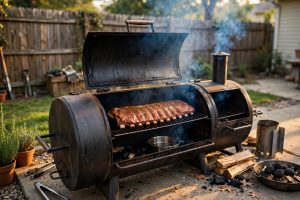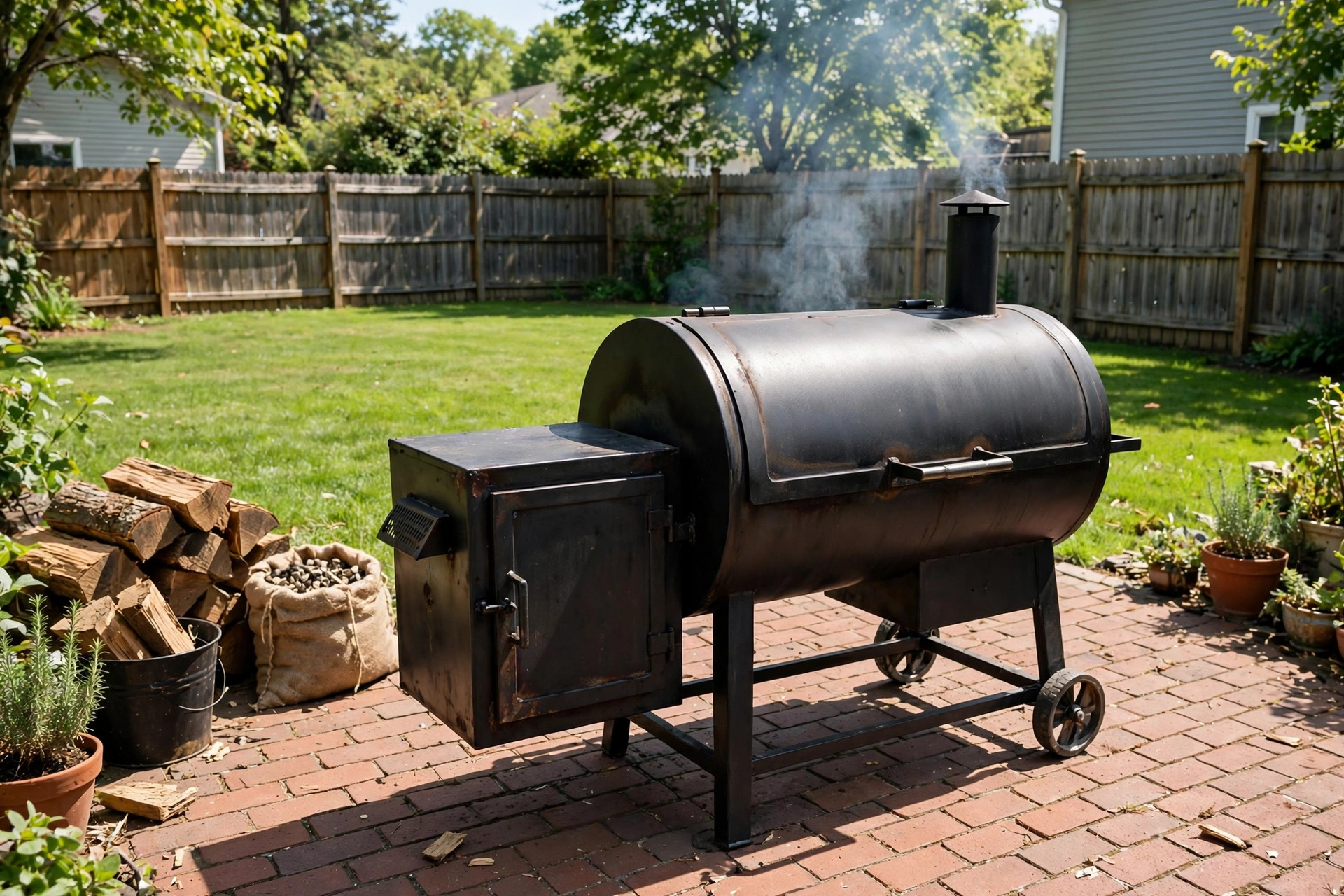

The best offset smoker under 500 dollars can turn a plain backyard into the center of every family meal. An offset smoker burns wood in a small side box, and the smoke and heat drift into a long main chamber where brisket, ribs, and chicken cook low and slow. It is the oldest and most honest way to smoke meat. You do not need to spend a fortune to get one that works. Under five hundred dollars you can find sturdy units that hold heat well and make deep, smoky flavor. But not every cheap smoker is worth the money. Thin steel, loose doors, and bad air flow can ruin a cook. This guide shows you what to look for, what to skip, and how to get real barbecue from a budget smoker.
Why It Matters
Smoke is a flavor you cannot fake. A brisket that has spent twelve hours in real wood smoke tastes different from one cooked in an oven with a sauce. The bark is darker. The smoke ring is deeper. The meat pulls apart with your fingers. An offset smoker gives you that flavor the old way, with a live wood fire and careful tending.
Price matters too. Many cooks think they must spend a thousand dollars or more to smoke meat well. That is not true. A well-built unit under five hundred dollars can smoke brisket, ribs, pork butt, and chicken just as well as a bigger rig. The secret is knowing what makes an offset smoker work: thick steel, a tight seal, and good air flow. Spend your money on those three things and the brand name matters much less.
What to Look For: Best Offset Smoker under 500 Dollars
Steel Thickness
Steel is the heart of a smoker. Thick steel holds heat. Thin steel loses it. When the walls are thin, the fire must work harder, the temperature swings up and down, and you burn more wood. Look for a main chamber made of steel that feels heavy when you lift the lid. Many good budget smokers use steel around one-eighth of an inch thick. That is enough to hold steady heat for a long cook.
Tap the body with your knuckle. A deep, dull ring means thick metal. A thin, tinny sound means the walls are light and will leak heat. If you buy online, check the shipping weight. A heavier smoker almost always means thicker steel.
Doors and Seals
Air leaks are the enemy of steady smoke. The door of the main chamber should close tight, with no wide gaps around the edges. Small gaps can be fixed with a gasket kit, which costs little and works well. But a door that is bent or badly fitted from the start will fight you every cook.
Look for doors with a solid hinge and a latch that pulls the door shut. A small handle that stays cool is a plus. Many cooks add high-heat gasket rope around the door frame to stop smoke leaks. It is a cheap fix that makes a big difference.
Size and Cooking Space
Think about what you will cook. A brisket can be twenty inches long. A rack of ribs needs space too. Measure the cooking grates before you buy. Most budget offset smokers give you between four hundred and seven hundred square inches of cooking space. That is enough for a full brisket or two pork butts.
Check the firebox size as well. A larger firebox holds more wood and needs fewer refills. It should be at least half the size of the main chamber. If the firebox is too small, you will be feeding it wood every twenty minutes.
Air Flow and Dampers
Good air flow is what makes an offset smoker cook evenly. The firebox should have an adjustable damper that lets you control how much air feeds the fire. The chimney on the main chamber should sit at grate level or near it, so smoke moves across the food instead of rising past it.
Some budget smokers ship with a baffle plate or a tuning plate that spreads heat across the chamber. If yours does not have one, you can add a simple steel plate later. Guides from makers like Weber and Traeger explain how air moves through a cooker, and the ideas apply to offsets too.
Types and Options
Horizontal Offset Smokers
This is the classic design. The firebox sits on the side, and smoke flows into a long horizontal barrel. It is simple, easy to learn, and the most common type under five hundred dollars. Most first-time buyers start here. If you are new to smoking, read our guide on the best smoker for beginners under 300 to see how offsets compare with other beginner options.
Reverse Flow Offset Smokers
A reverse flow smoker has a steel plate under the grates that forces smoke to travel to the far end of the chamber and back again. The result is more even heat from end to end. Fewer hot spots mean fewer ruined ribs. Reverse flow units cost a little more, but some still fall under five hundred dollars on sale.
Compact and Hybrid Models
Some makers sell small offset smokers with extras built in, such as a charcoal grill section or a side shelf. These hybrids save space on a small patio. They cook well for small meals but can feel cramped for a full brisket. For pure smoking, a simple horizontal barrel is hard to beat.
Fuel Choices
Offset smokers burn wood or charcoal. Splits of oak, hickory, or fruit wood give the best flavor. Lump charcoal works well to start the fire and hold steady heat. Our guide to the best charcoal for smoking brisket reviews can help you pick a fuel that burns clean and long. Many cooks start with a bed of charcoal and feed in wood splits through the cook.
Cost and Price
What Five Hundred Dollars Buys
Between three hundred and five hundred dollars, you can expect a horizontal offset smoker with a steel barrel, a side firebox, two or three cooking grates, and a built-in thermometer. The thermometer on the lid is often low quality, so plan to buy a good digital probe thermometer as well. A wireless model makes long cooks much easier, as our roundup of bbq thermometers suggests for safe, even cooking.
Hidden Costs
Plan for a few extras. A gasket kit for the doors costs under thirty dollars. A cover to keep rain off the steel costs forty to sixty dollars. Wood splits or lump charcoal will cost you per cook. A good cover from a retailer like Home Depot will pay for itself by stopping rust. You should also budget for a reliable probe thermometer if your lid gauge reads off, which many budget gauges do. Ten or twenty dollars of sealant and a cover can make a four-hundred-dollar smoker cook like a much dearer one.
Where to Shop
Big home stores, outdoor cooking shops, and online sellers all carry budget offset smokers. Compare the steel thickness and the shipping weight rather than the photos. A smoker that weighs ninety pounds will almost always outlast one that weighs fifty. Seasonal sales in spring and fall often drop prices below five hundred dollars on models that normally cost more.
Care and Upkeep
An offset smoker is simple to care for, but it needs care after every cook. Ash left in the firebox holds moisture and starts rust. Scoop out the ash once the smoker is cool. Brush the grates while they are still warm. Wipe out grease from the main chamber so it does not turn rancid.
Season the smoker when it is new. Coat the inside with a thin layer of cooking oil and run a hot fire for three hours. This builds a protective layer on the steel, much like seasoning a cast iron pan. Repeat the oiling once or twice a year.
Cover the smoker between cooks. Rain and steel do not mix. If rust spots appear, scrub them with a wire brush and touch them up with high-heat paint. A smoker kept dry and oiled can last ten years or more. For recipes to try once your smoker is seasoned, see our pellet smoker recipes for beginners and adapt them to wood smoke — the methods carry over nicely.
Safety
A live wood fire needs respect. Place the smoker on a flat, non-flammable surface, well away from the house, fences, and low branches. Ten feet of clear space is a good rule. Keep a fire extinguisher or a bucket of sand nearby, not water. Water on a grease fire can spread it.
Never leave a lit smoker alone for long. Check the fire every thirty to forty-five minutes. Keep children and pets away from the firebox, which stays hot long after the cook ends. Wear heat-resistant gloves when opening the firebox or adding wood. Let the ashes cool fully — at least a full day — before you throw them away. Guides from Char-Broil and Big Green Egg both stress the same basics of safe fire management at home.
Frequently Asked Questions
How much meat can I smoke on a budget offset smoker?
Most units in this price range hold a full packer brisket or two racks of ribs with room to spare. Check the grate length before you buy. If you cook for a crowd, look for at least five hundred square inches of cooking space.
Do I need to modify a cheap offset smoker?
Many cooks make small tweaks. The most common are adding gasket rope to the doors, extending the chimney down to grate level, and adding a baffle plate to even out heat. None of these cost much, and each one makes the smoker more steady. Resources like AmazingRibs and The Spruce Eats explain these mods in plain steps.
Wood or charcoal: which is better for an offset?
Most offset cooks use both. Charcoal gives a steady base of heat, and wood splits give the flavor. Oak and hickory are the classic choices for brisket. Fruit woods like apple and cherry are milder and good for chicken and ribs.
Can I grill on an offset smoker?
Yes. Most models have grates in the firebox that work for direct grilling. You can sear steaks or burgers over the coals while the main chamber smokes low and slow. It is a handy two-in-one feature.
How long does a cook take?
Plan on one to one and a half hours per pound for brisket at two hundred twenty-five degrees. Ribs take five to six hours. Pork butt takes ten to twelve. Always cook to temperature, not to time. A probe thermometer is the only sure guide.
Is an offset harder to use than a pellet smoker?
An offset needs more attention. You feed the fire and watch the temperature through the cook. A pellet smoker, made by brands like Napoleon and Broil King, holds heat on its own with an electric feed. The trade is flavor: many cooks say a stick-burner gives a deeper smoke taste than pellets.
A Short Final Word
The best offset smoker under 500 dollars is not the one with the most features. It is the one with thick steel, tight doors, and honest air flow. Buy for those three things, seal the small gaps yourself, and learn to manage a small wood fire. Do that, and your budget smoker will turn out brisket and ribs that stand next to anything from a rig three times the price. Start simple, tend the fire, and enjoy the smoke.
References
AmazingRibs.com. (n.d.). Barbecue and grilling science. https://www.amazingribs.com Big Green Egg. (n.d.). Kamado grills and outdoor cooking. https://www.biggreenegg.com Broil King. (n.d.). Gas and charcoal grills. https://www.broilkingbbq.com Char-Broil. (n.d.). Gas and charcoal grills. https://www.charbroil.com Consumer Reports. (n.d.). Product reviews and ratings. https://www.consumerreports.org Napoleon. (n.d.). Fireplaces, grills, and heating products. https://www.napoleon.com The Home Depot. (n.d.). Home improvement products. https://www.homedepot.com The Spruce Eats. (n.d.). Recipes and cooking guides. https://www.thespruceeats.com Traeger. (n.d.). Wood pellet grills. https://www.traeger.com Weber. (n.d.). Grills and outdoor cooking. https://www.weber.com
Was this guide helpful?

About Lisa Anderson
The My Garden US editorial team writes practical, in-depth home and garden guides for American homeowners — tested advice, no fluff.
You May Also Like
Gas Grill Regulator Reset Instructions
January 5, 2026 0 views
Outdoor Kitchen Countertop Material Options: A Plain Guide
February 27, 2026 0 views
How to Fix a Gas Grill Ignition That Is Not Working
March 9, 2026 0 views