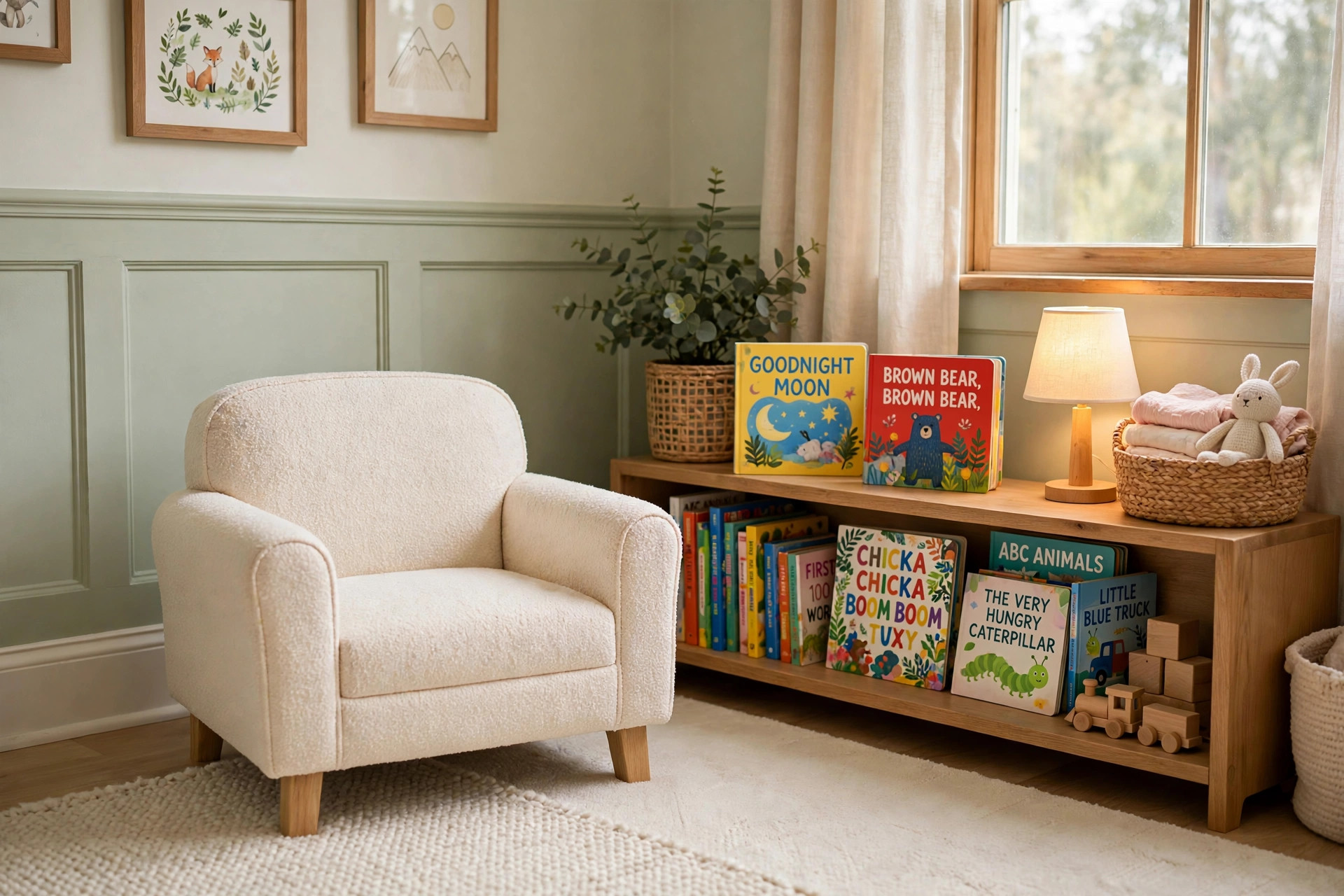

The chair sits low to the floor. It holds the child in an upright, open posture. The child can reach the books. He can turn the pages. He can stay with a story a little longer. Parents who set up such a corner often find that the child begins to choose books on his own. The chair makes reading feel like a treat, not a lesson.
Why a Reading Corner Matters for Toddlers
A reading corner gives books a home. When books live on a low shelf beside a small chair, the child learns that books have a place. A toddler who can reach his own books will often reach for them. This is how a habit begins. It begins with access, not with lessons.
A toddler armchair for reading corner kids also teaches independence. The chair is small enough for the child to climb into alone. He does not need help to sit down or to get up. This small act of doing it himself builds pride. Children who sit in their own chair often stay longer with a book than children who are held.
The corner itself sets the tone. A corner is quiet. It has walls on two sides. A soft rug under the chair tells the child this is a calm place. A warm lamp tells him the place is for slow hours. The corner does not need many things. It needs a chair, a light, and books within reach.
What to Look for in a Toddler Armchair: Toddler Armchair for Reading Corner Kids
Not every small chair suits a reading corner. Some are too deep. Some are too soft. Some tip over when the child climbs in from the side. The list below covers the points that matter most.
Size and Proportion
A toddler chair should match a toddler body. The seat height should let the feet rest on the floor. For most children between eighteen months and four years, this means a seat height of about nine to twelve inches. The seat depth should let the back touch the backrest while the knees bend at the edge. A seat that is too deep forces the child to slump. A slumped child cannot hold a book up. He grows tired fast.
The width matters, too. A narrow seat squeezes the child. A very wide seat invites rough play. A seat about thirteen to fifteen inches wide suits most toddlers. Measure the corner before you buy. The chair should fit the corner with room to spare. The child needs space to get in and out. He needs space to drop a book on the floor and pick it up again.
Fabric and Upholstery
Toddlers spill things. They carry sticky hands. They sit with juice. The fabric of the chair must stand up to daily use. Look for covers that come off. A removable cover that can go in the washing machine will save the chair.
Cotton canvas is a common choice. It breathes. It washes well. Microfiber resists stains and wipes clean with a damp cloth. Some parents prefer vinyl. Vinyl wipes clean in seconds. But vinyl can feel cold and sticky in summer. It can crack with age. For a toddler armchair for reading corner kids, a soft washable fabric beats a wipe-clean fabric in most homes. The child will sit longer in a chair that feels good against the skin.
Check the seams. On a well-made chair, the seams lie flat. The stitching is even. On a poor chair, the seams pull open in a few months.
Frame and Stability
The frame decides how long the chair lasts. Many toddler armchairs use a wooden frame. Wood is strong. It holds its shape. A hardwood frame can survive years of climbing and dragging. Some chairs use plastic frames. Plastic is lighter. It costs less. But cheap plastic can crack. It can flex under weight. A flexing chair feels unsteady. An unsteady chair tips.
Test the chair in the store if you can. Set it on a hard floor. Push the back. Push the side. A good chair stays put. It does not rock or slide. Many stores that sell children’s furniture, from IKEA to Pottery Barn Kids, display floor models. Use them. Five minutes of testing tells you more than any label.
Weight limits matter. Most toddler armchairs hold about sixty to eighty pounds. That is enough for a toddler and a stack of books. Read the tag. Respect the limit. A chair used past its limit will break, and it may break under a child.
Types of Toddler Armchairs for a Reading Corner
The market holds several kinds of small chairs. Each has its strengths. Each has its limits. The right kind depends on the child, the room, and the budget.
The upholstered armchair. This is the classic choice. It looks like a grown-up chair shrunk to toddler size. It has arms, a back, and a soft seat. It invites the child to sit back and stay a while. This type suits children who already like to sit with books.
The slipper chair. A slipper chair has low sides or no arms at all. It is easy to get in and out of. It suits younger toddlers and small corners where a full armchair would crowd the space.
The foam chair. Foam chairs are made from solid blocks of foam with a cover. They are light. A toddler can drag one across the room. They are soft all over, so there are no hard edges to bump. The drawback is shape. Foam compresses with time, and a foam chair used daily may flatten within a year or two.
The convertible chair. Some small chairs unfold into a lounger or a small bed. Children love them. But the moving parts add risk. Folding joints can pinch small fingers. If you choose a convertible model, check the hinge guards and make sure both positions lock firmly.
Parents sometimes pair the armchair with a kids bean bag chair for reading corner as a second seat. This gives the child a choice. Some days he wants the firm chair. Some days he wants softness. A corner with two seats also lets a parent or an older sibling sit nearby.
Cost and Price Ranges
A toddler armchair for reading corner kids costs less than most nursery furniture. Prices fall into three bands.
Under forty dollars. Chairs in this band are usually foam or simple plastic. They suit a corner that will change as the child grows. They are fine for light use. They rarely last more than a year or two of daily sitting. Retailers like Walmart and Target carry many models at this price.
Forty to one hundred dollars. This is the sweet spot. Chairs in this band usually have wooden frames and removable covers. They hold up to daily use. Most of the well-known models sit in this range. For most families, this is where the best value lives.
Over one hundred dollars. Chairs above this price are usually designer models or part of a matching nursery set. They use better foam and stronger frames. They may last through two children.
Watch for sales. Children’s furniture goes on sale often. A chair that lists at ninety dollars may sell for sixty in a sale week. Check the return policy before you buy. A chair that looks right online may feel wrong in the room. A store with a free return policy removes the risk.
Care and Upkeep
A reading corner chair takes daily abuse. Plan for it. The care routine is simple. It takes minutes. It keeps the chair good for years.
Vacuum the chair once a week with the soft brush tool. This pulls crumbs and dust from the seams before they become stains. Turn the chair over once a month. Check the feet and the frame joints. Tighten any screw that has worked loose.
Wash the cover on the schedule the tag gives. Most removable covers wash in cool water. Dry them on low heat or on a line. A cover that shrinks will not go back on. If the chair has no removable cover, spot clean it. Blot spills at once. Do not rub. Test any cleaner on a hidden spot first.
Keep the chair out of direct sun. Sun fades fabric and dries foam. A curtain or a blind solves it. The Spruce and What to Expect both publish care guides for nursery furniture that repeat this same advice.
Rotate the chair now and then. Children favor one spot. They lean on the same arm. Turning the chair every few months spreads the wear.
Safety Tips
A toddler chair must be safe before it is pretty. The points below come from years of parent experience and from public safety guidance.
Check for a tip-over risk. Set the chair on a hard floor. Push it from the side, the way a climbing child would. It should stay upright. Chairs with narrow bases tip. Chairs with wide, low bases stay put. The CPSC urges parents to anchor or test all children’s furniture for tip-over risk. A small chair that cannot tip is a safe chair.
Look for small parts. Buttons, zippers, and decorative studs can come loose. A loose button is a choking hazard. Choose chairs with sewn-on details, not glued ones. Pull every button before you bring the chair home. If one moves, skip that chair.
Mind the gaps. A chair with a gap between the seat and the arm can trap a small hand or foot. A chair with slats can trap a head. Sit the child in the chair in the store. Watch how his limbs fit the spaces. If a hand wedges anywhere, choose another model.
Keep the corner clear. The reading corner should hold the chair, a lamp, and books. That is all. Cords are a hazard. Run the lamp cord behind the furniture and use a cord cover. Heavy bookends can fall on a climbing child, so use soft baskets for books instead. HealthyChildren.org, the parent site of the American Academy of Pediatrics, offers room-by-room safety checklists that cover these same points.
Pair light with safety. A reading corner needs a lamp. A floor lamp can tip. A wall-mounted light or a sturdy lamp placed out of reach is safer. A nursery lamp with soft warm light for night gives enough light to read by without harsh glare. Soft light also tells the child that this is a calm place.
Watch the weight limit. Do not let older children use the toddler chair as a toy. Do not let adults sit in it for fun. The tag on the chair states the limit. Follow it.
Frequently Asked Questions
What age is a toddler armchair good for?
Most toddler armchairs suit children from about eighteen months to four years. An eighteen-month-old can climb into a low chair with help. A two-year-old can do it alone. By age four or five, most children outgrow the seat. The knees rise above the seat. That is the sign to move up a size.
Should the chair have arms or not?
Arms give the child something to hold. They make the chair feel like a nest. Most children prefer arms for reading. But arms add width. In a very small corner, an armless slipper chair fits better. If the corner has room, choose arms.
What is the best fabric for a toddler reading chair?
A washable fabric with a removable cover is best. Cotton canvas and microfiber both wash well. They feel soft and they breathe. Vinyl wipes clean fast, but it feels cold and can crack. For a toddler armchair for reading corner kids, comfort matters more than wipe-clean speed. Choose the fabric the child will want to touch.
How do I stop the chair from sliding on a hard floor?
Put a small rug under the chair. The rug grips the floor and marks the corner as the reading spot. Felt pads or rubber cups on the chair feet add grip and protect the floor. Avoid placing the chair on a slick floor with no rug. A sliding chair tips more easily.
Can I use the reading corner chair in the living room instead of the nursery?
Yes. Many families keep the toddler chair in the living room. The child sits near the family and feels part of the room. The rules stay the same. Keep the corner clear. Keep cords away. Keep the weight limit in mind. Some parents keep one chair in each room. Chairs at this price make that easy.
How many books should a reading corner hold?
Ten to fifteen board books are enough. A small child faced with fifty books will pull them all off the shelf. A small child faced with twelve books will pick one. Low kids wall shelves for books and toys display keep the books face-out and easy to reach. Swap the books every few weeks. Old favorites feel new again after a rest.
A Short Final Word
A toddler armchair for reading corner kids is a small buy with a long reach. It costs little. It takes up one corner. It asks for nothing but a lamp and a few books. In return, it gives the child a place that is his. A place where books live. A place where sitting still feels good. Set the corner up this weekend. Put the chair in place. Stack the books where small hands can find them. Then step back. The child will do the rest. Retailers from Wayfair to Crate & Barrel stock dozens of models, so finding one that fits your room and your budget takes less time than you think. The habit you are building will outlast the chair by years.
References
American Academy of Pediatrics. (n.d.). HealthyChildren.org. https://www.healthychildren.org Crate and Barrel. (n.d.). Furniture and home decor. https://www.crateandbarrel.com IKEA. (n.d.). Home furnishings. https://www.ikea.com Pottery Barn Kids. (n.d.). Kids furniture and decor. https://www.potterybarnkids.com Target. (n.d.). Retail store. https://www.target.com The Spruce. (n.d.). Home and garden advice. https://www.thespruce.com U.S. Consumer Product Safety Commission. (n.d.). Product safety information. https://www.cpsc.gov Walmart. (n.d.). Everyday low prices. https://www.walmart.com Wayfair. (n.d.). Furniture and home goods. https://www.wayfair.com What to Expect. (n.d.). Pregnancy and parenting guidance. https://www.whattoexpect.com
Was this guide helpful?

About Jennifer Lee
The My Garden US editorial team writes practical, in-depth home and garden guides for American homeowners — tested advice, no fluff.
You May Also Like

Nursery Wall Mural Peel and Stick Forest: A Calm Woodland Look for the Baby Room
March 5, 2026 0 views
Nursery Hamper With Lid for Odor Control: What Parents Need to Know
June 16, 2026 0 views
Best Kids Desk with Hutch for Homework: What to Know Before You Buy
June 7, 2026 0 views