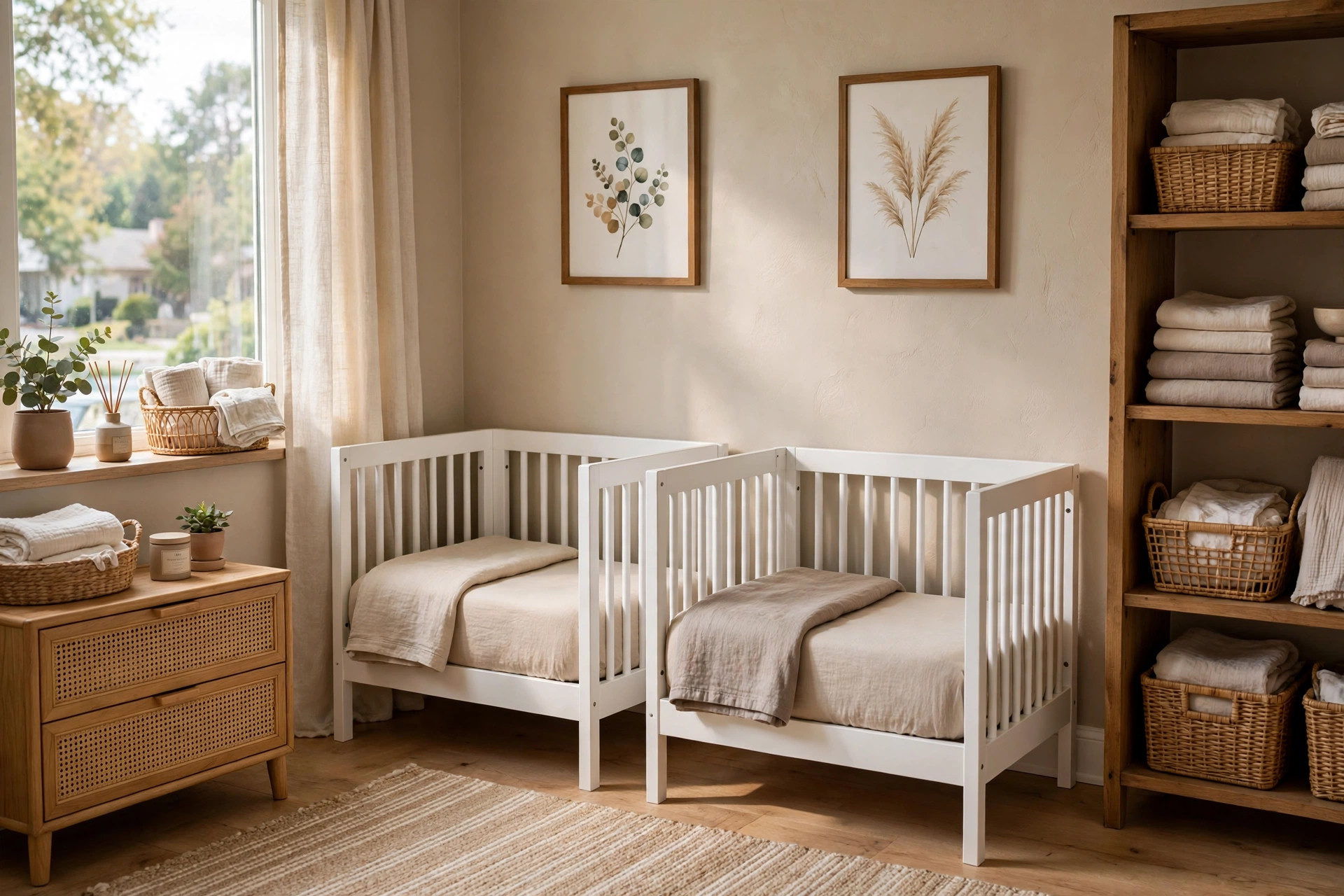

Welcoming twins is a joyful event. It also brings a practical question: how do you fit two cribs into one small nursery? Finding the best nursery crib for twins small room plans is not hard once you know what matters. The right crib keeps both babies safe. It saves floor space. It leaves room for a chair, a dresser, and a clear path for tired parents at night. This guide walks through the main choices, the costs, and the safety rules in plain language.
Why Twins in a Small Room Need Special Cribs
A standard crib takes up about nine square feet of floor. Two of them take up eighteen. In a nursery of only one hundred square feet, that leaves little room for anything else. Parents of twins often end up with a cramped room that is hard to move through at night. A small room twin nursery needs a smarter plan than simply buying two regular cribs.
The first months are the hardest. Twins feed at the same time. They wake at the same time. A parent who must step around two large cribs in the dark risks a fall. A tight layout also makes it hard to reach both babies at once. The best nursery crib for twins small room homes solve this with a narrow frame and a short length.
Room size shapes every choice. Measure the room before you shop. Write down the length and width. Mark where the door swings, where the window sits, and where the closet opens. Many parents find that two mini cribs fit along one wall with space left over. Others place the cribs in an L shape in a corner. Knowing the numbers keeps you from buying a crib that looks fine in the store but swallows the room at home.
Air flow matters too. A small room with two sleeping babies can grow warm and stuffy. Cribs with open slats let air move. Keep cribs away from heat vents and direct sun. A simple room thermometer helps you hold the nursery near 68 to 72 degrees.
What to Look for in a Twin Crib for a Small Room: Best Nursery Crib for Twins Small Room
Size and Footprint
Look at the true footprint, not the name. A “mini crib” can mean many things. Good mini cribs measure about 24 inches wide and 38 inches long. That is much smaller than a standard crib at 28 by 52 inches. In a small room, those saved inches matter. Place the cribs side by side and you still have room to walk.
Check the height of the rail. Low-profile frames let short parents reach in without a step stool. Tall parents may prefer a rail that keeps their back straight. Pick what fits the people who will use it most.
Storage under the crib is a bonus. Some slim cribs include a drawer that slides out below the mattress. In a small room twin nursery, that drawer can hold sheets and sleepers. It replaces a small dresser you no longer have room for.
Safety Standards
Every crib you buy must meet current federal safety rules. The U.S. Consumer Product Safety Commission sets the standards for cribs sold in America. You can read the latest guidance on crib safety before you shop. A safe crib has fixed sides, slats no more than two and three eighths inches apart, and no drop rail.
Check the mattress fit. Put the mattress in the frame. Press your fingers into the gap at the sides. If you can fit two fingers between the mattress and the crib wall, the mattress is too small. A loose mattress is a hazard. Buy the mattress that the crib maker suggests.
Look for a JPMA seal. That mark means the crib passed extra tests by an independent lab. It is not required, but it is a good sign. Read reviews from Consumer Reports if you want side-by-side test results on popular crib models.
Types of Cribs for Twins in Tight Spaces
Two Mini Cribs
The most popular answer to the twin problem is two mini cribs. Each one holds one baby. They fit along a single wall. Many fold flat for travel or storage. Mini cribs use their own smaller mattresses, so check that sheets made for that size are easy to buy.
Mini cribs last until the baby is about one year old or until the child can pull up to stand. After that, most families move to toddler beds. If you plan a long-term nursery, this short life is the main drawback. For parents who need nursery cribs for twins in a small room now, it is a fair trade.
Two Standard Convertible Cribs
A convertible crib grows with the child. It starts as a crib, becomes a toddler bed, and later a daybed or full-size bed. Two of these in a small room is tight. It works only if the room is at least ten by ten feet. The reward is that you buy once and never replace the bed frame.
Look for models with a narrow profile. Some standard cribs have chunky posts that eat six extra inches. Slim modern frames keep the true footprint close to the mattress size. Parents who shop at big retailers often browse IKEA and Wayfair for slim crib frames that suit tight rooms.
Portable and Folding Cribs
Portable cribs sit between a mini crib and a play yard. They fold up in minutes. They weigh less than thirty pounds. For a small room, a folding crib lets you open floor space during the day for play. At night you set it back up for sleep.
A folding crib is a good second sleep spot for one twin. It also helps when one baby is sick and you want to separate them for a few nights. Do not treat a folding crib as a daily bed for years. The thin mattresses are fine for travel but less restful for nightly use.
How to Choose the Right Setup
Start with your room plan. Tape the crib footprints on the floor with painter tape. Walk the room in the dark. Can you reach both cribs without moving furniture? Is there a path from the door to each baby? The tape test costs nothing and saves regret.
Think about how the twins will sleep. Some twins sleep better close together. Others wake each other with every sound. If your twins disturb each other, give them more distance between the cribs. A nursery sound machine for baby sleep aid placed between the beds can mask small noises and help both babies sleep longer.
Pick one color and style for both cribs. A matched pair looks calm and keeps the small room from feeling busy. White and natural wood both reflect light and make a tight room feel larger. Dark finishes absorb light and shrink the space in the eye.
Buy quality sheets in bulk. Twins go through sheets fast. Two cribs mean double the laundry. Choose sheets made for your exact crib size. Keep six to eight fitted sheets on hand. A crib mobile arm for attaching to crib is a nice touch for each bed, but hang it high and keep cords far from little hands.
Plan for the daybed stage. If you buy convertible cribs, know where the toddler rails will store. If you buy mini cribs, know what beds come next. A small room that fits two mini cribs today must also fit two toddler beds in a year.
Cost and Price
Twin nurseries cost more than single ones, but the numbers stay fair. A safe mini crib runs from about 150 to 300 dollars. Two of them cost 300 to 600 dollars. A quality convertible crib runs from 250 to 600 dollars each. A full pair then costs 500 to 1,200 dollars.
Mattresses add to the bill. A firm mini crib mattress costs 60 to 120 dollars. A standard crib mattress costs 80 to 180 dollars. You need two of each. Waterproof mattress covers add about 20 dollars each and are worth every cent with twins.
Sheets, blankets, and mobiles add another 150 to 250 dollars for two cribs. Total budgets land near 700 dollars at the low end and 1,700 dollars at the high end. That is before the dresser and the chair.
Save money by skipping the crib sets. Big bedding sets look pretty in the store. The quilts and bumpers inside them are not safe for infant sleep. Buy only fitted sheets. Spend the saved money on extra sheets and a good room thermometer. Families hunting for value often check prices at Pottery Barn Kids for quality pieces and BabyCenter for parent reviews before they buy.
Care and Upkeep
Wipe the crib frame once a week with a damp cloth and mild soap. Babies teethe on the rails. Check the paint and finish each month for chips or bite marks. Touch up small spots with the maker’s repair kit. If the finish is failing, replace the crib.
Tighten every bolt and screw once a month. Cribs loosen with rocking and climbing. A quick check takes five minutes and keeps the frame solid. Keep the assembly tool taped inside the crib drawer so you never hunt for it.
Wash sheets twice a week or sooner after a spit-up. Keep the mattress cover on at all times. Air out the mattress in the sun a few times a year. Sunlight keeps it fresh and dry. Rotate the mattress head to foot each month for even wear.
When twins outgrow the mini cribs, pass them on or store them flat. Wipe them down, bag the hardware, and tape the bag to the frame. A clean used mini crib holds its value well for resale.
Safety Tips for a Twin Nursery in a Small Room
Safe sleep rules count double with twins. Each baby gets their own sleep space. Never put both twins in one crib. The American Academy of Pediatrics gives its latest guidance through HealthyChildren.org. The basics are simple: back to sleep, a firm flat mattress, and nothing else in the crib.
Keep cribs away from windows. Blind cords and curtain strings are a danger. Cordless window coverings are the safest pick for any nursery. Keep the cribs at least three feet from lamps, heaters, and wall outlets.
Do not hang anything heavy above the cribs. A shelf or frame that falls in the night can hurt a baby. Art belongs on a wall no crib stands against. Soft night lights are fine if they plug in far from the bed.
Space the cribs so a baby cannot climb from one to the other. A small gap of a few inches is enough. In a tight room, push each crib into its own corner when the babies start to pull up.
Watch the room temperature. Two bodies warm a small room fast. Dress the babies in light sleepers. Skip hats and thick blankets indoors. If the room runs hot, a fan on low keeps air moving without blowing straight on a crib.
Learn the recall list. Register each crib with the maker so you get recall notices by mail. You can also search current recalls on the CPSC website. Used cribs need this check most, since older models may carry hidden recalls.
For week-by-week guidance on twin care at home, many parents read the baby care articles on What to Expect alongside their pediatrician’s advice.
Frequently Asked Questions
Can twins share one crib?
No. Each twin needs their own crib. Shared sleep raises the risk of one baby rolling onto the other. It also breaks the safe sleep rules doctors advise. Two small cribs fit in less space than most parents expect.
When do twins outgrow a mini crib?
Most twins outgrow a mini crib between nine and twelve months. The sign is clear: the baby can pull up to stand or the baby’s head and feet nearly touch the ends. Move to a toddler bed or a full-size crib before the child can climb out.
How do I fit two cribs and a dresser in a small room?
Place the two cribs along the longest wall. Put the dresser under the window or in the closet with the doors off. A slim dresser used as a changing top saves the space a full changing table would take. Read small-space nursery ideas on The Spruce for layout sketches.
What is the best room layout for twin cribs?
The two most common layouts are side by side along one wall and L-shaped in a corner. Side by side works when the wall is at least seven feet long. The L shape fits square rooms and leaves the center open for play. If you lack floor space for clothes too, see our guide on the best nursery storage for small apartment living.
Should the twins’ cribs face each other?
Facing cribs let twins see each other, which some parents love. The risk is that the twins keep each other awake. Try it both ways for a week each. Keep whichever layout gives the longest naps.
Do I need two of everything?
Not quite. You need two cribs, two mattresses, and plenty of sheets. You can share one dresser, one chair, and one diaper station. One good monitor covers a small room. Twins share germs anyway, so shared bath gear is fine.
A Short Final Word
The best nursery crib for twins small room living is the one that fits your floor plan, meets every safety rule, and leaves you room to move. Measure first. Buy two safe cribs that match. Keep sleep bare and simple. With a little planning, a small room can hold two happy babies with room to spare.
References
American Academy of Pediatrics. (n.d.). HealthyChildren.org. https://www.healthychildren.org BabyCenter. (n.d.). Toddler play and learning guides. https://www.babycenter.com Consumer Reports. (n.d.). Product reviews and ratings. https://www.consumerreports.org IKEA. (n.d.). Home furnishings. https://www.ikea.com Pottery Barn Kids. (n.d.). Kids furniture and decor. https://www.potterybarnkids.com The Spruce. (n.d.). Home and garden advice. https://www.thespruce.com U.S. Consumer Product Safety Commission. (n.d.). Product safety information. https://www.cpsc.gov Wayfair. (n.d.). Furniture and home goods. https://www.wayfair.com What to Expect. (n.d.). Pregnancy and parenting guidance. https://www.whattoexpect.com
Was this guide helpful?

About Robert Taylor
The My Garden US editorial team writes practical, in-depth home and garden guides for American homeowners — tested advice, no fluff.
You May Also Like

Nursery Diaper Caddy Organizer Portable: A Complete Guide
October 4, 2026 0 views
Crib Mobile Projector With Lullaby Music: A Complete Guide for New Parents
April 3, 2026 0 views
Best Kids Storage Cubes for Closet Organization: A Practical Guide
February 24, 2026 0 views