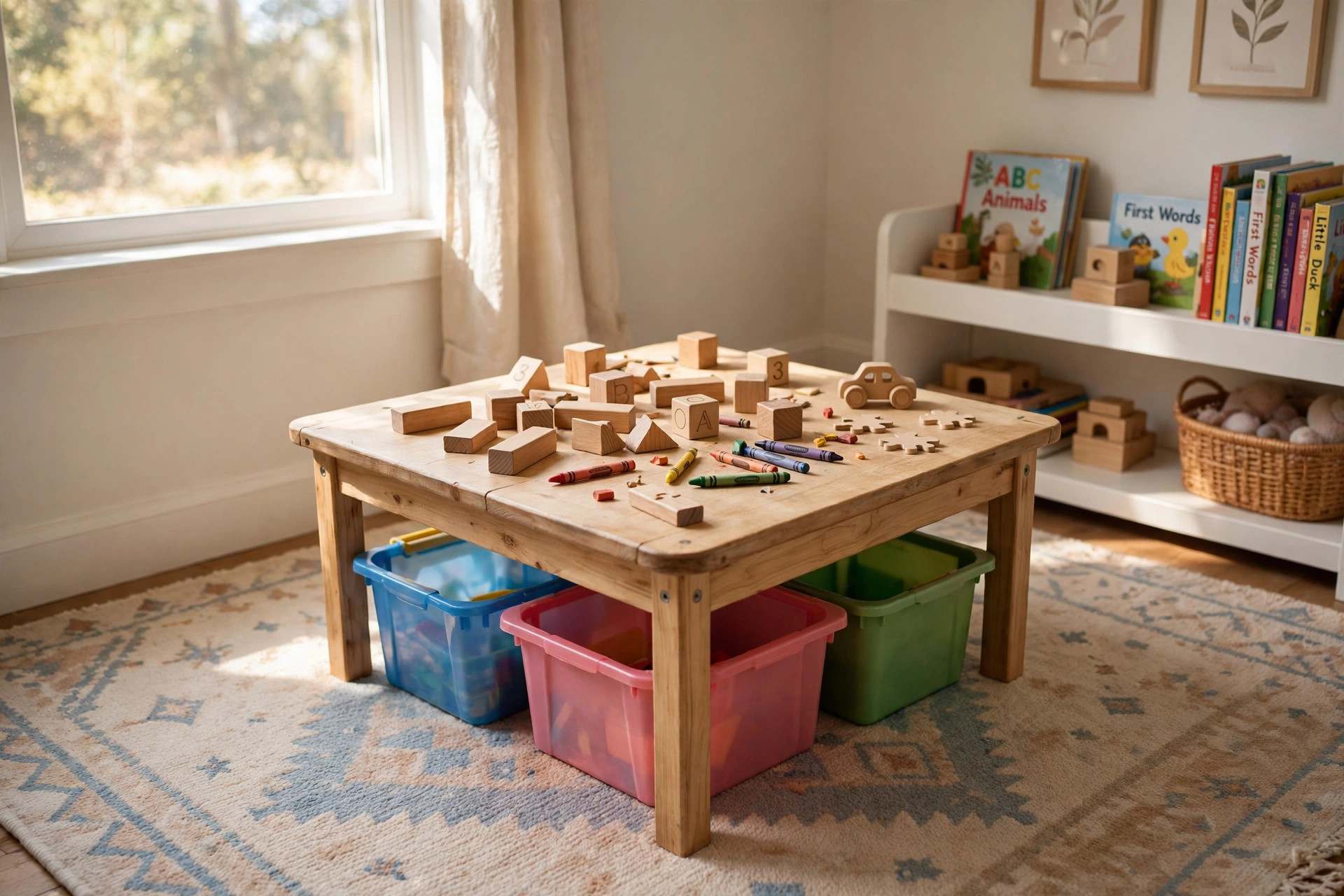

A toddler table with storage bins underneath is one of the most practical pieces of furniture a young family can own. It gives a child a small work surface sized for short legs and small hands, and it hides a surprising amount of toys in bins that slide neatly out of sight. Any parent who has stepped on a stray block in the dark will understand the value of a place where playthings can rest between uses.
Most toddlers spend their days in motion. They draw, they build, they pour, they stack. A regular table stands too tall for them, and the floor offers no order at all. A child sized table with bins beneath it meets the child where the child is. It says, in a quiet way, that this space belongs to the little one, and that tidying up is simply part of the game.
Why It Matters
The early years shape a child’s habits. When a toddler has a steady spot for drawing and building, the child learns to settle. The small table invites focus. Crayons stay on the top, blocks wait in the bins below, and the child moves between the two without leaving the seat. This simple rhythm supports the kind of long, calm play that builds strong minds.
Order matters for parents as well. A living room can hold only so many toys before it feels like a toy store exploded across the floor. Bins underneath a toddler table swallow crayons, puzzles, cars, and figurines in seconds. Guests see a neat table, not a cluttered floor. The parent sees a room that can be cleaned before dinner without a long struggle.
Storage under the table also teaches a child where things belong. When the bins have fixed spots, a two year old can learn to drop the red cars in one bin and the books in another. The lesson is gentle. The child feels grown up, and the parent gets a helper who can put toys away in half a minute.
What to Look For: Toddler Table with Storage Bins Underneath
Size and Height
A toddler table should let a child sit with both feet flat on the floor. For most children between eighteen months and four years, a table top between nineteen and twenty three inches high works well. Measure the child’s chair before buying. The child’s knees should fit under the top with room to spare, and the child’s elbows should rest near the surface without straining.
The bins matter too. Shallow bins work best for crayons and small figures. Deeper bins hold blocks, dolls, and chunky toys. Open bins let a child see the toys inside, which encourages independent play. Lidded bins look neater, but a lid can slow a child down and may pinch small fingers.
Materials
Solid wood tables last the longest and hold up to years of hard use. A well built wooden frame can serve one child and then pass to the next. Engineered wood with a smooth finish costs less and still looks fine in most rooms. Thick molded plastic is the lightest option, and it wipes clean in seconds, which matters when juice spills.
Check the bins as well. Sturdy plastic bins survive drops and tosses. Fabric bins feel soft and quiet, but they stain more easily. Some tables use bins made of the same material as the frame, which gives a clean, matched look.
Edges and Corners
A good toddler table has rounded corners and smooth edges. Sharp corners have no place in a child’s room. Run a hand along every edge in the store, or read the listing with care if you shop online. The finish should be smooth all over, with no rough spots that could catch a sleeve or scrape a small arm.
Stability
Children lean, push, and sometimes climb. A toddler table must not wobble or tip. Wide legs or a broad base keep the table steady. Test it by pressing on one corner. If it rocks, look at another model. Heavier tables stay put better than very light ones, though the lightest plastic tables have the benefit of being easy to move for cleaning.
Types and Options
Tables with Removable Bins
Some models use bins that lift out of a frame under the table. The child can carry a bin to another room and bring it back when done. This works well for families who move play from room to room. When shopping, note that a toddler table and chair set for playroom often pairs the table with seating in one box, which saves a separate search.
Tables with Fixed Drawers or Cubbies
Other tables have built in drawers or open cubbies instead of removable bins. These stay with the table, so nothing wanders off. Open cubbies under the top work much like the open shelving parents praise in a kids bookshelf with bins for toy storage, giving each toy a visible home while keeping the tabletop clear.
Foldable and Adjustable Tables
A few designs fold flat for storage or adjust in height as the child grows. These suit small homes and grandparents’ houses. The moving parts add cost, and they can trap fingers if the hinges are not covered, so inspect the design with care before choosing this type.
Themed and Decorative Styles
Many tables come in bright colors or carry pictures of animals, letters, or cartoon scenes. A cheerful design can draw a shy child to the table. Plain wood or white finishes blend with most rooms and age better as tastes change. There is no wrong answer here. Choose what fits the room and the child.
Cost and Price
Prices for a toddler table with storage bins underneath vary with material and brand. Simple plastic models often sell between forty and seventy dollars. Sturdy engineered wood tables usually run between seventy and one hundred fifty dollars. Solid wood models with fine finishes can reach two hundred dollars or more.
Buying a set with chairs costs more up front than buying the table alone, but the chairs in a set match the table in height and style. Parents who already own small chairs may save by buying only the table. Some families pair the purchase with a best kids bed with storage drawers underneath when refreshing a whole room at once, since matching storage themes keep the room calm.
Watch for sales around holidays and back to school season. Large retailers such as IKEA, Wayfair, Target, and Amazon carry wide ranges of children’s tables, and prices shift through the year. Specialty children’s stores like Pottery Barn Kids sell well reviewed models at higher price points.
A used table can be a fine bargain. Check classified listings and thrift stores. Inspect the frame for cracks, make sure the bins slide freely, and wash everything with warm soapy water before the child uses it.
Care and Upkeep
Daily care is simple. Wipe the tabletop with a damp cloth at the end of the day. Most finishes handle water based cleaners without trouble. For stubborn marks from markers, a paste of baking soda and water rubbed gently with a soft cloth usually lifts the stain.
Empty the bins once a week and shake out the crumbs. This takes only a few minutes and keeps the bins pleasant to use. If a bin smells stale, wash it in warm soapy water and let it dry fully before sliding it back in.
Tighten screws and bolts every few months. Children are hard on furniture, and joints loosen over time. A loose leg can make a table wobble, and a wobbling table invites a fall. Keep the small tool that came with the table in a drawer so the job stays easy.
Keep the table out of direct sun when possible. Long hours of bright sun can fade colored finishes and dry out wood. A rug under the table protects both the floor and the table legs, and it marks the child’s corner of the room in a friendly way.
Safety
Safety comes first with any children’s furniture. The United States Consumer Product Safety Commission sets standards for small tables and chairs, and parents can check CPSC for recall notices before buying. A recalled table should be taken out of use at once, even if it looks fine.
Choose tables with non toxic finishes. Paint and stain should be free of lead and other harmful chemicals. Reputable makers state this on the package or listing. When in doubt, contact the maker directly and ask.
Mind the bins. Deep, heavy lids can hurt small fingers. Removable bins should be light enough for a child to lift safely. Very small parts, such as loose bin dividers or tiny knobs, pose a choking risk for children under three and should not be within reach.
Place the table away from windows with cords and away from stairs. Toddlers climb, and a table near a hazard becomes a ladder. The American Academy of Pediatrics offers guidance on childproofing rooms through HealthyChildren.org, which is worth reading when setting up a play space.
Never let a child stand on the table. Teach this rule from the first day. A calm, steady reminder each time the child tries to climb will take hold sooner than most parents expect.
Frequently Asked Questions
What age is a toddler table with storage bins underneath best for? Most models suit children from eighteen months to about five years. Very young toddlers need low tables with stable bases. Older preschoolers may outgrow the height by age five, at which point the table can move to a younger sibling or a new home.
How many bins should the table have? Two to four bins handle most needs. Two bins sort toys into simple groups, such as art supplies and blocks. Four bins allow finer sorting, which some children enjoy. More bins mean more pieces to manage, so keep the count modest for very young toddlers.
Wood or plastic: which lasts longer? Solid wood usually lasts longest and can serve several children. Thick plastic resists stains and weighs less, which some families prefer. Both serve well if the build quality is sound. Check reviews and feel the pieces in person when possible.
Can the bins hold heavy toys like wooden blocks? Yes, provided the frame is sturdy. Wooden blocks are heavy in bulk, so look for bins with solid bottoms and a frame that does not flex under weight. Light fabric bins suit soft toys and art supplies better than heavy blocks.
How do I clean crayon marks off the tabletop? Warm soapy water removes most marks. For wax crayon, a baking soda paste works well. Test any cleaner on a hidden spot first. Avoid harsh solvents, which can damage the finish and may leave unsafe residue.
Where can I learn more about setting up a safe playroom? Family health sites offer useful checklists. What to Expect covers toddler milestones and play ideas, while The Spruce publishes room setup guides with storage tips for small spaces.
A Short Final Word
A toddler table with storage bins underneath is a small piece of furniture with a large effect. It gives a child a personal corner for drawing, building, and quiet play. It gives a parent a quick path to a tidy room. Chosen with care, kept clean, and used with simple rules, it will serve a family well through the busiest years of childhood. Take time to compare materials, test for stability, and check for recalls. The right table will earn its place in the home many times over.
References
Amazon. (n.d.). Online shopping. https://www.amazon.com American Academy of Pediatrics. (n.d.). HealthyChildren.org. https://www.healthychildren.org IKEA. (n.d.). Home furnishings. https://www.ikea.com Pottery Barn Kids. (n.d.). Kids furniture and decor. https://www.potterybarnkids.com Target. (n.d.). Retail store. https://www.target.com The Spruce. (n.d.). Home and garden advice. https://www.thespruce.com U.S. Consumer Product Safety Commission. (n.d.). Product safety information. https://www.cpsc.gov Wayfair. (n.d.). Furniture and home goods. https://www.wayfair.com What to Expect. (n.d.). Pregnancy and parenting guidance. https://www.whattoexpect.com
Was this guide helpful?

About David Wilson
The My Garden US editorial team writes practical, in-depth home and garden guides for American homeowners — tested advice, no fluff.
You May Also Like
A Nursery Wall Shelf for Books and Decor: A Complete Buying Guide
May 10, 2026 0 views
Nursery Bookshelf Wall Mounted for Small Space: A Practical Guide
July 19, 2026 0 views
Crib Sheet Set Organic Cotton for Sensitive Skin: What Parents Should Know
May 28, 2026 0 views