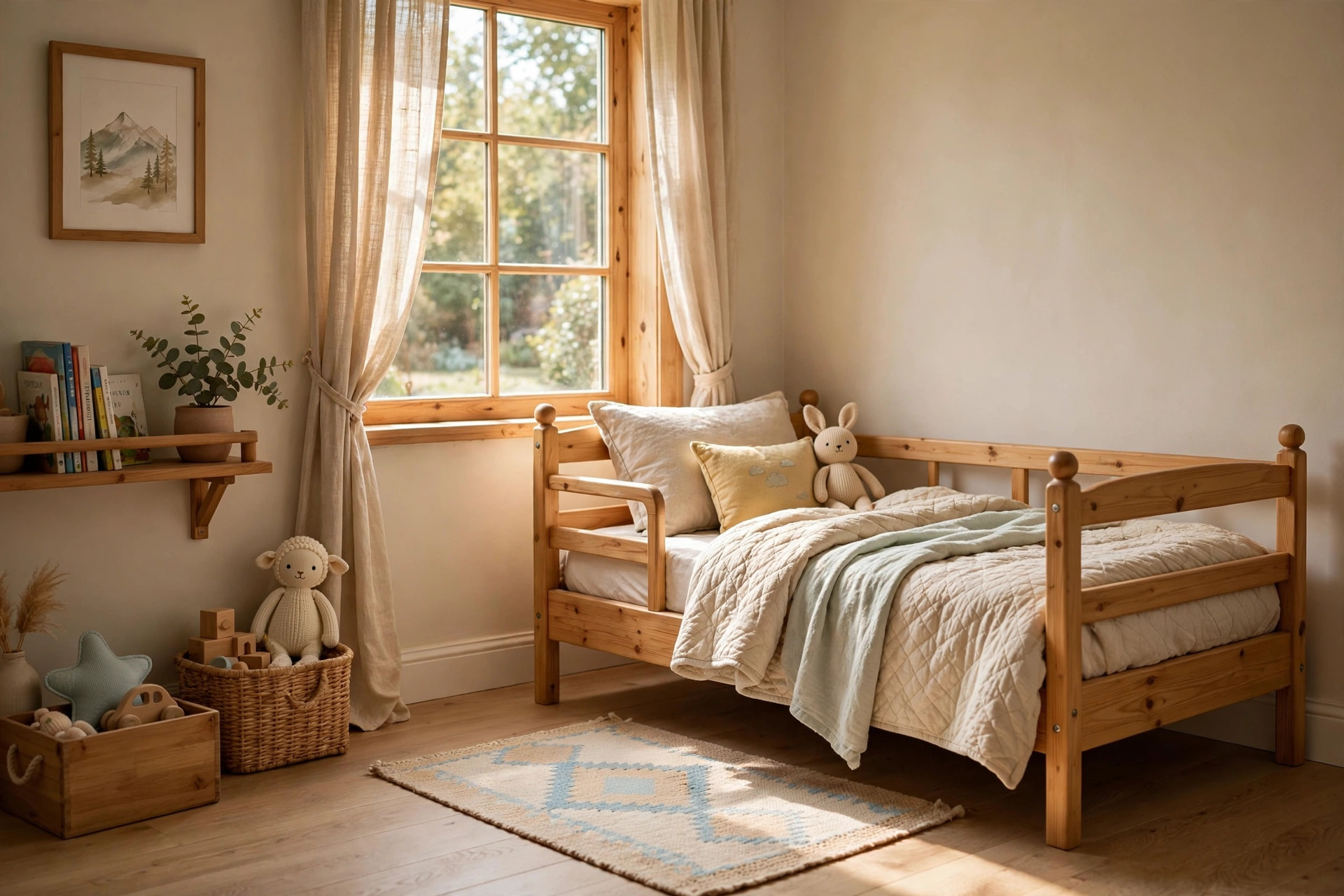
Moving a child from a crib to a real bed is a big day for any family. The child gets a first taste of freedom. The parents get a long list of new worries. When the room itself is small, the choice feels even harder. You want a bed that is safe and sturdy, but you also need space left over for play, storage, and simple movement. That is why so many parents search for the best toddler bed for small bedroom spaces. This guide walks you through what matters, what to skip, and how to pick a bed that fits both your child and your room.
Why the Right Bed Matters
Sleep shapes almost everything in a toddler’s day. A child between 18 months and three years old needs about 11 to 14 hours of sleep in a 24-hour period, including naps. A bed that feels strange or shaky can turn bedtime into a nightly battle. A bed that fits the room keeps mornings calm too, because the child can get in and out safely on their own.
A small room adds its own rules. There may be no space for a wide bed plus a dresser plus a toy corner. Door swings, window placement, and closet doors all eat into the floor plan. The right bed respects those limits. It lets you open drawers, reach the closet, and still have a clear path to the door at night. Parents who plan the bed around the room, rather than the room around the bed, usually end up happier with the result.
How to Choose: What to Look for First: Best Toddler Bed for Small Bedroom Spaces
Start with the tape measure, not the shopping cart. Measure the wall where the bed will go. Measure the doorway and the window clearance. Write the numbers down. Most toddler beds are about 28 inches wide and 50 to 55 inches long. Twin beds run about 38 by 75 inches. In a room under 100 square feet, those extra inches matter a great deal.
Go Low
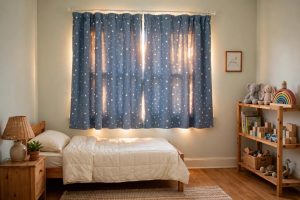
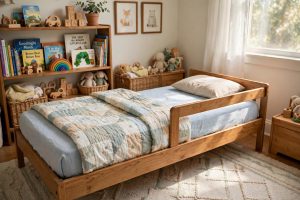
Low beds are the natural pick for small rooms. A floor-level or near-floor bed makes the room feel larger, because more wall stays visible. Low beds also make falls far less scary. If a child rolls out of a bed that sits six inches off the floor, the bump is small. That is one reason many families look at a floor bed for toddlers when the room is tight.
Keep It Solid
A toddler bed takes hard use. Children jump on beds. They shake the rails. They use the headboard as a ladder. Pick a frame made of solid wood or strong steel. Press on the rails in the store if you can. A good frame does not wobble. Check that screws and bolts sit flush, with no sharp edges poking out.
Match the Mattress Size
Toddler beds usually take a standard crib mattress, which is about 28 by 52 inches. This is good news if you already own one. You can move the mattress from the crib to the new bed and save money. Measure the inside of the frame before you buy. The mattress should fit snug, with no gap larger than two finger widths between the mattress and the frame. Gaps are a danger, because a small child can slip a limb into them.
Rails Are Worth It
Guard rails are the single most useful feature on a toddler bed. A low rail on each side keeps a sleeping child from rolling out at 2 a.m. Some beds come with rails built in. Others need add-on rails. Either way, choose rails that attach firmly and leave no gap where a child could get stuck. Many guides to a toddler bed with guard rails explain the rail height and spacing rules in detail.
Types of Space-Saving Toddler Beds
Not every style suits a small room. Here are the main options, and how each one behaves in tight space.
Standard Toddler Bed
This is the classic first bed. It sits low, uses a crib mattress, and often comes with side rails. Its footprint is small, which is its great strength. The weakness is time: most children outgrow it by age four or five. Still, for a small room, the low height and small size make it a top pick. Retailers such as IKEA and Target carry several models designed for compact rooms.
Convertible Crib
A convertible crib starts life as a crib and changes into a toddler bed with a conversion rail. The frame is the same size either way, so it does not gain or lose floor space. If you already own a convertible crib, this is the cheapest path. You only buy the rail kit. The downside is that crib frames are often tall and bulky, which can make a small room feel crowded.
Floor Bed
A floor bed is simply a mattress placed at floor level, sometimes on a very low frame. It takes the same floor space as a standard bed but opens up the room visually. Children can climb in and out without help. Some parents worry about drafts or dampness at floor level, so a thin rug or mat under the mattress is wise. What to Expect has helpful notes on when children are ready for this step.
Twin Bed
A twin bed lasts for years, which parents love. The trouble is size: 38 by 75 inches is a lot of floor in a small room. It can still work if the room is narrow but long, with the bed pushed against one wall. Use a guard rail on the open side. Many families skip the twin at first and move to one later, when the child is older and the room layout changes.
Daybed with Trundle
A daybed sits against the wall like a sofa and works for naps and nighttime alike. The trundle underneath pulls out for a second sleeper, which is handy for guests or siblings. The catch is that the trundle needs clear floor space in front to pull out. Measure carefully. If the room cannot spare that space, a simple daybed without the trundle is the safer pick. Wayfair and Walmart list many daybed options in kids’ sizes.
Loft and Bunk Beds
These save floor space, but they are not safe for toddlers. Young children should never sleep on an upper bunk. Loft beds with desks under them are a fine idea for a school-age child later on. For now, keep the sleeping surface low.
What You Will Pay
Prices for toddler beds vary widely. A basic wooden toddler bed often costs between 60 and 120 dollars. Models with built-in rails, storage drawers, or nicer finishes run 120 to 250 dollars. Convertible crib rail kits usually cost 50 to 100 dollars. Daybeds start around 150 dollars and climb past 400 for solid wood.
Mattresses are a separate cost if you do not reuse the crib mattress. A basic foam crib mattress runs 50 to 80 dollars. A firmer innerspring model can reach 120 to 180 dollars. Budget shoppers often check BabyList registries and guides to compare real prices before buying.
Watch for hidden costs. Some beds need tools you do not own. Some need a special mattress size. A few need wall anchors sold separately. Read the box contents before you leave the store or click buy.
Care and Upkeep
A toddler bed does not ask for much, but a little care keeps it safe and looking good.
Tighten all bolts every few months. Children loosen furniture faster than adults expect. A quick check with a wrench twice a year takes five minutes and stops wobble before it starts.
Wipe the frame down with a damp cloth. Use mild soap for sticky spots. Skip harsh cleaners, because toddlers chew rails and headboards. If the finish chips, touch it up with a child-safe paint or simply sand the rough spot smooth.
Wash bedding often. A waterproof mattress protector under the sheet saves the mattress from the leaks and spills that are normal at this age. Rotate the mattress head to foot every few months so it wears evenly.
When the child outgrows the bed, take it apart and store the hardware in a labeled bag. You may use it again for a younger sibling, or pass it to a friend. Keep the manual if you still have it. Guides on Pottery Barn Kids often include care tips for their wooden frames that apply to most beds.
Safety Comes First
Safety rules for toddler beds are strict, and for good reason. The U.S. Consumer Product Safety Commission sets the federal standard. Before you buy, check that the bed meets the current standard for toddler beds. The CPSC site lists recalls, so search the model name there before you bring it home.
A few rules to live by:
– Keep the bed away from windows. Blind cords and curtain cords are a real hazard. If cords are near the bed, cut the loops or use cordless blinds. – Do not place the bed under a shelf or near heavy wall art that could fall. – Use a firm mattress, never a soft adult pillow-top. Soft sleep surfaces raise the risk of suffocation for small children. – Keep pillows, thick blankets, and stuffed animals out of the bed for children under two. For older toddlers, one small pillow and a light blanket are enough. – Anchor tall dressers and bookshelves to the wall. Toddlers climb. Tip-over accidents are common and preventable. – Leave a clear path from the bed to the bedroom door. In a small room, this means planning where the toy bin and laundry basket go, so they never block the way at night.
Health experts at HealthyChildren.org remind parents that safe sleep habits matter just as much in a toddler bed as they did in a crib. The room should be cool, dark, and quiet. A simple night-light in the hall is kinder than a bright lamp in the room.
Pair the Bed with Smart Storage
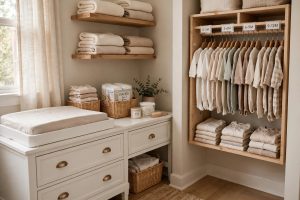
A small room needs every inch to work. The bed is only one piece of the puzzle. A toddler wardrobe for a small bedroom can hold clothes without eating floor space meant for play. Under-bed drawers turn dead space into a home for sheets and pajamas. Wall shelves keep books off the floor. A small hamper in the closet corner keeps dirty clothes out of the way. When the bed and the storage work together, even a nine-by-ten room can feel calm and open.
Decorating sites like The Spruce show real small-room layouts that put these ideas to work. The best examples share one trait: everything has a place, and the floor stays mostly clear.
Frequently Asked Questions
When should my child move to a toddler bed?
Most children move between 18 months and three years. The clearest sign is climbing: when your child can climb out of the crib, the crib is no longer safe. Other signs include asking for a big-kid bed, or simply outgrowing the crib. Do not rush the change. If the child sleeps well in the crib and cannot climb out, there is no harm in waiting.
What size mattress does a toddler bed use?
Almost all standard toddler beds use a crib mattress, about 28 by 52 inches. Measure the frame’s inner opening before you buy or reuse a mattress. The fit should be snug with no large gaps. If the mattress is too small for the frame, choose a different bed.
Are floor beds safe for toddlers?
Yes, when set up with care. The mattress should be firm and fit its frame or mat snugly. Keep the area around the bed clear of small objects. Make sure the room itself is childproofed, since the child can get up and roam. Many parents like floor beds because a fall from floor level is a non-event.
How do I stop my toddler from falling out of bed?
Use guard rails on both open sides of the bed. Place a soft rug or folded blanket beside the bed as a cushion during the first weeks. Keep the bed low. Some children do better with the bed pushed into a corner, so only one side needs a rail. Patience helps too: most children learn the edge of the bed within a week or two.
Can a toddler bed fit in a room with a sibling?
Often, yes. Two low toddler beds can sit side by side along one wall, or head to head in an L shape. Floor beds work well here because they keep sight lines open and leave room to walk between them. Give each child a small basket or shelf for personal things so the shared room still feels like it belongs to both of them.
Is it worth buying a bed with storage drawers?
In a small room, yes. Drawers under the bed hold sheets, blankets, and out-of-season clothes. They cost more up front, but they can replace a small dresser. Just make sure the drawers glide smoothly and cannot be pulled fully out onto little feet.
Final Word
The best toddler bed for small bedroom spaces is the one that keeps your child safe, fits your floor plan, and leaves room to live. Measure first. Choose a low, solid frame with guard rails. Reuse the crib mattress if it fits. Keep the room clear and the furniture anchored. The perfect bed does not need to cost a fortune. It needs to do its quiet job night after night, while the small room around it stays open, calm, and ready for play.
References
American Academy of Pediatrics. (n.d.). HealthyChildren.org. https://www.healthychildren.org Babylist. (n.d.). Baby registry and gear guides. https://www.babylist.com IKEA. (n.d.). Home furnishings. https://www.ikea.com Pottery Barn Kids. (n.d.). Kids furniture and decor. https://www.potterybarnkids.com Target. (n.d.). Retail store. https://www.target.com The Spruce. (n.d.). Home and garden advice. https://www.thespruce.com U.S. Consumer Product Safety Commission. (n.d.). Product safety information. https://www.cpsc.gov Walmart. (n.d.). Everyday low prices. https://www.walmart.com Wayfair. (n.d.). Furniture and home goods. https://www.wayfair.com What to Expect. (n.d.). Pregnancy and parenting guidance. https://www.whattoexpect.com
Was this guide helpful?

About Jennifer Lee
The My Garden US editorial team writes practical, in-depth home and garden guides for American homeowners — tested advice, no fluff.