
Introduction
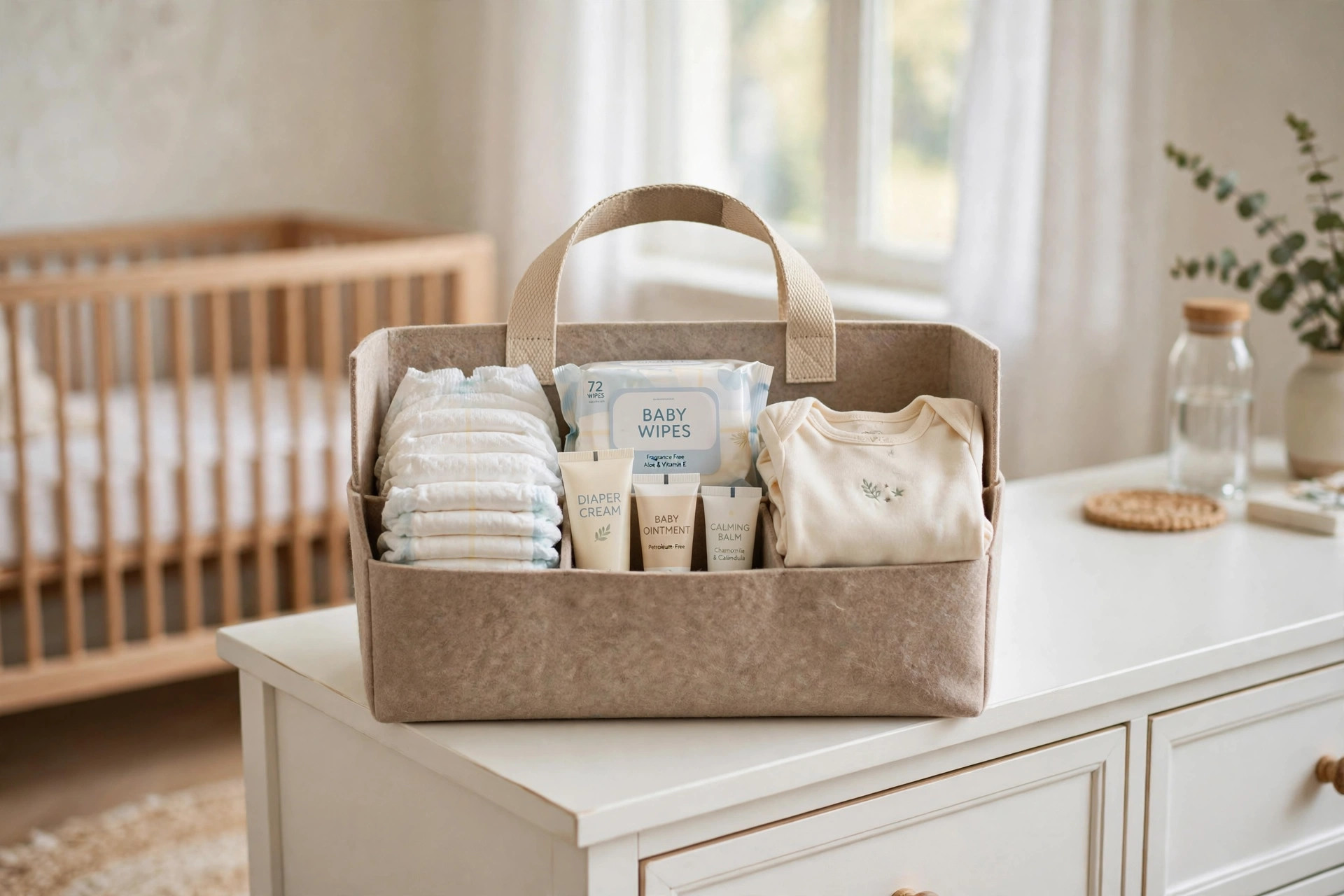
A nursery diaper caddy organizer portable is one of the simplest tools a new parent can own. It is a small basket or tote with divided sections. Each section holds a different supply. Diapers go in one part. Wipes go in another. Creams, lotions, and small clothes fill the rest. The carry handle on top lets you move it from room to room. Many parents keep one caddy in the nursery and carry it to the living room during the day. Some keep a second one in the car.
Newborn babies need frequent changes. In the early weeks, a baby may use ten to twelve diapers a day. When the baby cries in the middle of the night, no parent wants to search drawers in the dark. A portable diaper caddy for newborns solves this problem. Everything sits in one place. You pick it up and carry it to the changing spot. You finish the change and set the caddy down again. The simple habit saves time and lowers stress.
This guide explains why a nursery diaper caddy organizer portable matters, how to choose one, the main types on the market, what they cost, how to clean them, and how to use them safely. It also answers common questions at the end.
Why a Portable Caddy Matters: Nursery Diaper Caddy Organizer Portable
A changing table stays in one room. A baby does not. Babies are changed in the nursery, in the living room, in a grandparent’s home, and in the car. A portable caddy follows the parent. It turns any flat surface into a changing station. This freedom matters most in homes with two floors. Running upstairs for a fresh diaper ten times a day wears any parent out.
The caddy also keeps supplies organized. Without one, diapers pile on a shelf and creams disappear into drawers. Small items roll under the crib. A baby diaper storage organizer with separate pockets ends this clutter. Each item has its own slot. You can see at a glance when wipes run low. You can restock the caddy in seconds before a trip.
Parents of twins or two small children gain even more. One caddy can serve both children. The parent carries the full kit from one changing pad to the next. Guests who care for the baby also benefit. A grandmother can find everything in one basket instead of learning the nursery layout.
There is a calm that comes from order. Night feedings are hard enough. A caddy with the exact supplies you need removes one small worry. Over weeks and months, those small comforts add up.
What to Look for When You Choose One
Start with size. The caddy must hold a day’s worth of supplies without becoming too heavy to carry. A good size holds eight to ten diapers, a full pack of wipes, two or three creams, a spare outfit, and a small toy. Measure your largest changing area. The caddy should sit flat without tipping.
Look at the dividers. Fixed walls give strong structure. Removable inserts give flexibility. Some caddies have one large open center with pockets on the outside walls. Others have many small pockets inside and out. Think about how you work. If you change diapers fast, a wide open center helps. If you like everything sorted, choose more pockets.
The handle matters more than most people expect. A single stiff handle carries well with one hand. That leaves the other hand free for the baby. A two-handle design feels balanced when full. Some caddies also have a shoulder strap. Padded straps help when you walk far with the caddy. Check that the handle is sewn firmly to the body.
Material sets the tone. Felt caddies look warm and fold flat for travel. Canvas caddies resist stains and hold their shape. Plastic caddies wipe clean but look plain. Leather-look caddies suit a styled nursery but cost more. Nursery storage experts at The Spruce often note that wipeable materials save time for busy parents, and the same rule applies to caddies.
Weight counts. An empty caddy should feel light. A heavy caddy becomes a burden once loaded. Lift it in the store if you can. If you shop online, read reviews about the true weight. Retailers such as Target and Amazon list product weights in the details section.
Check the bottom. A flat, firm base keeps the caddy upright on a table or the floor. A soft bottom tips when you pull a wipe from the side pocket. Some caddies have a reinforced base board. That small detail makes daily use much easier.
Types and Options on the Market
Fabric Felt Caddies
Felt is the most common material. These caddies are soft, light, and low in price. They come in gray, beige, and many nursery colors. Many fold flat for storage or travel. The main weakness is cleaning. Felt soaks up leaks. Spot clean it with a damp cloth. Some felt caddies have washable liners.
Canvas and Cotton Caddies
Canvas caddies look sturdy and hold their shape well. They resist stains better than felt. Many have stiff inner walls. They cost a little more than felt. Machine washing works for many canvas models. Always read the care tag first. Decor retailers such as IKEA and Wayfair carry canvas storage designs that match modern nursery themes.
Structured Totes with Frames
Some caddies use a metal or plastic frame. The frame keeps the shape even when half empty. These look tidy on a shelf. They weigh more than soft caddies. They also cost more. They suit parents who keep the caddy in one main spot and move it only at night.
Travel and Car Caddies
A travel diaper changing caddy is smaller and flatter. It fits in a diaper bag or under a car seat. It holds three or four diapers and a slim wipe case. Parents use it for short trips and errands. It is not a replacement for the main nursery caddy. It is a helper for life on the road.
Multi-Use Storage Caddies
Some organizers serve the nursery now and the toy room later. When diaper days end, the caddy holds art supplies, bath toys, or cleaning bottles. Buying a caddy that lasts past the diaper years stretches your money. Stores like Pottery Barn Kids sell nursery pieces designed to grow with the child.
Cost and Price
Prices are friendly. Most portable caddies cost between ten and thirty dollars. Basic felt models sit at the low end. Many parents find a fifteen-dollar caddy works fine for years. Canvas and framed models range from twenty to forty dollars. Designer brands charge forty to sixty dollars. They offer nicer fabrics and colors.
Compare what you get for the price. A ten-dollar caddy with weak stitching may tear in six months. A twenty-five-dollar caddy with reinforced seams can last through two children. Read buyer reviews about seams and handles before you decide.
Watch for bundle deals. Some sets pair a caddy with a changing pad or a small wipe dispenser. Bundles can save money if you need both items. If you already own a changing pad, buy the caddy alone.
Remember the long view. Diaper supplies are an ongoing cost. A caddy is a one-time purchase. Spending a little more on quality pays off over two or three years of daily use.
Care and Upkeep
Keep the caddy stocked and it will serve you well. Refill diapers each morning. Check the wipe pack each night. A half-empty caddy fails at two in the morning when you need it most.
Clean spills at once. Diaper cream stains fabric if it sits. Wipe the spot with a damp cloth and mild soap. Let the caddy air dry fully before you restock it. Trapped dampness can cause odors.
Wash fabric caddies as the label directs. Some go in the machine on a gentle cycle. Others need hand washing. Never put a framed caddy in the dryer unless the tag allows it. Heat can warp the frame.
Store spare supplies near the caddy. Keep a small reserve of diapers and wipes on a nearby shelf. Then refilling takes seconds. Parents who place a caddy beside a kids dresser with changing top for nursery often keep backup supplies in the top drawer.
Retire the caddy when it shows real wear. Torn seams can catch little fingers. A sagging handle can drop the whole kit. Check the stitching every few months.
Safety Notes
A caddy is simple, but safety still matters. Never hang a loaded caddy on a crib rail. The weight can tip the rail or fall on the baby. Set the caddy on a flat, stable surface instead.
Keep small items out of pockets a baby can reach. Thermometers, nail clippers, and medicine bottles belong in a closed drawer. The U.S. Consumer Product Safety Commission reminds parents to keep nursery items free of small parts that could cause choking.
Watch cream and lotion tubes. Babies grab fast. A tube left open can spill into eyes or mouth. Close every tube after use and return it to its pocket.
Place the caddy where a crawling baby cannot pull it down. A shelf edge or a table edge invites trouble. The floor or a low closed cabinet is safer.
Check for loose threads and fraying. Long threads can wrap around tiny fingers and toes. Trim them with scissors and check the seams. Health guidance from HealthyChildren.org notes that regular nursery checks prevent many small injuries.
If you use the caddy in the car, secure it. A loose caddy slides during a sharp stop. Place it on the floor behind a seat or in a secured bag. Never set it on the seat next to the baby’s car seat.
Frequently Asked Questions
How many diapers should a portable caddy hold? Aim for eight to ten newborn diapers or six larger diapers. That covers several hours away from your main supply. For a full day out, restock at midday or carry a backup pack.
Can I use one caddy for two children? Yes. Many parents of twins use one large caddy. Pack both sizes of diapers in separate sections. Label the sections with small tags if the sizes look alike. Refill more often since two babies use supplies twice as fast.
Is a portable caddy better than a dresser top organizer? They serve different needs. A nursery dresser changing table combo for small space keeps supplies fixed in one spot. A portable caddy moves with you. Many families use both. The dresser holds bulk supplies. The caddy holds what you need right now.
What goes in a diaper caddy besides diapers? Pack wipes, diaper cream, a spare outfit, burp cloths, hand sanitizer, a small trash bag for dirty diapers, and a pacifier. Some parents add a small book or rattle for distraction during changes. Keep the list short so the caddy stays light.
How do I keep the caddy clean on trips? Line it with a washable cloth. Place the cloth under the supplies. When it gets dirty, toss it in the wash. For car use, keep the caddy in a large zip bag to block dust and spills. Parenting guides at BabyCenter suggest packing a fresh liner for each outing.
When should I stop using the caddy? Most families use it until the child is toilet trained, usually between ages two and three. After that, the caddy still works for art supplies, snacks, or bath toys. Many parents keep using it in the playroom for years.
A Final Word
A nursery diaper caddy organizer portable is a small purchase with a large daily payoff. It gathers scattered supplies into one neat kit. It moves from room to room and from home to car. It costs little and lasts for years. Choose one with a firm base, a strong handle, and pockets that fit your habits. Pair it with good storage like nursery storage baskets for diapers and wipes for the bulk supplies you keep at home. Stock it each morning, clean spills at once, and keep it where little hands cannot pull it down. Nursery furniture makers such as Delta Children design pieces that work well beside a simple caddy, and the pairing keeps the whole room calm. With the right caddy, every change becomes a little easier, day and night.
References
Amazon. (n.d.). Online shopping. https://www.amazon.com American Academy of Pediatrics. (n.d.). HealthyChildren.org. https://www.healthychildren.org BabyCenter. (n.d.). Toddler play and learning guides. https://www.babycenter.com Delta Children’s Products. (n.d.). Children’s furniture. https://www.deltachildren.com IKEA. (n.d.). Home furnishings. https://www.ikea.com Pottery Barn Kids. (n.d.). Kids furniture and decor. https://www.potterybarnkids.com Target. (n.d.). Retail store. https://www.target.com The Spruce. (n.d.). Home and garden advice. https://www.thespruce.com U.S. Consumer Product Safety Commission. (n.d.). Product safety information. https://www.cpsc.gov Wayfair. (n.d.). Furniture and home goods. https://www.wayfair.com
Was this guide helpful?

About David Wilson
The My Garden US editorial team writes practical, in-depth home and garden guides for American homeowners — tested advice, no fluff.
You May Also Like
Crib Mattress Pad Waterproof for Accidents: A Parent’s Guide
May 19, 2026 0 views
The Best Kids Bed With Storage Drawers Underneath: A Simple Buying Guide
July 30, 2026 0 views
Crib Sheet Set Organic Cotton for Sensitive Skin: What Parents Should Know
May 28, 2026 0 views