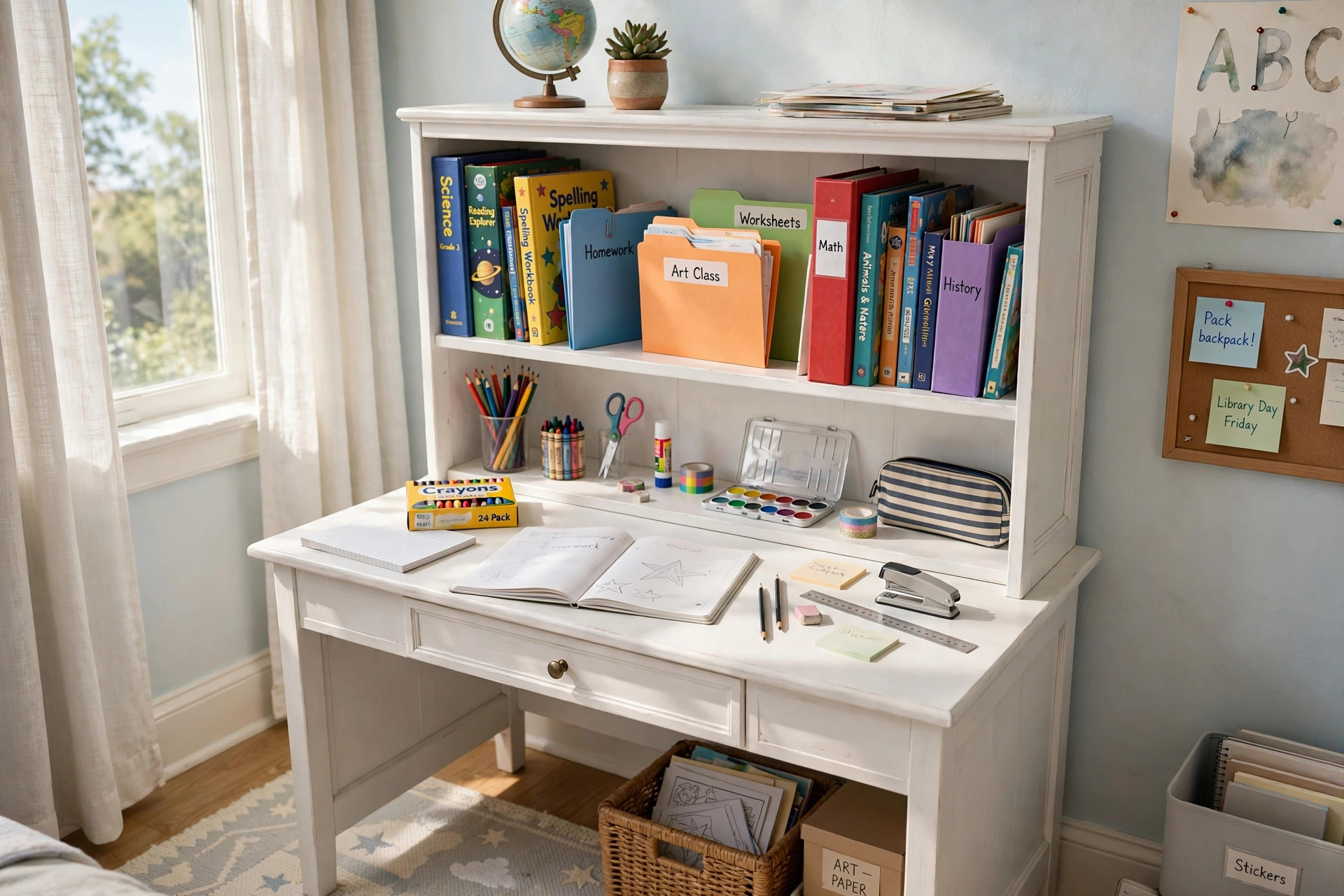

Homework is a daily part of school life. A child needs a quiet place to sit, write, and read. Many families look for the best kids desk with hutch for homework because the hutch adds shelves and cubbies above the work surface. Books, folders, and art supplies stay within reach. The top of the desk stays clear for writing. This guide explains what matters when you shop. It covers size, materials, styles, cost, care, and safety. It also answers the questions parents ask most often.
Why a Desk with a Hutch Helps with Homework
A desk alone is just a flat top. Add a hutch and the desk becomes a small work station. The shelves above hold books that the child needs every day. Pencils and crayons go in the side cubbies. Papers slide into the slots. Nothing rolls away.
Children study better in a set place. The American Academy of Pediatrics notes that a regular study spot helps children build steady homework habits. A desk with a hutch gives that spot a clear shape. The child learns where each item lives. When the math book goes on the same shelf each day, the child wastes less time looking for it.
The hutch also trains a child to keep things tidy. A desk without shelves often ends with papers stacked in piles. A hutch with dividers shows the child where each pile belongs. Over time, the child keeps the space neat with little help.
Small rooms gain from a hutch, too. The storage goes up instead of out. A desk with a hutch uses the same floor space as a plain desk, yet it holds twice as much. This matters in a shared bedroom. Room planners at HGTV point out that vertical storage is the key to small kids rooms. A hutch is vertical storage built into the desk.
What to Look for When You Buy: Best Kids Desk with Hutch for Homework
Size of the Desk Top
A child needs room for a book, a notebook, and a hand. Measure the space first. A desk top of about 36 inches wide and 18 inches deep suits most grade-school children. Teens may need 42 inches or more. The hutch should match the desk in width. A hutch that hangs over the sides looks wrong and may tip.
Height
The child should sit with feet flat on the floor and elbows at desk level. Most kids desks stand 24 to 30 inches tall. A chair that can move up and down helps more than a desk that moves. A kids desk chair adjustable for growing children lets the child sit right at any desk height. Check the chair first, then match the desk.
Hutch Shelf Height
The lower shelves should sit low enough for the child to reach without standing. The top shelf can hold items the parent hands down, such as art paper or a printer. Deep shelves, about 10 inches, hold school books upright. Shallow shelves work for small items like glue sticks.
Materials
Solid wood lasts longest. Pine, rubberwood, and birch all take daily use. Engineered wood with a thick finish costs less and still serves well for years. Look at the edges. Thick, rounded edges resist chips better than sharp thin ones. Avoid desks with a very thin paper coating, since it peels with moisture.
Finish
A smooth finish makes cleaning easy. White and light wood brighten a room. Dark wood hides marks but can make a small room feel heavy. A clear, non-toxic finish is best for kids furniture. Retailers such as Pottery Barn Kids test their finishes to low-toxicity standards for children.
Types and Styles of Kids Desks with Hutches
Classic Two-Shelf Hutch
This is the most common type. The hutch has two open shelves above the desk. It holds books and boxes. It fits most rooms and most budgets. Many come in white, gray, or natural wood.
Hutch with Cabinet Doors
Some hutches have doors on the upper part. The child can hide craft items or games behind the doors. This style suits a shared room, where a neat look matters. The doors add cost but cut visual clutter.
Corner Desk with Hutch
A corner unit fills a room corner with work space on two sides. The hutch wraps around above both sides. This type gives a lot of room for older children with many books. It needs more floor space, so measure twice.
Desk and Chair Sets
A kids study desk with chair set adjustable arrives as one package. The desk and chair match in style and size. This is a simple path for parents who want everything to fit at once. The sets often include a hutch option.
Adjustable and Growing Desks
Some desks rise as the child grows. These cost more at first but last from first grade through high school. IKEA and other makers sell height-adjustable kids desks in many sizes. If the budget allows, a growing desk is a sound buy.
How to Choose the Right One for Your Child
Start with the child, not the store. Watch how the child works. Some children spread papers wide. They need a deep desk top. Some children like small items sorted in trays. They need many small cubbies in the hutch.
Check the school load. A first grader needs space for one book and a pencil box. A sixth grader needs room for a laptop, a textbook, and a binder. Buy for the years ahead when you can.
Take the child to the store or measure the child at home. Seat the child at a table of the right height. Note the elbow height. This number guides the desk choice. Read parent reviews on sites like Wayfair, where many families post photos of the desk in real rooms. Real photos show the true size better than studio shots.
Plan the storage inside the hutch. Books need tall slots. Papers need flat trays. A kids desk organizer for school supplies storage placed on the desk top pairs well with a hutch that has only shelves. Together they hold everything.
Test the desk for wobble before you buy. Press down on one corner of the hutch. A good desk stays firm. A desk that rocks at the store will rock worse at home with a child leaning on it. Look at the back panel, too. A solid back panel adds strength. A desk with no back panel, or only a thin sheet, bends over time.
Wood tone also plays a part in a small room. Light finishes, such as natural pine or white, bounce light and make the room feel larger. Dark walnut or espresso looks rich but can make a tight corner feel closed in. If the bedroom is small, favor light wood and open hutch shelves over closed cabinets.
Cost and Price
Prices vary with material and size. As a rough guide in the United States market:
– Small particle-board desk with open hutch: 60 to 120 dollars – Medium engineered-wood desk with shelved hutch: 120 to 250 dollars – Solid wood desk with cabinet hutch: 250 to 500 dollars – Large corner desk with wrap-around hutch: 300 to 600 dollars – Height-adjustable desk with hutch: 250 to 550 dollars
Check large home stores such as Home Depot and Lowe’s for seasonal sales. Back-to-school season often brings the best prices. Buying the desk and chair together can cut the total.
Think of cost per year. A 120-dollar desk that lasts three years costs 40 dollars a year. A 300-dollar solid wood desk that lasts ten years costs 30 dollars a year. The dearer desk can be the cheaper buy in the long run.
Care and Upkeep
Dust the desk and hutch once a week with a soft cloth. Wipe spills at once. Water left on wood raises the grain. Use coasters under paint cups and glue bottles.
Tighten screws twice a year. Kids furniture takes daily bumps. A loose hutch can lean. Check the wall anchor too. Many desks come with a strap that holds the hutch to the wall. Keep it in place.
Teach the child to clean the desk each night. Five minutes of sorting keeps the hutch useful. A monthly clear-out of old papers keeps the shelves from filling with junk. Home guides at The Spruce suggest a simple weekly tidy routine for kids rooms.
For scuffs on wood, rub a small amount of furniture wax into the mark. For paint marks, a damp cloth with mild soap works. Avoid harsh cleaners. They dull the finish.
Safety
A hutch sits high and can tip if a child climbs it. Always anchor the desk to the wall with the hardware that comes in the box. The U.S. Consumer Product Safety Commission urges parents to anchor all tall furniture in kids rooms. This step takes ten minutes and stops a real hazard.
Check for pinch points where hutch doors meet the frame. Small fingers get caught there. Soft-close hinges help. Keep heavy items on the lower shelves of the hutch. Heavy books up high raise the center of gravity.
Look for smooth, rounded corners on the desk edge. A sharp corner at a child’s eye level is a risk when the child stands up fast. Parenting guides at What to Expect list rounded edges among the top features of safe kids furniture.
Check the paint and finish for lead safety if you buy a used desk. Old painted furniture may carry lead paint. A new desk from a known maker should meet current safety rules. Apartment Therapy offers simple steps for checking secondhand kids furniture before you bring it home.
FAQ
What age is right for a desk with a hutch?
Most children can use one from about age five or six. The child should reach the lower hutch shelves while seated. For very young children, keep the hutch shelves low and let the top shelf stay empty.
How much space does a kids desk with hutch need?
Allow the desk footprint plus two feet behind it for the chair to pull out. A 40-inch desk needs about 64 inches of wall length when you add room for the chair to move. Measure the wall before you shop.
Can the hutch be removed later?
On many models, yes. The hutch bolts to the back of the desk. You can take it off when the child outgrows it or moves to a dorm. Keep the bolts in a labeled bag.
Is solid wood worth the extra cost?
It often is. Solid wood takes knocks, can be refinished, and holds screws tight through years of use. Engineered wood serves fine for a few years but wears faster at the joints.
What should go on the hutch shelves?
Keep daily items low: textbooks, notebooks, a pencil cup. Store art supplies in bins on the middle shelf. A kids study desk with chair set adjustable can be paired with bins that fit the same shelves. Put items used rarely on the top shelf.
How do I keep the desk area well lit?
Place the desk near a window when you can. Add a desk lamp for evening work. A lamp with a warm bulb and an adjustable arm lights the page without glare.
A Short Final Word
The best kids desk with hutch for homework is the one that fits your child, your room, and your budget. Measure first. Choose safe, sturdy materials. Anchor the hutch to the wall. Then let your child make the space their own. A desk that feels like their own place will draw them back each school day.
References
American Academy of Pediatrics. (n.d.). HealthyChildren.org. https://www.healthychildren.org Apartment Therapy. (n.d.). Home design ideas and inspiration. https://www.apartmenttherapy.com HGTV. (n.d.). Home and garden ideas. https://www.hgtv.com IKEA. (n.d.). Home furnishings. https://www.ikea.com Lowe’s. (n.d.). Home improvement products. https://www.lowes.com Pottery Barn Kids. (n.d.). Kids furniture and decor. https://www.potterybarnkids.com The Home Depot. (n.d.). Home improvement products. https://www.homedepot.com The Spruce. (n.d.). Home and garden advice. https://www.thespruce.com U.S. Consumer Product Safety Commission. (n.d.). Product safety information. https://www.cpsc.gov Wayfair. (n.d.). Furniture and home goods. https://www.wayfair.com What to Expect. (n.d.). Pregnancy and parenting guidance. https://www.whattoexpect.com
Was this guide helpful?

About Sarah Mitchell
The My Garden US editorial team writes practical, in-depth home and garden guides for American homeowners — tested advice, no fluff.
You May Also Like
Toddler Bed Guard for Preventing Falls at Night
February 11, 2026 0 views
Nursery Rocking Chair Upholstered for Comfort: A Plain Buying Guide
February 21, 2026 0 views
Kids Teepee Tent for Indoor Playroom Decor: A Simple Buying Guide
May 31, 2026 0 views