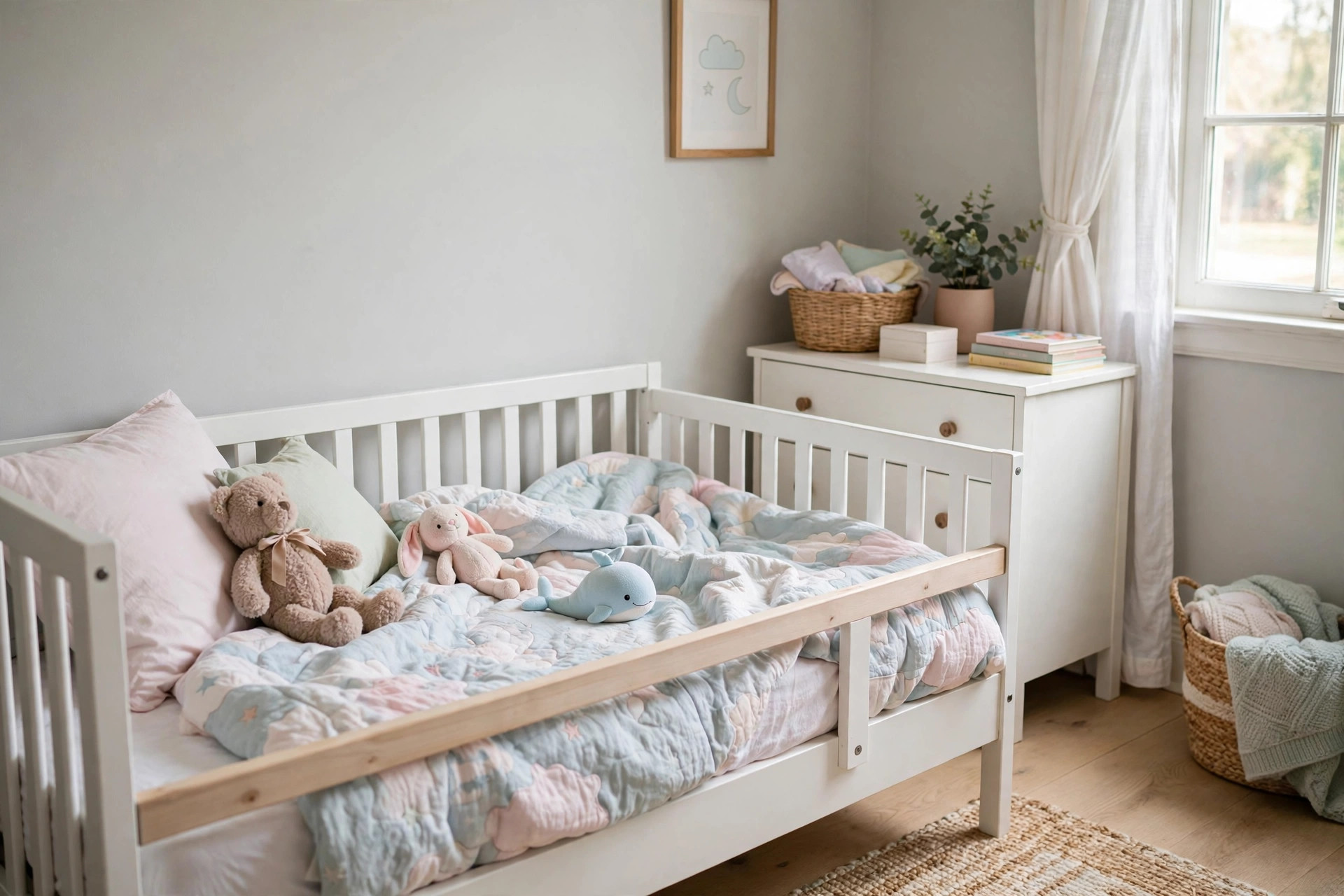

Moving a child from a crib to a bed is a big step for any family. The best convertible toddler bed with safety rail makes that step safer and simpler. A good bed fits the child now and still works a few years later, when the toddler is taller and more sure of himself. The safety rail keeps the child from rolling out at night. The convertible design lets the bed change shape as the child grows. This guide explains what to look for, how much to spend, and how to keep the bed safe and clean for years of use.
Why a Convertible Toddler Bed with a Safety Rail Matters
Most children leave the crib between eighteen months and three years of age. Some start to climb out. Some ask for a big bed. Some simply outgrow the crib. Whatever the reason, the change can be hard. A toddler who wakes in a new bed may sit up, roll over, and fall to the floor. A safety rail stops that fall before it happens.
A convertible bed does more than hold a rail. It adapts. Many models start as a low toddler bed with a rail on each side. Later, you can remove one rail. Later still, you can remove both. Some models even stretch into a twin-size bed when the child is ready. That is the real value of the best convertible toddler bed with safety rail. You buy it once, and it serves the child for five years or more.
Parents also save money in the long run. A single bed that converts costs less than three separate beds bought one after another. It also saves the trouble of shopping again every two years. The child keeps a bed he knows, and the room keeps a look the family likes. Change is hard enough for a small child. A bed that stays familiar makes the change easier.
There is another gain that parents notice at once. A toddler bed sits low to the floor. The child can climb in and out alone. That small freedom builds confidence. The rail guards the sleeping hours. The low height guards the waking hours. Together they give the child a bed that is safe from every side.
What to Look for When You Choose: Best Convertible Toddler Bed with Safety Rail
Shopping can feel confusing. Dozens of beds look alike in pictures. A few simple checks will narrow the field fast.
Size and Fit
A standard toddler bed takes a crib-size mattress, about twenty-eight inches wide and fifty-two inches long. Check the mattress you own before you shop. If you plan to reuse the crib mattress, make sure the new bed frame fits it with no wide gaps. A gap larger than two fingers between the mattress and the frame is a hazard. Small limbs can slip into it.
Measure the room as well. A toddler bed with guard rails for first bed use should leave room for a dresser, a chair, and a clear path to the door. In a tight space, look at a best convertible crib for small nursery room design, which often shares the same small footprint.
Rail Height and Strength
The rail should rise at least five inches above the top of the mattress. That height is enough to stop a rolling child. Press on the rail in the store, or read reviews about sturdiness. A good rail does not bend or wobble. It should attach with bolts, not with plastic clips. Removable rails are fine, but the connection points must be solid.
Some beds come with two rails, one for each long side. Others come with one. Two rails give the best protection for restless sleepers. If you place the bed against a wall, one rail may be enough, since the wall guards the other side. Even then, check that the bed sits flush against the wall. A gap between bed and wall is just as dangerous as a gap around the mattress.
Materials and Finish
Solid wood is the strongest choice. Pine, poplar, and rubberwood are common and hold up well. Metal frames are strong too, but they can feel cold and hard. Whatever material you pick, check the finish. It should be smooth, with no rough spots or splinters. A non-toxic finish matters, because toddlers chew on rails and posts. Look for paint or stain labeled lead-free and phthalate-free.
Big furniture retailers and department stores like Target publish material lists for each bed they sell. Reading those lists takes five minutes and can tell you a great deal about quality.
Types of Convertible Toddler Beds
Not every convertible bed works the same way. Knowing the types helps you match the bed to your plans.
Crib-to-Toddler Converters
Some cribs come with a conversion kit. You remove the front rail of the crib and add a half rail in its place. The crib becomes a toddler bed. This option costs the least, since you already own the crib. The catch is that the kit often sells separately, and some older cribs have no kit at all. Check with the maker before you assume it will fit. Many parents shopping for a best convertible crib for small nursery room start here, because the change is gentle for the child.
Standalone Toddler Beds
These beds are built for toddlers from the start. They sit low, often with built-in rails shaped like animals, cars, or simple panels that match the room. They do not convert into anything bigger. The price is low, and the look is fun. The limit is clear. When the child outgrows it, usually around age five, you must buy again.
Four-in-One Convertible Beds
The four-in-one bed is the most flexible type. It starts as a crib or toddler bed, converts to a daybed, and finally becomes a full-size or twin bed. The safety rail fits the toddler stage and comes off when it is no longer needed. These beds cost more at first, often two to four hundred dollars. Spread over eight or ten years of use, the yearly cost is low. Families who want one purchase to last choose this type most often. Shoppers comparing options on sites like Wayfair and Amazon will find the widest range of four-in-one models there.
A fourth option suits families short on space. Some toddler beds include drawers under the frame. A best kids bed with storage drawers underneath keeps clothes or toys close at hand and removes the need for an extra dresser. The storage adds weight, so moving the bed for cleaning takes more effort.
Cost and Price Range
Prices for toddler beds vary more than many parents expect. A basic standalone toddler bed can cost as little as sixty dollars. A mid-range convertible bed with solid wood and two rails usually runs between one hundred fifty and three hundred dollars. A four-in-one bed from a premium brand can reach four or five hundred dollars.
The safety rail itself adds little to the price. Most convertible beds include at least one rail in the box. Buying a rail separately, for a bed that did not come with one, costs twenty to fifty dollars. Universal rails fit many frames, but always check the measurements before you order.
Do not judge by price alone. A cheap bed with weak joints is a poor deal. A mid-priced bed from a maker with a long record is often the best value. Read parent reviews, and give extra weight to reviews written after six months of use. Those tell you how the bed holds up, not just how it looks on day one. Price guides and nursery ideas on The Spruce and Pottery Barn Kids can help you set a realistic budget before you shop.
Care and Upkeep
A toddler bed takes daily wear. Juice spills. Crayons wander. Small shoes kick the posts. A little care keeps the bed looking good and working well.
Wipe the frame once a week with a damp cloth. Use mild soap for sticky spots, and dry the wood right away so water does not soak in. Check the bolts once a month. Wood shrinks and swells with the seasons, and bolts loosen over time. A quick turn with a wrench keeps every joint tight.
Wash the mattress cover as often as you wash sheets. A waterproof cover under the sheet protects the mattress from night accidents and adds years to its life. If the bed has fabric rails or padded bumpers, check the maker rules before washing. Some covers come off for the machine. Others need spot cleaning only.
When the time comes to convert the bed, keep every part you remove. Put the rails, bolts, and the instruction sheet in a labeled bag. Tape the bag to the bed frame or store it with other nursery keepsakes. Parents who lose the small parts often find they cannot convert the bed later, and replacement kits for older models can be hard to find.
Safety Tips Every Parent Should Know
Safety is the reason most families buy this kind of bed, so it deserves full attention. The U.S. Consumer Product Safety Commission sets firm rules for toddler beds, and buying a bed that meets those rules is the first step.
Start with the mattress fit. Lay the mattress in the frame and press your fingers into every edge. If you can fit more than two fingers between the mattress and the frame, the fit is too loose. A snug mattress leaves no space for a child to get trapped.
Check the rail gaps next. The spaces between the slats of a rail should be narrow. A soda can should not pass through them. Wide gaps can trap a small head or arm. The same rule applies to the headboard and footboard.
Keep the bed away from windows. Cords from blinds are a strangling hazard, and a climbing toddler can reach a low sill. Move the bed to an inside wall when you can. If the bed must sit near a window, fit the window with cordless blinds.
Do not pile the bed with pillows and soft toys. A toddler needs one flat pillow at most, and many sleep fine with none. Heavy blankets are not needed either. A light blanket or a sleep sack keeps the child warm without covering the face. Guidance on safe sleep from HealthyChildren.org, the parent site of the American Academy of Pediatrics, explains these points in plain terms.
Finally, anchor tall furniture in the room. A toddler who climbs out of bed may climb a dresser next. Wall straps cost a few dollars and stop tip-overs. Parenting guides on What to Expect remind families that the whole room must be safe, not just the bed.
Frequently Asked Questions
At what age should my child move to a toddler bed? Most children are ready between eighteen months and three years. The clearest sign is climbing out of the crib. Another sign is simple size. If the child looks cramped, it is time. There is no prize for moving early. A child who sleeps well in the crib can stay a little longer.
Can I use my crib mattress in a toddler bed? Yes, in most cases. Standard toddler beds take a standard crib mattress. Check the fit with the two-finger test described above. Replace the mattress if it sags, smells, or no longer springs back when you press it.
How long will a convertible toddler bed last? A standalone toddler bed usually fits until age four or five. A four-in-one convertible can serve into the teen years as a full-size bed. The safety rail is only needed for the toddler stage, usually one to two years. After that you can remove it and keep using the frame.
Is a safety rail really needed if the bed is low? A low bed still lets a sleeping child roll onto a hard floor. The fall is short, but it can wake and frighten the child, and night waking can undo weeks of good sleep habits. A rail costs little and removes the risk. Most parents find it worth having for the first year.
What is the best material for a toddler bed? Solid wood is the best all-around choice. It is strong, it repairs well, and it holds bolts tightly over time. Metal is strong too but can dent walls and feel cold. Avoid beds made only of particleboard for daily use by an active toddler. They loosen faster and do not survive a move to a new room.
A Final Word
The best convertible toddler bed with safety rail is not the most costly one on the shelf. It is the one that fits your child, fits your room, and meets strict safety rules. Measure twice. Check the rail. Read the reviews. Then let the bed do its quiet work while your child sleeps. A good bed gives the whole family better nights, and better nights make better days.
References
Amazon. (n.d.). Online shopping. https://www.amazon.com American Academy of Pediatrics. (n.d.). HealthyChildren.org. https://www.healthychildren.org IKEA. (n.d.). Home furnishings. https://www.ikea.com Pottery Barn Kids. (n.d.). Kids furniture and decor. https://www.potterybarnkids.com Target. (n.d.). Retail store. https://www.target.com The Spruce. (n.d.). Home and garden advice. https://www.thespruce.com U.S. Consumer Product Safety Commission. (n.d.). Product safety information. https://www.cpsc.gov Wayfair. (n.d.). Furniture and home goods. https://www.wayfair.com What to Expect. (n.d.). Pregnancy and parenting guidance. https://www.whattoexpect.com
Was this guide helpful?

About James Carter
The My Garden US editorial team writes practical, in-depth home and garden guides for American homeowners — tested advice, no fluff.
You May Also Like
Toddler Bed Frame with Headboard for Style: A Buyer’s Guide
August 21, 2026 0 views
Kids Play Tent with Tunnel for Indoor Fun
April 16, 2026 0 views
Best Convertible Crib for Small Nursery Room: A Parent’s Buying Guide
August 13, 2026 0 views