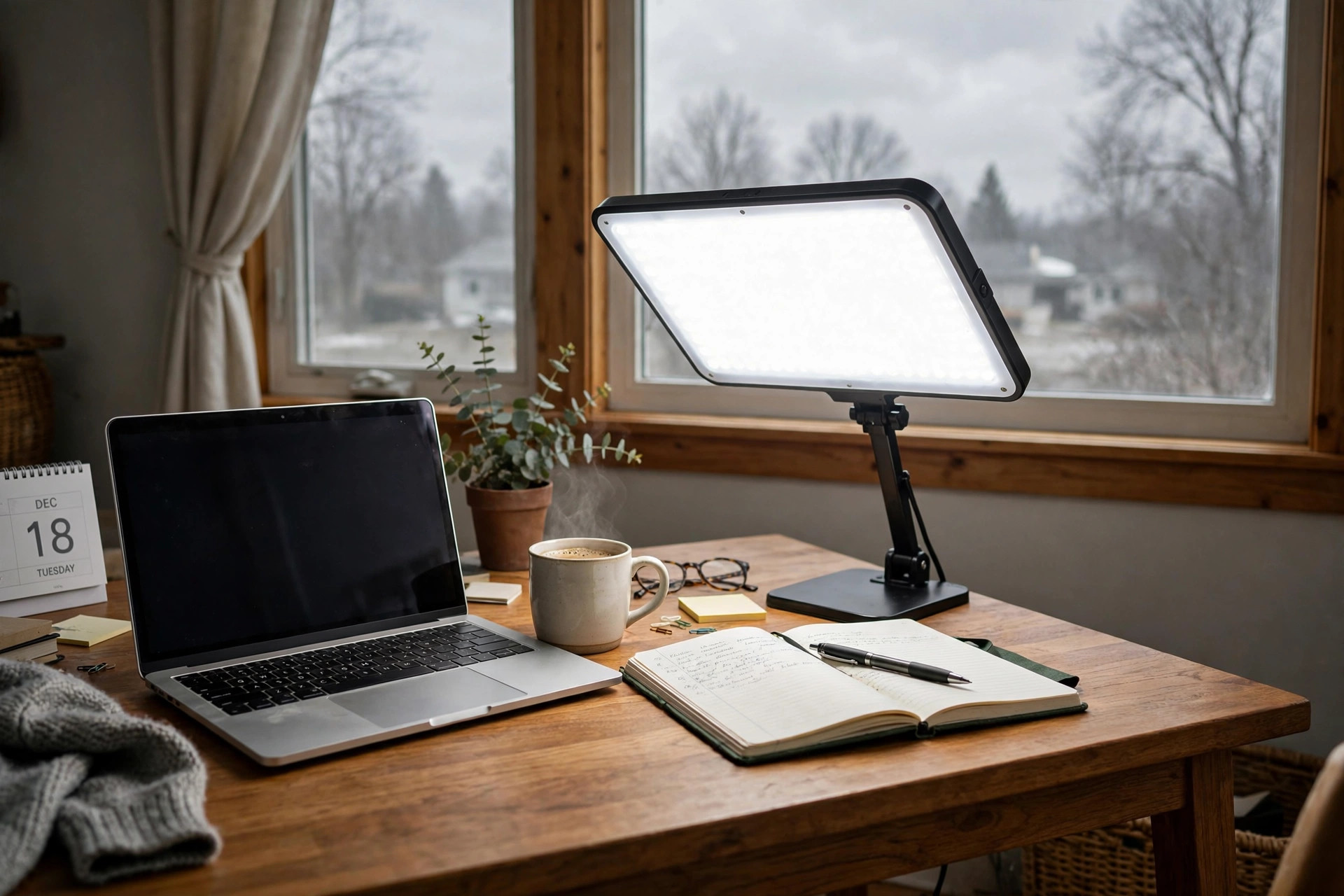

A Brighter Way Through the Dark Season
Winter days are short. The sun rises late and sets early. For people who work at home, this can be a real problem. The office grows dim by mid-afternoon. Mood drops. Focus fades. This is why so many remote workers look for the best daylight lamp for home office winter blues. A daylight lamp gives off bright light that looks like the sun. It sits on a desk or a side table. It shines for part of the day. Many users say it lifts their mood and helps them stay alert. This guide explains what a daylight lamp is, how to choose one, and how to use it with care.
Why Winter Light Loss Hits Home Workers Hard: Best Daylight Lamp for Home Office Winter Blues
The human body runs on a daily clock. Light sets that clock. Morning light tells the brain to wake up. It lowers melatonin, the sleep hormone. It raises alertness. In winter, many home workers never get that signal. They wake in the dark. They work under a weak ceiling bulb. They finish work in the dark again.
Low light can bring low spirits. Psychologists call the winter dip “seasonal mood change.” It is milder than full seasonal depression, but it is real. People feel tired at noon. They crave sweets. They lose the will to start hard tasks. Home workers feel this more than office staff. There is no commute past bright shop windows. There is no office lobby full of light.
A daylight desk lamp for home office use cannot replace the sun. But it can give the eyes a strong dose of bright light each morning. Studies of light therapy suggest that bright light helps many people feel more awake and more even-tempered. That is the promise behind the search for the best daylight lamp for home office winter blues.
What a Daylight Lamp Actually Does
A daylight lamp is not an ordinary lamp. A normal desk bulb gives about 200 to 500 lux at the eye. Lux is the unit for light brightness. A therapy-grade daylight lamp gives 10,000 lux at a set distance, often about 16 inches. That is close to outdoor light on a cloudy morning.
The lamp uses LED panels with a high color temperature. Color temperature is measured in Kelvin. Sunlight at noon is near 5,500 Kelvin. Most daylight lamps sit between 5,000 and 6,500 Kelvin. The light looks white with a cool blue hint. It feels like morning sun through a window.
The user sits near the lamp for 20 to 30 minutes. The light does not need to shine straight into the eyes. It should fall on the face from an angle. Most people read email, drink coffee, or eat breakfast while the lamp runs. The key is steady exposure, not staring.
How to Choose: What to Look For
Brightness
Check the lux rating. A lamp rated at 10,000 lux lets you get a full session in about 20 minutes. Lamps rated at 2,500 lux need longer sessions, sometimes an hour or more. Higher is not always better. A lamp that is too bright can cause glare. Look for a model that lists its lux at a stated distance, such as 10,000 lux at 16 inches.
Color Temperature
Choose 5,000 Kelvin or higher. This is the range that mimics daylight. Lamps near 2,700 to 3,000 Kelvin are warm and cozy. They suit evenings, but they do not fight the winter blues as well. Some lamps let you switch between cool and warm modes. That is useful if one lamp must serve both morning energy and evening rest.
Size and Screen Quality
Bigger screens feel more natural. A large panel lights the face evenly. Small panels can create hot spots. Look for a lamp with a diffuser. A diffuser spreads the light and softens the glare. Check that the lamp is UV-free. Good makers state this clearly. UV rays can harm skin and eyes.
Timer and Dimmer
A built-in timer is handy. It shuts the lamp off after a set time. A dimmer helps too. Full brightness may feel harsh at first. A dimmer lets you start low and build up. If you also want an adjustable desk lamp with dimmer for eye strain, look for a model that pairs both roles: bright therapy light in the morning, soft task light later.
Placement and Power
The lamp should fit your desk. Tabletop models suit desks with room to spare. Floor models suit reading chairs. USB-powered lamps are light and cheap, but they are often too weak. Plug-in models give steadier brightness. Check cord length before you buy.
Types of Daylight Lamps
Daylight lamps come in several shapes. Each suits a different home office.
Light boxes. These are flat panels that stand on a desk. They are the classic choice. They give even light across the face. Many are rated at 10,000 lux.
Desk lamps with daylight mode. These look like normal desk lamps. They have an LED head that can switch to 6,000 Kelvin. They cost less than light boxes. Their brightness is often lower, so sessions run longer. They pair well with other best task lighting for home office desk setups.
Floor lamps. These are tall lamps that stand beside a chair or desk. They suit people who want light while reading in the morning. They take more room.
Visor-style and portable lamps. These are small and run on batteries. They suit travelers. Their brightness is low. They are a backup, not a main tool.
Wake-up lights. These lamps act as alarm clocks. They grow brighter over 30 minutes before the alarm sounds. They ease the body out of sleep. They do not replace a daylight lamp, but they help people who hate waking in the dark.
Cost and Price
Prices vary widely. A simple light box costs about 35 to 60 dollars. Mid-range models with timers and dimmers run 70 to 120 dollars. Premium brands with large screens and medical-grade filters cost 150 to 250 dollars. Desk lamps with a daylight mode start near 25 dollars.
What drives the price? Brightness is the main factor. A true 10,000-lux panel needs many LEDs and a good diffuser. Timers, remote controls, and phone apps add cost. Brand names add cost too.
A fair rule: pay for honest specs. A 40-dollar lamp that clearly states 10,000 lux at 16 inches and UV-free light is a better buy than a 100-dollar lamp with vague claims. Read the product page on a trusted retailer such as Wayfair or Amazon and look for the numbers, not just the stars.
Check the warranty as well. Most daylight lamps carry a one-year warranty. Some makers offer two or three years. A longer warranty often signals better build quality. Keep the receipt. If the panel flickers or the brightness drops within the first year, a good maker will replace it. Also check the return policy of the store. Some shops give 30 days. That is enough time to test the lamp for two or three weeks and judge how you feel.
Care and Upkeep
Daylight lamps need little care. Wipe the screen with a soft, dry cloth. Dust cuts brightness. Do not use harsh cleaners. They can scratch the diffuser.
Keep the lamp dry. Do not place it near a window where rain can reach it. Unplug it when you travel. LED panels last for years, often 20,000 to 50,000 hours. The brightness may fade slowly over time. If a session starts to feel weak after years of use, the panel may be aging.
Store the lamp upright. Do not stack heavy items on a light box. Keep the power cord clear of chair wheels. A damaged cord is a safety risk.
Safety Notes
Daylight lamps are safe for most people. Still, a few rules apply.
Do not stare straight into the light. Let it fall on your face from the side. Stop if you get a headache or eye pain. Move the lamp farther away or shorten the session.
Use the lamp in the morning or early afternoon. Late-evening use can delay sleep. The bright light tells the brain that it is still daytime. Morning use fits the body clock best.
People with eye diseases should talk to an eye doctor first. People who take medicines that make the skin or eyes sensitive to light should check with a doctor too. People with bipolar disorder should ask a doctor before starting light therapy. Bright light can shift mood in ways that need medical guidance.
Buy from makers that follow safety standards. Retail guides at IKEA and Best Buy often note which lamps carry proper certifications. Look for UL or ETL marks on the box.
Frequently Asked Questions
How long should I sit by a daylight lamp each day?
Most makers suggest 20 to 30 minutes at 10,000 lux. Sit about 16 inches from the screen. Weaker lamps need longer. Start with 15 minutes. Add time if you feel no change after a week.
What time of day is best?
Morning is best. Use the lamp within the first two hours after waking. Afternoon use still helps some people. Avoid the last two hours before bed.
Can a daylight lamp replace my desk lamp?
It can add to your setup, but it is not a full replacement. A daylight lamp is built for bright morning sessions. A good task lamp gives focused light for reading and typing all day. Many home workers use both. Pair the therapy lamp with a ring light for home office video calls if your face looks dark on camera.
Will a daylight lamp raise my electric bill?
Only a little. Most LED models use 10 to 30 watts. Running one for 30 minutes a day adds pennies to a monthly bill. This is one reason LEDs beat older fluorescent light boxes.
Is blue light from a daylight lamp harmful?
Daylight lamps give off light in the blue-white range. That is what makes them work in the morning. At normal distances and session lengths, makers state the light is UV-free and safe for daily use. Do not use the lamp for hours at a time. Follow the session guide.
Where should I put the lamp on my desk?
Place it to one side, about 16 inches from your face. Angle it so the light falls on your eyes without shining straight into them. Keep your normal work light separate. Review sites such as The Spruce and Wirecutter show desk layouts that fit both lamps without clutter.
Fitting Light Into Your Workday
A daylight lamp works best as part of a routine. Switch it on when you sit down with coffee. Answer email while it runs. Turn it off when the timer ends. Small habits beat grand plans.
Try to keep your wake time steady, even on weekends. The body clock likes rhythm. A lamp session at 7 a.m. each day beats a random session now and then. If you wake before dawn, sit by the lamp while you plan the day. If your mornings are rushed, run it at your desk during the first work block. The light still works as long as it reaches your eyes.
Open the curtains too. A lamp does not cancel out real daylight. On bright winter mornings, the lamp plus a window gives the strongest signal. Move your desk near a window if you can. The two light sources work as a team.
Your whole desk setup matters too. Ergonomic research from Herman Miller and Steelcase shows that light, posture, and desk layout work together for comfort. A lamp from UPLIFT Desk accessories or a lighting guide at PCMag can help you plan the full workspace, not just one corner of it.
A Short Final Word
Winter will shorten the days. It does not have to darken your work. The best daylight lamp for home office winter blues is the one with honest specs, a size that fits your desk, and a routine you will keep. Choose 10,000 lux, 5,000 Kelvin or higher, and UV-free light. Use it each morning. Pair it with good task lighting. In a few weeks, the dark season may feel a little less dark.
References
Amazon. (n.d.). Online shopping. https://www.amazon.com Best Buy. (n.d.). Consumer electronics retailer. https://www.bestbuy.com Herman Miller. (n.d.). Office furniture and ergonomic seating. https://www.hermanmiller.com IKEA. (n.d.). Home furnishings. https://www.ikea.com PCMag. (n.d.). Technology product reviews. https://www.pcmag.com Steelcase. (n.d.). Office furniture and workplace research. https://www.steelcase.com The Spruce. (n.d.). Home and garden advice. https://www.thespruce.com UPLIFT Desk. (n.d.). Standing desks and ergonomic office furniture. https://www.uplift-desk.com Wayfair. (n.d.). Furniture and home goods. https://www.wayfair.com Wirecutter. (n.d.). Product reviews from The New York Times. https://www.nytimes.com/wirecutter
Was this guide helpful?

About Emily Rodriguez
The My Garden US editorial team writes practical, in-depth home and garden guides for American homeowners — tested advice, no fluff.
You May Also Like
A Practical Guide to a Home Office Humidifier for Dry Winter Air
March 5, 2026 0 views
Rolling Standing Desk With Locking Wheels: A Practical Guide for the Home Office
January 13, 2026 0 views
Small L Shaped Desk With Monitor Shelf: A Practical Guide for Small Home Offices
February 2, 2026 0 views