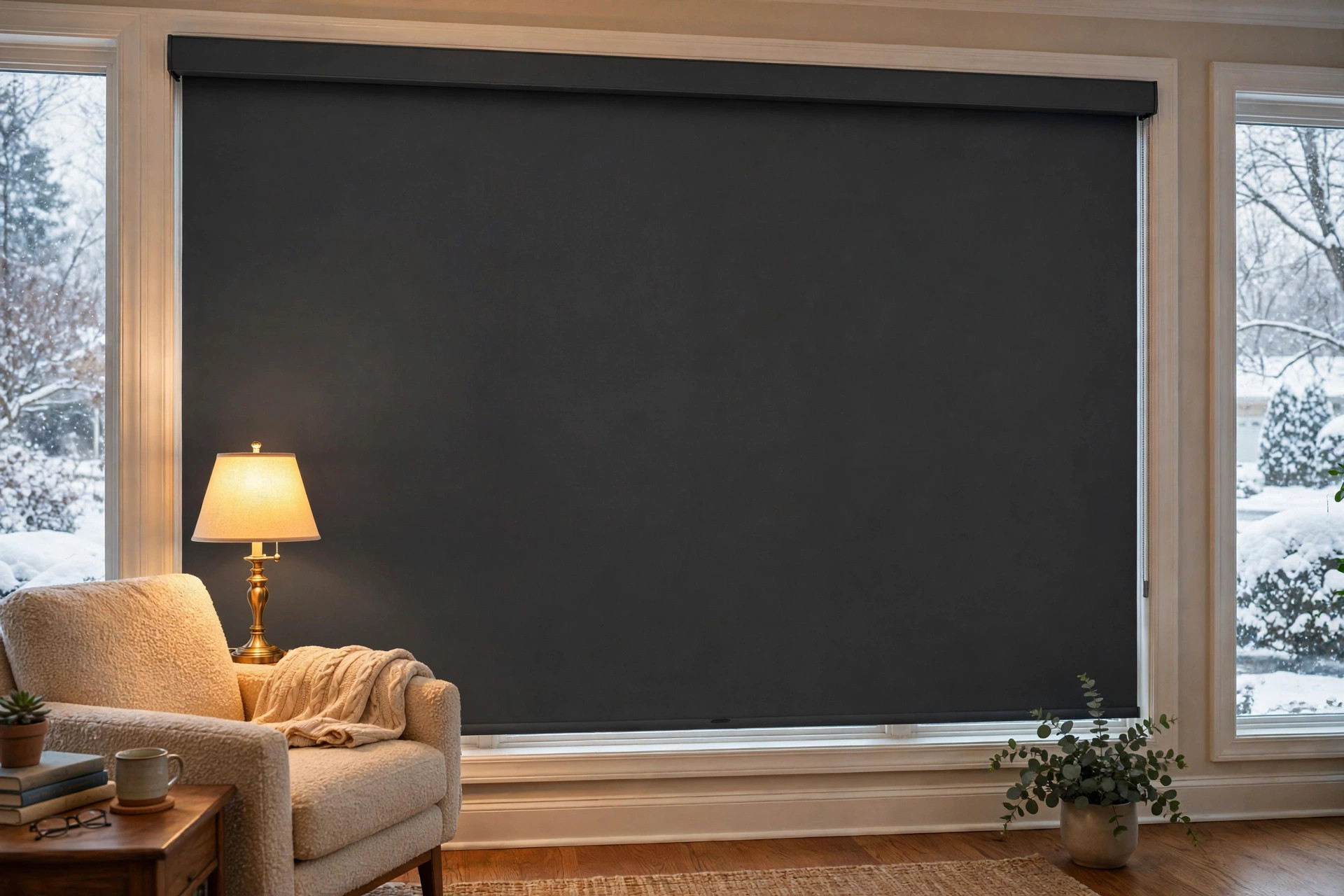

Winter nights are long. The sun sets early, and cold air presses against the glass. Many people search for the best blackout roller shades for cold climates because they want two things at once: full darkness and a warmer room. A good shade blocks the morning light, and it also slows the loss of heat through the window. This guide explains what to look for, how much you might pay, and how to keep your shades in good shape for years.
Why Blackout Roller Shades Matter in Cold Climates
Glass loses heat fast. A plain window has little power to stop cold air from creeping into a room. Even a well built wall keeps heat better than a standard window. In cold states, windows can account for a large share of the heat that leaves a home in winter. The U.S. Department of Energy notes that windows are one of the main paths of heat loss, and simple window treatments can cut that loss by a clear margin.
A blackout roller shade adds a layer between the glass and the room. The layer is not thick, but it works. It traps a pocket of still air near the glass. Still air is a poor carrier of heat, so less warmth escapes. When the shade is down in the evening, the room feels less drafty near the window. The furnace runs less often. Over a full winter, that can mean a lower heating bill.
Light control is the other half of the story. In far northern homes, winter brings very short days, but street lights and yard lights still shine through thin curtains. In a bedroom, stray light can disturb sleep. A true blackout shade stops nearly all of it.
What to Look for When You Choose: Best Blackout Roller Shades for Cold Climates
Not every shade sold as “room darkening” is a true blackout shade. And not every blackout shade helps much with cold. The best blackout roller shades for cold climates share a few clear traits. Check each one before you buy.
Fabric and Backing
The fabric is the heart of the shade. True blackout fabrics are made with a special backing that light cannot pass through. Some use a white reflective backing. Some use a foam-like layer bonded to the cloth. Some use two or three bonded layers built into one sheet.
For cold climates, a thicker fabric with a bonded backing does more than a thin vinyl sheet. The backing adds weight and body, and the small gap between the layers acts like extra insulation. Ask the maker or the store what the fabric is made of. Look for words like “thermal backing” or “insulated blackout fabric.” Independent reviews on sites such as Bob Vila often test how well a shade blocks light and note the feel of the material.
Color matters a little too. A light colored backing facing the street gives a clean look from outside and may reflect some summer sun. The room side can be any color you like. Dark room-side colors look rich, but they show dust less than white. Choose what suits your room.
Fit and Side Channels
A shade only works if it fits well. Light leaks in at the edges. Cold air does the same. A shade that is cut too narrow lets both slip past the sides. Measure the window opening with care, and order the shade to the exact size the maker asks for.
An inside mount looks neat. The shade sits within the window frame. But an inside mount almost always leaves small gaps at the sides where the brackets and the roll sit. An outside mount covers the whole opening plus a margin of wall on each side. For cold climates, an outside mount is the stronger choice. The extra overlap closes the gaps where drafts sneak through.
Some makers sell side channels or side tracks. These are slim strips that run down the sides of the window. The shade slides inside them as it moves up and down. Side channels block the last thin lines of light and air. They cost extra, but for a bedroom in a cold state they are worth the price. Retailers like Blinds.com and Wayfair list which of their shades accept side channels.
Lift style matters as well. A cordless lift is clean and safe, and it also leaves fewer gaps than a cord loop system. A motorized shade can be set to lower at sunset on a timer, so you never forget to close it on a cold night.
Types of Blackout Roller Shades
The market offers several types. Each has strengths for cold weather homes.
Standard blackout roller shades. These are the plain roll-up shades with a blackout fabric. They are simple, cheap, and easy to clean. They do the basic job well. Most buyers start here.
Thermal blackout roller shades. These use a thicker fabric with an insulating backing. They cost more than standard shades, but they slow heat loss better. For a drafty older window, this is the type to pick.
Cellular blackout shades. These fold into honeycomb shapes when raised. The honeycomb cells trap air, which adds insulation. A top rated cordless cellular shade for American homes can outperform a flat roller shade on heat control. The trade off is a higher price and a fabric that is harder to wipe clean.
Motorized blackout roller shades. These run on a small motor with a remote or a phone app. They are handy for tall windows and for people who want the shades to close on a schedule. Some can link to a smart home system. They need power, either a battery wand or a wired line.
Double roller shades. These pair a blackout roll with a sheer or light filtering roll in one bracket. You use the sheer in the day for soft light and the blackout at night. They are a smart pick for a living room, where you want daylight some of the time and darkness the rest.
Cost and Price
Prices vary widely. A basic blackout roller shade for one standard window can cost as little as twenty to forty dollars at a large retailer like IKEA or The Home Depot. These shades fit most windows and come in a few colors. They block light well but add little insulation.
A mid-range shade with a thicker thermal fabric runs from about fifty to one hundred twenty dollars per window. Many online shops sit in this range. The build quality is better, the fabric is heavier, and side channels are often sold as an add on.
A custom made shade starts near one hundred fifty dollars per window and can climb past three hundred. Custom shops cut to your exact size, offer many fabrics, and fit side channels built for the shade. For odd shaped windows or for a perfect look, custom is the way.
Side channels add roughly thirty to eighty dollars per window. A motorized lift adds about fifty to one hundred fifty dollars per shade, plus the cost of batteries over time.
Think about the payback. A set of shades for a cold bedroom may cost two hundred dollars. If they cut the heat loss at those windows by a quarter or more, the heating savings over a few winters can cover the cost. The ENERGY STAR program offers guidance on which window products save the most energy in cold regions.
If your budget is tight, start with the coldest rooms. The bedroom is first, since you spend eight hours there each night. A north facing window is second, since it gets no warming sun. You can add shades to other rooms later.
Care and Upkeep
Blackout roller shades are low work, but they last longer with small care steps.
Dust the shade once a month. Use a soft cloth or a vacuum with a brush head. Work from top to bottom so the dust falls off the fabric. A thick blackout fabric can hold dust in its weave, so this step matters more than it seems.
Wipe spots with a damp cloth and mild soap. Do not soak the fabric. Water can seep into the backing and leave marks or cause the layers to peel apart. Test a small hidden spot first before you clean a large stain.
Raise the shade slowly and evenly. Jerking the pull can tear the fabric at the edges or knock the roll out of its brackets. If the shade has a spring roller, guide it up with your hand rather than letting it fly.
Check the brackets once a year. Screws can loosen with use. Tighten them so the shade hangs level. A shade that hangs crooked lets light and air pass on one side.
Keep the room aired now and then. In winter, warm moist air can condense on the cold glass behind a closed shade. Open the shade for an hour on mild days to let the glass dry. This small habit guards against mold on the frame.
If a shade stops rolling well, look for dust in the roller ends. Clean the ends with a dry cloth. Many common shade problems come down to dirt in the mechanism, not a broken part.
Safety
Safety comes first in any home with children or pets. Old style cord loops are a known hazard. A looped cord can wrap around a small neck and cause grave harm. The Consumer Product Safety Commission has long warned about corded window coverings, and new rules now limit the cords that makers may sell.
Choose cordless shades for any room a child or pet can reach. Cordless shades lift by hand or by motor, so there is no loop at all. If you keep older corded shades, cut the loop and fit cord cleats high on the wall, or replace the shades outright. The cost of new cordless shades is small next to the risk.
Mount the brackets into solid wood or with proper anchors. A shade that falls in the night can startle a sleeper and break the shade. Heavy thermal shades weigh more than thin ones, so use the anchors that fit your wall type.
If you choose motorized shades, follow the maker on battery care. Use the right battery type, and keep spares away from small children. Swallowed button batteries are a serious danger.
Frequently Asked Questions
Do blackout roller shades really keep a room warmer?
Yes, they help. They do not replace good windows or wall insulation, but they add a real layer against heat loss. A snug shade with side channels can cut the heat loss at a window by a meaningful amount. Pair them with thermal energy efficient window treatments for sale in the coldest rooms for the best result.
What is the difference between blackout and room darkening?
Blackout blocks nearly all light. Room darkening blocks most light but lets some pass through the fabric. In a bright room, the difference is plain to see. If you need full darkness for sleep, buy a true blackout product, not a room darkening one.
Can I layer shades with curtains?
Yes, and it is a strong move for cold climates. A blackout roller shade blocks the light. A heavy curtain on top adds another layer of still air. Together they insulate better than either one alone. Many people pair shades with custom thermal insulated curtains for small apartments in bedrooms. Keep the curtain a few inches from the shade so air can move a little and moisture does not get trapped.
Do I need an inside mount or an outside mount?
For cold climates, an outside mount is usually better. It covers the window opening with an overlap, which seals more of the gaps at the edges. An inside mount looks tidier, but it leaves small light and air gaps near the brackets. If looks matter most, an inside mount still works, and side channels can close the gaps.
How do I measure for a blackout roller shade?
Measure the width of the window opening in three places: top, middle, and bottom. Use the smallest number. Measure the height in three places too, and use the largest number. For an outside mount, add at least two inches of overlap on each side and on top. Order to the size the maker asks for, and double check before you buy.
Are motorized shades worth the cost?
They are worth it if you have tall windows that are hard to reach, or if you want the shades to close on a timer each evening. A timer means the shade is always down when the cold sets in, even if you forget. For a small bedroom window you open by hand each day, a cordless manual shade is fine and costs less.
A Final Word
The best blackout roller shades for cold climates do two jobs: they keep the room dark, and they keep the room warm. Look for a thick blackout fabric, an outside mount with good overlap, and cordless lift for safety. Start with the bedroom and the coldest windows, and add more rooms as your budget allows. With care, a good set of shades will serve you for many winters, saving heat and guarding sleep night after night.
References
Blinds.com. (n.d.). Window blinds, shades, and shutters. https://www.blinds.com Bob Vila. (n.d.). Home improvement advice. https://www.bobvila.com ENERGY STAR. (n.d.). Energy efficient products. https://www.energystar.gov IKEA. (n.d.). Home furnishings. https://www.ikea.com The Home Depot. (n.d.). Home improvement products. https://www.homedepot.com U.S. Consumer Product Safety Commission. (n.d.). Product safety information. https://www.cpsc.gov U.S. Department of Energy. (n.d.). Energy efficiency and renewable energy. https://www.energy.gov Wayfair. (n.d.). Furniture and home goods. https://www.wayfair.com
Was this guide helpful?

About James Carter
The My Garden US editorial team writes practical, in-depth home and garden guides for American homeowners — tested advice, no fluff.
You May Also Like

Custom Curtain Tiebacks and Holdbacks for Southern States
April 15, 2026 0 views
Navy Blue Velvet Curtains Reviews and Buying Guide
January 12, 2026 0 views
Buy Bamboo Roman Shades Online in Arizona: A Complete Guide
July 11, 2026 0 views