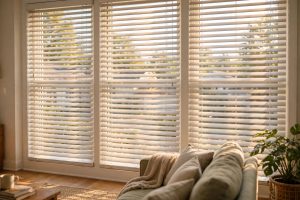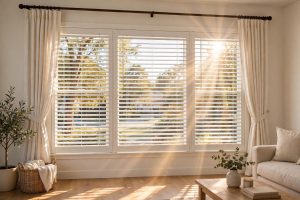
When people look for energy efficient custom made curtains online for sale, they want one thing most of all. They want lower power bills. Windows are the weak point of most homes. Heat slips out through glass in winter. Heat pours in through glass in summer. A standard curtain does little to stop this. A custom made energy efficient curtain does a great deal. It fits the window exactly. It seals at the edges. It uses thick fabric with a thermal lining. The result is a warmer house in January and a cooler house in July.
This guide explains why these curtains work. It shows what to look for when you shop. It covers types, costs, care, and safety. It also answers the questions buyers ask most often.
Why It Matters
Windows account for a large share of home energy loss. A single pane window lets heat pass through almost as fast as an open hole. Even double pane glass is poor compared to an insulated wall. The U.S. Department of Energy has long noted that about one third of a home’s heating and cooling energy escapes through windows. That is money leaving the house every day.
Curtains cannot change the glass. But they can add a layer of still air between the room and the window. Still air is a good insulator. A curtain that hangs close to the glass and seals at the top, bottom, and sides traps this air. Off the shelf curtains fail here. They are too short. They are too narrow. Gaps let air flow behind them. That flow, called convection, carries heat away.
Custom made curtains solve the fit problem. They are cut to your exact measurements. They can be made wide enough to overlap the frame by several inches on each side. They can be made long enough to puddle on the floor or seal against the sill. When you order energy efficient custom made curtains online for sale, you enter your own sizes. The maker builds the curtain for your window, not for an average one.
The savings are real. Studies of window coverings show that well sealed drapes can cut heat loss by 25 percent or more on a winter night. In summer, closing them during the hottest hours keeps direct sun off the glass. This cuts the work your air conditioner must do.
What to Look For: Energy Efficient Custom Made Curtains Online for Sale
Fabric Weight
Heavy fabrics stop air better than light ones. Velvet, brocade, and heavy cotton duck all work well. Independent testers such as Consumer Reports rate heavier weaves higher for insulation. The fabric should feel thick in the hand. Hold it up to a light. If light passes through easily, the curtain will not insulate well.
The Thermal Lining
The lining does most of the work. Look for curtains with a thermal or insulated lining sewn in. These linings use a foam or bonded layer that blocks heat transfer. Some use a reflective backing that bounces heat back into the room in winter and away from the room in summer. A curtain listed as “thermal backed” or “insulated” is what you want. Buyers of thermal energy efficient window treatments for sale often find this lining makes the biggest difference of any single feature.
Fit and Sealing
Measure each window yourself. Do not trust builder plans. Width should cover the frame plus four to six inches on each side. Length should reach the sill or the floor. For the best seal, the rod should mount above the frame and the curtain should return to the wall at each end. Some makers offer magnetic edges or Velcro strips that seal the sides. These small extras matter.
Color and Weave
Dark colors absorb heat. Light colors reflect it. For summer cooling, a light outer face helps. For winter warmth, the lining matters more than the face. A tight weave stops drafts better than a loose one. Run your fingers across the cloth. A tight, dense weave feels smooth and firm.
How to Choose
Start With the Room
Bedrooms need darkness and warmth. A full length thermal drape with a blackout lining serves both needs. For room by room planning ideas, guides at The Spruce and HGTV show how different treatments change a space. Living rooms need flexibility. A curtain that draws open in the day and seals at night works best. Kitchens and baths need washable fabric, since grease and steam soil cloth fast.
Match the Climate
Cold climates need maximum insulation. Look for three layer curtains: face fabric, foam thermal layer, and inner lining. Hot climates need sun blocking. A reflective back and light color matter most. Mixed climates need both. Many online makers now build curtains with a reversible lining. One side is white for summer. The other side is dark for winter. You flip the curtain with the season.
Check the Lining Type
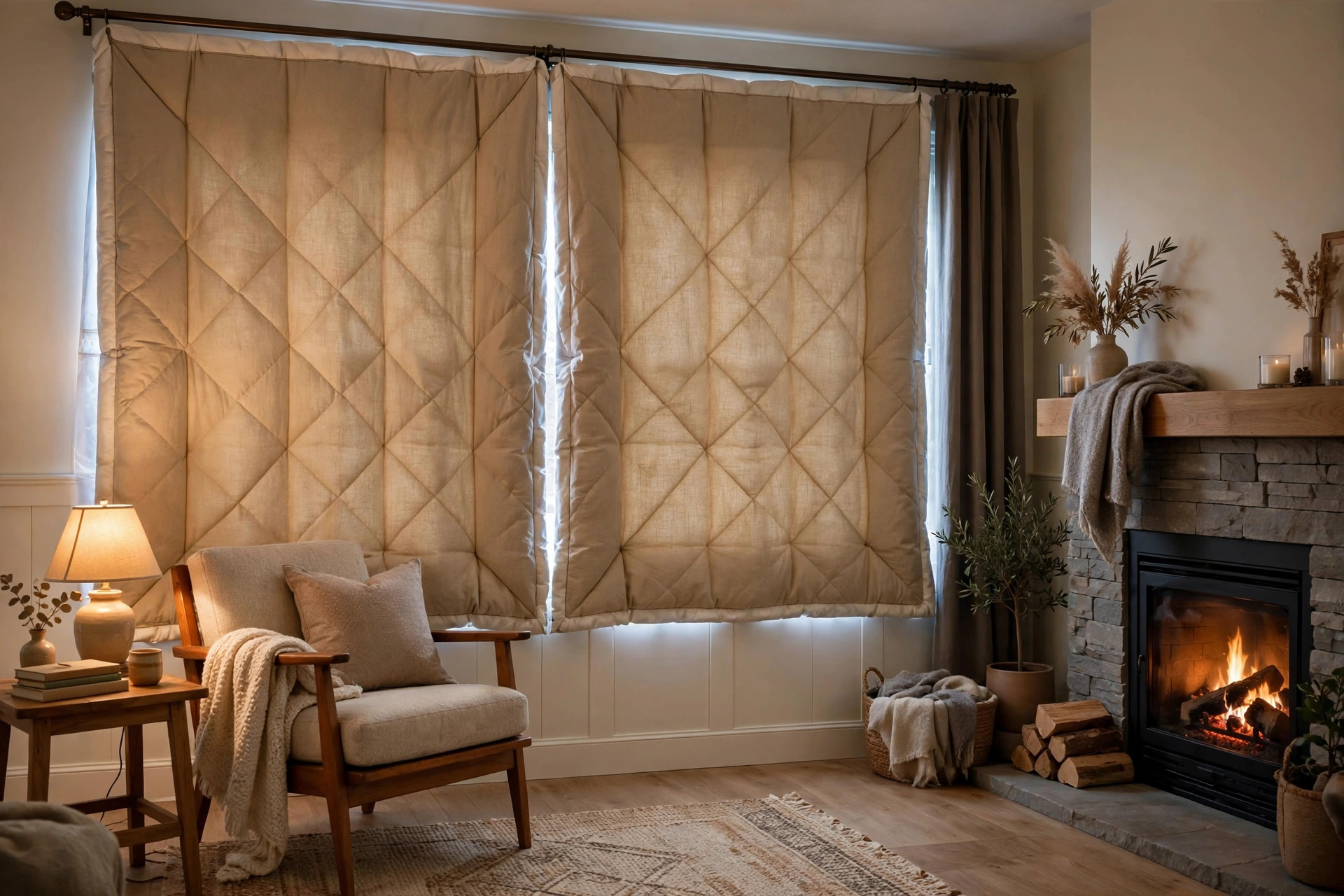
Foam backed linings insulate well but can stiffen the drape. Fused linings stay soft. Some buyers prefer custom thermal insulated curtains for small apartments with a quilted interlining. This is a cotton flannel layer sandwiched inside. It insulates well and drapes in soft folds. It costs more but looks better.
Read the Return Terms
Custom goods often cannot be returned. Read the policy before you pay. Good online sellers send a free swatch first. Order swatches. Test them against your wall color and your light. Check the weight. Only then place the full order.
Types and Options
Thermal Lined Drapes
These are the most common type. A decorative face fabric hides a thermal lining. They hang like normal curtains but insulate like a blanket. They suit living rooms and bedrooms.
Blackout Thermal Curtains
These add a light blocking layer. They keep rooms dark at any hour. Shift workers and light sleepers like them. They also block heat well. A good blackout thermal curtain can cut outside noise too, since heavy layers absorb sound.
Interlined Curtains
Interlined curtains hide a thick flannel layer between the face and the back. They are the luxury choice. They drape in deep, full folds. They insulate better than simple lined curtains. They cost more and weigh more. Check that your rod and brackets can hold the weight.
Cellular and Honeycomb Styles
Some buyers compare curtains with thermal bamboo roman shades for sale. Honeycomb shades trap air in their cells. They are very good insulators. But curtains offer better edge sealing when made custom. Some homes use both: a shade on the glass and a drape over it. This double layer works best of all.
Motorized Options
Some online sellers offer motorized rods. Specialty shops like Blinds.com sell cordless and motorized designs. The curtains open and close on a timer or remote. This helps energy use. The curtains close themselves at sunset in winter and open at dawn. They close at noon in summer when the sun is high. Motorized systems add cost but remove the need to remember.
Cost and Price
Prices for energy efficient custom made curtains online for sale vary widely. A single lined panel for a standard window may start near forty dollars. A full set of interlined drapes for a wide patio door can run past four hundred dollars. The factors are simple: size, fabric, lining, and extras.
Fabric is the largest cost driver. A plain cotton duck is cheap. A silk damask is not. Thermal linings add ten to thirty dollars per panel. Interlining adds more. Motorized tracks add one hundred dollars or more per window.
Do not judge on price alone. A cheap curtain that fits poorly saves little. A well made curtain that fits tight pays for itself. Many buyers find their heating bill drops within the first winter. The Department of Energy notes that good window coverings are among the cheapest energy upgrades a homeowner can make. Compare the price with the cost of new windows, which run hundreds of dollars each. ENERGY STAR lists good window coverings among the cheapest energy upgrades a homeowner can make, so curtains look like a bargain.
When you shop, look for these value signs. The seller gives exact thermal claims, not vague words like “energy saving” with no numbers. The seller offers swatches. The seller states the lining type plainly. The seller shows how to measure. These signs mark an honest shop.
Care and Upkeep
Heavy curtains collect dust. Vacuum them with a soft brush head once a month. This keeps the weave open and the fabric fresh. Most thermal lined curtains cannot go in a washing machine. The foam lining cracks in hot water. Read the care label. Many need dry cleaning.
Sun fades face fabric. A lining with a light colored back slows this. Still, rotate the curtains if one window gets more sun than others. Close the curtains during the hottest part of the day in summer. This protects the fabric and cools the room at once.
Check the hems and seams once a year. Heavy curtains pull at their stitching. A loose hem lets air leak behind the drape. Restitch small tears at once. They grow if ignored.
If the curtain uses Velcro or magnetic seals, test them each season. Magnets lose strength over many years. Velcro collects lint. Clean the strips with a stiff brush. Replace them when they stop gripping.
Safety
Cord safety matters most in homes with children and pets. Many custom curtains still use cords or pull chains. A looped cord can strangle a small child. The U.S. Consumer Product Safety Commission warns parents about this danger every year. Choose cordless designs when you can. If cords are present, keep them short. Use a cord cleat on the wall. Wrap the cord high, out of reach.
Fire safety matters near heaters and stoves. Curtains are cloth. Keep them away from open flame. Do not let long curtains touch baseboard heaters. Heat plus fabric is a fire risk. In kitchens, choose shorter panels that end above the sill.
Weight safety matters with heavy drapes. A full set of interlined curtains can weigh twenty pounds or more. Mount the rod into studs, not just drywall. Use heavy duty brackets. A falling rod can injure a person and damage the window frame.
Ventilation is a small but real point. Sealed curtains trap moisture as well as heat. In winter, this can cause condensation on the glass. Wipe the glass now and then. A little air flow behind the curtain once a day prevents mold.
FAQ
Do energy efficient curtains really save money?
Yes. They do not work magic, but they cut a real share of window heat loss. A tight fitting thermal curtain can reduce heat flow through a window by a quarter or more. Your savings depend on your climate, your windows, and your fuel price. Most owners see lower bills in the first season.
Are custom curtains worth more than ready made ones?
For energy use, yes. Ready made curtains come in fixed sizes. They almost always leave gaps at the sides and bottom. Custom curtains are cut to your window. That exact fit is what stops air flow. The energy gain comes from the fit as much as from the fabric.
What lining is best for cold winters?
A three layer build works best. Face fabric, foam or bonded thermal layer, and a soft inner lining. Quilted interlining is another strong choice. Look for curtains that state their insulation type. Avoid thin single layer curtains for cold rooms.
Can I hang them myself?
Most buyers can. The curtain maker sends the panels. You supply the rod, which you can find at stores like The Home Depot, IKEA, or Wayfair. Measure twice. Mount the rod high and wide. Hang the panels and check the seal. Motorized systems may need an electrician if they wire into the house. Battery powered motors are simpler.
How long do thermal curtains last?
Good ones last ten to fifteen years. The face fabric wears first, fading in the sun. The thermal lining can last longer if kept dry and clean. Dry clean when the label says so. Replace the curtains when the lining cracks or the fabric thins.
Will they help in summer too?
Yes. Closed curtains block direct sun from hitting the glass. Sun through glass is the main cause of summer overheating. Close east facing curtains in the morning and west facing curtains in the afternoon. A light colored lining reflects the most heat.
Final Word
Windows will always leak energy. Glass is thin and cold. But a curtain is a cheap, simple fix. Make it heavy. Make it lined. Above all, make it fit. When you buy energy efficient custom made curtains online for sale, you are not just buying cloth. You are buying a seal around every window. That seal keeps warm air in and hot air out. It lowers bills. It makes rooms feel better. Order swatches, measure with care, and choose a maker who states the facts plainly. Your home will thank you every winter and every summer.
References
Blinds.com. (n.d.). Window blinds, shades, and shutters. https://www.blinds.com Consumer Reports. (n.d.). Product reviews and ratings. https://www.consumerreports.org ENERGY STAR. (n.d.). Energy efficient products. https://www.energystar.gov HGTV. (n.d.). Home and garden ideas. https://www.hgtv.com IKEA. (n.d.). Home furnishings. https://www.ikea.com The Home Depot. (n.d.). Home improvement products. https://www.homedepot.com The Spruce. (n.d.). Home and garden advice. https://www.thespruce.com U.S. Consumer Product Safety Commission. (n.d.). Product safety information. https://www.cpsc.gov U.S. Department of Energy. (n.d.). Energy efficiency and renewable energy. https://www.energy.gov Wayfair. (n.d.). Furniture and home goods. https://www.wayfair.com
Was this guide helpful?

About Sarah Mitchell
The My Garden US editorial team writes practical, in-depth home and garden guides for American homeowners — tested advice, no fluff.