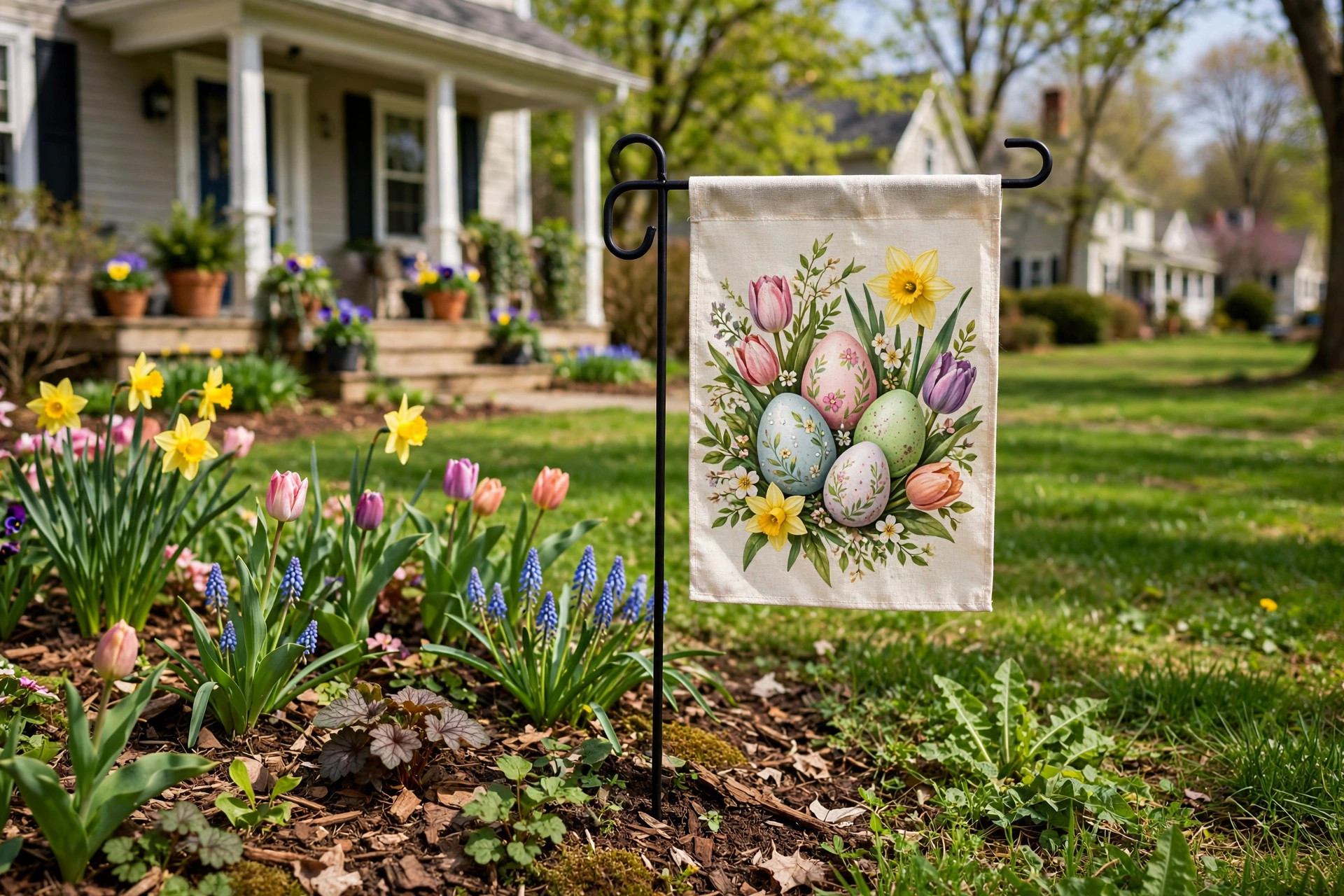

A spring garden flag for easter and floral welcome is one of the simplest ways to make a yard look ready for the season. It is small. It is cheap. It takes only a few minutes to set up. But it changes the whole feel of a front yard. When neighbors and guests walk past, the flag tells them that spring has arrived and Easter is near.
Every year, when the cold of winter passes, homeowners look for small touches that bring life back to the outside of the house. A garden flag with Easter eggs, tulips, bunnies, or floral patterns does this job well. It moves in the wind. It catches the light. It gives a friendly hello to anyone who sees it. This guide explains how to choose the right flag, where to hang it, and how to keep it looking fresh through the whole season.
Why a Spring Garden Flag Matters
A Small Flag Makes a Big First Impression
The front yard is the first thing people see when they come to a house. In spring, after months of bare branches and brown grass, the yard can look plain. A spring garden flag for easter and floral welcome adds instant color. It fills the gap between winter and the full bloom of summer.
Many families decorate for Easter with wreaths on the door or flowers in pots. A garden flag adds another layer. It can be seen from the street, even by people who do not stop at the door. It works well with other spring decorations, like a spring wreath for front door floral welcome or a best easter wreath for front door spring flowers. Together, these small items create a full spring look without much work or money.
A Welcome Sign for the Season
Flags have been used for centuries to send a message. A garden flag sends a simple one: welcome. A flag with Easter words like “Happy Easter” or “Welcome Spring” tells guests they are wanted. Floral designs with tulips, daffodils, and cherry blossoms show that the homeowner cares about the beauty of the season.
Children love garden flags too. A flag with a painted bunny or a basket of eggs makes them smile. It turns an ordinary yard into a place that feels festive. For families who host Easter egg hunts or spring parties, the flag sets the mood from the moment guests arrive.
What to Look for When You Buy: Spring Garden Flag for Easter and Floral Welcome
Size and Shape
Garden flags are much smaller than house flags. Most garden flags measure about 12 by 18 inches. This size fits a small stand that pushes into the ground. It is large enough to be seen from the sidewalk but small enough not to block the view of the yard.
Some flags are larger, around 13 by 18 inches or even bigger. These work well for wide yards or for homes set far back from the road. If the flag stand is already in the ground, check the size of the old flag before buying a new one. The sleeve on the flag must fit the top bar of the stand.
Fabric and Print Quality
The best garden flags are made of strong outdoor fabric. Look for burlap-style linen, canvas, or heavy polyester. These fabrics hold up in wind and rain. They also let the design show on both sides, which matters because the flag will turn in the wind.
Print quality matters too. The colors should be deep and clear. A good print will not fade fast in the sun. Some flags use heat transfer, which gives bright colors at first but may crack over time. Others use dyed fabric, which costs more but lasts longer. For a flag that stays out for the whole spring season, dyed or double-sided print is the better choice.
Home improvement stores carry a wide range of outdoor flags, and browsing their garden section can help you compare fabrics side by side (The Home Depot, Lowe’s).
Design Themes for Easter and Floral Welcome
There are many designs to choose from. Easter designs often show bunnies, decorated eggs, chicks, or crosses. Floral designs show tulips, daffodils, peonies, or wildflowers. Many flags combine both, with Easter eggs resting in a bed of spring flowers.
Think about the style of the home. A farmhouse-style home looks good with a rustic burlap flag and hand-painted flowers. A modern home may suit a flag with clean lines and simple pastel shapes. A cottage-style yard looks charming with a flag that shows a rabbit among tulips.
For more Easter decorating ideas, craft stores offer supplies to match your flag’s colors (Michaels). If you want to add more bunny figures to your yard, see our guide on the best easter bunny decorations for front porch.
Types and Options
Double-Sided Flags
Double-sided flags show the design on both the front and the back. This is the most common type for garden flags. When the wind turns the flag, the design still reads correctly. The letters do not appear backward. This is important for flags with words like “Happy Easter” or “Welcome.”
Single-sided flags cost less, but the back shows a mirror image. They also tend to be thinner. For a spring garden flag for easter and floral welcome, a double-sided flag is worth the small extra cost.
Sleeve Style and Hanging
Most garden flags slide onto a stand through a sleeve at the top. The stand has a horizontal bar that fits through the sleeve. Some flags have a tab top instead of a full sleeve. Check which style your stand uses before you buy.
A standard garden flag stand is made of black metal and costs only a few dollars. It has a curved hook at the top and two prongs that push into the soil. Some stands are taller or have extra arms for hanging more than one flag. A heavier stand with thicker metal will stay upright in spring storms.
Weather-Resistant Options
Spring weather can be rough. April showers, wind gusts, and bright sun all test outdoor flags. Look for flags labeled “weather-resistant” or “fade-resistant.” These use fabric treatments that protect the colors from sun damage.
Some homeowners take their flags inside during heavy storms. This is a good habit if the flag is expensive or has delicate detail. But for most garden flags, it is fine to leave them out all season. Taking the flag down during a strong storm can add years to its life.
Cost and Price
A spring garden flag for easter and floral welcome is one of the cheapest ways to decorate a yard. Prices vary by quality and design.
– Basic single-sided flags: three to eight dollars – Double-sided standard flags: eight to fifteen dollars – Premium dyed-linen or applique flags: fifteen to thirty dollars – Garden flag stands: five to twelve dollars
Most families can set up a full display — flag, stand, and a few matching decorations — for under thirty dollars. Compare this to the cost of new plants or a full wreath, and the flag wins on value.
Sales are common after Easter. If you find a flag you love, you can buy a second one at a lower price after the holiday and save it for next year. Store it in a dry place, away from direct light, and it will look new when spring comes again.
How to Hang and Display Your Flag
Choosing the Right Spot
Place the flag where it can be seen but where it does not block anything. Good spots include the edge of a flower bed, beside the front steps, or near the mailbox. The flag should face the street or the main walkway so guests see it when they arrive.
Push the stand into soft soil. Avoid rocky ground or spots with buried pipes and cables. If the soil is hard, water it first and wait an hour. The stand should go in deep enough that it does not lean in the wind.
Pairing With Other Spring Decor
A garden flag looks best when it is part of a larger display. Place potted tulips or daffodils near the flag stand. Hang a wreath on the front door in matching colors. A doormat with a spring message ties the look together.
Pastel colors — soft pink, light yellow, pale blue, and mint green — are classic for Easter. A flag in these colors will match most spring flowers. If the yard has bright red or purple blooms, choose a flag with a neutral background so the colors do not clash.
Gardening sites offer tips on which spring bulbs to plant for a flag-matching border (Burpee, The Old Farmer’s Almanac).
Care and Upkeep
Cleaning Your Garden Flag
Garden flags get dirty. Dust, pollen, and rain leave marks. To clean a flag, fill a basin with cool water and a small amount of mild soap. Wash the flag gently by hand. Do not use bleach. Rinse well and hang it to dry in the shade.
Do not put a garden flag in the washing machine unless the maker says it is safe. The spinning can tear the fabric or crack the print. Hand washing takes only a few minutes and keeps the flag looking bright.
Storage Between Seasons
When Easter passes and the season changes, take the flag down and store it for next year. Fold it flat. Place it in a box or a bag with a dry cloth to keep out dust. Do not store it in a damp basement or a hot attic. A closet shelf is best.
If the flag faded badly over the season, consider replacing it. Flags are cheap, and a faded flag can make the yard look tired. Many families keep two or three spring flags and rotate them each year.
Lifestyle sites often feature fresh seasonal styling ideas when it is time to change your display (Country Living, HGTV).
Safety Tips
Garden flags are safe, but a few simple rules keep everyone happy.
– Keep the flag stand away from the edge of the driveway. Cars should not hit it. – Do not place the stand where children run and play. The metal prongs can hurt if someone falls on them. – If the flag has a tall stand, make sure it cannot fall on a walkway. – Check local rules. Some neighborhoods and homeowners groups limit the size or number of flags in a yard.
The U.S. Consumer Product Safety Commission offers general guidance on safe outdoor decor and garden products (CPSC).
Frequently Asked Questions
How long does a spring garden flag last?
A good double-sided flag lasts one to three seasons if left outside. Hand washing and taking it down in storms can make it last longer. Cheap single-sided flags may fade in a single season. Storage in a dry place between seasons adds to the life of any flag.
Can I leave my garden flag out in the rain?
Yes. Garden flags are made for outdoor use. But heavy rain and wind cause wear. If a strong storm is coming, it is smart to bring the flag inside. This small step protects the print and the fabric.
What size stand do I need?
Most garden flags fit a standard 12-by-18-inch stand. Measure the sleeve on your flag and check the stand size before you buy. If you already own a stand, buy a flag that matches it.
Can I make my own spring garden flag?
Yes. Craft stores sell blank flag fabric and outdoor paint (Michaels). You can paint Easter eggs, flowers, or a welcome message. Making your own flag is fun for families and lets you match the exact colors of your yard. Use outdoor-grade paint so the design survives rain.
When should I put up my spring garden flag?
Most people put up spring flags in late March or early April, a few weeks before Easter. You can leave it up through May, when summer flags take over. There is no rule — put it up when the weather turns warm and the flowers start to bloom.
How do I stop my flag from fading?
Fade-resistant and UV-treated flags last longest. Hang the flag where it gets some shade during the hottest part of the day. Taking it inside during long sunny stretches helps too. Home decor guides suggest rotating outdoor textiles to even out sun exposure (The Spruce).
A Short Final Word
A spring garden flag for easter and floral welcome is a small buy with a big return. It costs little, takes minutes to set up, and brings a smile to everyone who passes the house. Choose a strong fabric, pick a design that fits your home, and care for the flag through the season. When the tulips bloom and the Easter eggs are hidden, your flag will wave a warm hello to the whole neighborhood.
References
Burpee. (n.d.). Seeds, plants, and gardening supplies. https://www.burpee.com Country Living. (n.d.). Country home and lifestyle. https://www.countryliving.com HGTV. (n.d.). Home and garden ideas. https://www.hgtv.com Lowe’s. (n.d.). Home improvement products. https://www.lowes.com Michaels. (n.d.). Arts and crafts supplies. https://www.michaels.com The Home Depot. (n.d.). Home improvement products. https://www.homedepot.com The Old Farmer’s Almanac. (n.d.). Gardening calendars and advice. https://www.almanac.com The Spruce. (n.d.). Home and garden advice. https://www.thespruce.com U.S. Consumer Product Safety Commission. (n.d.). Product safety information. https://www.cpsc.gov
Was this guide helpful?

About James Carter
The My Garden US editorial team writes practical, in-depth home and garden guides for American homeowners — tested advice, no fluff.
You May Also Like

Christmas Window Decals for Holiday Home Decor: A Complete Guide
April 3, 2026 0 views
Easter Basket Decorations for Kids Egg Hunt: A Plain Guide for Parents
August 2, 2026 0 views
Best Christmas Stockings Personalized for Family
March 30, 2026 0 views