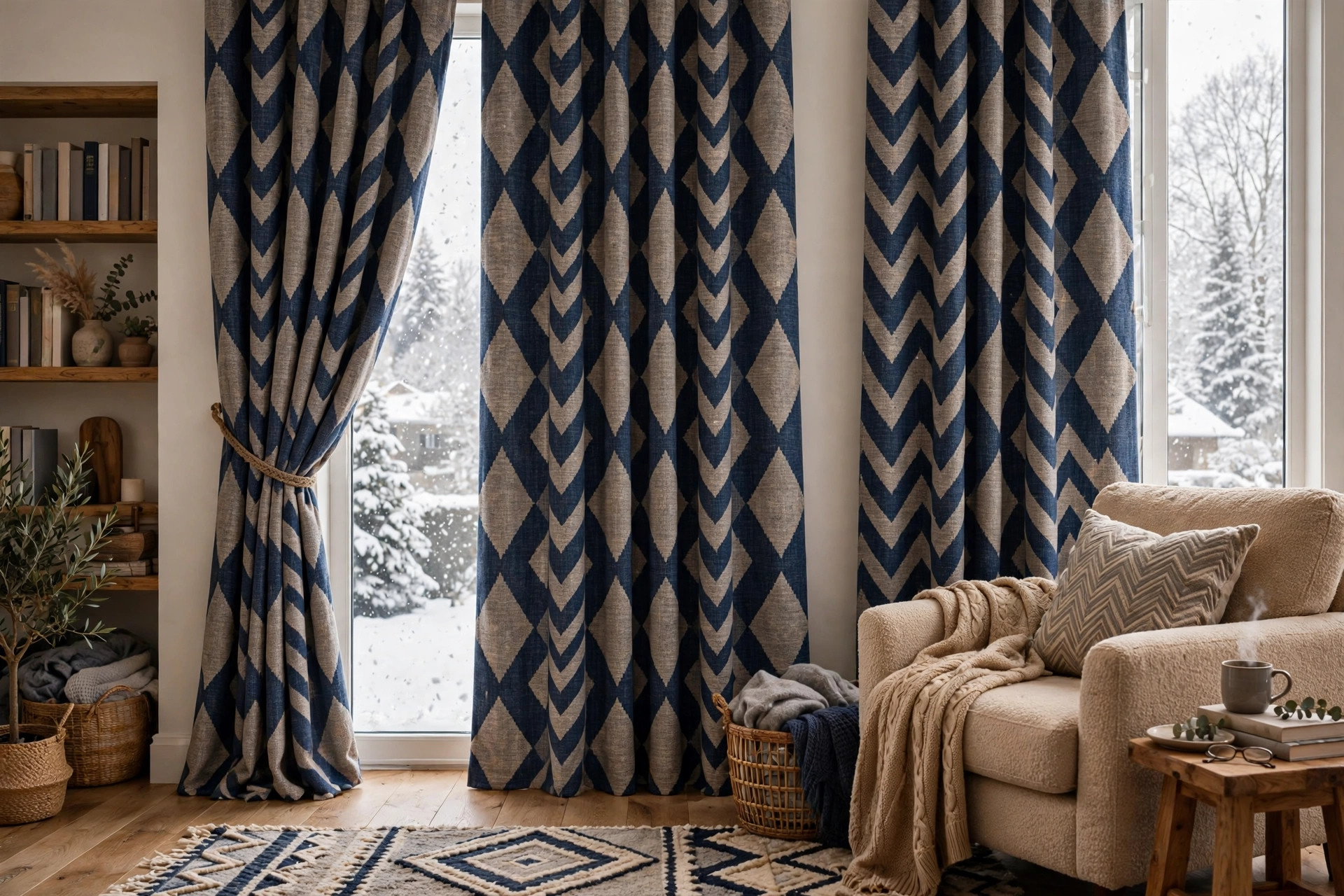

The search for the best modern geometric curtains for cold climates starts with two needs. A room should look good. A room should also stay warm. Modern geometric patterns bring a clean and current look to any room. Thick insulated fabric keeps cold air from seeping in through the glass. This guide explains how to find both in one curtain. It covers what matters in the fabric, how to choose the right size, what types are on the market, what they cost, and how to keep them clean. The advice here is simple and direct, so any buyer can use it with ease.
Why Insulated Curtains Matter in Cold Climates
Windows are the weakest point in most homes when winter arrives. Glass lets heat pass through far faster than a wall. Even a good double pane window can let cold air gather along its surface. That cold air then falls into the room. The room feels drafty near the windows, and the furnace runs longer than it should.
Curtains that are built for cold weather help in three ways. First, they add a layer of still air between the fabric and the glass, and still air slows the movement of heat. Second, a tight weave and a heavy lining block drafts that slip around window frames. Third, a floor length panel that seals at the sides and top keeps warm room air from touching the cold glass.
The result is easy to feel. A living room with proper cold climate curtains holds its heat through the night. The thermostat cycles less often. Many buyers notice a lower heating bill after one winter. The U.S. Department of Energy notes that well fitted window coverings can cut heat loss through windows by a meaningful share, which is worth keeping in mind when you shop.
Modern geometric patterns are a smart match for this task. Bold shapes, lines, diamonds, and chevrons give a room a fresh face. They also hide the heavy look of thick fabric.
What to Look For When Choosing: Best Modern Geometric Curtains for Cold Climates
Shopping for the best modern geometric curtains for cold climates means checking a few key traits. Each trait below has a direct effect on how warm and how good the curtain will be.
Fabric Weight and Weave
Heavy fabric is the first sign of a good cold climate curtain. Look for words like triple weave, thermal weave, or insulated on the tag. These fabrics have a dense core that is woven right into the cloth. The core blocks light and heat from passing through. A good test is to hold the fabric up to a window in the store. If you can barely see light through it, the weave is dense enough for winter. Home guides from The Spruce suggest the same simple light test before you buy.
Common face fabrics include cotton twill, linen blends, and polyester. Cotton twill looks natural and takes print well. Polyester holds its shape, resists wrinkles, and often costs less.
The Lining
The lining is where much of the insulation lives. Many cold climate curtains use a foam backing or an acrylic coating on the back of the face fabric. Others hang a separate thermal lining that can be tied back on its own. A separate lining is useful in spring and fall. You can use the face curtain alone when the weather is mild and add the lining back when winter returns.
Check the lining seams. They should be straight and even, with no bubbles in a foam coat. Bubbles can crack and flake after a few wash cycles.
Size and Fit
For cold weather, size matters more than most buyers think. A curtain that is too short lets cold air pour in under the hem. A panel that is too narrow leaves gaps at the sides. Follow these rules for the best seal:
– Hang the rod four to six inches above the window frame and three to six inches wider on each side. – Choose panels that reach the floor or puddle one to two inches on the floor. – Make the total panel width at least twice the width of the window so the fabric folds seal together in the middle.
Magnetic strips or hook and loop tape along the edges can pull the panels tight to the wall. A valance or a cornice box at the top stops warm air from rising behind the rod.
Header Style and Hardware
The way the curtain hangs affects both looks and warmth. Grommet tops slide smooth and give a clean modern line that suits geometric prints. Rod pocket tops gather tight and block air at the top, which is good for insulation. Back tab tops offer a neat flat front that shows a geometric pattern to full effect.
Pick a sturdy rod. Heavy thermal curtains weigh much more than sheer panels. A rod with a center bracket keeps long spans from sagging.
If you want more ideas on insulated options for small rooms, see our guide to custom thermal insulated curtains for small apartments.
Types of Modern Geometric Curtains
The term modern geometric covers a wide range of prints and colors. Knowing the main types helps you match the curtain to your room.
Bold large scale prints. Big diamonds, oversized chevrons, and wide stripes make a strong statement. They suit large living rooms and open floor plans, and decor features on HGTV often pair such bold prints with simple solid furniture to keep the room balanced. A large print also hides small stains and wear, which is a plus in a busy home.
Fine small scale prints. Small triangles, thin lattice lines, and tiny hexagons read as texture from across the room. They work well in bedrooms and small dens where a bold print might feel too much, and style sites like Apartment Therapy often feature them in calm bedroom makeovers. For dark, restful bedrooms, pair the idea with luxury blackout curtains for bedrooms buying guide.
Two tone color blocks. Some modern designs mix solid bands of color with geometric borders. These are easy to match with furniture and rugs. Navy and gray, mustard and cream, and black and white are common pairs.
Textured geometrics. These use woven patterns rather than printed ones. The design comes from the threads themselves, so it never fades or cracks. Woven geometrics often cost more, but they last longer and look rich up close.
Color choice also affects winter mood. Deep tones like navy, forest, and rust make a room feel warm. Light tones like cream and soft gray keep a dark winter room bright.
How They Compare to Other Window Treatments
Curtains are not the only way to fight cold at the windows. Buyers often ask how thermal curtains stand next to shades and blinds. Each has strengths.
Cellular shades trap air in honeycomb pockets and insulate very well, but they offer fewer style choices. Wood blinds add style but leave gaps that let drafts pass.
Curtains win on style range and on side coverage. A wide panel covers the whole frame and wall around it, which blocks the drafts that shades miss. Many homes use both: a cellular shade for daily insulation and a pair of geometric curtains over them for looks and extra warmth. To compare more options, read thermal energy efficient window treatments for sale.
Cost and Price
Prices for modern geometric curtains made for cold weather vary by size, brand, and fabric. A clear picture helps you set a budget.
Budget range, about fifteen to forty dollars per panel. These are usually polyester with a foam back coat. The prints are bright and modern. They insulate well for the price, though the foam back may wear after a few years.
Mid range, about forty to ninety dollars per panel. Here you find cotton blends, better print detail, and separate thermal linings. The hang is fuller and the seams are neater.
Premium range, ninety dollars and up per panel. Premium panels use woven geometrics, quilted interlinings, or custom sizing. They look and feel like fine drapery. For tall windows or whole house orders, custom work can run several hundred dollars per window.
Do not forget the hardware. A strong rod, brackets, and finials can add twenty to sixty dollars per window. Magnetic edge seals and a top valance add a bit more. Even so, the full cost is small next to one winter of high heating bills.
Watch for sales in late summer and early fall. Many stores clear last season prints before the cold arrives. Buying off season is one of the easiest ways to get a better curtain for less money. Sites like Wayfair, IKEA, and The Home Depot run frequent sales on curtain panels, Blinds.com often lists seasonal deals on custom sizes, and Consumer Reports publishes test based buying advice for window coverings.
Care and Upkeep
Good curtains last many winters if they are cared for well. The care steps are simple.
Read the tag first. Foam backed panels often need spot cleaning only. Machine washing can crack the coating. Cotton and polyester panels with separate linings can usually go in the machine on gentle with cold water.
Vacuum with a brush head. Dust builds up on heavy fabric. A monthly pass with the upholstery tool keeps the weave fresh and the room air cleaner, a step also stressed in the drapery care guides from Bob Vila. This is also a good time to check that hooks and rings are tight.
Air them out. Once a year, take the panels down on a mild day and hang them outside in fresh air. Sun and breeze lift odors without chemicals.
Fix small problems fast. A loose hem or a pulled thread is easy to mend when it is small. Replace bent hooks so the panel hangs straight and seals well.
Store off season panels well. If you swap to light curtains in summer, fold the winter panels in clean cotton bags. Add cedar blocks to keep moths away from wool blends. Store them flat or loosely rolled, never crammed in a tight box.
Safety
Curtains are safe in most homes, but a few points deserve care.
Keep fabric away from heat sources. Panels should clear radiators, baseboard heaters, and space heaters by at least twelve inches. Heavy floor length curtains can brush a heater if the rod is too short, so measure with care.
Corded hardware needs care around small children and pets. The U.S. Consumer Product Safety Commission warns that cords on window coverings can pose a strangulation risk to young children. Choose cordless rods and wands where you can, or fit cord cleats high on the frame and wrap cords tight.
Check the fire rating if you have a fireplace or stove near the windows. Some thermal linings are treated for flame resistance. If yours are not, keep them well clear of open flame.
Finally, make sure heavy rods are fixed into studs or solid anchors. A full set of thermal panels is heavy. A weak anchor can pull out of drywall and drop the rod.
Frequently Asked Questions
Do geometric thermal curtains really lower heating bills? They can help in a real way. By cutting drafts and adding an insulating layer at the glass, they reduce the heat your furnace must replace. Savings vary with climate, window age, and how well the panels fit. A tight fit matters more than a high price.
Can I use these curtains in summer too? Yes. The same dense weave that blocks winter cold also blocks summer heat and sun. Light colored geometric panels can keep a south facing room cooler. If the room feels too dark, tie the panels back during the day and close them at night.
Are foam backed curtains safe for people with allergies? Foam back coatings are generally low odor once aired out. Air new panels in a garage or outside for a day before hanging them. If you are sensitive, choose a separate cotton thermal lining instead of a bonded foam back.
How do I measure for a pair of panels? Measure the window width and double it for fullness. Add six to twelve inches for side coverage. For length, measure from the rod to the floor and add one to two inches for a slight puddle. Write all three numbers down before you shop so you can compare sizes fast.
Will dark geometric prints fade in sunny windows? Any dyed fabric fades with strong sun over time. Woven patterns fade the least. Printed cotton fades faster. A lining on the back slows fading a great deal. Rotating panels between windows every year or two also evens out the wear.
Can I layer geometric curtains with blinds I already own? Yes, and it often works very well. Keep your blinds for day time light control and add curtain panels on a front rod for night time insulation.
A Short Final Word
The best modern geometric curtains for cold climates do two jobs at once. They dress the window in a fresh, current pattern. They also hold back the cold that tries to slip through the glass. Choose a dense weave, a sound lining, and a fit that seals at the sides, top, and floor. Do these things and your rooms will feel warmer, look better, and cost less to heat all winter long.
References
Apartment Therapy. (n.d.). Home design ideas and inspiration. https://www.apartmenttherapy.com Blinds.com. (n.d.). Window blinds, shades, and shutters. https://www.blinds.com Bob Vila. (n.d.). Home improvement advice. https://www.bobvila.com Consumer Reports. (n.d.). Product reviews and ratings. https://www.consumerreports.org HGTV. (n.d.). Home and garden ideas. https://www.hgtv.com IKEA. (n.d.). Home furnishings. https://www.ikea.com The Home Depot. (n.d.). Home improvement products. https://www.homedepot.com The Spruce. (n.d.). Home and garden advice. https://www.thespruce.com U.S. Consumer Product Safety Commission. (n.d.). Product safety information. https://www.cpsc.gov U.S. Department of Energy. (n.d.). Energy efficiency and renewable energy. https://www.energy.gov Wayfair. (n.d.). Furniture and home goods. https://www.wayfair.com
Was this guide helpful?

About James Carter
The My Garden US editorial team writes practical, in-depth home and garden guides for American homeowners — tested advice, no fluff.
You May Also Like

Buy Outdoor Patio Curtains Online in Texas: A Homeowner’s Guide
July 7, 2026 0 views
Top Rated Faux Wood Blinds for Humid Climates: A Buyer’s Guide
February 24, 2026 0 views
Custom Curtain Tiebacks and Holdbacks Buying Guide
April 23, 2026 0 views