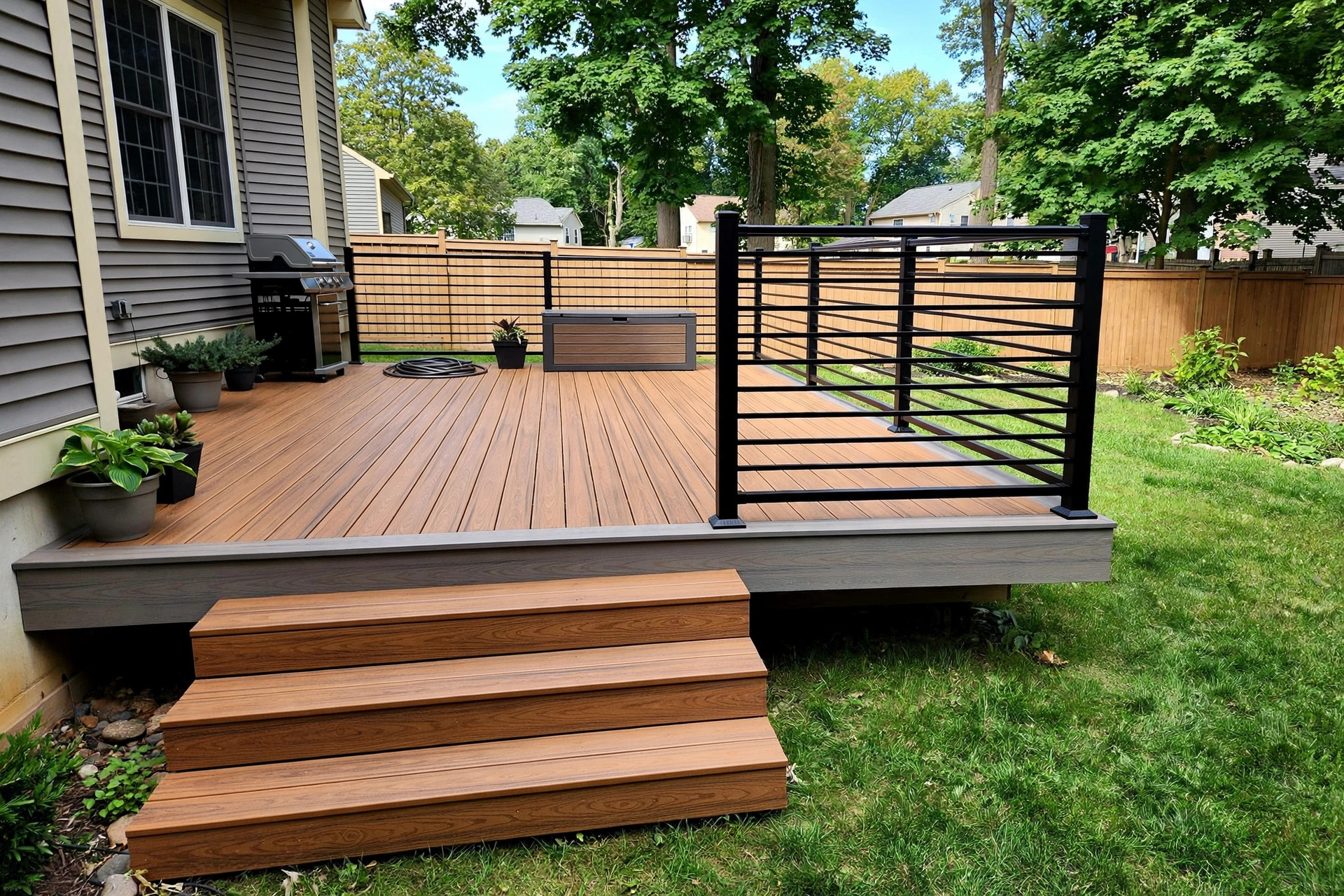

A new deck changes how a family uses its yard. It becomes a place for summer dinners, quiet mornings with coffee, and weekend cookouts with friends. When shoppers look for durable composite decking materials for sale, they are really looking for peace of mind. They want boards that keep their color, resist rot, and ask for very little work from year to year. This guide walks through the whole subject in plain terms: what the material is, why it lasts, how to choose it, what it costs, and how to care for it.
Why Durable Composite Decking Matters
A wood deck is a fine thing when it is new. The trouble starts after a few seasons. Rain soaks into the boards. Sun dries them out again. The cycle of wet and dry makes the wood swell and shrink. Boards crack. Nails rise. Splinters appear along the edges. Homeowners who want a safe surface for bare feet soon face a choice: sand and seal the deck every year, or watch it age fast.
Composite decking was made to break that cycle. The boards are a mix of recycled wood fiber and plastic, pressed into long, even planks. Because plastic runs through the whole board, moisture has a harder time getting in. The material does not feed termites the way plain lumber does. It does not rot in damp corners. For a busy household, that means fewer repair weekends and fewer surprise bills.
The word durable matters most at the time of purchase. Not every composite board is equal. Thin, early designs could stain or fade. Modern capped boards carry a tough outer shell that resists stains, scratches, and sun damage. When you compare products, look past the pretty showroom samples and ask what the board will look like after ten summers. Project guides from publications like This Old House and Bob Vila often remind readers to judge outdoor materials by their long-term record, not their first-day shine.
A deck is also a safety surface. Children run across it. Older relatives step out on it at night. A surface that stays solid and free of splinters is worth more than a small saving on cheap boards. For that reason alone, many families now treat composite as the default choice and wood as the budget option.
What to Look for When You Buy: Durable Composite Decking Materials for Sale
Shopping for composite decking is easier when you know the few facts that truly matter. Ignore the noise and focus on these points.
Capped or Uncapped Boards
Modern composite boards come in two main forms. Capped boards have a hard polymer shell fused around the core. The shell resists stains from food, grease, and leaves. It also slows fading from the sun. Uncapped boards, sometimes called first-generation composite, lack that shell. They cost less, but they stain more easily and can grow mildew in shaded, damp spots. For most buyers, capped boards are the safer pick.
Thickness and Span Rating
Boards must bridge the gap between joists without sagging. Standard residential decks use joists spaced 16 inches apart, and most composite boards are rated for that span. Thicker, solid-profile boards feel firmer underfoot and allow wider joist spacing on some designs. Always check the span table printed on the product literature before you buy.
Color Stability and Finish
Ask the seller how the color is rated for fade. Better lines carry a fade warranty with a stated number of years. Wood-grain embossing adds realism, and deep, variegated tones hide dust and footprints better than flat light colors. If your yard gets full afternoon sun, favor lines tested for strong ultraviolet exposure.
Warranty Terms
Read the warranty the way you would read a contract. Note the length in years, what it covers, and what voids it. Some warranties require specific fasteners or minimum ventilation under the deck. Keep your receipt and register the product if the maker asks for it. Warranty guides on sites like The Spruce stress that small print decides real claims.
Fasteners and Accessories
Most composite decks now use hidden fasteners that clip into grooved board edges. The result is a clean surface with no screw heads showing. Make sure the fastener system you buy matches the board brand. Mismatched clips can void the warranty. Also plan for fascia boards to cover the rim, stair treads to match, and end caps or plugs if your system uses them.
Main Types of Composite Decking
Three broad families cover nearly everything sold today. Each has its place.
Wood-plastic composite, capped. This is the most common type. A core of recycled wood fiber and plastic sits under a protective polymer cap. It looks like wood, feels solid, and carries the strongest warranties. Most of the boards you will find at a national home improvement retailer or another major home improvement store fall in this group.
PVC or capped polymer decking. These boards contain no wood fiber at all. They are pure synthetic plastic, often with a cellular core. They resist moisture better than any wood-based board and work well around pools or in very wet climates. They can feel a bit springier underfoot and usually cost more.
Early-generation uncapped composite. These older-style boards are still sold at lower prices. They are heavier, can stain, and fade faster. They suit sheds, rental properties, or utility platforms where looks matter less. For a main family deck, the capped lines are worth the step up.
Boards also differ in profile. Solid boards are heavy and strong. Scalloped or hollow boards weigh less and cost less, but they need closer joist spacing in some cases. Grooved edges accept hidden clips; square edges need face screws or plugs. Stair treads and picture-frame borders usually call for square-edge boards.
Before you commit to wood instead, run a pressure treated lumber decking price comparison alongside composite prices in your area. The lumber may look cheaper per board, but once you add stain, sealant, and your own labor over fifteen years, the gap narrows fast. A true price comparison should count the cost of upkeep, not just the cost of boards.
Cost and Price Guide
Prices vary by region, brand, and line, but some broad ranges help with planning. As of the mid-2020s, basic capped composite boards often run from about eight to fourteen dollars per square foot for materials alone. Mid-range lines with deeper grain patterns and longer warranties run roughly twelve to twenty dollars per square foot. Top lines can pass twenty dollars per square foot before labor.
Labor is the other half of the bill. A straightforward ground-level deck may cost five to ten dollars per square foot for installation. Raised decks, curved edges, stairs, and railings push the number higher. A full project with railings and stairs often lands between thirty and sixty dollars per square foot, all in. Get at least three written bids. Homeowners searching for premium deck building contractors near me should ask each bidder to break out materials and labor separately, so the quotes can be compared line by line.
A few factors move the price more than most buyers expect. Dark colors sometimes carry a small premium. Wide boards cost more per square foot than standard widths. Complex designs with borders and inlays use more material and more labor. Permits and inspections add a few hundred dollars in most towns. And removing an old deck before the new build adds to the bill.
To keep costs in check without giving up quality, choose a popular color that stores keep in stock, keep the deck shape a simple rectangle, and limit stairs to one run. Buying during the off-season, in late fall or winter, can also bring better quotes from installers. When vetting installers, reviews for the best deck building contractors near me give a starting list, but always check licenses, insurance, and two recent references before signing.
Care and Upkeep
One of the main reasons people buy composite is the light upkeep. The work is simple, but it still matters.
Sweep the deck every week or two during the seasons you use it. Leaves and dirt trap moisture against the surface and leave tannin stains if left for months. A broom and a garden hose handle most of the job.
Wash the deck twice a year with warm water and a mild dish soap. Scrub along the grain with a soft-bristle brush, then rinse well. For tougher spots, use a cleaner made for composite decking and follow the label exactly. Avoid bleach-heavy mixes unless the maker allows them, since harsh chemicals can dull the cap.
Mold and mildew can appear in shaded, damp areas even on capped boards. They grow on pollen and dirt sitting on the surface, not in the board itself. Regular washing prevents most of it. If spots appear, treat them early with a composite-safe cleaner rather than letting them spread.
Grease from a grill is the most common stain. Put a grill mat under the barbecue and wipe spills the same day. Hot coals should never touch the boards. Snow should be cleared with a plastic shovel, never a metal edge that can gouge the cap. Salt for ice is usually fine in small amounts, but rinse it off when the thaw comes.
Pressure washers need care. If you use one, keep the pressure low, hold the nozzle at least eight inches from the surface, and use a fan tip. Better yet, skip the pressure washer and stick to the brush. Many warranty claims are denied because of pressure-washer damage. How-to columns at the Family Handyman repeat this warning for nearly every outdoor surface.
Safety Notes
A deck must be more than pretty. It must hold weight, drain water, and stay safe underfoot.
First, respect the structure. Composite boards sit on a wood or steel frame, and that frame must meet local building codes for joist size, spacing, and post footings. Never lay new boards over a rotted frame to save money. If the old frame is more than twenty years old, have a contractor inspect it before reuse.
Second, plan for water. Leave the recommended gaps between boards so rain can pass through. Make sure the ground under a low deck has airflow and drainage. Trapped moisture shortens the life of the frame even when the boards themselves resist rot.
Third, think about heat and slip. Dark composite boards get hot in full sun. Bare feet notice it on July afternoons. Lighter colors stay cooler. Wet boards can be slick, especially with algae film, so keep the surface clean and consider textured finishes around steps and pool edges.
Fourth, mind the grill and the fire pit. Most makers warn against placing fire pits directly on composite decking. Use a heat shield or set the pit on pavers. Keep a working fire extinguisher within reach when you cook outdoors.
Finally, check local rules before you build. Many towns require a permit for decks above a certain height or size, plus railings at set heights and stair lighting. Guides from building-material makers such as James Hardie and CertainTeed remind homeowners that exterior projects must meet code no matter which product is used. A quick call to the building office saves trouble later.
Frequently Asked Questions
How long does composite decking last? Most capped composite decks last 25 to 30 years with basic care. The boards themselves often outlive the wood frame beneath them. Warranties commonly run 25 years for residential use, with fade and stain coverage for a shorter stated period.
Is composite decking worth the higher price compared with wood? For most homeowners, yes. A wood deck needs staining or sealing every one to three years, plus board replacements as it ages. Add up fifteen years of materials, products, and weekends, and composite often costs about the same or less. It also keeps a cleaner look with far less effort.
Can I install composite decking myself? A handy homeowner can install it, but the material is less forgiving than wood. Boards expand and contract with temperature, so gapping must follow the maker’s chart. Hidden fastener systems take practice. If the deck is raised, large, or needs stairs and railings, hire a pro. Mistakes in framing are expensive to fix.
Does composite decking fade in the sun? Some fading is normal in the first months as the surface weathers in. After that, quality capped boards hold their color well for years. Cheaper uncapped boards fade more. Buying a line with a written fade warranty is the best protection.
Does composite decking get slippery when wet? It can, like any smooth outdoor surface. Texture and grain patterns improve grip. Keeping the deck clean matters most, since algae and pollen films cause most slips. Around pools and on stairs, choose boards rated for better traction.
Where should I buy the materials? Start with local lumberyards and the big home centers so you can see full-size samples in daylight. Composite decking specialists such as Trex also list dealers and showrooms on their sites. Compare the full system cost, including fasteners, fascia, and railings, before you decide.
A Final Word
Durable composite decking materials for sale are easy to find, but the right choice takes a little homework. Compare capped lines, read the warranty, count the full project cost, and hire careful installers. Do that, and the deck you build this year will still look fine when the children are grown. It is a purchase you make once and enjoy for decades.
References
Bob Vila. (n.d.). Home improvement advice. https://www.bobvila.com CertainTeed. (n.d.). Building materials and exterior products. https://www.certainteed.com Family Handyman. (n.d.). DIY home repair and maintenance. https://www.familyhandyman.com James Hardie. (n.d.). Fiber cement siding and exterior products. https://www.jameshardie.com Lowe’s. (n.d.). Home improvement products. https://www.lowes.com The Home Depot. (n.d.). Home improvement products. https://www.homedepot.com The Spruce. (n.d.). Home and garden advice. https://www.thespruce.com This Old House. (n.d.). Home renovation guidance. https://www.thisoldhouse.com Trex. (n.d.). Composite decking and outdoor living. https://www.trex.com
Was this guide helpful?

About Michael Thompson
The My Garden US editorial team writes practical, in-depth home and garden guides for American homeowners — tested advice, no fluff.
You May Also Like

Buy Board and Batten Siding Online in Arizona: A Homeowner’s Guide
January 14, 2026 0 views
Top Rated Exterior Lighting Fixtures for Cold Climates
January 24, 2026 0 views
Premium Exterior Shutters for Windows for Sale
March 14, 2026 0 views