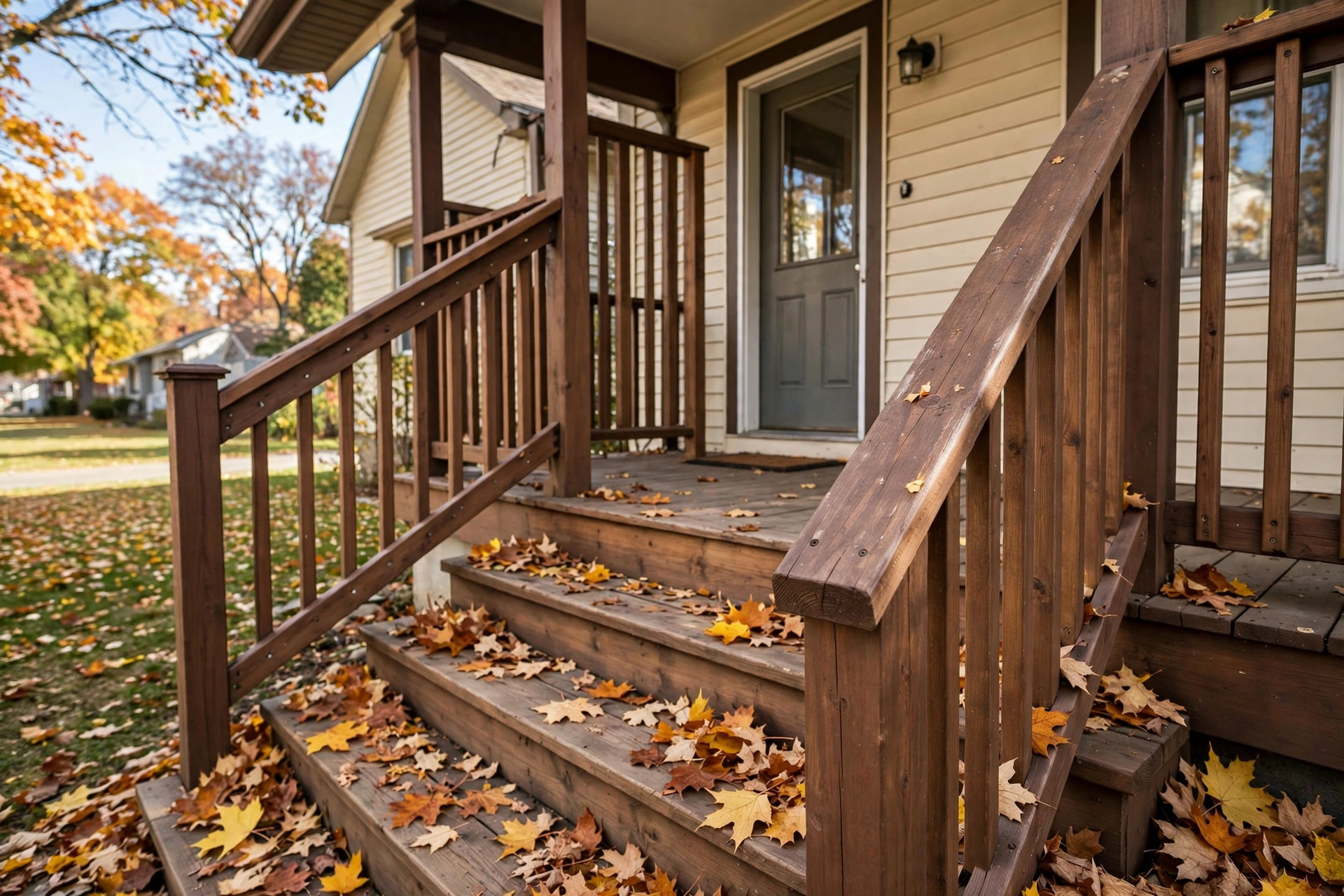

When the first freeze comes to Ohio or Illinois or Iowa, every set of porch steps turns into a test. The best exterior stair railings for midwest homes are not the prettiest ones in a catalog. They are the ones that stay firm in February, do not rust by April, and give an old parent a handhold she can trust on an icy morning. This guide walks through the choices in plain words. It covers why railings matter here, what to look for, the main types, what they cost, how to keep them up, and how to keep them safe.
Why Stair Railings Matter More in the Midwest
A staircase in the South is a different animal from a staircase in the Midwest. The Midwest brings a hard cycle. Water soaks into small cracks in autumn. The freeze expands it. The thaw soaks it again. After five or ten years of this cycle, a weak railing post works loose, a cheap rail rusts through, and a wooden handrail rots from the inside.
A loose railing is not a small matter. The front steps of a house get used every day. Children run up them. Older people lean on them hard. A visitor in dress shoes has nothing to catch if the rail gives way. Home inspectors in the Midwest check railings with a firm pull for good reason. A solid rail protects the people you love most.
There is a second reason. The home itself holds its value better. Buyers in Wisconsin and Minnesota notice the outside of a house first. A sagging rail on the steps tells them the rest may be tired too. A straight, firm rail tells the opposite story. It says the home was kept.
The top rated exterior lighting fixtures for cold climates matter on steps too, but light alone does not catch a fall. A handrail does the work. That is why this choice deserves care.
What to Look For in a Railing: Best Exterior Stair Railings for Midwest Homes
Start with strength. A handrail should not move when you pull it hard. The posts should sit on solid footings or bolt tight into solid concrete or wood. Short rails with long gaps between posts bend and bounce. Look for close post spacing and thick metal or solid wood.
Next comes the weather test. Ask one question of every material. How does it behave after ten Midwest winters? Some materials answer well. Powder-coated aluminum keeps its skin. Vinyl holds its shape. Cedar and redwood hold up if they are sealed. Bare steel does not answer well. It rusts at every scratch.
Think about grip. A round rail fits the human hand better than a flat two-by-four. In winter, metal rails get cold and can be slick with a glove on. Wood feels warmer and gives more grip. If you choose metal, a textured powder coat helps the hand hold on.
Check the rules before you buy. Most Midwest towns follow building codes that call for a handrail on any stair with four or more risers. The rail usually must sit 34 to 38 inches above the step nosing. Balusters must sit close enough that a four-inch ball cannot pass between them. Some cities add their own rules. A quick call to the building office saves trouble later. Guides at This Old House and The Family Handyman explain these rules in plain terms for homeowners.
Types of Exterior Stair Railings
Wood Railings
Wood is the old friend of the Midwest porch. A rail of cedar, redwood, or pressure-treated pine feels warm in the hand and looks right on an older home. Cedar resists rot by nature. Pressure-treated pine resists rot by chemistry, but it needs a good stain or sealer to look well and last.
The weakness of wood is upkeep. It must be sealed or stained every two to three years. If the finish fails, water enters, and the freeze-thaw cycle begins its work. Paint peels fastest on the top of the rail where sun and rain hit hardest. Still, for a homeowner who does not mind a weekend of staining, wood is hard to beat for price and looks.
Aluminum Railings
Aluminum is the low-upkeep champion. It does not rust. A powder-coated finish lasts many years without paint. It comes in many colors and styles, from simple rails to designs with glass or cable inserts. Panels arrive from the factory and bolt together on site.
Aluminum costs more than wood up front. The payoff comes later in saved paint weekends and saved repair money. For a home in the open prairie wind of Kansas or Nebraska, aluminum stands up without complaint. Brands and styles can be compared at The Home Depot and Lowe’s, which both carry wide lines of exterior railing kits.
Steel Railings
Steel is the strongest of the common choices. Wrought iron and steel tube rails have dressed up American porches for a century. They look fine and take hard use.
The enemy is rust. A steel rail lives or dies by its coating. Factory powder coat is best. Once the coat chips, rust starts under it and spreads. In a state that salts its roads and walks, like Michigan or Indiana, salt spray speeds the damage. A steel rail needs a watchful eye each spring. Touch up chips fast, and it will last.
Vinyl and Composite Railings
Vinyl railings are white, clean, and almost free of upkeep. They never need paint. They wash with soap and water. In the cold they can grow brittle, so buy a quality line rated for cold climates rather than the cheapest kit.
Composite railings mix wood fiber and plastic. They look more like wood than vinyl does. They cost more than vinyl but less than high-end aluminum. They hold up well to moisture, which is their main selling point in a wet Midwest spring.
Cable and Glass Railings
Cable railings use thin stainless cables between metal posts. They give a clear view from the porch, which suits a lake home or a house with a fine yard. They need the cables kept tight. They cost more than basic rails.
Glass panel railings use tempered glass between posts. They stop wind and look sharp. They need cleaning to stay clear, and they are the most costly of the common types. They suit a modern home better than a 1920s bungalow.
Cost and Price
Prices move with material, length, and who does the work. A simple pressure-treated wood rail on a short flight of steps may run a few hundred dollars in material if the homeowner does the work. Hired labor raises it.
Aluminum railing kits often cost more per foot than wood. Installed by a contractor, a full stair railing in aluminum can run well into four figures for a long run. Steel sits near aluminum. Vinyl and composite sit in the middle. Cable and glass sit at the top.
Three things change the price most. First, the length of the run and the number of posts. Second, the shape of the stairs. Straight runs are cheap. Corners, landings, and curves add labor. Third, who does the work. A handy homeowner saves the labor half of the bill.
Get three bids. Ask each bidder for the same details: material brand, post spacing, footing method, finish warranty, and who pulls the permit. Cheaper bids that skip the permit or skimp on footings cost more in the end. Reviews and buyer guides at Bob Vila and The Spruce help set a fair price in your head before the bids come in.
The best exterior stair railings for midwest homes do not have to be the most costly. A well-built wood rail beats a poorly built aluminum rail every time. Spend the money on solid posts and good footings first. The fancy finish comes second.
Care and Upkeep Through the Seasons
Spring is the season of inspection. Walk the stairs and pull each rail hard. Look at every post base. Check for rust spots, cracked paint, soft wood, and loose bolts. Tighten what has worked loose. Touch up paint chips before rain finds them.
Summer is the season of finish work. Stain or seal wood rails when the weather is dry and mild. Wash vinyl and aluminum with soap and water. Clear leaves and dirt from the base of posts, where moisture likes to sit.
Autumn is the season of repair. Fix what spring found before the freeze. Replace a rotting baluster. Re-caulk where the rail meets the house. Make sure water runs off the steps instead of pooling at the post bases.
Winter is the season of watch. Do not beat ice off a rail with a metal tool. It chips paint and dents soft metal. Use salt or sand on the steps with care, and rinse the salt off the rails in spring, since salt eats at steel and at concrete footings.
The weather resistant soffit and fascia repair for homeowners guide follows the same seasonal rhythm, because the whole outside of a Midwest home lives by the same calendar.
If your home also has wood siding, the makers at James Hardie and CertainTeed publish honest upkeep guides that apply the same lessons to siding and trim.
Safety Comes First
A railing is safety equipment, not decoration. Build it like it. Posts need solid footings below the frost line, or they will heave in winter and lean by spring. In much of the Midwest the frost line sits 36 to 48 inches deep. A post that sits shallow will move.
Keep both sides railed on a wide stair. Code may ask for it, but safety asks first. An older person climbing wide steps with a rail on one side only must cross the stair to find the rail. That crossing is where falls happen.
Mind the grip size. A handrail should be easy to close a hand around. Very thick rails look fine but fail the hand test, especially for small hands and arthritic hands. Round or oval rails in the range of one and a half to two inches across work well for most people.
Watch the bottom of the stairs too. The last step should meet a firm, level surface. A rail that ends above a cracked, heaved slab still leaves a hazard. Concrete repair and good drainage belong in the same project as the rail.
Product safety notes from TREX and Deckorators show how modern railing systems are tested for strength, which is worth reading before you choose a kit.
FAQ
How long do exterior stair railings last in the Midwest? A well-built wood rail lasts 10 to 15 years with regular sealing. Powder-coated aluminum and quality vinyl can last 20 to 30 years. Steel lasts as long as its coating holds; once rust takes hold deeply, replacement is the wise move.
What is the best material for icy winters? Aluminum with a textured powder coat is a strong all-around pick. It does not rust, needs little care, and holds up to freeze and thaw. Wood is fine too if you keep it sealed, and it feels warmer to a bare hand.
Do I need a permit to replace a stair railing? In most Midwest towns, yes, or at least an inspection. Railings are safety items, so the building office wants to see the height, the baluster spacing, and the anchoring. Call before you build.
Can I install a railing myself? A handy homeowner can install a kit railing on a straight run of steps. The hard part is the anchoring. Posts must tie into solid structure, and footings must go deep enough to beat frost heave. If the stairs are old or the concrete is cracked, hire a pro.
How much should I budget? For a short straight stair, a few hundred dollars in material for wood, more for aluminum or steel kits. Hired installation can double or triple the total. Long runs, corners, and premium styles like cable or glass push the price higher.
Should the railing match the house style? Yes, within reason. A simple farmhouse looks right with wood or black aluminum. A brick colonial suits steel or iron. A new modern home can carry cable or glass. The neighborhood and the age of the house are good guides.
A Final Word
The best exterior stair railings for midwest homes share three traits. They stand firm under a hard pull. They shrug off ten winters of freeze and thaw. And they fit the hand of the people who use them every day. Pick the material that fits your budget and your patience for upkeep. Anchor it deep. Keep it finished. Then forget about it and let it do its quiet job, winter after winter.
When the steps are done, look at the rest of the entry. The best storm door installation near me search pairs well with a railing project, since both guard the same doorway against the same weather.
References
Bob Vila. (n.d.). Home improvement advice. https://www.bobvila.com CertainTeed. (n.d.). Building materials and exterior products. https://www.certainteed.com Deckorators. (n.d.). Decking and railing products. https://www.deckorators.com Family Handyman. (n.d.). DIY home repair and maintenance. https://www.familyhandyman.com James Hardie. (n.d.). Fiber cement siding and exterior products. https://www.jameshardie.com Lowe’s. (n.d.). Home improvement products. https://www.lowes.com The Home Depot. (n.d.). Home improvement products. https://www.homedepot.com The Spruce. (n.d.). Home and garden advice. https://www.thespruce.com This Old House. (n.d.). Home renovation guidance. https://www.thisoldhouse.com Trex. (n.d.). Composite decking and outdoor living. https://www.trex.com
Was this guide helpful?

About Sarah Mitchell
The My Garden US editorial team writes practical, in-depth home and garden guides for American homeowners — tested advice, no fluff.
You May Also Like

Pergola Installation Kits: Reviews and Buying Guide
January 6, 2026 0 views
Budget Friendly Vinyl Siding Installation Near Me: A Homeowner’s Guide
April 12, 2026 0 views
Top Rated Vinyl Replacement Windows for USA Homes: A Plain Guide
January 16, 2026 0 views