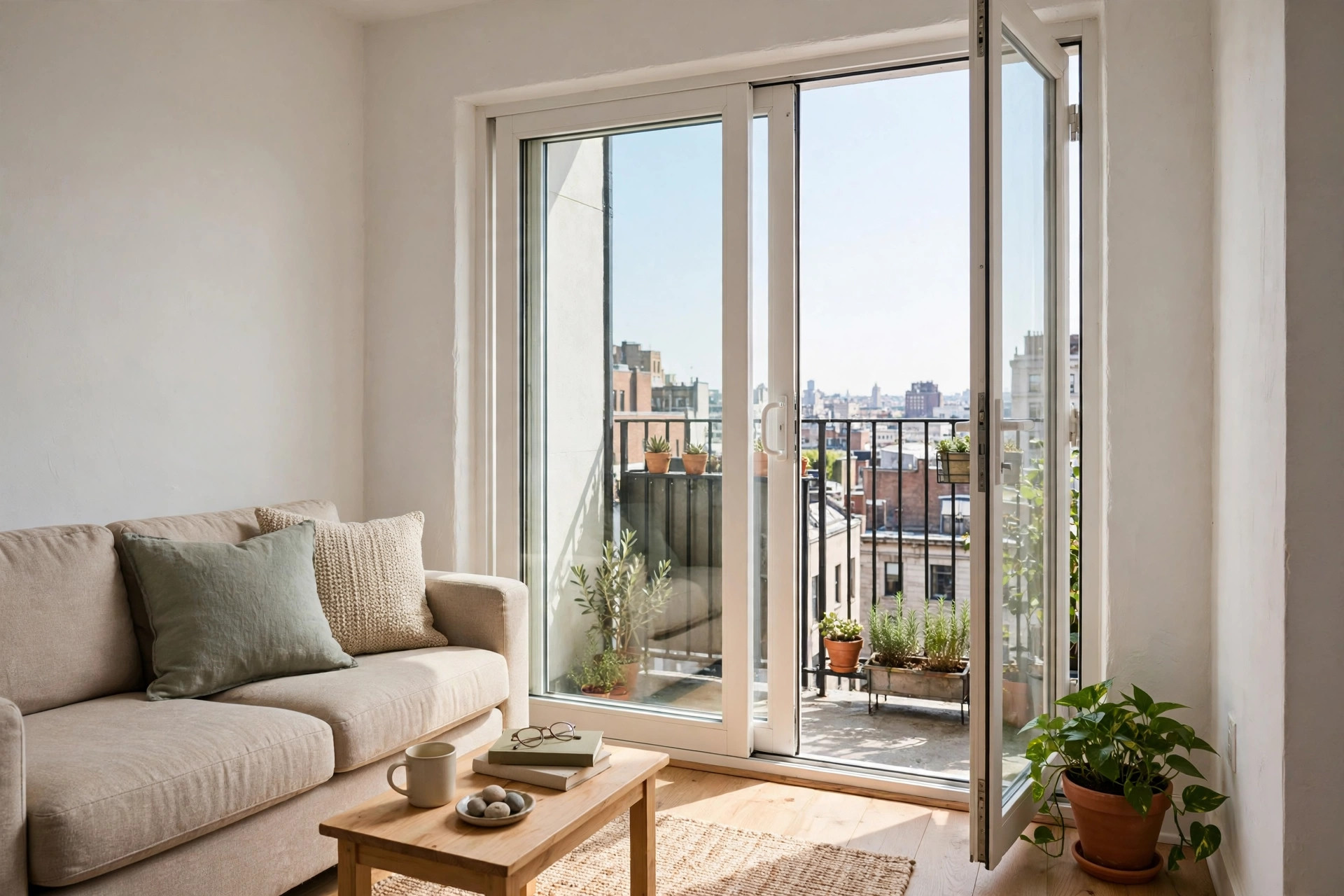

Finding the best sliding patio doors for small apartments takes care. A small flat has little room to waste. The wrong door can block light and eat up floor space. The right door can make the whole home feel larger. This guide explains how to choose well. It covers frame materials, glass types, prices, upkeep, and safety. The advice here suits renters and owners alike.
Why the Right Door Matters in a Small Apartment
A sliding patio door does more than open to a balcony. It shapes how a room feels every day. Glass lets daylight travel deep into the flat. Light makes small rooms feel wide. It lifts the mood of the people who live there.
A sliding door also saves space. A hinged door needs room to swing. In a small apartment, that swing can hit a chair or a table. A sliding panel moves along its track. It needs no extra floor room. That leaves more space for furniture.
The door also sets the tone of the room. A clean frame and clear glass look neat. An old, stuck door looks tired. It can let in drafts in winter. It can let in heat in summer. A good door holds the weather out. It keeps the home quiet too. City noise drops when the glass seals well.
For renters, the door is part of the home they pay for. For owners, it is an asset. A well-chosen door can add value to the flat. Guides on energy efficient sliding patio doors show how much a good door can cut heating and cooling bills. Small homes gain the most from each improvement. Every square foot counts.
What to Look For When You Choose: Best Sliding Patio Doors for Small Apartments
Frame Material
The frame holds the glass and takes the daily wear. Vinyl is the most common choice for small flats. It costs less than most other frames. It resists moisture and never needs paint. It insulates well, which keeps rooms warm in winter.
Aluminum frames look slim and modern. Slim frames mean more glass and more light. But aluminum passes heat and cold more than vinyl. Good models have a thermal break. This is a plastic strip inside the frame. It slows the flow of heat. Without it, the door can feel cold to the touch.
Fiberglass frames are strong and stable. They do not warp in heat or swell in damp. They cost more than vinyl. Wood frames look warm and rich. But wood needs care. It must be painted or sealed on a schedule. In a rental, vinyl or fiberglass often makes more sense.
Glass
Glass takes up most of the door. Double-pane glass is the standard now. Two sheets of glass trap a layer of air or gas between them. This slows heat flow. Triple-pane glass insulates even better. But it is heavy and costly. For most small apartments, double-pane is enough.
Low-E coating is worth the money. It is a thin, clear film on the glass. It reflects heat back to its source. In summer it keeps heat out. In winter it keeps heat in. It also blocks most UV rays. This protects floors and furniture from fading.
Tempered glass is a must for safety. It breaks into small, dull pieces instead of sharp shards. Building codes in many places require it for patio doors. Laminated glass is another option. It holds together when cracked. It also blocks more noise. That can matter in a busy city.
Size and Fit
Measure the opening with care. Take the width at the top, middle, and bottom. Use the smallest number. Do the same for height. A door that fits badly will leak air and water. A professional measure is wise if the wall is old or uneven.
Standard widths run from five to eight feet. Small apartments often suit the narrow end. A five-foot door gives two panels of about thirty inches each. That is enough for a person to pass with a bag. Think about what will pass through. Will a bike go through? Will large boxes move in and out? Plan for real life.
Track style matters too. Some doors have one sliding panel and one fixed panel. Others slide both ways. A screen door may ride on the same track. In a small flat, a smooth and quiet roller matters. You will hear every squeak. Look for doors with sealed ball-bearing rollers. Sliding door buying guides often compare roller types and track designs. Lowe’s carries many brands and posts detailed specs online.
Types of Sliding Patio Doors for Tight Spaces
Vinyl Sliding Doors
Vinyl doors lead the market for small homes. They are light and easy to slide. They need almost no care. A wipe with soap and water keeps them clean. They do not rot or rust. Prices sit at the low end of the range. For a budget fix that still performs, vinyl is hard to beat.
One small flaw: vinyl frames look a bit thick. Thick frames mean a little less glass. In a very dark flat, this can matter. Some makers now offer slim vinyl lines. Ask for them by name.
Aluminum Sliding Doors
Aluminum suits modern lofts and new builds. The frames are thin and strong. They can hold large panes with ease. That brings in more light. Many owners of small apartments pick aluminum for this reason.
Aluminum needs a thermal break in cold climates. It can also dent. Repair of a dented frame is tricky. But day to day, aluminum lasts for decades with little care.
Wood-Clad and Fiberglass Doors
Wood-clad doors have wood on the inside and a tough shell outside. The wood face looks fine from the living room. The outside shell resists rain and sun. This mix suits owners who want warmth without heavy upkeep.
Fiberglass doors copy the look of wood but act tougher. They resist dents, rot, and warp. They hold paint for many years. They cost more up front. Over a long stay, they can pay back in saved repairs.
Reviews on patio door comparisons break down the pros and cons of each material in plain terms. The Spruce is a trusted source for home product guidance.
Cost and Price
Prices vary by size, material, and glass. A basic vinyl sliding patio door starts around five hundred dollars. A mid-range vinyl or aluminum model runs from eight hundred to fifteen hundred dollars. High-end fiberglass or wood-clad doors can reach two thousand dollars or more. Custom sizes cost extra.
Installation is a separate bill. A simple swap in an existing opening may cost three hundred to six hundred dollars. A new opening cut into a wall costs far more. It may need a permit. Renters should get written approval from the landlord before any change. Some leases forbid door changes. Others allow them if the unit is restored later.
Glass upgrades add to the price. Low-E coating may add fifty to one hundred fifty dollars. Laminated glass adds more. These upgrades pay back through lower energy bills. A guide to energy efficient sliding patio doors explains how ratings like U-factor and SHGC work. Bob Vila’s site has long served home owners with clear, plain advice.
Shipping can matter for online orders. Some stores offer free delivery. Others charge by distance. Check the return policy before you buy. A door is heavy. Sending one back is no small task. Big retailers such as The Home Depot post full price lists for door models and install services, which makes it easy to compare before you commit.
Care and Upkeep
A sliding door asks for little, but it asks on a schedule. Clean the track each month. Dust and grit wear down rollers. Use a vacuum with a thin nozzle. Then wipe the track with a damp cloth. A drop of silicone spray on the rollers keeps them smooth. Never use oil. Oil draws dust and makes a paste.
Clean the glass with a mild soap solution. Avoid harsh powders. They can scratch the Low-E coating. Dry with a soft cloth to stop streaks. Clean the frame with the same soap. Rinse well.
Check the weatherstrip once a year. This is the soft seal around the door. If it is cracked or flat, replace it. New weatherstrip is cheap. It stops drafts and cuts noise. Check the lock too. A loose lock is a weak lock. Tighten the screws.
If the door drags, adjust the rollers. Most doors have screws at the bottom edge. A small turn raises or lowers each corner. Turn a little at a time. Test the slide after each turn. Guides on door track maintenance show the steps with photos. Family Handyman is a fine source for do-it-yourself care.
Wood frames need paint or sealer every few years. Look for peeling or bare spots. Sand the spot, prime it, and paint. This stops rot before it starts. Exterior product makers such as James Hardie also publish care guides for the siding and trim around the door, which is worth a read while you work. Vinyl and fiberglass need no paint. That is part of their appeal.
Safety
A glass door needs safety glass. Tempered glass is the norm. Ask for proof on the label. The label often sits in a corner of the pane. Laminated glass adds a second layer of safety. It stays in the frame when broken.
Locks matter as much as glass. A basic latch can be forced. A good door has a multi-point lock. It bolts at two or three points along the frame. A security bar adds more strength. It lies in the track and blocks the slide. A simple wooden dowel in the track works too.
For ground-floor flats, think about privacy. A sheer curtain or frosted film stops passersby from looking in. Film is cheap and easy to fit. It peels off when you move out. That suits renters.
Child safety needs thought. Small children can run into clear glass. Stickers or decals at eye level warn them. Door guards stop fingers from pinching in the track. Cord-free screens are safer than old corded ones. Advice from home safety experts covers building products and safe use in plain words.
Fire escape is another point. In many flats, the patio door is the second exit. Keep the track clear. Make sure the lock opens fast from inside. Never block the door with heavy furniture.
Frequently Asked Questions
Can a renter replace a sliding patio door?
Often yes, but get written approval first. Many leases allow upgrades if the landlord agrees. Keep the old door in storage if you must restore the flat later. Some landlords will pay part of the cost. A new door adds value to their unit. Always put the deal in writing.
What is the best frame material for a small apartment?
Vinyl suits most small flats. It costs less, insulates well, and needs no paint. Aluminum suits those who want thin frames and more light. Fiberglass is the best long-term pick if the budget allows. Wood looks fine but needs more care. Match the material to your climate and your budget.
How much does installation cost?
A straight swap in an existing opening often costs three hundred to six hundred dollars. New openings, permits, and structural work cost much more. Get two or three quotes. Ask each installer what the price covers. Haul-away of the old door may cost extra.
Do sliding patio doors save energy?
Yes, when chosen well. Double-pane glass with Low-E coating cuts heat loss. A tight seal stops drafts. Look for the U-factor on the label. A lower number means better insulation. Articles on energy saving doors and windows explain the labels in simple terms. This Old House has guided home owners for decades.
How do I stop a sliding door from sticking?
Clean the track first. Most sticking comes from dirt. Vacuum the track, wipe it down, and spray the rollers with silicone. If it still drags, adjust the roller screws at the base of the door. Raise or lower each corner a little. Worn rollers may need replacement. New rollers are cheap and easy to fit.
Are sliding doors safe for ground-floor apartments?
They can be, with the right steps. Choose tempered or laminated glass. Fit a multi-point lock and a security bar. Add window film for privacy. Keep the outside area lit. A motion light near the door helps. Check local crime trends and pick the level of protection that fits.
A Final Word
The best sliding patio doors for small apartments share a few traits. They fit the opening well. They slide with one finger. They seal out drafts and noise. They let in light without wasting space. Vinyl leads on value. Aluminum leads on light. Fiberglass leads on life span. Pick the one that fits your home, your lease, and your budget. Pairing the door with vinyl replacement windows can lift the whole flat at once. And if you want extra storm protection at the entry, read about storm door installation before you buy.
References
Bob Vila. (n.d.). Home improvement advice. https://www.bobvila.com CertainTeed. (n.d.). Building materials and exterior products. https://www.certainteed.com Family Handyman. (n.d.). DIY home repair and maintenance. https://www.familyhandyman.com James Hardie. (n.d.). Fiber cement siding and exterior products. https://www.jameshardie.com Lowe’s. (n.d.). Home improvement products. https://www.lowes.com The Home Depot. (n.d.). Home improvement products. https://www.homedepot.com The Spruce. (n.d.). Home and garden advice. https://www.thespruce.com This Old House. (n.d.). Home renovation guidance. https://www.thisoldhouse.com
Was this guide helpful?

About Michael Thompson
The My Garden US editorial team writes practical, in-depth home and garden guides for American homeowners — tested advice, no fluff.
You May Also Like

Buy Pergola Installation Kits Online in California
July 22, 2026 0 views
Best Garage Door Replacement for Homeowners: What to Know Before You Buy
February 16, 2026 0 views
The Best Siding Color Visualizer Tools for Cold Climates
July 7, 2026 0 views