
Tile floors look sharp when they are new. The tile stays hard and bright for years. The grout does not. Grout is the soft line between the tiles. It soaks up dirt, grease, soap, and foot traffic. Over time it turns gray or brown. A mop will not fix it. A brush and a bucket take hours and sore knees. That is why many homeowners and small cleaning firms now look at professional grade tile grout cleaning machines for sale. These machines scrub the grout lines deep and fast, and they bring back the look of a fresh floor.
This guide explains what these machines are, how they work, and what to look for when you shop. It covers the main types, real price ranges, upkeep, and safety. If you are a homeowner with stained grout or a cleaner who wants to add a service, read on.
Why Grout Gets Dirty and Why Machines Help
Grout is a cement mix. It is rough and porous. Spills sink into it. Steam from a shower sinks into it. Dust from shoes sinks into it. Once the dirt is deep in the pores, a damp mop only wets the top layer. Hand scrubbing works, but it is slow. A medium kitchen can take three hours with a brush.
A grout cleaning machine does three jobs at once. It applies hot water or cleaning fluid. It scrubs with a brush or pad that spins or pulses. Then it vacuums the dirty water back up. The floor dries fast and the grout lines come out even. Many users say the result looks close to a new floor.
For rental landlords, the machine pays for itself. A turnover clean with fresh grout lines lets a unit rent faster. For small cleaning firms, a grout machine adds a service they can charge for. Homeowners with large tile areas save the cost of hiring a pro year after year.
What to Look for When You Shop: Professional Grade Tile Grout Cleaning Machines for Sale
Not every machine with “professional grade” on the box is worth the money. Use this checklist before you buy.
Brush head size. A small head reaches into corners and shower stalls. A wide head covers halls fast. Some machines come with two heads. If you clean mostly bathrooms, choose small. If you clean large kitchens, choose wide.
Tank size. The machine carries clean water and holds dirty water. A one-gallon tank works for small jobs. You will refill often. A two-gallon tank or more suits large floors. But big tanks make the machine heavy to push and carry.
Steam or pressure. Steam machines heat water and force vapor into the grout pores. They use little soap and kill germs with heat. Pressure or spin-scrub machines use brushes and cleaning fluid. They work well on greasy grout in kitchens. Some units do both.
Vacuum pickup. Cheap units leave the floor wet. Better units pull the dirty water back into a tank. This matters. Dirty water left on grout sinks right back in. Look for a strong recovery tank and a squeegee edge.
Cord and power. Long cords save you from moving outlets. A 25-foot cord is a good start for home use. Check the wattage. Higher watts heat steam faster and drive stronger brushes.
Weight and wheels. You will push this machine around a wet floor. Under 15 pounds is light. Over 25 pounds is tiring on stairs. Wide wheels glide over tile lips. Test the handle grip if you can.
Noise. Some machines sound like a loud vacuum. If you clean early or late, or work in homes with children, ask about decibels.
Parts and warranty. Brushes wear out. Tanks crack. Pick a brand that sells spare parts in the United States and backs the unit for at least one year. Two years is better.
The guides at Consumer Reports test many cleaning machines under real home conditions, and their notes on brush wear and tank design are worth a read before you spend.
Types of Tile Grout Cleaning Machines
There are four main types on the market today. Each suits a different job.
Handheld Steam Units
These are the smallest. You hold them like an iron. They shoot steam through a small brush tip. They work well for spot jobs: a few stained lines, a shower corner, around a toilet. They cost little and store in a cabinet. But they are slow for whole floors. Most hold only a cup or two of water.
Upright Steam Mops with Grout Attachments
These look like stick vacuums. They heat water and push steam through a floor pad. Many come with a grout brush tool for the lines. A steam mop for tile floors can clean the tile face and the grout in one pass. This is the best choice for regular upkeep. It will not rescue grout that has been black for five years, but it keeps clean grout clean.
Spin Scrubbers and Power Scrubbers
A cordless electric scrubber has a spinning head that runs on a battery. You guide it along the grout lines. It does the arm work for you. These are light and cheap. They need a separate mop to pick up dirty water. Good for upkeep and light jobs.
Truck-Grade and Walk-Behind Extractors
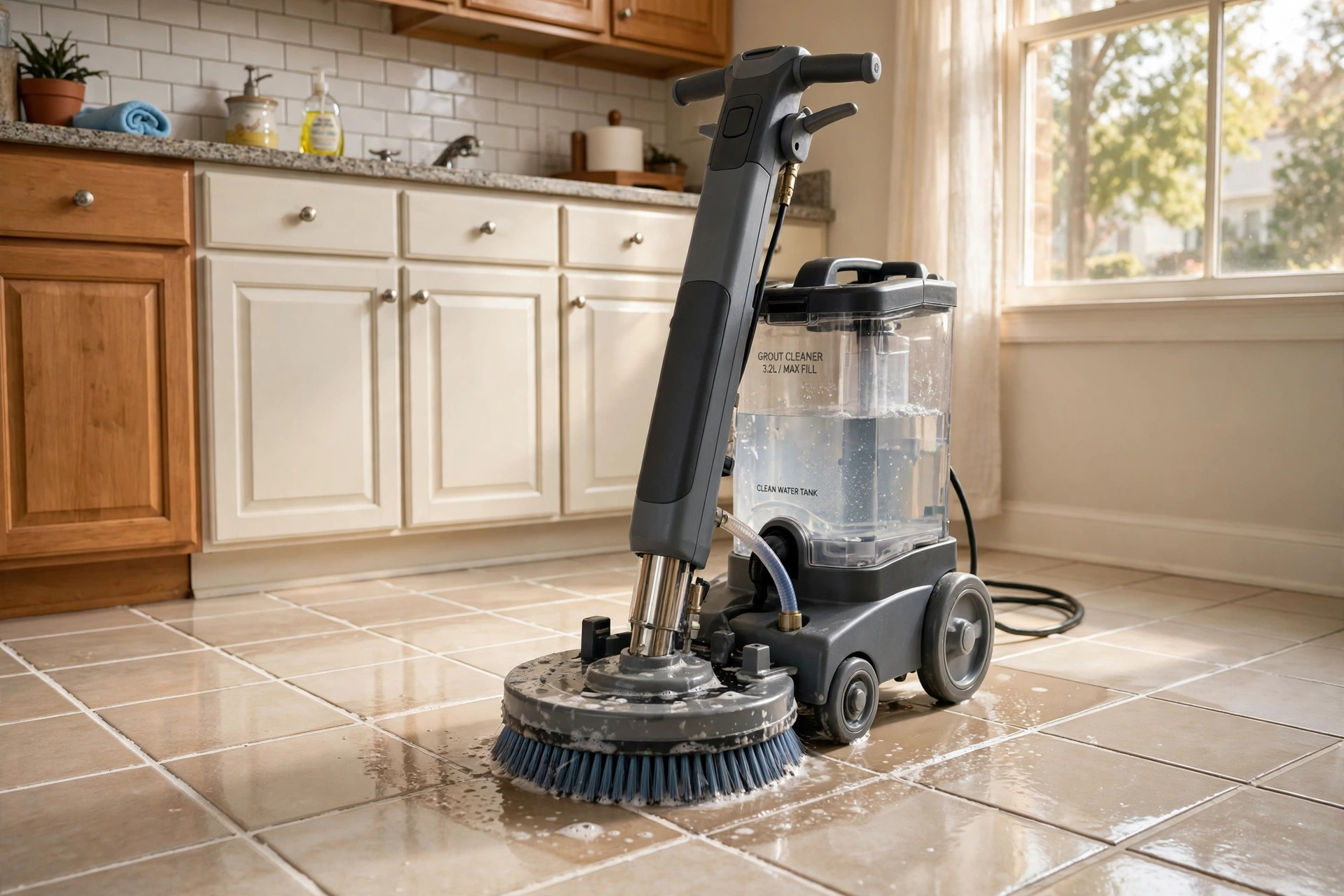
These are the true work machines. They spray hot solution, scrub with a wide rotary head, and vacuum it all back up. Cleaning firms use them for whole houses and commercial lobbies. They cost the most and weigh the most. For a homeowner, they make sense only if you have very large tile areas, such as a whole downstairs in tile.
The how-to library at Family Handyman walks through tile repair and cleaning jobs step by step, which helps you judge how much machine power your floor really needs.
Cost and Price Ranges
Prices vary by type and build. These are typical United States ranges.
– Handheld steam units: 30 to 120 dollars. – Upright steam mops with grout tools: 80 to 250 dollars. – Cordless spin scrubbers: 40 to 150 dollars. – Mid-size grout cleaning machines: 200 to 600 dollars. – Walk-behind professional extractors: 600 to 2,500 dollars or more.
Used units sell for less. Check local listings and refurbished stock. Test a used machine with water before you pay. Check the brush, the tank seals, and the heating time.
Think about cost per use. A 200-dollar machine used twice a year for ten years costs 10 dollars per use. A hired pro charges 150 to 400 dollars per visit for a kitchen. If your grout needs deep cleaning more than once a year, buying beats hiring.
Watch for hidden costs. Some brands need their own brand of cleaning pads. Pads cost 10 to 30 dollars a set and last months. Descaling fluid for steam units costs a few dollars a bottle. Replacement brushes run 15 to 40 dollars.
Retailers like Home Depot and Lowe’s carry many of these machines in store, which lets you lift them and feel the weight before you buy.
Where to Buy
You can buy in person or online. Each path has its perks.
Big-box stores let you see the box, read the specs, and return the unit to the store if it fails. Specialty cleaning suppliers know the trade machines and sell parts. Online shops often have the best price and wide stock. Read the return policy. A machine you cannot return is a risk.
When you shop online, read recent reviews, not old ones. Brands change motors and parts over the years. A 2022 review may not match the 2026 unit. Look for reviews from people with floors like yours: kitchen tile, bath tile, or large entry floors.
The independent product tests at Wirecutter review cleaning tools with clear methods, and their older steam-cleaner reviews still explain what separates a strong unit from a weak one.
Using the Machine the Right Way
A good machine still needs a good method. Follow these steps.
First, sweep or vacuum the floor. Grit under the brush can scratch the tile glaze. Pick up crumbs and dust.
Second, test in a hidden spot. Put the machine on low or test a corner behind a door. Watch the grout color and the tile glaze. Some rough pads can dull cheap tile.
Third, pre-treat heavy stains. Spray a mild grout cleaner on dark lines and let it sit for five minutes. Do not let it dry. The machine then has less work to do.
Fourth, work in small sections. Push the machine slow along the grout lines. Let the brush do the work. Overlap each pass by a few inches.
Fifth, rinse and dry. If your machine does not vacuum well, wipe up with a clean mop. Open a window or run a fan. Wet grout that sits damp can grow mildew.
The cleaning guides at The Spruce lay out a clear order of steps for grout work that matches this method, and Good Housekeeping publishes test results on which cleaning tools hold up over months of use.
Care and Upkeep
A machine that is cleaned after each use lasts years. One that is put away dirty dies early.
Empty both tanks after every job. Rinse them with clean water. Let them air dry with the lids off. Stale water grows slime and smell.
Rinse the brush or pad. Pull off hair and threads. A clogged brush spins weak. Replace brushes when the bristles bend or thin. This is normal wear.
For steam units, descale the tank. Hard water leaves white scale in the heater. Use the brand’s descaler or plain white vinegar, then flush with clean water. Do this once a month if you use the machine often.
Check cords and hoses. Look for cracks and kinks. Store the machine upright in a dry spot. Do not leave it in a freezing garage with water in the tank. Ice can split the tank.
Keep the manual. It lists the right parts and the order for taking the unit apart. The repair columns at Bob Vila and the pro trade notes at This Old House both stress that simple upkeep doubles the life of home machines.
Safety Tips
These machines use heat, water, and power. Treat them with care.
– Read the manual before the first use. Every model has its own limits. – Keep the cord and the plug dry. Never run the cord across standing water. – Steam burns. Do not point a steam head at skin, pets, or plants. – Ventilate the room. Open a window when you use cleaning fluids. The EPA offers plain guidance on safe indoor cleaning and ventilation. – Wear gloves and non-slip shoes. Wet tile is slick. – Unplug before you fill the tank or change a brush. – Keep children and pets out of the work area until the floor is dry. – Do not use steam on natural stone unless the maker says it is safe. Steam can crack some stone and ruin some sealers.
Frequently Asked Questions
How often should I deep clean my grout with a machine? Most homes need a deep clean once or twice a year. Kitchens with heavy cooking may need it three times a year. Bathrooms with hard water need it when stains show. Weekly mopping between deep cleans keeps the lines from getting bad.
Can a machine remove mold from grout? Steam machines kill surface mold with heat. Deep mold inside the grout may come back. If the grout stays dark after a full clean, the mold may be under the tile. In that case, regrout or call a tile pro. Do not seal mold in. Kill it first.
Do I need to seal grout after machine cleaning? Yes, in most cases. Cleaning opens the grout pores. A sealer fills them so dirt cannot sink in again. Wait until the grout is fully dry, usually a full day. Then brush on a grout sealer. Reseal every one to two years.
Will these machines scratch my tile? Most do not. The brushes are softer than tile glaze. But rough pads on cheap or soft tile can dull the shine. Test in a hidden spot first. Never use metal brushes on tile.
Can I use bleach in the machine? Check the manual. Many makers warn against bleach. It can corrode the tank and void the warranty. Use the maker’s own cleaner or a mild grout cleaner in a pre-treatment step instead.
Is a professional grade machine worth it for one bathroom? A small handheld or stick steam unit is enough for one bath. The big walk-behind machines suit large areas or cleaning firms. Match the machine to the size of the job. An upholstery cleaning machine buyer faces the same rule: buy the size that fits the work.
A Final Word
Dirty grout makes a clean house look tired. Professional grade tile grout cleaning machines for sale today put real cleaning power in the hands of any homeowner or small firm. Pick the type that fits your floors. Check the tank, the brush, and the warranty. Use the right method, keep the machine clean, and seal the grout when you are done. Your tile will look years younger, and it will stay that way with far less work.
References
Bob Vila. (n.d.). Home improvement advice. https://www.bobvila.com Consumer Reports. (n.d.). Product reviews and ratings. https://www.consumerreports.org Family Handyman. (n.d.). DIY home repair and maintenance. https://www.familyhandyman.com Good Housekeeping. (n.d.). Product reviews and home advice. https://www.goodhousekeeping.com Lowe’s. (n.d.). Home improvement products. https://www.lowes.com The Home Depot. (n.d.). Home improvement products. https://www.homedepot.com The Spruce. (n.d.). Home and garden advice. https://www.thespruce.com This Old House. (n.d.). Home renovation guidance. https://www.thisoldhouse.com U.S. Environmental Protection Agency. (n.d.). Protecting human health and the environment. https://www.epa.gov Wirecutter. (n.d.). Product reviews from The New York Times. https://www.nytimes.com/wirecutter
Was this guide helpful?

About James Carter
The My Garden US editorial team writes practical, in-depth home and garden guides for American homeowners — tested advice, no fluff.
You May Also Like

How to Buy Stainless Steel Appliance Cleaners Online in California
August 24, 2026 0 views
Top Rated Pest Control Service Plans Reviews: A Plain Guide for Homeowners
April 24, 2026 0 views
Budget Friendly Shower Door Descalers With Free Shipping
June 6, 2026 0 views