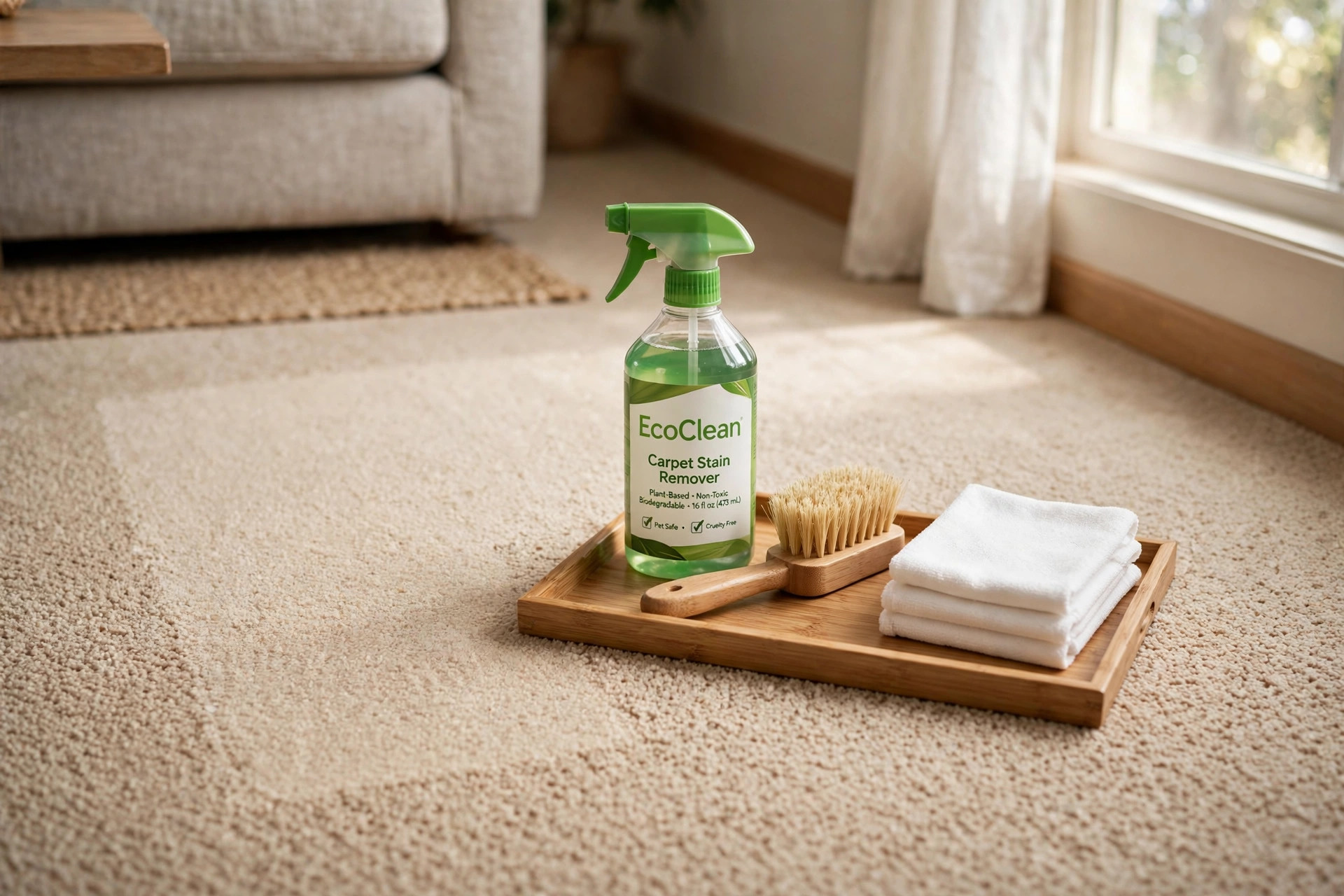

A spilled cup of coffee. A pet accident in the hallway. Muddy footprints after a long rain. Carpet takes the punishment every day, and most homes know the sight well. When buyers look for eco friendly carpet stain remover kits for sale, they want two things at once: a cleaner that takes the stain out, and a formula that keeps the air in the home safe. This guide walks through what these kits are, why they matter, how to choose one, what they cost, and how to use them with care. It is written in plain terms, so a first-time buyer can read it once and shop with confidence.
Why It Matters
Carpet stains are more than a mark on the floor. A stain that is left alone sinks deeper into the fibers with each week that passes. Heat from the sun through a window can set it. Foot traffic grinds it in. After a few months, even a strong cleaner may fail where a fast treatment would have worked.
The reason many shoppers now seek eco friendly carpet stain remover kits for sale is simple. Traditional spot cleaners often use harsh solvents. Those solvents can leave a sharp smell that lingers for days. Some carry warnings about keeping children and pets away from the treated area. In a home with small children who crawl on the rug or a dog that naps on the carpet, those warnings matter a great deal.
Green cleaners take a different path. They use plant-based surfactants, enzymes, and minerals such as baking soda or peroxide in gentle amounts. The U.S. Environmental Protection Agency runs the Safer Choice program, which lists products made with safer chemical ingredients, and many eco friendly kits carry that label or a similar third-party mark. Reading guidance from the EPA can help a buyer understand what safer chemistry means in plain terms.
There is also the question of the home itself. Wool carpet, natural jute rugs, and dyed silk blends can react badly to bleach or strong solvents. An eco friendly kit is usually gentler on delicate fibers, which is one more reason households with fine rugs prefer them. And because these kits often come with a brush, cloths, and a spray in one box, they save a trip to buy each tool on its own.
What to Look For in a Kit: Eco Friendly Carpet Stain Remover Kits for Sale
Full Ingredient Lists
A trustworthy maker lists every ingredient on the label. If a kit hides its formula behind the word “proprietary,” treat that as a warning sign. Plant-based does not always mean safe, and safe does not always mean plant-based. Look for names you can check: enzymes, citric acid, hydrogen peroxide, sodium carbonate, and coconut-derived surfactants are common in green formulas.
Third-Party Marks
Marks from independent groups carry weight. The EPA Safer Choice label is one. Another is the testing program at Consumer Reports, which rates household cleaners on both performance and safety. A product that has passed independent review has cleared a higher bar than one that only claims to be green on its own box.
The Tools in the Box
A kit should do more than hold a bottle. The better eco friendly carpet stain remover kits for sale include a stiff-bristle brush for working the cleaner into the fibers, a set of absorbent cloths, and sometimes a scraper for dried spills. Some kits add a small handheld sprayer that makes its own fine mist, which uses less liquid and keeps the carpet from getting soaked. Fewer tools in the box means more trips to the store later.
Stain Coverage
Not every formula handles every stain. Enzyme cleaners excel at protein stains: milk, blood, egg, and pet waste. Oxidizing cleaners built on gentle peroxide work well on coffee, tea, wine, and fruit juice. Oil-based stains from butter or salad dressing need a surfactant strong enough to lift grease. Before buying, list the stains your home sees most and match the kit to them. A kit that names the stain types on its box is more honest than one that promises to fix “everything.”
Carpet Compatibility
Check the label for fiber types. Most green kits are safe for nylon and polyester, the two most common carpet fibers. Wool needs extra care, because some alkaline cleaners can dull its feel. Always test first on a hidden corner, no matter what the box says. Advice on carpet fiber types and safe cleaning methods appears regularly at The Spruce, which is a helpful second opinion when a label is vague.
Types of Kits
Enzyme-Based Kits
These rely on living enzymes that digest organic matter. They are the first choice for homes with pets, because they break down the proteins in urine and vomit rather than just hiding the smell. They work slowly, often needing fifteen to thirty minutes of dwell time, and they must stay damp while they work. Reviews at Good Housekeeping often note that patience is the price of enzyme cleaning, but the results on pet stains are hard to beat.
Oxidizing Kits
These use oxygen-releasing compounds such as sodium percarbonate. When mixed with water, they release oxygen that lifts color from the fiber. They are strong on coffee, tea, and wine. Many kits in this group come as a powder that you mix fresh before use, which keeps the formula potent and cuts down on plastic waste from pre-mixed bottles.
Plant-Surfactant Spray Kits
The simplest type. A ready-to-use spray built on coconut or corn-derived surfactants, plus a brush and cloths. These handle fresh spills and light everyday marks. They are the easiest to use: spray, brush gently, blot dry. For old, set stains they may need a second pass or a stronger companion product.
Multi-System Kits
Some boxes combine two or three approaches: an enzyme pre-treatment, an oxidizing spotter, and a rinse aid. These cost more, but they cover the widest range of stains. A busy household with children, pets, and a light-colored carpet may find the extra cost worth it. Step-by-step guidance on pairing products for tough stains is easy to find at Bob Vila, where home repair experts break the process into simple moves.
Cost and Price
Eco friendly carpet stain remover kits for sale range widely in price. A basic spray-and-brush kit often sells for under fifteen dollars. Mid-range kits with enzyme formulas and extra tools usually run from fifteen to thirty dollars. Multi-system kits with several bottles and professional-style brushes can reach thirty to sixty dollars.
Price does not always track with quality. A ten-dollar kit with a short, honest ingredient list can outperform a fifty-dollar kit built on marketing. What matters is the match between the formula and your stains. Before paying more, read the label and count the tools.
Buying in larger sizes or refill packs cuts the cost per use. Many makers sell concentrate refills that mix with tap water at home. This lowers the price and reduces plastic waste, since you reuse the same spray bottle. Shoppers comparing current shelf prices can browse the cleaning aisles at Home Depot or Lowe’s to see how kits are priced side by side.
For renters and first-time homeowners on a tight budget, a single all-purpose enzyme kit is often enough. For landlords who turn over units each year, a multi-system kit in bulk may be the better value. Related cleaning tools, such as those for baseboards in damp homes, are covered in our guide to best baseboard cleaning tools for humid climates.
Care and Upkeep of the Kit
A kit only works well if it is stored right. Keep bottles out of direct sun and away from heat, because heat breaks down enzymes fast. Most enzyme cleaners lose strength after a year on the shelf, even unopened. Write the purchase date on the box with a marker so you know when to replace it.
Rinse brushes after each use and let them dry bristle-down. A brush caked with old cleaner will scratch carpet fibers instead of lifting stains. Wash cloths separately from laundry, since stain residues can transfer color to clothes. Practical how-to advice on cleaning tools appears often at Family Handyman, which covers the small habits that keep equipment working longer.
Check sprayer nozzles now and then. Mineral deposits from hard water can clog a fine mist nozzle. A quick soak in warm vinegar water clears it. If a kit includes a powder, keep it sealed and dry; moisture turns the powder into a hard lump that will not dissolve.
Safety
Green does not mean risk-free. Even plant-based cleaners can irritate eyes or skin, and powdered oxidizers can bother the lungs if the dust is breathed in. Read the safety section of every label before the first use.
Keep kits on a high shelf or in a locked cabinet if children or pets live in the home. A child who finds a spray bottle may drink from it, and a curious dog may chew the box. Store the kit away from food for the same reason.
Ventilate the room while you clean. Open a window or run a fan. Fresh air speeds drying, and a carpet that dries fast is less likely to grow mold under the pad. Guidance on safe ventilation during home cleaning projects is a regular topic at This Old House.
Never mix products. An enzyme cleaner mixed with a bleach-based product can lose its power or release fumes. Use one product at a time, rinse with plain water between steps, and let the area dry before judging the result. If a stain does not lift after two honest tries, it may be time to call a professional rather than layering on more chemistry. For larger jobs, some households compare their options in our piece on commercial grade deep cleaning service packages for homeowners.
Design ideas for keeping cleaning supplies tidy and out of reach are shared at Apartment Therapy, which is useful when a small home has little storage space.
Frequently Asked Questions
Do eco friendly stain removers really work as well as regular ones?
For most fresh stains, yes. Enzymes and oxygen-based formulas match or beat solvent cleaners on protein and dye stains. On old, heat-set stains, any cleaner struggles, green or not. The key is speed: treat the spill within the first hour and the green kit will usually do the job.
Are these kits safe for pets?
They are safer than solvent cleaners, but no cleaner is meant to be eaten or licked. Keep pets out of the room until the carpet is fully dry. Enzyme cleaners are a good choice for pet stains because they remove the odor that draws the animal back to the same spot.
Can I use an eco friendly kit on wool carpet?
Often yes, but test first. Wool dislikes high-alkaline products and very hot water. Use lukewarm water, blot instead of scrubbing, and pick a kit that lists wool as safe on its label. When in doubt, ask the carpet maker before you buy.
How long does a kit last?
An unopened enzyme kit keeps about a year. Once opened, use it within six months for full strength. Powdered oxidizers last longer, often two years if kept dry. Tools like brushes and cloths last for years with basic care.
Will green cleaners remove old red wine stains?
Maybe. A fresh red wine spill responds well to an oxidizing kit if you act fast and blot first. A stain that has sat for a year and been walked on hundreds of times may only fade, not vanish. Two treatments with dwell time give the best chance. Deep-set stains are one reason some homeowners book a service, as noted in our guide to reliable chimney sweep services in colorado for those bundling home maintenance visits.
A Final Word
Shopping for eco friendly carpet stain remover kits for sale is not hard once the basics are clear. Match the formula to your stains, check the ingredient list, look for independent marks, and store the kit well. Treat spills fast, test on a hidden spot first, and keep children and pets away until the carpet dries. With those habits, a green kit keeps the carpet clean and the home’s air easy to breathe, which is all most buyers ever wanted.
References
Apartment Therapy. (n.d.). Home design ideas and inspiration. https://www.apartmenttherapy.com Bob Vila. (n.d.). Home improvement advice. https://www.bobvila.com Consumer Reports. (n.d.). Product reviews and ratings. https://www.consumerreports.org Family Handyman. (n.d.). DIY home repair and maintenance. https://www.familyhandyman.com Good Housekeeping. (n.d.). Product reviews and home advice. https://www.goodhousekeeping.com Lowe’s. (n.d.). Home improvement products. https://www.lowes.com The Home Depot. (n.d.). Home improvement products. https://www.homedepot.com The Spruce. (n.d.). Home and garden advice. https://www.thespruce.com This Old House. (n.d.). Home renovation guidance. https://www.thisoldhouse.com U.S. Environmental Protection Agency. (n.d.). Protecting human health and the environment. https://www.epa.gov
Was this guide helpful?

About David Wilson
The My Garden US editorial team writes practical, in-depth home and garden guides for American homeowners — tested advice, no fluff.
You May Also Like
Best Antibacterial Disinfectant Sprays for Humid Climates
August 20, 2026 0 views
Professional Grade Shower Door Descalers for Small Apartments: A Complete Guide
September 24, 2026 0 views
HEPA Vacuum Cleaners Reviews and Buying Guide
April 24, 2026 0 views