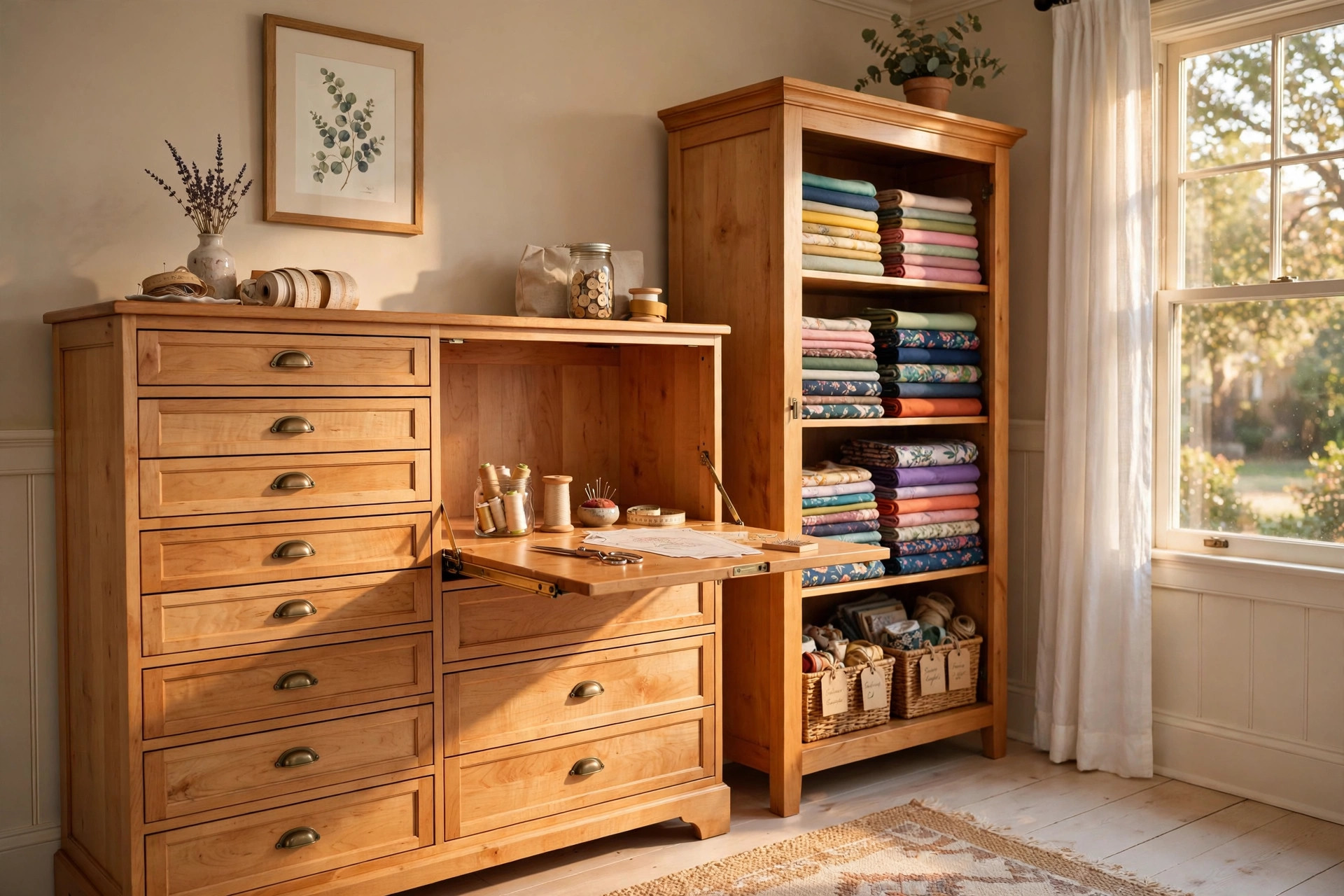

Sewers gather thread, fabric, and tools over many years. The collection grows fast. Soon the dining table is full of spools. The closet overflows with bolts of cloth. Many home sewers look for luxury sewing room storage cabinets for sale when the mess takes over. Fine cabinets change the room. They turn a cluttered corner into a true work studio. This guide explains what to look for, the types on the market, fair prices, care, and safety. It answers common questions in plain words. By the end, you will know how to shop with confidence.
Why a Sewing Room Needs Fine Storage
A sewing room is not like other rooms. It holds hundreds of small parts. There are needles, pins, bobbins, zippers, and buttons. There are spools of thread in every color. There are large bolts of fabric that weigh a lot. A good cabinet keeps each item in its place. It saves time. You can find what you need in seconds.
Luxury cabinets do more than hold goods. They protect your tools. Cheap drawers jam and tip. A heavy cabinet stands firm under the weight of fabric. Fine drawers glide open on metal runners. They do not stick. Shelves adjust to hold tall bolts or short spools. Many owners say the room feels calmer after fine cabinets arrive. Work flows better. Projects finish faster.
A luxury cabinet also protects your money. Sewing machines, sergers, and embroidery machines cost a great deal. Fabrics such as silk and wool are costly too. Sun, dust, and damp air can ruin them. Closed cabinets keep dust off. Solid doors block sun that fades cloth. Some cabinets lock, which keeps small tools safe from young hands. Read more about room planning in our guides to craft room storage cabinets and fabric storage cubes.
What to Look For When You Buy: Luxury Sewing Room Storage Cabinets for Sale
Build Quality and Materials
Solid wood is the best choice. Maple, oak, and cherry last for decades. They hold screws well and do not warp. Plywood with a hardwood veneer is also fine. It is lighter and costs less. Avoid thin particle board if you can. It swells with damp air. It chips at the edges. If you choose laminate, pick a thick grade with sealed edges.
Check the joints. Dovetail joints are strong and look fine. Dowels and screws hold well in good plywood. Stapled joints are weak. Open and close every drawer in the store. It should glide smooth and quiet. It should stop before it falls out. The cabinet should not wobble when you push it.
Drawer Design and Layout
Sewers need many shallow drawers. Thread spools, needles, and bobbins sit well in drawers that are two or three inches deep. Deeper drawers hold folded fabric. Pull out a drawer and look inside. Drawer dividers help. Some luxury models have felt-lined trays for small tools. Tilt-out bins are handy for scrap fabric. Ask if extra trays can be bought later.
Measure your tools first. Write down the height of your tallest bolt. Note the width of your cutting mat. Bring a tape measure when you shop. A fine cabinet should fit what you own now and leave room to grow. Test each drawer with a full load. Some cheap runners work fine when empty but grind under weight. Place a stack of books inside and pull again. The drawer should still move smooth and stop clean. Many shoppers compare options at large home stores such as Home Depot and Lowe’s before they decide.
Size and Room Fit
Measure the room twice. Leave space to walk around your cutting table. Most sewers want at least thirty inches of clear floor in front of a cabinet. Tall cabinets use wall space well. Wide low cabinets can double as a work top. Corner cabinets use dead space. Sliding doors suit small rooms because they do not swing out.
Think about the floor too. A full fabric cabinet is heavy. Old floors may sag. Check that the feet spread the load. Levelers help on uneven floors. If you rent your home, a freestanding cabinet is best. It moves with you.
Finish and Style
A sewing room is a work room, but it should please the eye. Light finishes such as maple or white paint make small rooms feel larger. Dark finishes suit large rooms and hide wear. The finish should be smooth. Rough paint snags thread. Look for a sealed top that wipes clean. Craft glue and dye wash off sealed tops with ease.
Types of Luxury Sewing Cabinets
Armoire Style Cabinets
Armoires are tall and deep. They hide a sewing machine inside. Fold-down tables give a work top. When closed, the room looks neat. These suit sewers who share the room with guests. Prices run high because of the moving parts. Check the hinges. They must hold the table flat without sag.
Drawer Bank Cabinets
Drawer banks are wide chests with many drawers. They are the workhorses of the sewing room. Look for twenty or more drawers in varied depths. Some have a maple top for cutting. These are simple and strong. They cost less than armoires. See our top rated craft room storage cabinets buying guide for more drawer layouts.
Wall and Hutch Units
Hutches sit on a base or hang on the wall. They give tall storage for books, patterns, and jars. Open shelves show off fabric by color. Closed doors hide the rest. Wall units keep the floor clear. They must be bolted to wall studs. A loaded hutch can tip if it is free standing.
Custom Built-Ins
Built-ins are made to fit one room. A carpenter builds them around your tools and your space. They cost the most. They add value to the home. If you sew every day, they are worth it. Get three quotes before you agree. Ask to see the carpenter’s past work.
Cost and Price Guide
Prices vary with wood, size, and brand. A fine freestanding drawer bank in oak may cost eight hundred to two thousand dollars. Armoire style units often run fifteen hundred to four thousand dollars. Custom built-ins start near three thousand and can pass ten thousand for a full room. These are common ranges in American stores as of recent years. For current pricing ideas, browse Wayfair and IKEA, which list many storage lines online.
Watch for hidden costs. Delivery of heavy cabinets may cost extra. White glove delivery, where the crew carries the piece inside and sets it up, is worth the fee for large units. Assembly of flat pack cabinets takes time. If you hire help, ask the price up front.
Sales come often. January and July bring white sales and home sales. Floor models sell at a discount. Ask the store about open box pieces. They may have small marks but work just fine. Read warranty terms. A five year warranty on drawers and hinges is a good sign. Keep your receipt. Some brands register the warranty online.
Think in terms of cost per year. A two thousand dollar cabinet that lasts twenty years costs one hundred dollars a year. A cheap cabinet that fails in three years costs more in the end. Buy the best you can afford. It pays off over time.
Care and Upkeep
Good cabinets need little care. Dust them each month with a soft cloth. Use a mild cleaner on painted tops. Avoid harsh sprays that can dull the finish. Wax solid wood once a year with paste wax. It feeds the wood and keeps it smooth.
Watch the drawers. Vacuum crumbs and thread bits from the runners. A drop of dry lubricant on metal slides keeps them quiet. Tighten loose screws each year. Wood moves with the seasons. A screw that was tight in July may loosen by January.
Keep the room dry. Damp air swells wood and rusts pins. A small dehumidifier helps in wet climates. Keep silica gel packs in drawers that hold metal tools. They cost little and stop rust. Check the back of the cabinet for dust each spring. A quick vacuum keeps the piece fresh for years. Keep cabinets out of direct sun. Sun bleaches fabric and fades wood. A window shade costs little and saves much. For upkeep tips on the whole house, the guides at Family Handyman and Bob Vila are useful.
Safety in the Sewing Room
Safety matters, most of all with children and pets in the home. Bolt tall cabinets to the wall. A loaded cabinet can tip and hurt a child. Use the straps that come with the unit. Do not store a hot iron on a wood top. Use a heat proof pad. Put rotary cutters and needles in locked drawers. Young hands grab shiny things.
Keep cords tidy. A sewing machine cord across the floor is a trip hazard. Run cords behind the cabinet. Use a power strip with a switch. Turn it off when you leave the room. This cuts fire risk. Do not overload one outlet with an iron, a machine, and a lamp.
Weight matters too. Do not climb on drawers to reach high shelves. Use a step stool. Open only one deep drawer at a time. Two open drawers full of fabric can tip a chest forward. These are simple habits. They keep the room safe for years. The Container Store sells wall straps and drawer locks that fit most cabinets.
Frequently Asked Questions
How many drawers does a sewing room need?
Most sewers do well with twenty to thirty drawers. Shallow drawers hold notions. Deep drawers hold fabric. It is better to have too many than too few. A growing collection fills space fast. Plan for twice what you own today.
Can I use kitchen cabinets in a sewing room?
Yes, and many sewers do. Kitchen base cabinets are strong and deep. They hold a cutting mat on top. They cost less than sewing brands. The drawers may be too deep for notions, so add trays. Paint them to match the room. Ideas for mixing furniture styles appear on Houzz and The Spruce.
What is the best wood for sewing cabinets?
Hard maple is a top pick. It is hard, pale, and stable. Oak is strong and shows a bold grain. Cherry darkens with age to a rich tone. All three hold up for decades. Avoid soft pine for heavy drawers. It dents and wears fast.
Should I buy online or in a store?
Both work. Stores let you test drawers and feel the wood. Online shops give more choice and clear prices. If you buy online, read reviews with care. Look for notes on shipping damage. Check the return policy before you pay. Large pieces may cost much to send back.
How do I organize thread in a cabinet?
Sort by type first, then by color. Keep cotton apart from polyester. Use drawer dividers or small boxes. Stand spools on dowels so you can see each color. Label the front of each drawer. A label maker costs little and saves time. Apartment Therapy shares many small space ideas at Apartment Therapy.
Are custom cabinets worth the cost?
They are worth it if you sew daily and plan to stay in the home. Custom work fits your tools exactly. It uses every inch of wall. It adds to the home’s value. If you move often or sew rarely, a fine freestanding unit is the wiser buy.
A Final Word
A sewing room is a place of joy. Fine cabinets protect that joy. They keep tools at hand and fabric safe. They make the room calm and clean. Take time to measure, compare, and test before you buy. Choose solid build over flashy looks. Pick drawers that fit your tools. Buy the best your budget allows. Your future projects will thank you for it.
References
Apartment Therapy. (n.d.). Home design ideas and inspiration. https://www.apartmenttherapy.com Bob Vila. (n.d.). Home improvement advice. https://www.bobvila.com Family Handyman. (n.d.). DIY home repair and maintenance. https://www.familyhandyman.com Houzz. (n.d.). Home design and remodeling. https://www.houzz.com IKEA. (n.d.). Home furnishings. https://www.ikea.com Lowe’s. (n.d.). Home improvement products. https://www.lowes.com The Container Store. (n.d.). Storage and organization products. https://www.containerstore.com The Home Depot. (n.d.). Home improvement products. https://www.homedepot.com The Spruce. (n.d.). Home and garden advice. https://www.thespruce.com Wayfair. (n.d.). Furniture and home goods. https://www.wayfair.com
Was this guide helpful?

About Jennifer Lee
The My Garden US editorial team writes practical, in-depth home and garden guides for American homeowners — tested advice, no fluff.
You May Also Like

Stackable Bike Storage Racks for Cold Climates: A Plain Guide
July 4, 2026 0 views
Top Rated Laundry Room Shelving for Small Apartments
July 11, 2026 0 views
How to Buy Sports Equipment Organizers Online in California
August 13, 2026 0 views