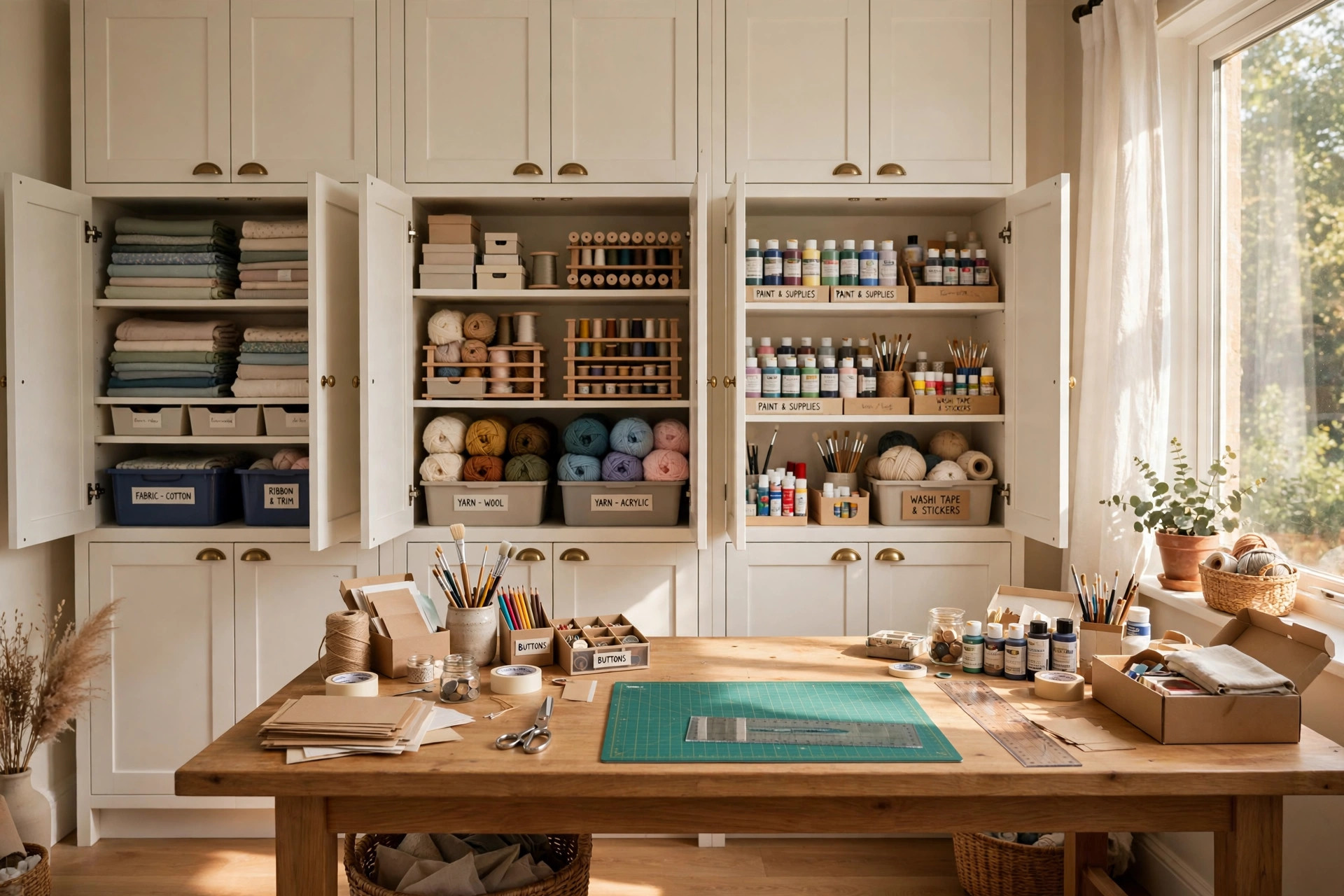

Craft room storage cabinets reviews and buying guide lists like this one exist for one simple reason. A craft room that looks neat is a craft room that gets used. When paper, fabric, paint, and tools have a real home, you spend less time hunting and more time making. A good cabinet keeps dust off your supplies, hides the mess behind closed doors, and gives every project its own place. A weak cabinet bows in the middle, swings crooked doors, and ends up holding less than the box it came in.
This guide walks through what matters when you shop for craft room storage cabinets. It covers how reviews help and where they fall short, what to look for in build quality, the main types of cabinets, what you should expect to pay, how to care for them, and how to keep them safe in a busy home. Read it before you buy, and you will pick with confidence.
Why Your Craft Room Needs Real Cabinets
Many people start a craft room with a folding table and a few plastic bins. That works for a week. Then the yarn grows, the scrapbook paper stacks up, and the paint bottles march across the table. Soon the table is gone under the clutter, and the room feels smaller than it is.
Cabinets change that. Tall units hold the big items. Base cabinets with drawers keep small tools in order. Wall cabinets lift supplies off the floor and free the table for work. A mix of closed doors and open shelves gives you both neat storage and quick access. Craft supplies are small and come in odd shapes, so a room built on general bookshelves rarely fits. Cabinets made for craft storage have more drawers, more shelves, and more small spaces, which is exactly what ribbons, beads, dies, thread, and glue sticks need.
There is a second reason. Craft supplies cost real money. Fine paper fades in sun. Fabric collects dust. Metal tools rust in damp air. A closed cabinet is cheap insurance. It blocks light, keeps dust out, and holds a steady home for your goods. Many shoppers who read pantry shelving units reviews and buying guide end up choosing closed-front storage for that very reason.
What to Look For When You Buy: Craft Room Storage Cabinets Reviews and Buying Guide
Reviews tell you what owners like and what they regret. A buying guide tells you what to check before the box arrives. Use both. Here are the points that matter most.
Build Quality
Open a product page and look past the photos. Read the weight of the cabinet. A heavy cabinet is almost always a strong cabinet. Light particleboard bows under paint bottles and reams of paper. Solid wood costs more but lasts for years. High grade plywood sits in the middle and gives good value.
Check the hardware. Soft close hinges keep doors from slamming. Metal drawer slides hold more weight than plastic rollers. Look at the back panel. A thin cardboard back lets the cabinet rack and wobble. A solid or framed back holds it square. Reviews that mention sagging shelves or doors that will not stay closed are a clear warning.
Size and Layout
Measure your room before you shop. Measure the wall where the cabinet will stand, the doorways it must pass through, and the ceiling height. Write the numbers on a card and keep it with you. Many buyers skip this step and end up with a cabinet that will not fit through the door.
Depth matters as much as width. A deep cabinet holds more but sticks out into the room. Twelve inches of depth suits paper and small boxes. Sixteen inches suits fabric bolts and yarn. Twenty four inches suits sewing machines and large totes. Plan your work space too. You need room to open doors and pull out drawers while you stand at the table.
Storage Style
Think about what you own. Paper crafters need flat drawers for 12 by 12 inch sheets. Sewers need open cubbies for fabric and a deep shelf for a machine. Painters need upright storage for canvases and small drawers for tubes and brushes. Mixed crafters need a little of everything. Count your largest items first, then fit the rest around them.
Adjustable shelves are worth their weight. They let you change the inside of the cabinet as your hobby changes. Drawers with dividers keep small parts from sliding into a heap. Doors with inside racks turn dead space into useful space. Many owners who bought rolling storage carts reviews and buying guide later added cabinets, because carts move well but cannot hold the whole collection.
Types of Craft Room Storage Cabinets
Cabinet makers sell several forms. Each one fits a different room and a different budget.
Base Cabinets
Base cabinets sit on the floor and stand about waist high. Their tops can serve as extra work space. Wide drawers hold paper, fabric, and tools within easy reach. They are the workhorse of the craft room. A row of base cabinets along one wall gives a clean look and a long work surface on top.
Wall Cabinets
Wall cabinets mount above the work area. They keep daily supplies at eye level and off the table. They work well for small items like paints, pens, and thread. Make sure they are fixed to wall studs, not just drywall. A loaded wall cabinet is heavy, and it must hang on solid wood.
Tall Utility Cabinets
Tall cabinets use the full height of the room. They hold wrapping paper rolls, bolts of fabric, easels, and other long items. Many come with a mix of shelves and hanging space. They are the best choice when floor space is tight and ceiling space is free.
Craft Specific Storage
Some cabinets are built for one hobby. Sewing cabinets have a lift for the machine and a folding leaf that grows the work top. Scrapbook cabinets open into a full work station with dozens of small cubbies. Thread cabinets have hundreds of tiny holes for spools. These units cost more than plain cabinets, but for a serious hobby they pay off in comfort and speed.
For more ideas on matching storage to your tools, see best workshop tool chests for american homes, which covers heavy duty chests that suit garages and craft rooms alike.
Cost and Price
Craft room storage cabinets run from under one hundred dollars to well over one thousand. Price tracks materials and size more than brand names.
A small particleboard cabinet with two doors and two shelves usually costs between fifty and one hundred fifty dollars. It suits light loads and dry rooms. A mid range plywood cabinet with adjustable shelves, metal slides, and soft close doors usually costs between two hundred and five hundred dollars. This is the sweet spot for most craft rooms. It holds a full load and survives daily use.
Solid wood cabinets and hobby specific units usually cost between six hundred and one thousand five hundred dollars. A sewing cabinet with a machine lift sits at the top of this range. Custom built ins cost more still, but they fit the room to the inch.
Watch for hidden costs. Delivery fees for heavy cabinets can be high. White glove delivery adds more. If the cabinet ships flat packed, assembly takes one to three hours and needs two people for the tall ones. A few models need extra tools. Read the shipping terms before you pay.
Where you shop changes the price too. Big home stores like The Home Depot and Lowe’s carry stock cabinets in a range of finishes. Furniture sellers like Wayfair and IKEA offer many sizes and styles, often with free delivery. Specialty shops like The Container Store focus on small space storage, and craft retailers like JOANN carry hobby focused units.
Care and Upkeep
Good cabinets last for decades if you treat them well. Keep the room dry. Damp air swells particleboard and stains wood. A small dehumidifier helps in basements and in humid states. Wipe spills at once, especially paint, glue, and ink, which stain fast.
Tighten hinges and screws once a year. Doors that sag put extra strain on the frame. Wax the drawer slides with a bit of candle wax or paraffin so they glide. Avoid harsh cleaners on wood and on laminate. Warm water with a drop of dish soap handles most messes.
Do not overload the shelves. Every cabinet has a weight limit per shelf, and the limit is real. Spread heavy items low and wide. Books, paper reams, and paint belong on bottom shelves. Light items like ribbon and tissue go up high. If a shelf starts to bow, move weight off it at once.
Safety
A craft room is a work room, and work rooms need care. Anchor tall and heavy cabinets to the wall with anti tip brackets. This matters most in homes with small children, where climbing is common. Brackets are cheap and take minutes to fit.
Keep sharp tools in drawers with locks or latches when children are near. Store chemicals such as spray paint, solvents, and strong glues in a closed cabinet, high up and away from heat. Never block a door or a window with a cabinet. You need a clear path out of the room.
Wall cabinets need special care. Use a stud finder and drive the mounting screws into solid studs. Check the weight rating of the cabinet and of the wall anchors. If the wall is old plaster or hollow block, ask a handyman for help. A falling cabinet can cause real harm.
For general workshop safety tips that apply to craft rooms as well, Family Handyman offers clear project guidance.
Frequently Asked Questions
How much should I spend on craft room storage cabinets?
Spend what your load requires. Light paper crafts do fine with a mid range particleboard cabinet. Heavy sewing, painting, and mixed media supplies call for plywood or solid wood. Most owners are happy in the two hundred to five hundred dollar range, where build quality is solid and the price stays fair.
Are flat pack cabinets strong enough for craft supplies?
They can be, if you pick well. Look for thick panels, metal hardware, and a solid back. Many owners report years of good use from well built flat pack units. Thin cheap units fail under heavy loads, so read the reviews for words like sag, bow, and wobble before you buy.
What size cabinet fits a small craft room?
For small spaces, tall narrow units are best — see pantry shelving units reviews and buying guide for slim storage ideas that fit tight rooms. A cabinet eighteen to twenty four inches wide and seventy inches tall holds a great deal while using little floor space. Wall cabinets above the work table add storage without using any floor space at all.
Should I buy open shelves or closed cabinets?
Buy both if you can. Closed cabinets keep dust out and hide the mess. Open shelves show what you own and speed up work. Many crafters use closed cabinets for bulk storage and one or two open shelves for daily supplies.
How do I judge cabinet reviews before I buy?
Read the mid range reviews first. Five star reviews praise, one star reviews complain, but three and four star reviews explain. Look for details about assembly, shelf strength, door fit, and customer service. Reviews with photos show the real finish. Guides from testing labs like Consumer Reports can help you compare build quality across brands.
Can I use kitchen cabinets in a craft room?
Yes, and many people do. Stock kitchen cabinets are strong, well made, and easy to find. Base cabinets give drawers and work tops. Wall cabinets give overhead storage. Paint or refinish them to suit the room. Design ideas from Apartment Therapy and The Spruce show how kitchen units adapt to craft spaces.
A Final Word
The best craft room storage cabinet is the one that fits your room, holds your supplies, and stays square for years. Read the reviews with care, measure twice, and buy for the load you really carry. Check a few trusted sources, from The Home Depot to Wayfair to The Container Store, and compare build details before price tags. A well chosen cabinet turns a cluttered corner into a working studio, and that is a purchase you will enjoy every time you sit down to make something.
References
Apartment Therapy. (n.d.). Home design ideas and inspiration. https://www.apartmenttherapy.com Consumer Reports. (n.d.). Product reviews and ratings. https://www.consumerreports.org Family Handyman. (n.d.). DIY home repair and maintenance. https://www.familyhandyman.com IKEA. (n.d.). Home furnishings. https://www.ikea.com JOANN. (n.d.). Fabric and craft supplies. https://www.joann.com Lowe’s. (n.d.). Home improvement products. https://www.lowes.com The Container Store. (n.d.). Storage and organization products. https://www.containerstore.com The Home Depot. (n.d.). Home improvement products. https://www.homedepot.com The Spruce. (n.d.). Home and garden advice. https://www.thespruce.com Wayfair. (n.d.). Furniture and home goods. https://www.wayfair.com
Was this guide helpful?

About Robert Taylor
The My Garden US editorial team writes practical, in-depth home and garden guides for American homeowners — tested advice, no fluff.
You May Also Like

Tie Belt and Accessory Organizers: A Practical Price Comparison for USA Homes
March 24, 2026 0 views
Premium Pantry Food Storage Containers Buying Guide
April 23, 2026 0 views
Under Bed Storage Containers Price Comparison USA
April 10, 2026 0 views