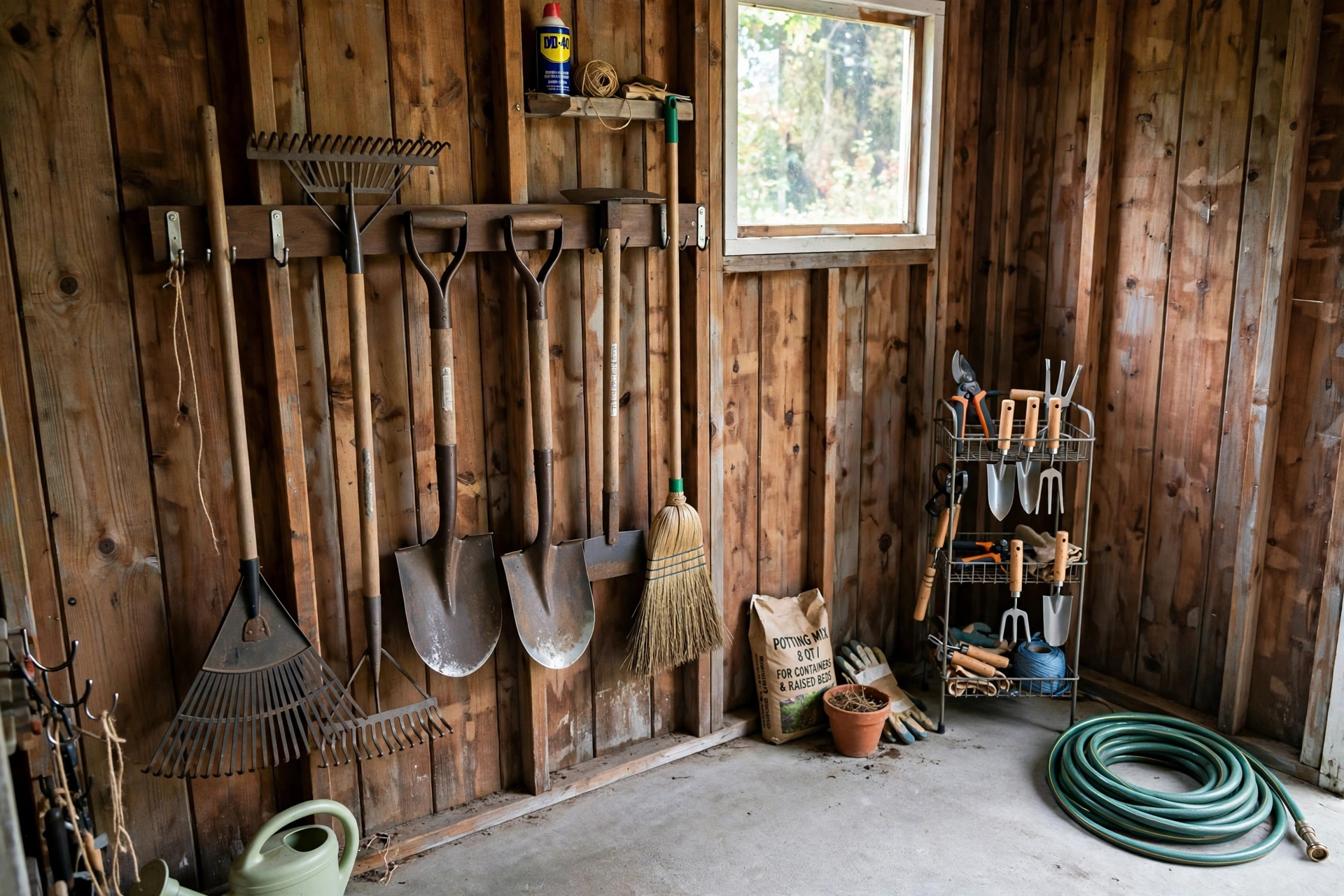

A tidy shed saves time. When every rake, shovel, and pair of shears has its own place, you spend your Saturday in the garden, not digging through a pile of tangled handles and rusty blades. That is why many American homeowners run a garden tool organizers price comparison in the USA before they buy. Prices run from a few dollars for a simple clip rail to well over a hundred dollars for a large freestanding tower with wheels. The right choice depends on how many tools you own, how much wall or floor space you have, and whether your tools live in a garage, a shed, or outdoors. This guide walks you through the kinds of organizers on the market, what each kind costs, how to judge quality, and how to keep your setup safe and in good shape for years.
Why It Matters
Garden tools are long, sharp, and awkward. A shovel left lying across a walkway is a tripping hazard. A rake propped in a corner slides down and clatters onto a car door. Hand tools left in damp soil grow rust that shortens their working life by years. An organizer solves all three problems at once. It gets tools off the floor, it holds them upright and apart so handles do not tangle, and it keeps blades and tines off wet ground where rust starts.
There is also the matter of time. A gardener who cannot find a trowel loses ten minutes per job. Over a season, that lost time adds up to whole afternoons. A well-planned storage spot puts every tool in view and within arm’s reach. For families, order matters for safety too. Children play in garages and sheds. Tools stored high and locked away from small hands are far safer than tools left leaning against a wall.
Finally, tools are not cheap. A good spade or lopper can cost thirty to sixty dollars. A shed full of tools is an investment worth hundreds. Spending twenty or forty dollars to protect that investment is plain common sense. A simple price check before you buy is the same habit shoppers use for every other home purchase.
What to Look For When You Shop: Garden Tool Organizers Price Comparison Usa
How to Judge Size and Capacity
Start by counting your tools. Lay them on the driveway and group them: long-handled tools such as rakes, shovels, and brooms in one pile; medium tools such as hoes and loppers in another; small hand tools such as trowels, pruners, and gloves in a third. Count the long handles first, because they set the size of the organizer. Most wall racks hold between five and twelve long tools. Most freestanding towers hold between ten and twenty-four.
Measure your wall or floor space next. A wall rail needs a flat stretch of wall at least two feet wide and a clear area below it so tool heads can hang down. A freestanding tower needs about two square feet of floor space and a few inches of clearance on each side. If your shed is small, a wall-mounted rack or a narrow corner unit saves the most room.
Think about growth. A gardener buys new tools over time. Choose an organizer that holds a few more tools than you own today. An organizer that is full on day one leaves you nowhere to put next season’s purchases.
How to Judge Build Quality
Look at the material. Powder-coated steel resists rust and holds heavy tools without bending. Thick molded plastic is light, easy to clean, and fine for dry sheds. Solid wood looks warm and fits a potting shed, but it needs sealing against moisture. Thin wire racks bend under heavy loads and rust fast in damp places. Avoid them for long-term use.
Check the weight limit. A good organizer lists how many pounds it can hold. Long-handled tools are heavier than they look, and a full rack of shovels and rakes can weigh fifty pounds or more. Choose a rack rated well above your total tool weight.
Test the grips if you shop in person. Spring clips and rubber rollers should grip a handle firmly and release it with one hand. Weak clips let tools slip out. Slots should fit your thickest handle with room to spare. Online guides from sources like The Spruce often show close-up photos that help you judge grip design before you order.
Look at the mounting hardware. A wall rack is only as strong as its screws and wall anchors. Quality kits include heavy-duty screws and anchors for drywall, wood, and masonry. If the kit ships with light hardware, plan to buy stronger screws yourself.
Types of Garden Tool Organizers
Wall-Mounted Racks and Rails
A wall rail is a horizontal bar with clips or rollers that holds long tools upright against the wall. It uses no floor space, which makes it ideal for small sheds and crowded garages. Many models also include hooks on the ends for hand tools, cords, or hoses. Installation takes about fifteen minutes with a drill. Price range: ten to forty dollars, with most good steel rails near twenty-five dollars.
Freestanding Towers
A tower is a tall unit that stands on the floor and holds tools in slots around its frame. Some towers turn on a base, like a lazy Susan, so you can spin the tools you need toward you. Others are simple triangular or square frames. Towers work well when you cannot mount anything to the wall, such as in a rental home. They also roll: many have wheels, so you can move tools to the garden bed and back. Price range: thirty to one hundred twenty dollars. Shoppers comparing shelves for other rooms of the house can see the same wall-versus-floor trade-off in a mudroom storage bench price comparison.
Corner Units
A corner unit fits into the meeting of two walls and turns dead space into storage. Most hold six to ten long tools plus a small bin for hand tools. Corner units are shorter than full towers, so they fit under low shed roofs. Price range: twenty to sixty dollars.
Pegboard Systems
A pegboard panel with hooks lets you arrange tools any way you like. It suits gardeners with many small and medium tools. You can move hooks as your collection changes. Boards sell by the square foot, and hook assortments sell separately, so total cost varies. Expect fifteen to fifty dollars for a full setup. Buying advice for similar pegboard products appears in many online stores, including IKEA and The Container Store.
Tool Bags and Portable Organizers
A canvas or nylon bag with pockets keeps hand tools together and carries them to the far corner of the yard. Some models strap to a five-gallon bucket. These do not replace a shed organizer, but they pair well with one. Price range: fifteen to forty dollars.
Shed and Cabinet Storage
Some gardeners store tools inside a small resin cabinet or a tall locker. Cabinets lock, which keeps tools away from children and discourages theft. They also shield tools from dust and damp. A small resin cabinet costs sixty to two hundred dollars. For heavier workshop gear, a locking metal cabinet is a related option, as described in guides to the best workshop tool chests for American homes.
Cost and Price: A Garden Tool Organizers Price Comparison in the USA
The clearest way to compare is by type and by what the type includes. The table below shows typical price bands seen at major American retailers such as Home Depot, Lowe’s, Wayfair, and Amazon in 2026.
Simple clip rails and single-row wall racks run ten to twenty-five dollars. These suit a small set of tools in a dry garage. Mid-range wall systems with thirty or more slots, plus hooks and bins, run twenty-five to fifty dollars. They are the sweet spot for most suburban gardeners.
Freestanding towers start near thirty dollars for basic plastic models and climb to about one hundred twenty dollars for large steel towers with wheels, locking casters, and extra bins. Corner units fall between twenty and sixty dollars. Portable tool bags run fifteen to forty dollars, and resin cabinets run sixty to two hundred dollars depending on size and whether they lock.
Price is not the same as value. A fifteen-dollar rack that rusts in one damp season costs more over five years than a thirty-five-dollar powder-coated rack that lasts. Read product reviews and check whether the maker offers a warranty. Consumer groups such as Consumer Reports publish durability tests for storage products that can help you judge which brands hold up.
Shipping and tax add to the real cost. Online sellers sometimes charge more for shipping than the rack itself costs. Free-shipping thresholds matter here: a twenty-dollar rack with free shipping beats a seventeen-dollar rack with a nine-dollar shipping fee. Sales cluster around spring, when stores stock garden centers, and again around fall clearance. If you can wait, you can often save twenty to thirty percent.
Care and Upkeep
An organizer lasts longest when it stays dry. Wipe tools clean before you hang them. Soil and wet leaves carry moisture that feeds rust on both the tools and the rack. In a damp shed, choose a plastic or powder-coated steel unit rather than plain steel or bare wood.
Oil metal clips and rollers once a year. A drop of household oil on each moving part keeps springs and rollers working smoothly. Tighten mounting screws each spring. Temperature swings loosen screws over time, and a rack full of heavy tools puts constant weight on its mounts.
Wash plastic towers with soap and water once a season. Dust and spider webs collect in the slots. For wood units, reseal with an outdoor finish every year or two. Replace any clip that cracks or loses its grip. A single failed clip can let a sharp tool fall, so do not ignore a weak one. Home-repair guides from Family Handyman show simple shed upkeep routines that keep storage systems in good shape.
Safety
Store sharp tools with blades pointing down or away from walkways. Pruners, loppers, and saws should hang with cutting edges facing the wall. Keep heavy tools, such as mattocks and splitting mauls, at waist height or lower so they cannot fall far. Light tools, such as rakes and brooms, are safe higher up.
Mount wall racks into studs or use anchors rated for the full loaded weight. A rack that pulls out of drywall drops heavy steel on feet and floors. If small children use the garage or shed, add a lockable cabinet for sharp tools and store chemical products, such as fertilizers and pesticides, on a separate high shelf with a lock.
Watch for pinch points. Spring clips and roller grips can catch fingers, especially small ones. Teach children to ask an adult before taking tools down. Keep the floor beneath the organizer clear. A clear floor means a safe step back when you lift a long tool out of its slot.
FAQ
How much should I spend on a garden tool organizer?
Most homeowners spend between twenty and sixty dollars and get a sturdy unit that lasts for years. Spend less only if you own few tools and your shed stays dry. Spend more if you own a large collection or want a wheeled tower or a locking cabinet.
Which type is best for a small shed?
A wall-mounted rail or a narrow corner unit. Both use almost no floor space. If you cannot drill into the walls of a rental shed, a small freestanding tower works without mounting hardware.
Can garden tool organizers stay outdoors?
Some can, but most last longer under cover. If you must store tools outdoors, choose a resin or powder-coated steel unit rated for outdoor use, and cover it or place it under an overhang. Bare metal rusts fast in rain.
How do I stop my tools from falling out?
Use clips or rollers sized for your handles, tighten them if they adjust, and replace weak clips. Load the heaviest tools closest to the center of the rack so the weight balances. Mount the rack level; a tilted rack lets tools slide out.
Are expensive organizers worth it?
Often, yes. The jump from a ten-dollar wire rack to a thirty-dollar powder-coated steel rack buys real strength and rust resistance. Past about eighty dollars, you pay mostly for extra capacity, wheels, and locking bins rather than better materials.
Where can I compare prices online?
Major home retailers post full price lists with reviews, and home-design publications such as Apartment Therapy round up storage options by budget. Compare the same type across at least three sellers before you buy, and watch shipping fees.
A Final Word
A garden tool organizers price comparison in the USA does not need to take long, but it pays off. Measure your space, count your tools, pick the type that fits, and compare a few trusted sellers before you commit. A twenty-dollar rack that holds every tool in its place beats a hundred-dollar tower you never quite fill. Buy once, buy well, and your shed will greet you with order every time you open the door.
References
Amazon. (n.d.). Online shopping. https://www.amazon.com Apartment Therapy. (n.d.). Home design ideas and inspiration. https://www.apartmenttherapy.com Consumer Reports. (n.d.). Product reviews and ratings. https://www.consumerreports.org Family Handyman. (n.d.). DIY home repair and maintenance. https://www.familyhandyman.com IKEA. (n.d.). Home furnishings. https://www.ikea.com Lowe’s. (n.d.). Home improvement products. https://www.lowes.com The Container Store. (n.d.). Storage and organization products. https://www.containerstore.com The Home Depot. (n.d.). Home improvement products. https://www.homedepot.com The Spruce. (n.d.). Home and garden advice. https://www.thespruce.com Wayfair. (n.d.). Furniture and home goods. https://www.wayfair.com
Was this guide helpful?

About Lisa Anderson
The My Garden US editorial team writes practical, in-depth home and garden guides for American homeowners — tested advice, no fluff.
You May Also Like

Vacuum Storage Bags for Clothes Price Comparison USA
June 29, 2026 0 views
Top Rated Attic Storage Solutions for Cold Climates
October 1, 2026 0 views
Best Kitchen Cabinet Organizers for Texas Homes: A Plain Guide to Calm, Working Kitchens
April 3, 2026 0 views