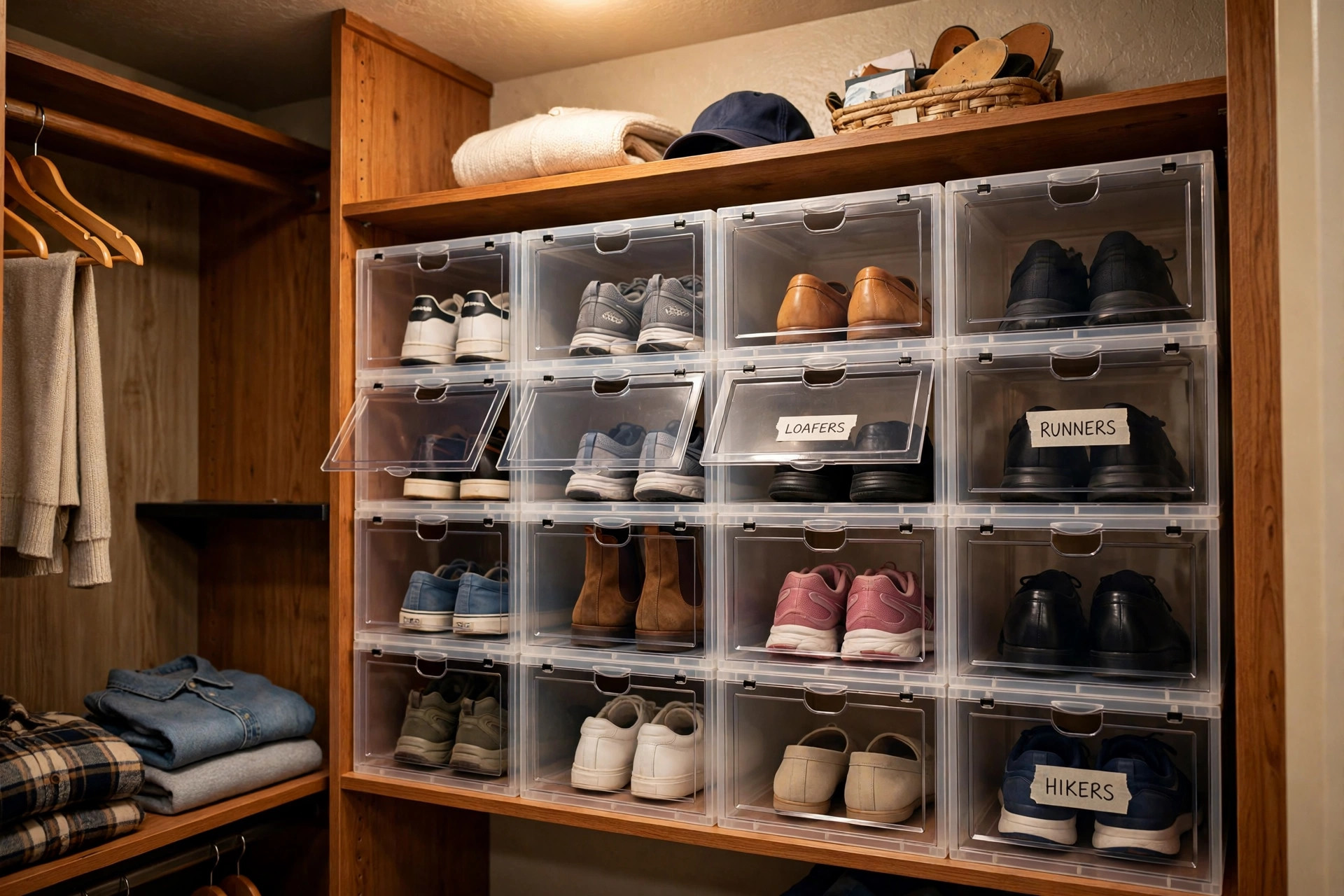

Most American homes hold far more shoes than their closets were built to hold. A survey of closet space across the country shows the same pattern again and again. Shoes pile up by the front door. They gather in the mudroom. They hide under beds. This stackable shoe storage boxes reviews and buying guide exists to end that clutter. A good stackable shoe storage box protects each pair. It keeps dust away. It lets you see what you own. It makes your closet look neat and calm.
Why Stackable Shoe Boxes Matter
Shoes cost money. A fine pair of leather shoes can last ten years with proper care. Left in a heap, the same pair will crack and warp in two. Stackable boxes give each pair its own small home. The shoe keeps its shape. The leather stays clean. You find the pair you want in seconds.
Stacking matters because floor space is limited. A row of single boxes uses the same floor area as a pile. A stack of six boxes uses the same floor area as one. You build upward. Closets with high shelves become useful again. Entry closets stay open for guests.
Reviewers of home storage systems often point to the same benefit. People buy fewer duplicate shoes when they can see their collection. The clear front panel is the key feature. You do not need to open five boxes to find your brown loafers. The Spruce notes that visible storage reduces morning stress. That claim matches common sense.
Boxes also keep shoes safe from household hazards. Pets chew leather. Children step on satin heels. Dust settles on suede. A closed box stops all of that. For boots, tall boxes prevent the shafts from folding. For dress shoes, the box blocks light that fades color.
What to Look For in a Stackable Shoe Box: Stackable Shoe Storage Boxes Reviews and Buying Guide
A stackable shoe storage box sounds simple. In practice, small design details make the difference between a box you love and a box you throw away.
Size comes first. American men often wear size 10 to 13. Women often wear size 7 to 10. Measure your largest pair. Boots need tall boxes. Running shoes need wide boxes. A box that is too small will bend the heel. A box that is too large wastes shelf space.
The front panel matters most. Look for a clear front or a small clear window. This is the door you will use every day. A hinged front door swings down or out. A drop-front design lets you reach shoes without unstacking. Avoid boxes where you must lift the whole lid off. You will never bother.
Stacking strength is critical. The box at the bottom holds the weight of the whole tower. Thick walls resist bowing. Some boxes have interlocking grooves on the top and bottom. These grooves keep the stack from sliding. Look for this feature if you plan to stack more than four high.
Ventilation keeps shoes fresh. Shoes hold moisture from your feet. Sealed boxes trap that moisture. Trapped moisture leads to odor and mildew. The best boxes have small air holes or slots. Ventilation holes near the back work well.
Material choice affects durability. Most boxes are plastic, fabric, or wood. Plastic boxes are the most common. Clear plastic shows your shoes. Solid plastic hides them. Fabric boxes fold flat for storage. They are light but less strong. Wood boxes look fine but cost more. For damp basements, plastic resists moisture best. Family Handyman recommends sealed plastic for basements and garages.
Types of Stackable Shoe Boxes
The market offers several distinct types. Each type suits a different need. Reviewers group them into four main categories.
Clear plastic drop-front boxes are the most popular type. Each box holds one pair. The front door drops down. You can see every pair through the clear front. These stack in a grid. They fit well in standard closets. Most cost between two and six dollars each. The Container Store sells several lines of this type. They are the default choice for most buyers.
Large stackable bins hold three to five pairs each. They are wide and tall. They work well for children and for casual shoes. The lid lifts off the top. They do not let you reach the middle pair without lifting the lid. These bins cost between eight and twenty dollars. They suit people who own many casual shoes.
Under-bed stackable boxes are low and wide. They slide under a bed. They stack only two or three high in a closet. They hold four to six pairs each. Dust stays out because the lid closes tight. These boxes cost between ten and twenty-five dollars. IKEA offers several low-profile boxes of this type.
Boot boxes and tall organizers are built for tall footwear. A boot shaft needs fourteen to seventeen inches of height. Tall boxes give boots that space. The boots stand straight. They do not flop over. Some tall boxes have dividers for ankle boots. These cost between eight and eighteen dollars each.
A fifth option exists for those who prefer style over pure function. The best stackable shoe storage boxes with free shipping appeal to buyers who want clear boxes delivered at no extra cost. Some buyers prefer the luxury stackable shoe storage boxes for sale market instead. Those boxes use fine materials and polished fronts. They cost more but look like furniture.
Choosing Between One-Pair and Multi-Pair Boxes
One-pair boxes cost more per shoe. They also give better protection. Each shoe rests alone. Scuffs are rare. Multi-pair boxes cost less per shoe. They also crowd the shoes. Heavy shoes press on light ones. For daily wear, one-pair boxes win. For seasonal storage, multi-pair boxes save money.
Clear Versus Opaque
Clear fronts save time. You see the shoe before you open the box. Opaque boxes look tidier from across the room. A wall of opaque boxes reads as one calm surface. Many reviewers buy clear fronts for closets they open daily. They buy opaque boxes for attic and basement storage.
Cost and Price Guide
Prices for stackable shoe storage boxes vary by type and material. Here is what American shoppers can expect to pay.
Basic clear plastic drop-front boxes sell for two to six dollars each. A pack of twelve often sells for twenty-five to fifty dollars. Bulk packs lower the per-box price. Watch for free shipping on large orders.
Large stackable bins sell for eight to twenty dollars each. The price rises with size and wall thickness. Thick-walled bins last longer.
Under-bed boxes sell for ten to twenty-five dollars each. Long boxes with wheels cost the most. Wheels add ten dollars or more to the price.
Tall boot boxes sell for eight to eighteen dollars each. Boxes with ventilation and sturdy lids sit at the top of the range.
Fabric boxes are the cheapest option. A set of six often sells for fifteen to thirty dollars. They fold flat. They weigh almost nothing.
Wood boxes are the most expensive. A single wood box can cost thirty to eighty dollars. A full set can cost several hundred dollars. Wood suits living rooms and fine entryways.
When you compare prices, calculate the cost per pair of shoes. A twelve-pack of drop-front boxes at forty-eight dollars holds twelve pairs. That is four dollars per pair. A large bin at fifteen dollars holds four pairs. That is three dollars and seventy-five cents per pair. Consumer Reports advises buyers to compare value per unit rather than package price.
Shipping costs matter. Boxes are bulky. Shipping can add twenty to forty percent to the cost. Many retailers offer free shipping over a threshold. Wayfair and The Home Depot often run free-shipping deals on storage products.
Care and Upkeep of Your Shoe Boxes
Shoe boxes need little care. A few simple habits keep them in good shape for years.
Clean plastic boxes with a damp cloth. Warm water and mild soap remove dust. Dry the box before you stack it again. Trapped water causes mildew. For fabric boxes, vacuum the dust with a brush attachment. Spot-clean stains with mild soap. Let the fabric dry fully.
Check the stack once a season. Pull the boxes out. Wipe the shelf. Look for cracks in the walls. A cracked box at the bottom of a stack can fail. Replace cracked boxes right away. Move heavy shoes to the bottom of the stack.
Keep boxes away from heat. Plastic softens near radiators and heating vents. Soft plastic warps. Warped boxes do not stack straight. Keep boxes out of direct sun. Sunlight fades clear plastic. It makes the front panels yellow and cloudy.
Label the boxes if the fronts are opaque. A small label on each box saves time. Write the shoe type and color. Use a label maker or masking tape. Reviewers say labels cut search time in half.
Air out shoes before you box them. Wet shoes should dry in the open. Put them in the box only when fully dry. A damp shoe in a closed box grows odor fast. A sprinkle of baking soda in the box helps absorb smells.
Safety Notes for Stacked Storage
Stacked boxes are heavy. A stack of six full boxes can weigh forty to sixty pounds. Place stacks on solid floors or wide shelves. Narrow shelves can tip. Anchor tall stacks to the wall if children are in the home.
Do not stack higher than you can reach. Reaching overhead for a heavy box is dangerous. You may drop the box. Use a step stool for high stacks. Keep daily shoes at waist height. Keep seasonal shoes up high.
Check weight limits on shelving. Wire closet shelves have load limits. Heavy shoe stacks can bend them. A bent shelf can collapse. Distribute the weight across several shelf brackets.
Ventilation matters for health. Shoes from gyms and sports can carry fungus. Ventilated boxes reduce the risk. The Home Depot product guides note that air holes are standard on most modern boxes. Old sealed tubs may lack them.
Frequently Asked Questions
How many shoe boxes do I need for a collection of thirty pairs? Thirty pairs need thirty one-pair boxes. Multi-pair bins change the math. Six large bins can hold thirty pairs of casual shoes. Most reviewers suggest counting your shoes first. Then buy boxes in bulk packs of six or twelve. Bulk packs cost less per box.
Can stackable shoe boxes hold boots? Standard boxes cannot hold tall boots. Tall boots need boxes of fourteen inches or more in height. Buy tall boot boxes for full-length boots. Ankle boots fit in large standard boxes. Measure the boot shaft before you buy.
Are clear plastic boxes bad for leather shoes? Clear boxes are safe for leather. The concern is sunlight, not the plastic. Clear boxes in a dark closet cause no harm. Clear boxes in a sunny room can fade leather. Keep shoe boxes out of direct sun. Ventilated boxes prevent moisture damage.
How high can I safely stack shoe boxes? Most reviewers stack four to six high. The bottom box must hold the full weight. Thick-walled boxes with interlocking grooves stack the highest. Place the heaviest shoes at the bottom. Anchor tall stacks to the wall. Never stack above shoulder height in homes with small children.
What is the cheapest way to store shoes in boxes? Fabric boxes are the cheapest. Bulk packs of clear plastic boxes are the next cheapest. Watch for sales at big retailers. Lowe’s and IKEA often price storage products below specialty stores. Free shipping deals cut the total cost further.
Do I need ventilated boxes? Ventilation helps in humid climates. It also helps with sports shoes. If your home is dry and your shoes are dress shoes, sealed boxes are fine. In humid states like Florida and Texas, choose ventilated boxes. Ventilation reduces odor and mildew risk.
A Final Word
Stackable shoe storage boxes are a small purchase with a large effect. They protect shoes worth hundreds of dollars. They make closets calm and orderly. They end the morning search for a missing shoe. This stackable shoe storage boxes reviews and buying guide has shown what to look for. Measure your shoes. Choose the right box type. Compare prices per pair. Keep the stack safe and clean.
For full closet projects, pair your shoe boxes with other organizers. Apartment Therapy offers closet layout ideas. A corner closet organizers reviews and buying guide can help with tricky closet corners. Wirecutter tests storage products with care. Start with one pack of boxes. See how they fit. Then build the rest of your system.
References
Apartment Therapy. (n.d.). Home design ideas and inspiration. https://www.apartmenttherapy.com Consumer Reports. (n.d.). Product reviews and ratings. https://www.consumerreports.org Family Handyman. (n.d.). DIY home repair and maintenance. https://www.familyhandyman.com IKEA. (n.d.). Home furnishings. https://www.ikea.com Lowe’s. (n.d.). Home improvement products. https://www.lowes.com The Container Store. (n.d.). Storage and organization products. https://www.containerstore.com The Home Depot. (n.d.). Home improvement products. https://www.homedepot.com The Spruce. (n.d.). Home and garden advice. https://www.thespruce.com Wayfair. (n.d.). Furniture and home goods. https://www.wayfair.com Wirecutter. (n.d.). Product reviews from The New York Times. https://www.nytimes.com/wirecutter
Was this guide helpful?

About Robert Taylor
The My Garden US editorial team writes practical, in-depth home and garden guides for American homeowners — tested advice, no fluff.
You May Also Like
Lockable Workshop Tool Chests for Sale: A Buyer’s Guide
August 25, 2026 0 views
Space Saving Attic Storage Solutions for Sale: A Practical Guide
March 16, 2026 0 views
Where to Buy Ottoman Storage Benches in Arizona
May 25, 2026 0 views