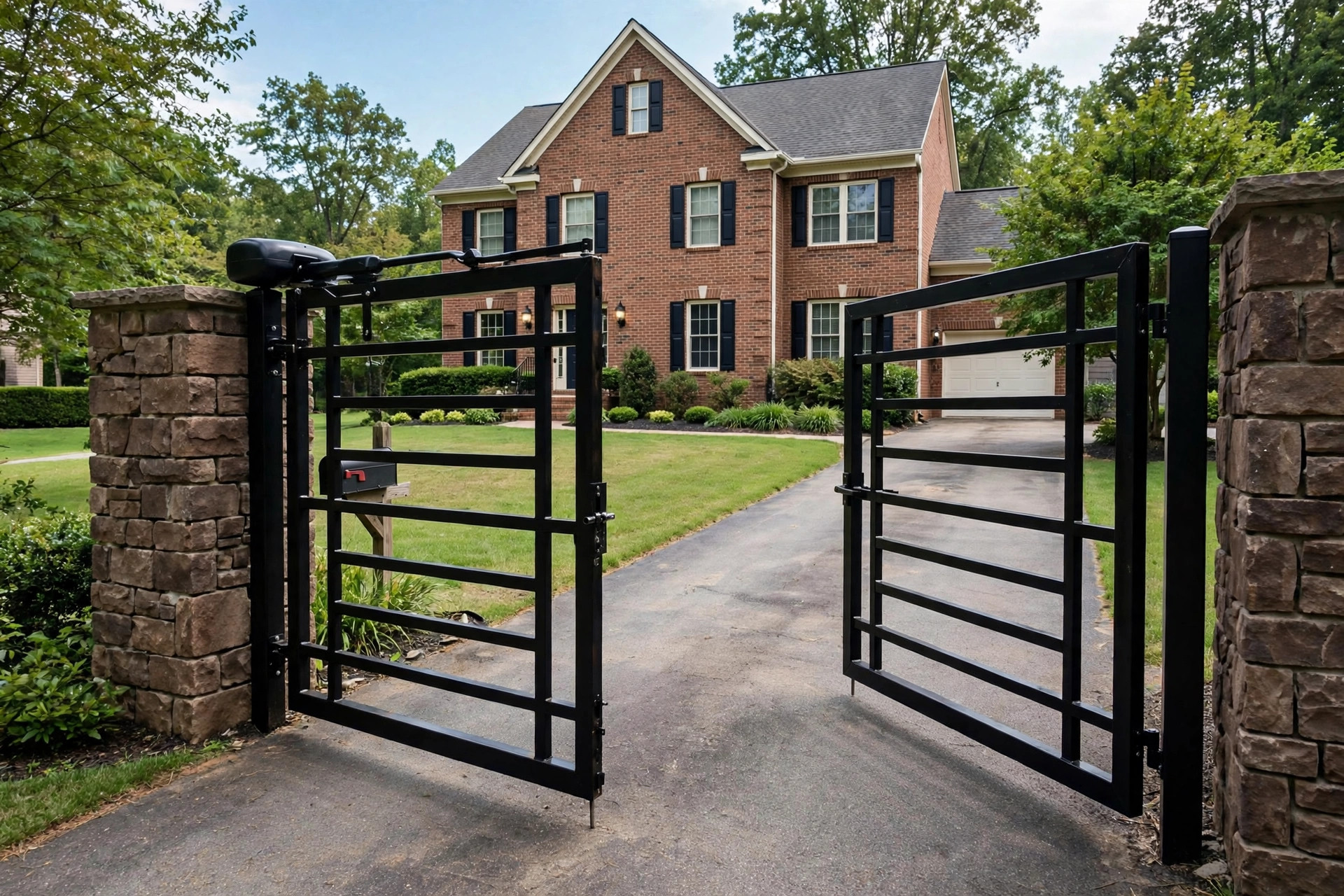

Why Homeowners Ask About the Best Automatic Driveway Gate Cost Installed
A driveway gate does more than close off your yard. It sets the tone of your home. It gives you privacy. It keeps kids and pets safe inside. It also keeps strangers out. When the gate opens at the press of a button, daily life feels easier and calmer.
Many homeowners now ask about the best automatic driveway gate cost installed. They want a clear number before they call a contractor. They do not want surprise fees. They want to plan their budget with care. This guide gives you that number. It shows the common price ranges. It explains what makes the cost go up or down. It also covers types, care, and safety. The goal is simple: help you decide with real facts and plain words.
Why an Automatic Driveway Gate Matters: Best Automatic Driveway Gate Cost Installed
A gate is the first thing guests see. It is also the first line of defense for your home. In busy neighborhoods, a closed gate tells passersby that your home is protected. It slows down would-be intruders. It also stops stray animals from walking in.
For families, a gate adds real peace of mind. Children can play in the front yard without running into the street. Dogs stay where they belong. For homeowners who live on rural land, a gate marks the edge of their property. It can sit far from the house and still open with a remote or a phone app.
There is also the value question. A good gate can raise the look and worth of a home. Buyers like homes that feel secure and well kept. A working automatic gate sends that message the moment they arrive. Independent product ratings from groups like Consumer Reports often stress that curb appeal and security rank high on buyer wish lists.
How to Choose the Right Gate for Your Driveway
Start with your driveway itself. Measure how wide it is. A narrow drive may suit a single swing gate. A wide drive may need a double swing gate or a sliding gate. Look at the slope too. Swing gates need flat ground to open inward. If your driveway slopes up from the road, a sliding gate may be the better choice.
Think about how often the gate will move. A gate that opens twice a day has an easy life. A gate that opens twenty times a day needs a heavy-duty opener. Rental properties and farms put more wear on a gate. Buy an opener rated above your expected use. That small step adds years of life.
Material matters as well. Steel is strong and costs less than many other metals. Aluminum is light and resists rust. Wood looks warm and classic, but it needs more care. Wrought iron looks grand and lasts for decades, but it is heavy and costs more. Vinyl is low upkeep and suits modern homes. Pick a material that fits your climate. Wet regions favor aluminum or vinyl. Dry regions work well with wood or steel.
Controls deserve thought too. Most gates come with a remote. Many now link to a phone app. You can open the gate from your office or from the store. A keypad at the post lets guests enter a code. Some owners add an intercom. Others link the gate to their home security setup. Tech reviewers at CNET and PCMag cover smart home gear that pairs well with gate systems, such as cameras and video doorbells from Ring.
Types of Automatic Driveway Gates
Swing Gates
Swing gates open like a door. They can swing in or out. Single swing gates have one panel. Double swing gates have two. They are the most common type in American suburbs. They are quiet and simple to fix. They need flat ground and clear space to swing. If snow piles up in the swing path, the gate may stall. Keep that in mind if you live in a cold state.
Sliding Gates
Sliding gates roll to one side on a track or a cantilever arm. They work well on sloped driveways. They also fit wide openings. They need space along the fence for the gate to slide into. They cost more to install than swing gates. The track needs care. Dirt and ice can block it. A covered chain housing helps in bad weather.
Barrier Arm Gates
Barrier arms are the simple red and white bars you see at parking lots. They suit very long rural drives where a full gate is too costly. They give less security. They mostly mark an entry and slow traffic. Some farm owners pair them with a solar gate opener, a topic covered in our guide on solar gate opener reviews for driveway usa.
Solar vs Wired Openers
Every automatic gate needs a motor, called an opener. Wired openers draw power from your house. They are steady and strong. Solar openers use a panel and a battery. They suit gates far from the house. They need good sun. In cloudy regions, a larger panel or a backup battery helps. Both types can add smart features like app control and auto-close timers.
Best Automatic Driveway Gate Cost Installed: Real Price Ranges
Now the main question. What is the best automatic driveway gate cost installed? The honest answer is that it varies. Here are the ranges most American homeowners see in 2026.
A basic single swing gate with a standard opener costs about $2,000 to $5,000 installed. The gate is often steel or aluminum. The opener is a simple residential model. This suits a standard suburban driveway.
A double swing gate with a mid-range opener costs about $4,000 to $8,000 installed. Two panels mean more material and more labor. This is the most popular choice for wider drives.
A sliding gate with a heavy-duty opener costs about $6,000 to $12,000 installed. The track or cantilever system adds cost. The opener must be strong. This suits sloped or very wide driveways.
A high-end wrought iron or custom wood gate with a premium opener can cost $10,000 to $20,000 or more installed. Custom design, heavy materials, and smart controls push the price up. Estates and luxury homes fall in this range.
Labor alone often runs $500 to $2,000. That covers the installer, the wiring, the concrete footings, and the setup. Some installers charge a flat fee. Others charge by the hour. Always get the labor quote in writing. Home security firms like ADT and SimpliSafe sometimes offer entry-system bundles, but most gate work is done by fence and gate specialists.
For comparison, a related home project like a garage door opener installation cost near me runs much lower, since the structure already exists. A driveway gate needs posts, concrete, and sometimes trenching for power.
What Makes the Cost Go Up or Down
Several factors move the final price.
Gate material. Steel and aluminum cost less. Wrought iron and cedar cost more. Vinyl sits in the middle.
Gate size. A 12-foot single gate costs less than a 20-foot double gate. More material means more money.
Opener quality. A basic opener costs a few hundred dollars. A heavy-duty smart opener can cost over a thousand. Battery backup and solar panels add cost.
Power supply. If power is near the gate, wiring is cheap. If the gate sits far from the house, trenching for cable can add $500 to $2,000. Solar avoids this cost but needs a good panel.
Site work. Rocky soil, slopes, and old concrete slow the job. Installers charge more for hard sites.
Access controls. A basic remote comes with most openers. Keypads, intercoms, and phone apps add $100 to $800 each.
Permits. Some towns require a permit for a gate. Fees range from $50 to $300. Your installer should know the local rules.
Smart home links. Tying the gate into a smart home hub adds cost but adds ease. Platforms covered by Google Home let you open gates by voice in some setups. Tech news sites like The Verge follow these smart home trends closely.
Care and Upkeep
An automatic gate is a machine. It needs care to last. Plan for a little upkeep each season.
Clean the gate twice a year. Wash off dirt, salt, and pollen. For steel gates, check for rust spots. Sand them and touch up the paint. For wood gates, check for rot and reseal the wood every year or two. Aluminum and vinyl need little more than a wash.
Oil the hinges and moving parts once a year. Use a light machine oil or a silicone spray. Do not use thick grease on the opener chain. It attracts dirt. Check the chain or belt tension. A loose chain makes noise and wears fast.
Test the safety sensors. Most gates have photo eyes that stop the gate if a car or child blocks the beam. Wave your hand through the beam while the gate closes. It should stop or reverse. If it does not, call a technician. Do not guess with safety parts.
Check the battery backup. Open the control box and look at the battery. If it is swollen or very old, replace it. A fresh battery keeps the gate working during a power cut. Solar owners should clean the panel. Dust cuts power.
Keep the swing path clear. Trim bushes and move rocks. In winter, clear snow from the path. A blocked gate strains the motor. Small care steps like these keep repair bills low.
Safety Rules for Automatic Driveway Gates
Safety is not optional. A moving gate is heavy. It can hurt people and pets. Follow these rules.
First, buy a gate that meets current safety standards. The federal safety agency CPSC tracks injury reports for automatic gates. Look for openers listed to UL 325. That standard covers entrapment protection. Ask your installer about it by name.
Second, keep controls out of reach of children. Mount keypads and buttons high. Do not let kids play with remotes. Teach them that the gate is not a toy.
Third, never try to beat a closing gate. Wait for it to open fully before you drive through. A gate that hits a car can cause real damage.
Fourth, add warning signs. Many installers include them. Place one on each side of the gate. Signs remind visitors to keep clear.
Fifth, keep the area lit at night. A small solar light near the keypad helps guests find it. It also helps drivers see the gate arms.
Finally, get a yearly check from a pro. They test the force settings. A gate should reverse with light pressure. If it pushes hard, the settings are wrong. A yearly visit costs little and catches problems early.
If you add a lock to a side gate or a walk-through gate, read our notes on a smart padlock for gate reviews 2026 usa for ideas on keyless options.
Frequently Asked Questions
How long does installation take?
Most jobs take one to three days. A simple swing gate on flat ground may finish in a day. A sliding gate with trenching can take three days or more. Custom iron work takes longer because the gate is built to order.
Can I install an automatic driveway gate myself?
A handy homeowner can mount a light gate and a simple opener. But posts must be set in deep concrete. Wiring must be safe and to code. Most people hire a pro for the posts and the power. You can save money by painting or staining the gate yourself.
How long do automatic driveway gates last?
A well-built gate lasts 15 to 25 years. Steel and aluminum last the longest. The opener lasts 10 to 15 years with care. Batteries need replacement every 3 to 5 years. Harsh weather shortens these spans. Regular care stretches them.
Do automatic gates work in a power outage?
Yes, if they have battery backup. Most modern openers include a backup battery. It gives a day or more of use. Solar gates run on their own battery. Without backup, you can usually release the opener by hand with a key. Ask your installer to show you how before you need it.
Do I need a permit for a driveway gate?
It depends on your town. Many places require a permit if the gate is over a certain height or sits near the road. Some homeowner associations have rules about style and color. Check before you buy. A good installer will handle the paperwork.
Will an automatic gate raise my home insurance?
It can help in some cases. Insurers like security features. A gate alone rarely changes your rate much. But paired with cameras and a security system, it may earn a small discount. Ask your agent.
A Short Final Word
The best automatic driveway gate cost installed falls between $2,000 and $12,000 for most homes. Simple swing gates sit at the low end. Sliding gates and custom iron sit at the high end. Labor, power runs, and smart extras shape the final bill. Take three written quotes. Ask about UL 325 safety. Plan a little yearly care. Do that, and your gate will serve you well for decades.
References
ADT. (n.d.). Home security and automation. https://www.adt.com CNET. (n.d.). Technology news and reviews. https://www.cnet.com Consumer Reports. (n.d.). Product reviews and ratings. https://www.consumerreports.org Google Store. (n.d.). Smart home devices. https://store.google.com PCMag. (n.d.). Technology product reviews. https://www.pcmag.com Ring. (n.d.). Smart home security devices. https://www.ring.com SimpliSafe. (n.d.). Home security systems. https://www.simplisafe.com The Verge. (n.d.). Technology news and reviews. https://www.theverge.com U.S. Consumer Product Safety Commission. (n.d.). Product safety information. https://www.cpsc.gov
Was this guide helpful?

About Jennifer Lee
The My Garden US editorial team writes practical, in-depth home and garden guides for American homeowners — tested advice, no fluff.
You May Also Like
Solar Lease vs Buy Comparison USA 2026: A Plain Guide for Homeowners
April 10, 2026 0 views
Best Solar Installer Near Me Reviews 2026
May 7, 2026 0 views
EV Charger Tax Credit 2026 for Homeowners in the USA: A Plain Guide
July 24, 2026 0 views