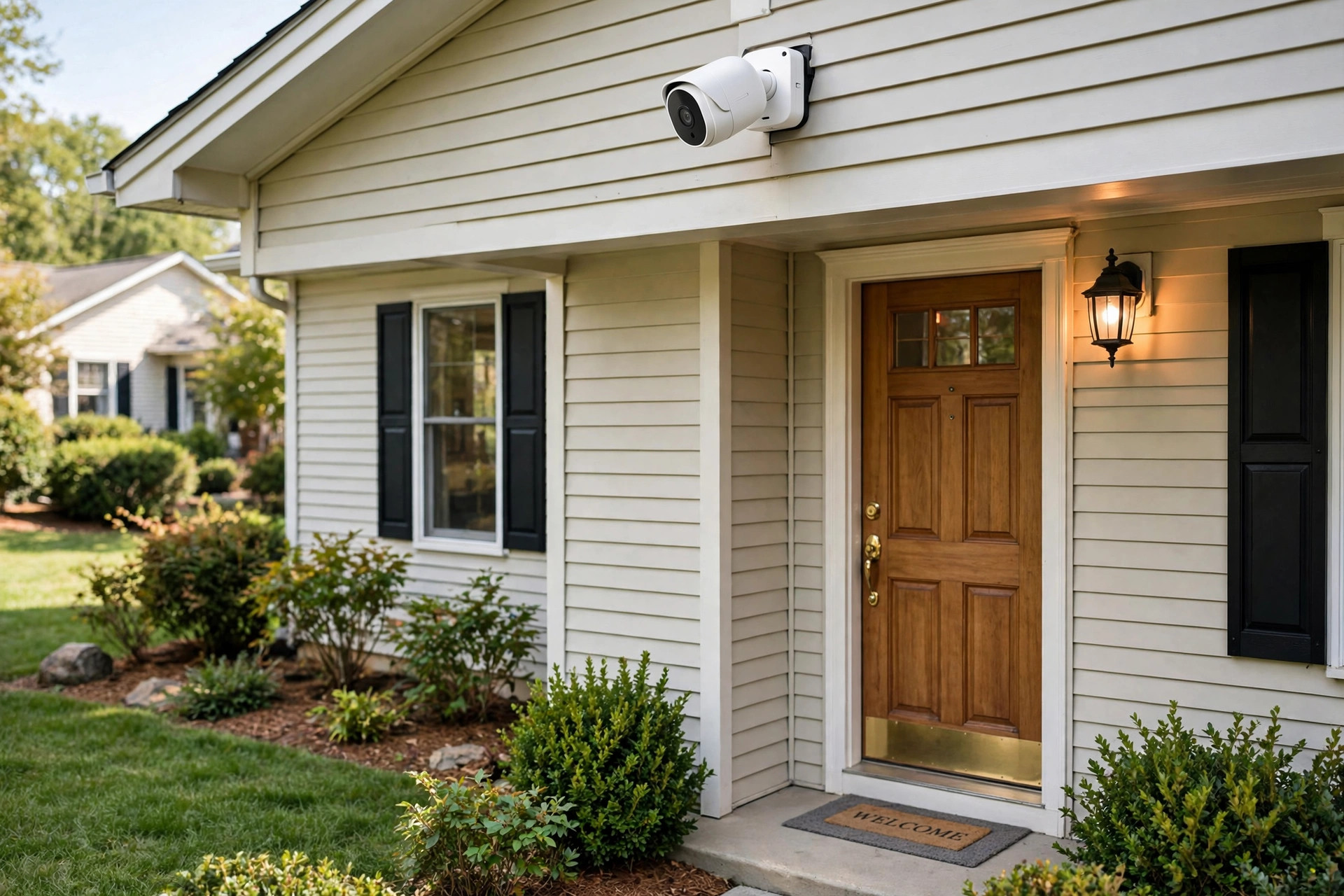
Home security has changed a great deal in recent years. The large wired systems of the past are no longer the only choice. Today a small camera on a porch or a garage wall can watch over a home day and night. This guide to wireless outdoor security camera reviews 2026 explains what these cameras do, what to look for, and how much they cost. It is written in plain terms so any reader can follow along and make a wise choice.
Why a Wireless Outdoor Security Camera Matters
A wireless outdoor security camera guards the home without the need for long cables. It can watch the front door, the driveway, the back yard, or the side gate. When it sees movement, it records video and sends an alert to the phone of the home owner.
The value of such a camera lies in early warning. A package thief, an intruder, or a stray animal triggers a motion alert within seconds. The home owner can then view live video and decide what to do. In many cases the sight of a camera alone is enough to turn a visitor away.
Insurance firms in the United States have noted for years that visible security measures can lower the risk of a break-in. The Consumer Product Safety Commission also reminds home owners that safe installation of any electrical device matters as much as the device itself. A camera that is mounted well and maintained well serves its purpose for many years.
How These Reviews Were Judged: Wireless Outdoor Security Camera Reviews 2026
The wireless outdoor security camera reviews 2026 in this guide rest on a set of plain tests. Each type of camera was judged on picture quality, night vision, motion detection, battery or power life, weather resistance, storage options, and monthly costs. Brands were checked against the work of independent test labs. Consumer Reports publishes ratings for many home security cameras after long periods of lab testing. CNET and PCMag also run hands-on tests of new models each year.
No single camera wins in every class. A buyer with a small porch needs a different unit than a buyer with five acres. The sections below walk through the main points one by one.
What to Look for Before You Buy
Picture Quality and Resolution
Resolution is the sharpness of the picture. Most wireless outdoor security cameras today record in 1080p or 2K. Some record in 4K. A 1080p camera is enough for a door or a porch. A 4K camera is better for a long driveway, where faces and license plates are far away. Higher resolution uses more storage and more battery power, so it is wise to match the resolution to the task.
Night Vision
Most crime takes place after dark. Night vision is therefore one of the most important features. Old cameras used infrared light, which gave a gray image. Newer models use color night vision with small spotlights or starlight sensors. The best units can show color at night from twenty to thirty feet. When reading wireless outdoor security camera reviews 2026, look for the stated night vision range and check sample night footage if it is offered.
Motion Detection and Alerts
Motion detection tells the camera when to record. Basic models use simple pixel change, which can trigger on trees or shadows. Better models use passive infrared sensors that react to heat and movement together. The best models use smart detection that can tell a person apart from a car, an animal, or a package. Smart detection cuts down on false alerts and is worth the extra cost.
Battery Life and Power
A wireless camera has no power cable. It runs on a rechargeable battery, a solar panel, or a plug-in power adapter. Battery life ranges from one month to six months between charges, based on use and temperature. Cold weather shortens battery life. Solar-powered models can run for much longer with little care. Some buyers prefer solar-powered outdoor cameras paired with a standard battery model as backup.
Weather Resistance
An outdoor camera must stand up to rain, snow, heat, and dust. The weather rating is shown as an IP code. An IP65 rating means the camera is sealed against dust and water spray. An IP67 rating means it can survive short periods under water. For most American homes an IP65 rating is enough. Mounting the camera under an eave adds one more layer of protection.
Storage Options
Video must be stored somewhere. Cloud storage keeps video on the servers of the maker. Local storage keeps video on a memory card or a base station in the home. Cloud plans cost money each month but keep footage safe even if the camera is stolen. Local storage has no monthly fee, and many buyers prefer models that store video locally to avoid paying a subscription forever. Some cameras offer both.
Main Types of Wireless Outdoor Security Cameras
Battery-Powered Cameras
Battery cameras are the most common type. They mount with one or two screws and run for months on a charge. They are best for doors, porches, and garages. The well-known Ring line of battery cameras is popular for this reason. The drawback is that the battery must be charged or swapped a few times a year.
Solar-Powered Cameras
Solar cameras pair a battery with a small solar panel. In sunny spots they can run for a full year with little attention. They are a good choice for back yards and sheds far from an outlet. Reviews in 2026 show that solar panels work best on south-facing walls in warm states. In cloudy northern winters the battery still needs a manual charge now and then.
Plug-In Wireless Cameras
Some wireless cameras use a standard power outlet but connect over Wi-Fi. These run nonstop and never need a battery charge. They are a good pick for a porch with an outdoor outlet. The tradeoff is that they must stay close to the outlet, which limits placement.
Floodlight Cameras
A floodlight camera joins a bright light with a camera and a speaker. When motion is seen, the light turns on and the camera records. The bright light is a strong deterrent. The Verge has covered several new floodlight models in 2026 that use color night vision and two-way talk. These units draw more power, so most are plug-in or solar-assisted.
Doorbell Cameras
A doorbell camera watches the front step and records visitors. It is not a full outdoor camera, but for many homes it covers the most important spot. Doorbell cameras pair well with one or two outdoor cameras on the sides of the house.
Cost and Price
Prices for wireless outdoor security cameras fall into three bands.
Budget cameras cost between twenty-five and sixty dollars. They record in 1080p and offer basic night vision. Battery life is shorter and smart detection may be missing. They suit a small apartment porch or a low-risk area.
Mid-range cameras cost between sixty and one hundred fifty dollars. Most buyers land in this band. Cameras here offer 2K video, color night vision, smart person detection, and solid weather sealing. Many include a free trial of cloud storage. The reviews of 2026 rate this band as the best value for most homes.
Premium cameras cost between one hundred fifty and three hundred fifty dollars. They add 4K video, longer battery life, radar-based motion detection, and better two-way audio. Buyers with large lots or high-value property often choose this band.
Monthly plans add to the cost. A single-camera cloud plan runs from three to ten dollars a month. A multi-camera plan runs from ten to twenty dollars a month. Many buyers wish to avoid these fees and look for cameras that work without a Wi-Fi subscription or with local storage only. The table of five-year cost can surprise a buyer. A cheap camera with a ten-dollar plan costs six hundred dollars in fees over five years, while a pricier camera with local storage costs nothing more after the first purchase.
Installation adds little. Most wireless cameras mount in under thirty minutes with a drill and a ladder. Professional installation, where wanted, costs about one hundred to two hundred dollars per camera.
Care and Upkeep
A wireless outdoor security camera needs only light care. Wipe the lens with a soft dry cloth every few months. Dust and spider webs blur the picture over time. Check the mount twice a year to make sure wind has not loosened the screws.
Recharge or swap batteries on the schedule the maker suggests. In winter, check more often, since cold drains batteries faster. If the camera uses a solar panel, wipe the panel clean so it can gather full sun.
Update the camera software when the maker sends a new version. Updates fix bugs and close security holes. Use a strong, unique password for the camera account and turn on two-step sign-in if it is offered. Change the default password the first day the camera is installed.
Check the stored video now and then. Make sure the camera still records and the motion alerts still arrive. A quick test each season keeps the system honest.
Safety
Mount the camera with care. Use a steady ladder and have a second person hold it when the camera goes high. Do not drill into power lines or water pipes. If the wall is brick or stone, use masonry anchors rated for the weight.
Point the camera at your own property. Laws differ by state, but it is good practice not to aim a camera straight into a neighbor’s bedroom window. The federal guidance from the Consumer Product Safety Commission covers the safe use of electrical products around the home, and it is worth a read before any install.
Keep the camera out of easy reach where possible. A camera mounted at eight to ten feet is hard to steal but still close enough to capture faces. Do not let the power cable, if any, dangle where a child can pull it.
Cyber safety matters as well. A camera that connects to the home Wi-Fi is a small computer. Keep the home router updated, use a strong Wi-Fi password, and turn off remote viewing features that are not needed. Reviews of security cameras in 2026 from independent labs like PCMag often include a privacy and security check for this reason.
Frequently Asked Questions
Do wireless outdoor security cameras work without Wi-Fi?
Most need Wi-Fi to send alerts and store video in the cloud. A few models record to a local memory card or base station and can work without an internet link, though remote viewing then stops. Buyers who want no cloud service often compare units with onboard storage.
How long do the batteries last?
Battery life runs from one to six months in normal use. Heavy motion, cold weather, and 4K recording shorten it. Solar panels stretch the time between charges to many months in sunny spots.
Are wireless cameras easy to steal?
Any small device can be stolen, but makers have added tamper alerts and cloud backups so that stolen footage is still saved. Mounting the camera high and out of easy reach lowers the risk a great deal.
Can I use these cameras in rain and snow?
Yes, if the camera carries a weather rating of IP65 or better. It is still wise to place it under an eave or a small cover to cut down on direct water and ice.
Do I have to pay a monthly fee?
No. Many cameras work fine with local storage and no fee. The fee only adds cloud history, smart alerts, and longer video history. A buyer should weigh the five-year cost before choosing.
How many cameras does a typical home need?
Most single-story homes do well with two to three cameras: one at the front door, one at the back door or yard, and one at the garage or driveway. Larger homes and corner lots may need four to six.
Final Word
The wireless outdoor security camera reviews 2026 point to a clear trend. Cameras are sharper, smarter, and easier to install than ever before. The best choice for most buyers is a mid-range battery camera with 2K video, color night vision, person detection, and the option of local storage. Start with the doors and the driveway, mount the units high and dry, and keep the software updated. A little care at the start pays back with years of quiet watch over the home.
Related guides on this site include best video doorbell without subscription usa, ring vs nest doorbell comparison 2026 usa, and best wireless doorbell camera reviews usa.
References
ADT. (n.d.). Home security and automation. https://www.adt.com CNET. (n.d.). Technology news and reviews. https://www.cnet.com Consumer Reports. (n.d.). Product reviews and ratings. https://www.consumerreports.org Google Store. (n.d.). Smart home devices. https://store.google.com PCMag. (n.d.). Technology product reviews. https://www.pcmag.com Ring. (n.d.). Smart home security devices. https://www.ring.com SimpliSafe. (n.d.). Home security systems. https://www.simplisafe.com The Verge. (n.d.). Technology news and reviews. https://www.theverge.com U.S. Consumer Product Safety Commission. (n.d.). Product safety information. https://www.cpsc.gov
Was this guide helpful?

About Jennifer Lee
The My Garden US editorial team writes practical, in-depth home and garden guides for American homeowners — tested advice, no fluff.