Most American homes have a large hole in the ceiling that owners seldom think about. It is the opening for the pull-down stairs that lead to the attic. The stairs fold down from a hatch, and the hatch itself is often a thin sheet of plywood. It may have no insulation at all. Warm air rises in winter and pours straight through this gap. Hot attic air falls into the house in summer. An attic stairs insulation cover is a simple product made to fix this leak. It fits over the stair opening, on the attic side of the ceiling, and closes the gap with a layer of insulation.
This guide reads like a review summary. It explains what these covers are, how they work, what to check before you buy one, what they cost, and how to care for them.
Why the Stair Opening Matters So Much
A pull-down stair opening is large. It often measures about twenty-five by fifty-four inches. That is more than nine square feet of uninsulated ceiling in many homes. Even when the house itself has thick attic insulation, this one rectangle can undo a good part of the work. The United States Department of Energy has long advised homeowners to seal and insulate attic hatches and pull-down stairs, since air leaks in these spots are among the most common energy wasters in houses. You can find this advice on energy.gov.
Think of the house like a coat. A coat with a torn pocket still keeps you warm, but not as well as it should. The stair opening is that torn pocket. In winter, heated air from the rooms below drifts up through the gaps around the hatch. It carries moisture with it. The moisture can condense on cold wood in the attic and feed mold. In summer, the attic can reach very high heat. That heat presses down through the thin hatch and warms the room below. The air conditioner then runs longer than it should.
Many reviewers say the same thing in their own words. They noticed the room below the stairs felt colder in winter and warmer in summer than the rest of the house. After they fitted a cover, the difference shrank. Energy savings are hard to measure at home, and honest reviews say so. But comfort is easy to feel, and most owners report a clear gain.
How an Attic Stairs Insulation Cover Works: Attic Stairs Insulation Cover Reviews Usa
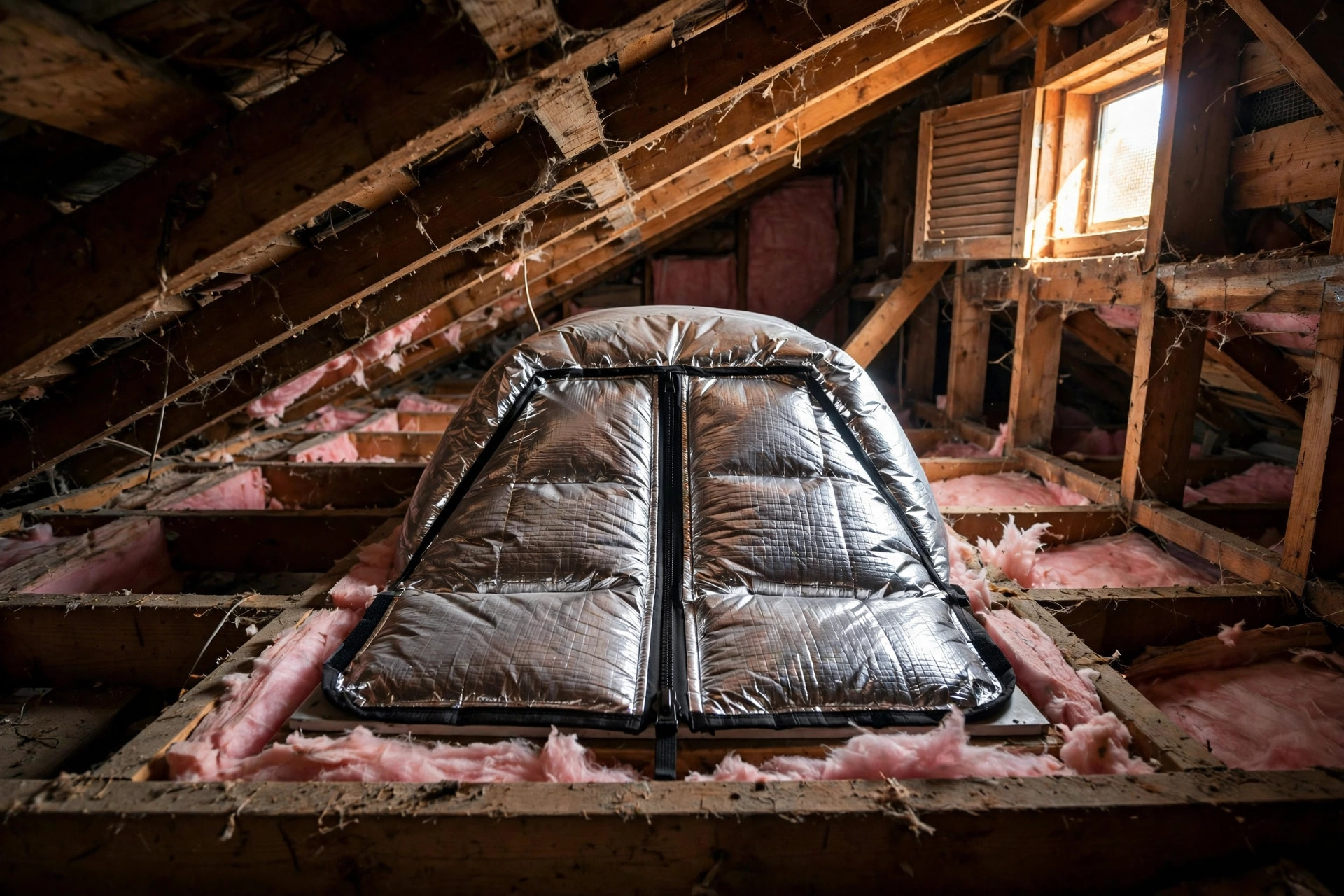
The cover is a box or tent of insulated fabric. It sits on the attic floor around the stair opening. The opening stays below it, hidden under the dome. When you want to use the stairs, you unzip or lift the cover, fold the stairs down, and climb up. When you finish, you fold the stairs back and close the cover again. The insulated shell stays in place while the stairs move.
The shell is usually made of layers. The outside layer is a tough fabric that resists tears. The middle layer is the insulation, often foil-faced bubble insulation or a thin foam blanket. The inside layer is a smooth lining. The edges meet the attic floor or the stair frame. A good cover seals all the way around so air cannot slip past. Some covers add a zipper so you can open one side like a door. Others use a lid that lifts off and sets aside.
The cover does not replace your attic insulation. It only treats the stair opening. Articles about how much attic insulation you need explain the wider job. The cover and the attic insulation work as a team.
What to Look For When You Read Reviews
Reviews of these covers repeat the same checks. The list below comes straight from that pattern. Use it when you compare models.
Size and Fit
Measure the stair opening before you shop. Take the rough length and width of the hatch frame, not just the visible door. Most covers come in a standard size that fits common openings, about twenty-five by fifty-four inches. Some makers sell a small size and a large size. A few sell extra-large models for wide custom stairs. If the cover is too small, air leaks at the corners. If it is far too large, it may not sit flat. Reviewers who measured first were happy. Reviewers who guessed were not.
Insulation Value
Covers are rated with an R-value, the standard measure of resistance to heat flow. Common ratings run from about R-14 to R-50. Higher is better in cold states. In mild states, a mid-range cover is fine. Do not expect the thickest cover to do the work of attic insulation. It only needs to bring the stair spot up toward the level of the rest of the ceiling. Many reviews praise covers in the R-30 range as a good middle ground. Maker guides such as those at goodmanmfg.com use the same climate logic for heating equipment: match the product to the climate you live in.
The Zipper and the Seal
The weak point of any cover is where it opens. A zipper should run smooth and feel strong. Cheap zippers jam and split. The best-rated covers use a heavy zipper with a large pull that you can grip with gloves on. Some models skip the zipper and use a loose lid instead. A lid is simple and has nothing to break, but it can shift if you bump it. Reviews favor zippered models for daily use and lid models for attics visited once a year.
Fabric and Stitching
The fabric must take some abuse. You will brush it with boxes and step near it in the dark. Look for tight stitching along the seams. A foil outer layer helps reflect radiant heat, which matters in hot attics. Several buyers mention that foil-faced covers also resist damp air better. For a deeper look at radiant heat in attics, see radiant barrier pros and cons for attics.
Ease of Install
Most covers install in under an hour with simple tools. You staple or tape the skirt to the stair frame or the attic floor, then set the dome over it. Reviews rate easy installs high. Watch for covers that need perfect square corners. Old houses settle, and frames are seldom square. A cover with a flexible skirt forgives small gaps.
Types and Options on the Market
Three basic designs show up in reviews across the country.
The Tent Style
The tent is the most common design. A fabric shell shaped like a small tent covers the opening. One side has a zipper door. You unzip it to pull the stairs down. It folds flat for shipping and pops up in the attic. Most attic tents for pull-down stairs use this shape. Buyers like the low price and the small box it ships in. The main complaint is the zipper. If it fails, the tent is much less useful.
The Box Style
The box is a rigid or semi-rigid shell, often made of foam board with a fabric skin. It sits over the opening like an upside-down box. Some lift off in one piece. Others hinge at one end. Boxes seal well because the edges are straight and firm. They cost more and need more attic space around the opening. Reviewers with tall attics like them. Reviewers with low roofs say the box gets in the way.
The Batt Blanket
The simplest option is a thick insulated blanket that lays across the hatch. It has no frame and no zipper. You lift it aside when you need the stairs. It costs the least and fits odd shapes. But it can shift, and it does not seal the frame gaps. Reviews treat it as a stopgap, not a full fix. It is better than nothing and worse than a tent or box.
Cost and Price
Prices are modest compared with most home upgrades. As of this writing, basic tent covers sell for about forty to ninety dollars. Box-style covers run from about one hundred to two hundred dollars. Batt blankets cost about twenty to fifty dollars. Prices move with sales and with the season, so check current listings before you buy.
Installation cost is near zero if you do it yourself. The job needs a staple gun or foil tape, a utility knife, and a tape measure. A handyman would charge a small fee for such a short job, but most owners handle it alone. Compare that with the cost of adding attic insulation, which runs into hundreds or thousands of dollars, and the cover looks like a bargain. It will not save as much energy as a full insulation upgrade, but it costs a fraction as much.
The Department of Energy and the Energy Star program both point out that sealing air leaks is one of the cheapest ways to cut heating and cooling bills. The energystar.gov site has plain guides on air sealing and insulation for homeowners. A stair cover is a small part of that larger job, and it fits the same logic: seal the leak first, then add insulation.
Care and Upkeep
A cover needs little care, but it is not care-free. Check it twice a year, in fall and in spring. Look for these things:
– The zipper should move free. If it sticks, rub a little dry soap on the teeth. – The skirt should sit flat on the frame. Re-staple any loose corner. – The fabric should be whole. Patch small tears with foil tape before they grow. – The inside should be dry. Damp spots mean warm moist air is still getting past. Check the seal.
Keep boxes away from the cover. Stored items press on the shell and wear the fabric. Keep the path to the stairs clear so you do not step on the skirt. A cover that is treated with care lasts many years. Reviewers who stored heavy boxes on their covers report early failure. Those who gave the cover its own space report no trouble.
Safety Points to Know
These covers are simple, but a few safety rules apply.
First, the cover sits in the attic, where temperatures can be extreme. Do not rest hot items, such as a heat lamp, against it. Keep the cover clear of any bare electrical wire. If your attic has old wiring, fix the wiring first.
Second, watch the seal in winter. A tight seal keeps warm moist air out of the attic. That is good. But it also means any moisture already in the attic stays there longer. Good attic ventilation matters. The Family Handyman site has clear how-to articles on attic airflow and vent care at familyhandyman.com.
Third, mind your step. Installing the cover means walking on attic joists. Step only on the joists or on a plank laid across them. One wrong step can break through the ceiling below. Wear a dust mask. Old attics hold dust and bits of old insulation that you do not want in your lungs.
Fourth, fire safety. Most covers use materials that resist flame spread, but no fabric cover is fireproof. Keep the cover away from recessed lights and from any flue or chimney. Old This Old House articles on attic work stress the same rule: keep insulation and fabric clear of heat sources. You can browse their attic guides at thisoldhouse.com.
Frequently Asked Questions
Do attic stair covers really save energy? They save some. No cover will cut your bill in half. But the stair opening is one of the largest single leaks in many homes. Most owners say the gain shows up as comfort first and as savings second. For a full picture of heating costs, maker guides from carrier.com and trane.com explain how heating systems lose heat through the building shell.
Can I install a cover myself? Yes, in most cases. The job takes less than an hour. You measure the opening, staple or tape the skirt in place, and set the cover over it. You need no special skill. If your stair frame is damaged or the opening is an odd shape, fix that first.
Will a cover fit my stairs? Measure first. Standard covers fit the most common pull-down stair sizes. If your opening is wider than fifty-four inches or longer than sixty inches, look for an extra-large model. Some makers sell custom sizes at a higher price.
Does the cover stop moisture problems? It helps. Much attic moisture comes from warm house air leaking up through the stair gap. The cover blocks that path. But it cannot fix a roof leak or a bathroom fan that vents into the attic. If you see mold or wet wood, find the source. Lennox and Rheem both publish homeowner guides on moisture and indoor air at lennox.com and rheem.com.
How long does a cover last? A well-made cover lasts ten years or more with light use. The zipper is the part most likely to fail first. Covers with heavy zippers and strong stitching last longest. Keep stored items off the cover and it will serve you well.
A Short Final Word
An attic stairs insulation cover is a small fix for a large leak. It costs little, installs fast, and needs almost no care. Reviews across the country agree on the main points: measure before you buy, pick a strong zipper, keep the seal tight, and give the cover its own space in the attic. Do that, and the room below your stairs will feel more like the rest of your house. In a home, comfort is the true test, and this is one of the cheapest comfort upgrades you can make.
References
Carrier. (n.d.). Heating and cooling systems. https://www.carrier.com ENERGY STAR. (n.d.). Energy efficient products. https://www.energystar.gov Family Handyman. (n.d.). DIY home repair and maintenance. https://www.familyhandyman.com Goodman. (n.d.). Heating and cooling equipment. https://www.goodmanmfg.com Lennox. (n.d.). Heating and cooling systems. https://www.lennox.com Rheem. (n.d.). Heating, cooling, and water heating. https://www.rheem.com This Old House. (n.d.). Home renovation guidance. https://www.thisoldhouse.com Trane. (n.d.). Heating and air conditioning. https://www.trane.com U.S. Department of Energy. (n.d.). Energy efficiency and renewable energy. https://www.energy.gov
Was this guide helpful?

About David Wilson
The My Garden US editorial team writes practical, in-depth home and garden guides for American homeowners — tested advice, no fluff.