
Every spring, millions of American families start to sneeze. Pollen drifts through open windows. Dust builds up in the ducts. Pet dander clings to every soft surface. If you are searching for the best air filter for allergies reviews usa, you are not alone. Homeowners all across the country want a simple answer: which filter will help my family breathe easier, and is it worth the money? This guide gives you that answer in plain language, with real facts about filter ratings, types, costs, and care.
Why a Good Air Filter Matters for Allergies
An air filter sits inside your furnace or air handler. Each time the blower runs, all the air in your home passes through it. A weak filter lets fine particles slip back into your rooms. A good filter traps them.
The particles that trouble allergy sufferers are very small. Pollen grains, mold spores, and pet dander all measure between one and ten microns across. For scale, a human hair is about seventy microns wide. You cannot see what a good filter catches, but you may feel the difference in fewer sneezes, less itchy eyes, and better sleep.
Doctors and public health agencies have long noted that cleaner indoor air helps people with asthma and seasonal allergies. Federal indoor air guidance points out that indoor air can hold two to five times more pollutants than outdoor air. A strong filter is one of the cheapest tools a homeowner has to fight that problem.
Reviews matter here. Marketing claims on filter boxes can be bold and vague. Independent reviews, such as those published by Consumer Reports, test filters under controlled conditions and report how well each one captures fine particles. Reading reviews before you buy saves money and spares you the disappointment of a filter that promises much and delivers little.
What to Look For: MERV, Size, and Fit: Best Air Filter for Allergies Reviews Usa
Understanding the MERV Rating
The MERV rating is the single most important number on the box. MERV stands for Minimum Efficiency Reporting Value. It runs from 1 to 16 for most home filters. A higher number means finer filtration.
– MERV 1 to 4: Basic protection. These thin filters catch dust and lint only. They do little for allergies. – MERV 5 to 8: A step up. They catch mold spores and pet dander. Most American homes use this range. – MERV 9 to 12: Good allergy control. They trap fine pollen, most dust mites, and some smoke particles. – MERV 13 to 16: Hospital grade. They catch bacteria, fine smoke, and the smallest allergy triggers.
For allergy sufferers, a filter rated MERV 11 to 13 is usually the sweet spot. It catches the particles that cause sneezing without choking the airflow your furnace needs. If you go higher, check your system first. Some older furnaces cannot push air through a dense MERV 16 filter, and the blower works too hard.
Exact Size and a Snug Fit
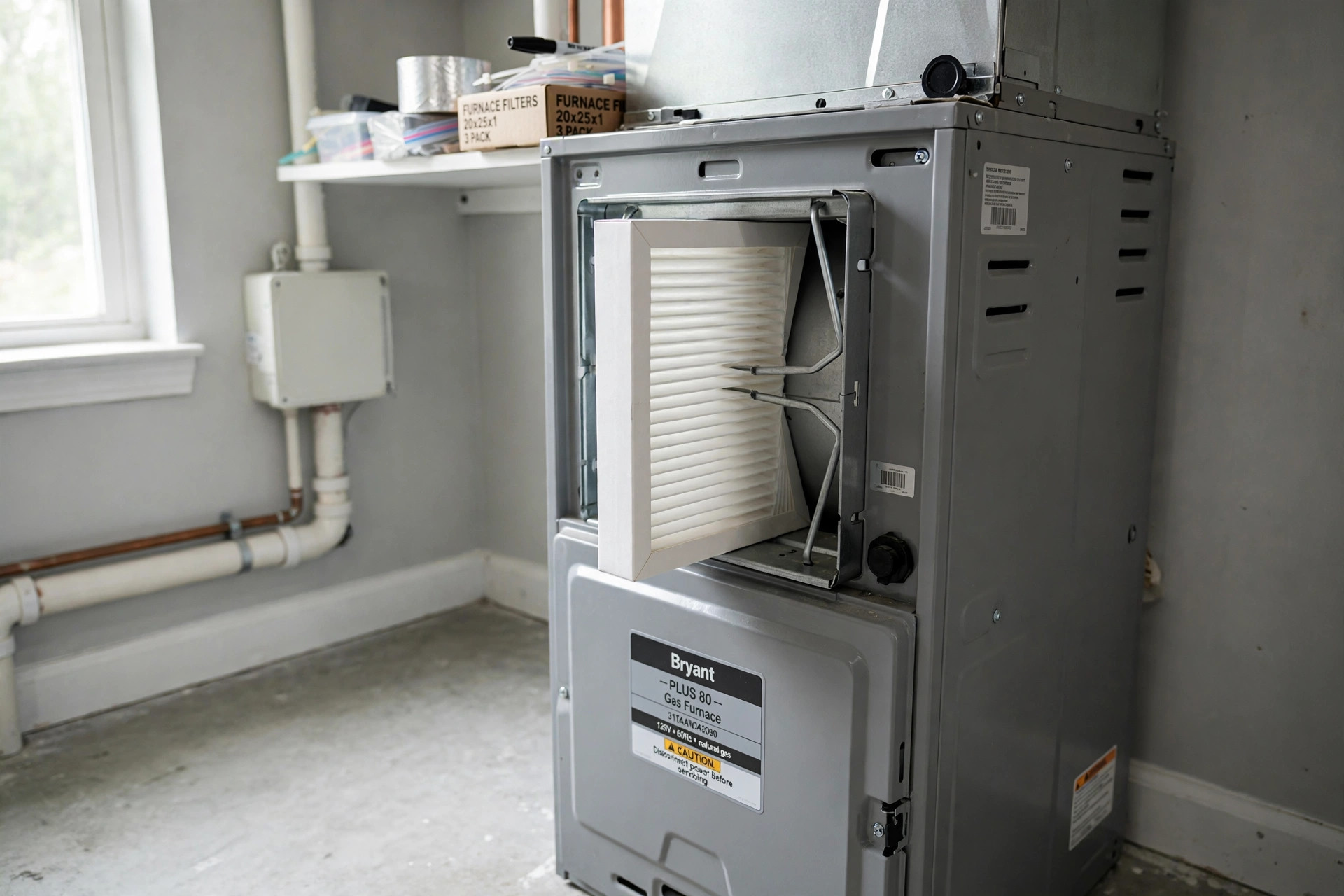
A filter only works when air passes through it, not around it. Measure the filter slot in your furnace carefully. Common sizes in American homes include 16 by 20 inches, 20 by 25 inches, and 20 by 20 inches. The size printed on the old filter is what you match.
Check the depth too. Most slots take a one-inch filter, but many systems accept two-inch or four-inch media filters, which last longer. A filter that rattles loose in the slot lets dirty air slip past the edges. Many Home Depot guides and Lowe’s guides remind buyers to tape or gasket any gaps around the frame.
Material and Build Quality
Pleated filters with a rigid cardboard or wire frame outperform flat fiberglass pads in every test. The pleats multiply the surface area, so the filter can trap more dirt before it clogs. Look for filters with sealed pleat edges and a sturdy frame that will not bow inward when the blower starts.
Types of Allergy Air Filters
Pleated Disposable Filters
These are the most common choice in American homes. They cost a few dollars to about fifteen dollars each, slide into a standard slot, and get replaced every one to three months. Reviews consistently show that a well-made MERV 11 or MERV 13 pleated filter gives the best value for allergy control. This Old House and Family Handyman both recommend pleated filters over cheap fiberglass for households with allergies.
Washable and Reusable Filters
Washable filters promise to save money because you rinse them and put them back. In practice, most reviewers find their MERV ratings are modest, around MERV 4 to 8. They help with dust but rarely do enough for serious allergy sufferers. They can work as a backup or in a home without allergy problems, but reviews for allergy use tend to be lukewarm.
Media Filters and Filter Cabinets
A media filter is a thick pleated cartridge, usually four or five inches deep, that sits in a cabinet attached to the furnace. It can run for six to twelve months between changes and holds far more dirt than a one-inch filter. Equipment makers such as Carrier, Trane, Lennox, and Rheem all sell matched media cabinets for their systems. Reviews are strong for allergy control, but the upfront cost is higher.
HEPA Filtration
True HEPA filters capture 99.97 percent of particles at 0.3 microns. They are the gold standard for allergies. But a HEPA filter creates so much resistance that it cannot simply slide into a standard furnace slot. It needs a separate whole-house HEPA unit or a stand-alone room purifier. The U.S. Department of Energy notes that high-resistance filters must be matched to the right equipment to avoid harming the system.
Room Air Purifiers as a Partner
Many allergy sufferers pair a good furnace filter with a portable room purifier in the bedroom. The furnace filter cleans air across the whole house, while the purifier gives extra help where you sleep. ENERGY STAR keeps a list of certified room air cleaners with tested performance numbers, which is a handy cross-check when reading reviews.
Cost and Price: What American Homeowners Pay
Prices vary by size and rating, but these ranges hold across most of the country:
– Basic fiberglass, MERV 4: 3 to 5 dollars each. Fine for equipment protection, poor for allergies. – Pleated, MERV 8: 5 to 10 dollars each. The common choice in many homes. – Pleated, MERV 11 to 13: 10 to 25 dollars each. The recommended range for allergy control. – Media cartridge, four inch: 30 to 60 dollars each, lasting six to twelve months. – Whole-house HEPA add-on: 800 to 2,500 dollars installed, plus yearly cartridge costs.
Buying in multi-packs cuts the per-filter price by a quarter or more. Many families sign up for automatic delivery so a fresh filter arrives on schedule. Over a year, a MERV 13 program costs most homes between 60 and 120 dollars in filters. That is a small sum next to a single doctor visit for an asthma flare-up.
One cost people forget is energy. A very dense filter makes the blower work harder, which can raise the electric bill slightly. A clean MERV 11 to 13 filter changed on time causes only a small change. A dirty, clogged filter of any rating causes far more strain. This is another reason reviews stress timely replacement.
Care and Upkeep
A good filter only helps if you change it on schedule. Mark your calendar or set a phone reminder. Homes with pets, smokers, or nearby construction need changes more often.
– Check monthly. Pull the filter out and hold it to a light. If you cannot see light through it, replace it. – Change every 30 to 90 days for one-inch pleated filters. Allergy homes lean toward 30 to 60 days. – Change media cartridges every 6 to 12 months, or as the system indicator directs. – Write the install date on the filter frame with a marker so you never have to guess.
Keep return vents clear. Do not stack furniture or rugs over them. Dust the vents themselves with a damp cloth when you change the filter. If your home has been through renovation, change the filter right after the work ends, because construction dust loads a filter fast.
If you run a mini split or a ductless system for parts of the house, remember that those units have their own washable screens. Readers looking at energy efficient mini split systems for 1500 sq ft homes should note that ductless screens catch only coarse dust and do not replace a main furnace filter for allergy control.
Safety Notes
A filter cannot fix a sick heating system. Change filters with the blower turned off. If you smell burning dust after a change, give it one cycle, but a strong or lasting odor means you should call a technician.
Never run your furnace without a filter in the slot. Even for a day, unfiltered air coats the blower and the indoor coil with dust, which cuts efficiency and can cause costly damage.
Be careful with ozone-producing devices. Some electronic air cleaners and ionizers release ozone, which can irritate lungs and make allergies worse. Reviews from independent testers often flag this issue. A plain mechanical filter with a high MERV rating avoids the problem entirely.
Carbon monoxide is a separate danger that filters cannot touch. If your home burns gas, oil, or wood, keep a working carbon monoxide detector on each level. The Goodman and Good Housekeeping home safety guides both list detectors as a must for any home with fuel-burning equipment.
Frequently Asked Questions
What MERV rating is best for allergies?
Most reviewers and HVAC professionals point to MERV 11 to 13 for allergy control in a standard home system. MERV 13 catches the finest allergy particles. Go higher only if your system is rated for it, because dense filters restrict airflow.
How often should allergy sufferers change their filter?
Every 30 to 60 days for a standard one-inch pleated filter. Homes with pets or heavy pollen seasons should change on the shorter end. A clogged filter stops helping and starts straining your system.
Are expensive filters worth the money for allergies?
Up to a point, yes. The jump from a three-dollar fiberglass pad to a twelve-dollar MERV 13 pleated filter is the best money you can spend. Past that, returns shrink. A media cabinet or whole-house HEPA unit helps most in homes with severe allergies or asthma.
Can an air filter help with pet allergies?
Yes, a MERV 11 to 13 filter catches much of the pet dander that circulates through the ducts. It will not remove dander from bedding or carpets, so combine filtration with regular vacuuming using a sealed HEPA vacuum and frequent washing of pet bedding.
Do I need a filter with activated carbon?
Only if odors are your problem. Carbon layers absorb cooking smells and smoke odors but add cost and resistance. For pure allergy control from pollen, dust, and dander, a standard high-MERV pleated filter is enough.
Will a better filter damage my furnace?
A clean filter at the right MERV level will not. Problems come from filters that are too dense for the system or left in too long. Check your furnace manual for the maximum rated MERV, and change filters on schedule. If your home uses zoned heating, you may also want to read about ductless mini split installation cost per zone and the best mini split for cold climates to understand how airflow needs differ across system types.
A Short Final Word
The best air filter for allergies is not the priciest box on the shelf. It is a well-reviewed pleated filter with a MERV 11 to 13 rating, sized exactly to your slot, changed on time every time. Read independent reviews, buy from a maker with a solid record, and keep a steady replacement schedule. Your lungs will notice before your wallet does.
References
Carrier. (n.d.). Heating and cooling systems. https://www.carrier.com Consumer Reports. (n.d.). Product reviews and ratings. https://www.consumerreports.org ENERGY STAR. (n.d.). Energy efficient products. https://www.energystar.gov Family Handyman. (n.d.). DIY home repair and maintenance. https://www.familyhandyman.com Goodman. (n.d.). Heating and cooling equipment. https://www.goodmanmfg.com Lennox. (n.d.). Heating and cooling systems. https://www.lennox.com Lowe’s. (n.d.). Home improvement products. https://www.lowes.com Rheem. (n.d.). Heating, cooling, and water heating. https://www.rheem.com The Home Depot. (n.d.). Home improvement products. https://www.homedepot.com This Old House. (n.d.). Home renovation guidance. https://www.thisoldhouse.com Trane. (n.d.). Heating and air conditioning. https://www.trane.com U.S. Department of Energy. (n.d.). Energy efficiency and renewable energy. https://www.energy.gov
Was this guide helpful?

About Michael Thompson
The My Garden US editorial team writes practical, in-depth home and garden guides for American homeowners — tested advice, no fluff.
You May Also Like
Gas Boiler Installation Cost for Old House: A Plain 2026 Guide
September 21, 2026 0 views
Best SEER Rating for Texas Homes 2026: What It Means and What to Pick
August 15, 2026 0 views
How to Choose HVAC Contractor USA Guide
June 7, 2026 1 views