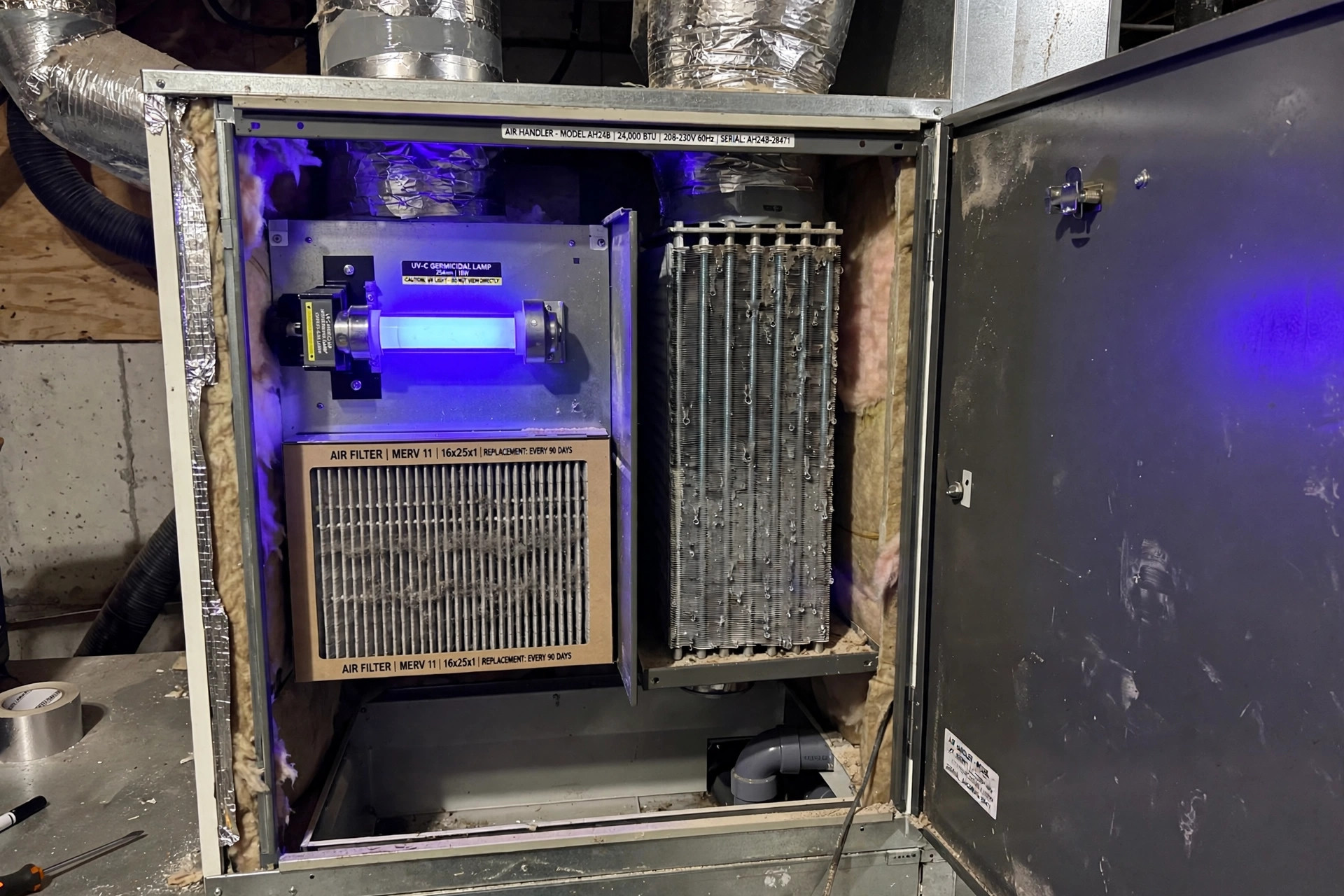

Many homeowners have heard of UV lights for heating and cooling systems. They wonder what they cost. The question of hvac uv light installation cost near me comes up often in 2026. A UV light is a small lamp that sits inside the ducts or near the coil. It shines ultraviolet light on the wet parts of the system. The idea is simple. It helps keep the coil and drain pan free of mold and slime. It may also cut germs that pass through the air. This guide walks through the real costs. It covers unit types, labor, upkeep, and safety. It will help you get a fair quote from a local contractor.
Why Homeowners Add UV Lights to HVAC Systems
The inside of an air handler is dark and damp. The evaporator coil gets wet every time the air conditioner runs. That wet coil is a good place for mold to grow. A thin layer of mold or slime on the coil cuts airflow. It can make the home smell musty. It can also push spores into the ducts. A UV light shines on the coil around the clock. The light slows the growth of mold and bacteria on that surface. That is the main job of the lamp. It keeps the coil clean, not the whole house.
Some lamps also treat the air as it moves past them. These are made to cut germs in the moving air stream. They mount in the return duct or the supply plenum. They work best when the air moves at the right speed. That is why the type and place of the lamp matter. Before you buy, it helps to read up on the uv light for hvac system pros cons so you know what these lamps do and what they do not do.
UV lights do not replace a filter. A good filter still traps dust, pollen, and pet hair. If you wonder how often to change hvac filter, the short answer is every one to three months in most homes.
Some homes need more than a lamp. A UV light kills germs on surfaces. It does not trap fine dust or smoke. Owners who want cleaner air across the whole house may look at a full whole house air purifier installation cost comparison before they decide. A purifier and a UV lamp can work side by side. The purifier traps particles. The lamp keeps the coil clean. Each one has its own cost.
Types of UV Lights for HVAC Systems: Hvac Uv Light Installation Cost near Me
Not all UV lamps are the same. They fall into three main groups. The right group for you depends on your system and your goal.
Coil-Style Lamps
Coil-style lamps mount near the evaporator coil. They shine directly on the coil and the drain pan. This is the most common type in homes. It attacks the spot where mold grows first. A single coil lamp is often enough for a standard split system. A technician drills a small hole in the cabinet. The lamp slides through the hole. The coil stays lit day and night.
Air-Sanitizing Lamps
Air-sanitizing lamps mount in the ductwork. They treat the air as it flows past. They sit in the return plenum or the supply trunk. The light must be strong enough to work on moving air. These lamps cost more than simple coil lamps. They often need a larger bulb or a two-bulb unit. Some homes use one air lamp plus one coil lamp. That pair covers both the coil and the air stream. Contractors like them in homes with allergy concerns. They do not trap dust, though. The filter still handles dust.
Dual-Lamp Systems
A dual-lamp system combines both jobs. One lamp guards the coil. A second lamp treats the air in the ducts. This is the top end of the home market. It suits larger homes and homes with two systems. It also suits homes where the coil sits in a damp basement or crawl space. Two lamps mean two bulbs to replace. The upfront cost is higher. Some owners feel the extra peace of mind is worth it. Others find a single coil lamp is enough.
How to Choose the Right UV Light
Start with your system type. A heat pump, a gas furnace with a coil, and a straight air conditioner all take coil lamps. A mini split is a special case. Most mini splits do not have room for a standard lamp. Some brands sell small UV kits for ductless units. A tech can tell you if yours accepts one. This Old House has general HVAC guidance for homeowners that can help you learn your system before you call a contractor.
Match the lamp to the size of your cabinet. The light must cover the full face of the coil. If it does not, mold can grow on the dark half. Ask the contractor to show you the lamp size on the quote. Also ask about the bulb type. Most home lamps use UV-C at 254 nanometers. That is the germ-killing range. The U.S. Department of Energy offers home energy basics that help you judge how a small add-on fits a larger efficient system.
Check the power draw and the wiring. A UV lamp needs 120-volt power. The tech will wire it to run when the blower runs, or around the clock. Around the clock is best for coil lamps. Ask if the unit has a safety shutoff. Good units turn off when the cabinet door opens. That keeps your eyes safe.
Look at the brand and the warranty. Known heating brands such as Carrier and Trane make or approve UV add-ons for their systems. Lennox, Rheem, and Goodman also offer guidance on UV lamps that fit their equipment. A two- or three-year warranty on the unit is common. Bulbs are wear parts. They carry a shorter warranty, often one year. The Family Handyman site has practical home repair articles that explain how warranties and service plans work for HVAC add-ons.
What Drives the Price of Installation
Three things set the price. The unit itself is the first. A basic single coil lamp is the cheapest. A dual-lamp air and coil system is the most. Brand name units cost more than generic ones. Units with odor-fighting coatings cost more too. Prices for the hardware alone run from about 80 to 400 dollars. Most name-brand single lamps land near 150 to 250 dollars for the part.
Labor is the second driver. A trained tech needs about one to two hours for a standard install. The job means drilling the cabinet, mounting the lamp, and wiring it to power. Labor rates differ by region. Big cities and the coasts charge more per hour. Small towns and the Midwest often charge less.
Your system is the third driver. Easy access keeps the cost down. A coil in an open basement utility room is a fast job. A coil crammed into a hot attic or a tight closet takes longer. If the tech must run a new power line to the unit, the price rises.
Cost and Price: Typical Numbers in 2026
For a single coil-style UV lamp with pro installation, most U.S. homeowners pay between 400 and 800 dollars in 2026. This is the most common job. It covers the unit, one to two hours of labor, and a basic test. A budget job with a simple lamp can land near 350 dollars in low-cost areas. The same job can pass 900 dollars in high-cost cities.
A dual-lamp system costs more. Installed, it runs from 800 to 1,500 dollars in most markets. Air-sanitizing lamps with stronger output sit in the same range. Whole-house packages that pair a UV lamp with an air purifier can reach 2,000 dollars or more. Get three quotes. Make sure each one names the lamp model. That way you compare like with like.
Bulb replacement is a repeat cost. UV bulbs fade even when they still glow. Most makers say to change the bulb once a year. Some say every nine months. A replacement bulb costs 40 to 120 dollars. Many owners buy a spare at install time. A yearly service plan can include the bulb swap. Ask about that when you get your quote. It can save a service call later.
Energy Star lists efficient heating and cooling options that help you keep the whole system efficient after an add-on. A UV lamp adds only a few dollars a year in power. It draws about as much as a small night light.
Care and Upkeep
Upkeep is simple. The main task is the yearly bulb change. Mark the date on a card taped to the air handler. A faded bulb looks the same as a fresh one. Your eyes cannot tell the difference. The date tells you when to swap it. Turn off power to the unit before you touch the lamp. Let the bulb cool if it has been running. Wipe the new bulb with a clean cloth. Skin oil on the glass can shorten bulb life.
Keep the coil clean too. A UV lamp slows mold. It does not clean a dirty coil. Have the coil checked at each yearly tune-up. If the tech finds heavy buildup, ask for a cleaning. A clean coil plus a fresh lamp is the best pair. Also keep changing the filter on schedule. A clogged filter cuts airflow. It can even let dust reach the coil.
Watch the drain line. UV light helps the drain pan stay clean. But the drain line can still clog. Pour a cup of plain white vinegar down the condensate drain once a season. This is a common home habit. It costs almost nothing. It helps the line stay clear.
If the lamp has an indicator light, watch it. Some units show green when the bulb runs well. Others blink when the bulb is due for a swap. Check your manual.
Safety Points
UV-C light can harm eyes and skin. Never look directly at a lit UV lamp. Do not run the lamp with the cabinet door open. Good units have a shutoff switch on the door. The lamp goes dark when the door opens. Ask the tech to test this in front of you. If your unit lacks a shutoff, ask for one. It is a small part and a wise add.
Ozone is another safety point. Some cheap UV lamps make ozone as a side effect. Ozone can irritate lungs. Look for lamps that say ozone-free on the box. Most name-brand coil lamps are ozone-free. Ask the contractor before you sign. If anyone in the home has asthma, this point matters more.
Keep bulbs away from children and pets. Old bulbs still carry a bit of mercury. Do not throw them in the trash. Take them to a local bulb recycling point. Many hardware stores take them for free. Your county may also have a drop-off day. Wear gloves when you handle a broken bulb. Vent the room and sweep up the pieces with care.
Frequently Asked Questions
How long does a UV light install take? Most installs take one to two hours. The tech drills a small hole, mounts the lamp, and wires it to power. Attic units and tight closets can take a bit longer. The tech will also test the safety shutoff before leaving.
Will a UV light cut my energy bill? Not directly. The lamp itself uses very little power. A clean coil may help the system run as it should. But no one should buy a UV lamp just to save energy. Buy it for a cleaner coil and fewer musty smells.
Do UV lights really kill mold in HVAC systems? They slow mold growth on the coil and drain pan. They do not scrub the whole house. In homes with heavy mold, the source of moisture must be fixed first.
Can I install a UV light myself? A handy owner can mount the lamp body. The wiring is the hard part. It ties into 120-volt power near the air handler. A mistake can shock you or harm the control board. Most owners are safer with a licensed tech.
How do I find a fair price near me? Search for “hvac uv light installation cost near me” and read local reviews. Call three licensed contractors. Ask each one to name the lamp model and the labor hours on the quote. Compare the quotes line by line. Pick the middle quote with the best warranty, not the cheapest price alone.
How often must I replace the bulb? Once a year is the standard. Some makers say every nine to twelve months. The bulb may still glow after a year. But its germ-killing power will have faded. Mark the install date on the unit so you do not forget.
A Short Final Word
A UV light is a small add-on with a clear job. It keeps the coil and drain pan free of mold. It does not replace a filter. It does not clean your ducts. For most homes, a single coil lamp with pro install runs 400 to 800 dollars. Yearly bulbs cost 40 to 120 dollars. Get three written quotes. Pick a name-brand, ozone-free lamp. Keep the filter fresh and the coil clean. Then the lamp can do its quiet work for years.
References
Carrier. (n.d.). Heating and cooling systems. https://www.carrier.com ENERGY STAR. (n.d.). Energy efficient products. https://www.energystar.gov Family Handyman. (n.d.). DIY home repair and maintenance. https://www.familyhandyman.com Goodman. (n.d.). Heating and cooling equipment. https://www.goodmanmfg.com Lennox. (n.d.). Heating and cooling systems. https://www.lennox.com Rheem. (n.d.). Heating, cooling, and water heating. https://www.rheem.com This Old House. (n.d.). Home renovation guidance. https://www.thisoldhouse.com Trane. (n.d.). Heating and air conditioning. https://www.trane.com U.S. Department of Energy. (n.d.). Energy efficiency and renewable energy. https://www.energy.gov
Was this guide helpful?

About David Wilson
The My Garden US editorial team writes practical, in-depth home and garden guides for American homeowners — tested advice, no fluff.
You May Also Like
Radiant Barrier Installation Cost Near Me: A Plain Guide for Homeowners
October 5, 2026 3 views
Gas Furnace Installation Cost for 2000 Sq Ft Homes: 2026 Prices and What to Expect
September 4, 2026 0 views
Rigid Foam Insulation for Basement Walls USA: A Plain Guide
September 15, 2026 0 views