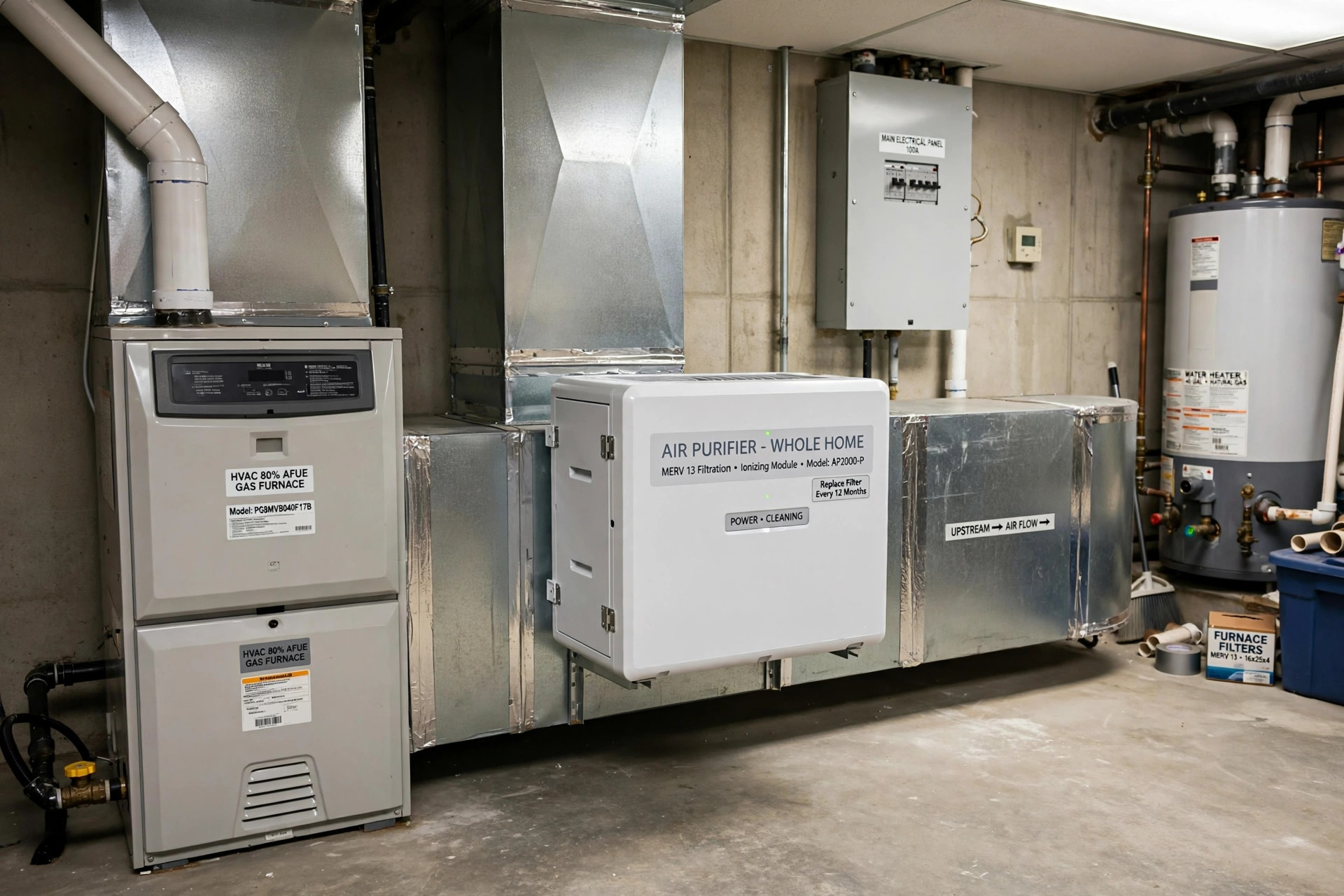

The best HVAC air purifier add on reviews USA buyers share all point to the same lesson. A portable air purifier helps one room. An add on that fits into the heating and cooling system serves the whole house. For homeowners who already own a furnace or central air handler, these devices promise cleaner air in every room with vents. But not every model earns its price. This guide looks at what the reviews say, how the main types work, what they cost, and how to keep one running well.
Why Indoor Air Quality Matters for Homeowners
Most people spend most of the day inside the home. Dust, pollen, pet hair, mold spores, and cooking smoke all float in the air. Older homes add more: cracked caulk, drafty windows, and aging ducts let fine dust move freely. For people with asthma, allergies, or young children, these small particles can cause real discomfort.
Portable purifiers only clean the room where they sit. A central system moves air through every duct several times a day. An add on placed in that airflow can catch particles from the whole house at once. Many reviewers say the main reason they bought one was simple. They wanted fewer dusting chores, fewer allergy symptoms, and cleaner air in every room, not just the bedroom.
What the Best HVAC Air Purifier Add On Reviews USA Say
Review sites and owner forums tell a steady story. The best hvac air purifier add on reviews USA homeowners post tend to reward the same three traits. First, low airflow resistance, so the furnace or air conditioner does not work harder. Second, low long term upkeep cost. Third, honest claims about what the device can and cannot do.
Models that need a costly replacement cartridge every few months draw the most complaints. Models that integrate well with standard ductwork and need only yearly attention earn the best marks. Owners also warn about ozone. Some electronic cleaners release small amounts of ozone as a byproduct. Devices listed by the California Air Resources Board as ozone safe draw more trust. When reading the best HVAC air purifier add on reviews USA buyers trust, pay attention to reviews written a year or more after purchase. First week reviews praise quiet running. Long term reviews reveal filter cost, service calls, and real effects on dust.
Types of HVAC Air Purifier Add Ons
Several designs fit into home ductwork. Each works in a different way.
Media Air Cleaners
Media cleaners hold a thick pleated filter in a cabinet attached to the duct. They trap dust, pollen, and lint as air passes through. They are the simplest design and often the cheapest to buy. Reviewers like them for quiet, steady work. Their drawback is filter replacement cost. A thick cabinet filter can cost more than a standard one inch furnace filter.
Electronic Air Cleaners
Electronic cleaners give particles an electric charge and collect them on plates. They catch very fine particles and the plates wash off with water. Some owners love the idea of never buying a filter. Others find that cleaning the plates every month or two becomes a chore they dislike. A few models make small amounts of ozone, so check for ozone safety listing before purchase.
UV Germicidal Lights
UV lights sit inside the duct or near the coil and kill mold, mildew, and germs on contact surfaces. They do not trap dust, so they work best beside a good filter. The uv light for hvac system pros cons usa discussion shows mixed views. Many owners report less mold on the indoor coil and cleaner drain pans. Others find little change in room air because UV treats only what passes within its reach. Bulbs need yearly replacement.
Hybrid and Polarized Media Units
Some units blend media filtering with an electronic charge. The charge makes the media catch finer particles without heavy airflow resistance. These score well in owner reviews for strong filtration with modest upkeep.
What to Look for When You Choose
Start with your duct system. Check the size of the cabinet space beside your furnace or air handler. Add on units come in sizes that fit common duct openings. Measure before you shop.
Match the unit to your filter habits. If you change furnace filters on schedule and do not mind buying them, a media cabinet may suit you. If you prefer washing parts over buying filters, look at electronic models.
Look at the MERV rating for media cleaners. MERV 11 to 16 covers most home needs. Higher numbers catch smaller particles but add more resistance. A very tight filter on an old furnace can strain the blower. Check your system manual or ask your technician about safe ratings.
Check power and noise claims with care. Most add ons draw little power and run quiet. Noise complaints usually come from poor installation rather than the device itself.
Look for third party testing. Units tested by independent labs carry more weight than maker claims alone. The whole house air purifier installation cost usa guide covers how these cabinets fit different system sizes.
Cost and Price Breakdown
Prices vary by type and by who installs them.
A media air cleaner cabinet often costs 150 to 600 dollars for the unit itself. Professional installation adds 200 to 700 dollars, depending on duct changes needed.
Electronic air cleaners usually run 400 to 1,200 dollars for the unit. Installation runs 300 to 800 dollars.
UV light kits are the cheapest add on. Basic kits cost 80 to 300 dollars. Installed cost often lands between 200 and 600 dollars, including yearly bulb changes. The hvac uv light installation cost near me page breaks down local price ranges.
Whole house hybrid units sit at the top. They can cost 800 to 2,000 dollars installed.
Yearly upkeep matters as much as the purchase price. Plan on 40 to 200 dollars a year for media filters, 60 to 150 dollars for UV bulbs, and little to nothing for washable electronic plates besides your own time. Always get written quotes from two or three local contractors before you sign.
Some makers and local power companies offer rebates on whole home filtration gear. Check the rebate pages of your utility and the maker before you buy. A rebate of 50 to 150 dollars is common and can shorten the payback time. Ask your contractor whether the job qualifies for any state energy program.
Installation: What to Expect
Most add ons install in the return duct or near the air handler. A technician cuts an opening in the duct, mounts the cabinet or lamp, wires power, and seals the joints. The job usually takes one to three hours.
Poor sealing is the most common installation fault in reviews. Leaky joints pull dusty attic or crawl space air into the system and defeat the purifier. Ask the technician to seal all new joints with mastic or foil tape. Also ask for a short test run to confirm the blower handles the new device without strain.
Some homeowners install UV kits themselves. The work is simple for a handy person, but the lamps emit strong ultraviolet light that can harm eyes and skin. Follow the maker directions closely and cut power before any service.
Care and Upkeep
A neglected purifier performs worse than none at all. Set a simple schedule.
For media cleaners, check the filter every three to six months and replace it as the maker directs. A clogged filter chokes airflow and raises energy bills.
For electronic cleaners, wash the collector plates every one to two months in the first year. You will learn how fast your home soils them. Let the plates dry fully before you slide them back.
For UV lamps, replace the bulb once a year even if it still glows. The germ killing output fades long before the visible light dies. Wipe the bulb housing at the same time.
Change the standard furnace filter on its normal schedule too. The add on works with the system filter, not in place of it.
Write the install date on the cabinet with a marker or a small label. It helps you track when the next bulb or filter change is due. Many owners tape a small log card inside the furnace room door. Two minutes of writing saves a missed change that costs far more in poor air flow.
Safety Notes
Turn off power to the furnace before you open any cabinet door. UV lamps can burn eyes in seconds; never look directly at a lit lamp. Electronic cleaners carry high voltage plates; unplug the unit before washing.
Ozone deserves care. Some electronic models emit small amounts. Ozone irritates lungs at high levels. Choose units certified to produce little or no ozone, and keep the device maintained so it runs as designed. If anyone in the home has a lung condition, discuss the choice with a doctor first. Government guidance on healthy indoor air is a sound starting point for any buyer.
For wider reading, manufacturer and agency sites cover the science in plain terms. Lennox publishes guidance on whole home filtration, and Carrier explains how central air cleaning pairs with standard systems. The U.S. Department of Energy offers neutral advice on indoor air quality and ventilation, while Energy Star lists certified equipment that meets federal efficiency tests. Homeowner guides at This Old House and Family Handyman walk through real installations with photos, and test labs at Trane, Rheem, and Goodman publish airflow and rating data for their own cabinets.
FAQ
Do HVAC air purifier add ons really work?
They reduce airborne dust, pollen, and lint in homes with forced air systems. Owners report cleaner surfaces and fewer allergy flare ups. They do not remove gases, odors, or radon, and they cannot fix mold growing inside walls. Treat them as one part of a clean air plan.
Are they better than portable purifiers?
They serve different needs. Portables clean one room well and need no installation. Add ons clean the whole house at once but cost more up front. Homes with central ducts gain the most from add ons.
How long do they last?
Media cabinets and electronic units often last 10 to 15 years with care. UV kits last many years, though bulbs need yearly replacement. Warranties of five years or more are common on quality units.
Will one raise my energy bill?
Most add little to the bill. Media filters can raise fan energy use if they are very tight or dirty. Electronic units and UV lamps draw modest power. Keep filters clean to hold energy costs down.
Can I install one myself?
Handy owners sometimes mount UV kits or media cabinets on their own. Electronic units need wiring that many prefer to leave to a licensed technician. Local codes may require a permit or a licensed installer.
Do they need duct cleaning first?
Not always, but very dirty ducts cut the benefit. If your ducts have heavy dust, debris, or visible mold, have them cleaned before the add on goes in.
A Short Final Word
The best hvac air purifier add on reviews USA homeowners write do not crown one perfect product. They reward honest performance, fair upkeep cost, and a clean installation. Choose the type that fits your system and your habits. Get firm quotes. Keep up with the filter or bulb schedule. Do those simple things, and an add on can give your whole house the cleaner air that portable units only promise one room at a time.
References
ENERGY STAR. (n.d.). Energy efficient products. https://www.energystar.gov Family Handyman. (n.d.). DIY home repair and maintenance. https://www.familyhandyman.com Goodman. (n.d.). Heating and cooling equipment. https://www.goodmanmfg.com Lennox. (n.d.). Heating and cooling systems. https://www.lennox.com Rheem. (n.d.). Heating, cooling, and water heating. https://www.rheem.com This Old House. (n.d.). Home renovation guidance. https://www.thisoldhouse.com Trane. (n.d.). Heating and air conditioning. https://www.trane.com U.S. Department of Energy. (n.d.). Energy efficiency and renewable energy. https://www.energy.gov
Was this guide helpful?

About James Carter
The My Garden US editorial team writes practical, in-depth home and garden guides for American homeowners — tested advice, no fluff.
You May Also Like
Closed Cell vs Open Cell Foam Comparison USA: Which Spray Foam Insulation Is Right for Your Home?
June 4, 2026 0 views
Bathroom Fan with Humidity Sensor Reviews USA
February 2, 2026 0 views
Ceiling Fan with Light and Remote Reviews USA: A Plain Guide to Choosing the Right One
September 6, 2026 0 views