
Every winter, American families watch the heating bill climb and wonder if there is a better way to stay warm. Fuel prices rise and fall, furnaces grow old, and the house still feels cold near the windows. Geothermal heating offers a different answer. It uses the steady warmth of the earth itself. Weighing the geothermal heating pros and cons USA families face is the first step before such a large purchase. This guide walks through how the system works, what it costs, what it saves, and where it falls short, in plain terms anyone can follow.
How Geothermal Heating Works
A geothermal system, also called a ground-source heat pump, moves heat rather than making it from fuel. A few feet below the surface, the ground holds a nearly constant temperature all year, usually between 45 and 75 degrees in most of the United States. In winter, fluid running through buried plastic pipes absorbs this warmth and carries it to a heat pump inside the house. The pump lifts the heat to a usable level and sends warm air through ducts or warm water through floors. In summer, the process runs in reverse. Heat from the house is pushed back into the cooler ground, which cools the home at very low cost. Homes in warm states often boost summer comfort further with better attic ventilation for hot climates, which lightens the load on any cooling system.
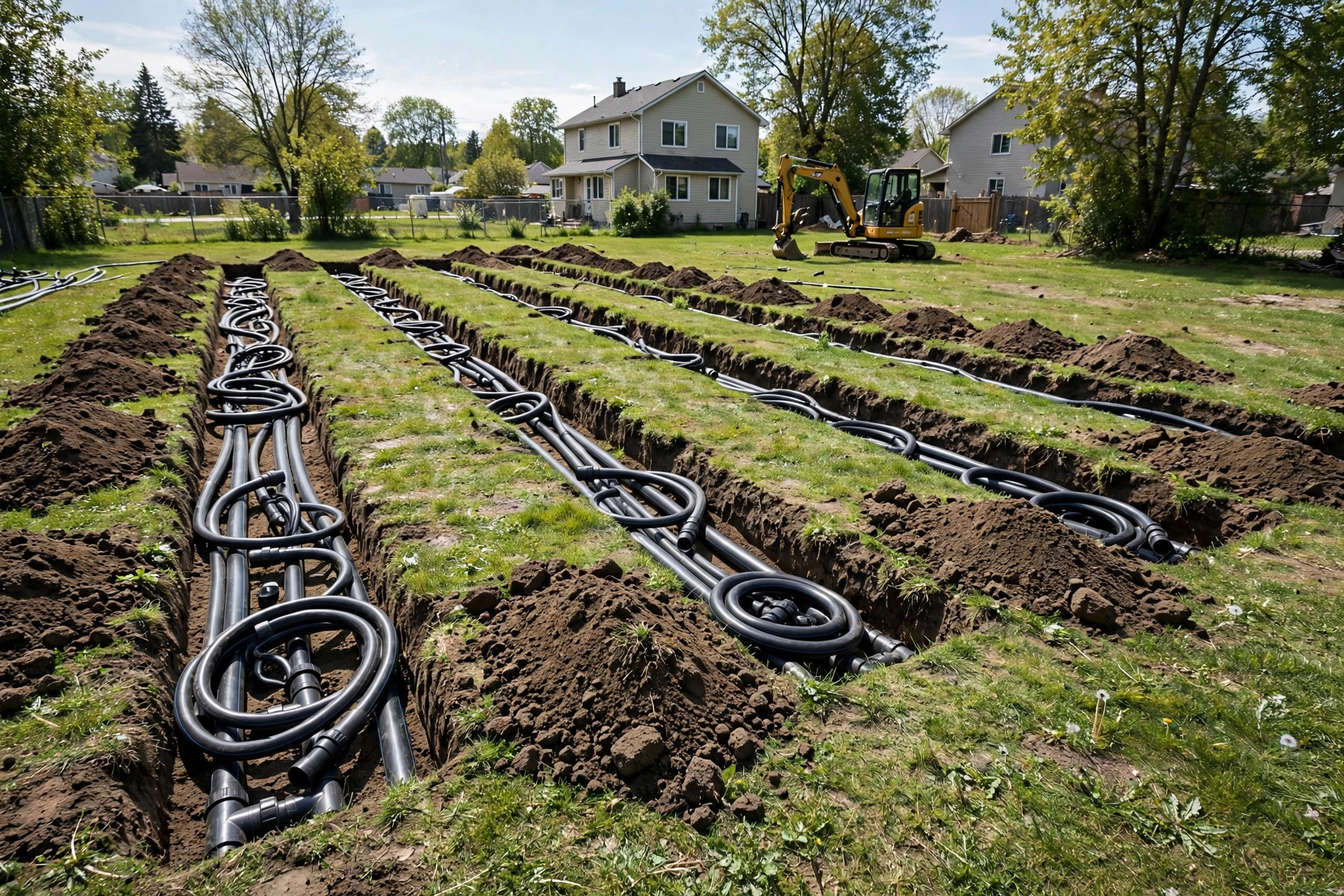
The pipes in the ground form what is called a loop. A horizontal loop is buried in shallow trenches across the yard. A vertical loop goes down deep wells drilled 150 to 400 feet into the earth. Vertical loops suit small lots. Horizontal loops need more land but cost less to install. The indoor heat pump unit looks much like an ordinary furnace or air handler and connects to the same ducts most homes already have.
Why the Pros and Cons Matter for USA Homeowners: Geothermal Heating Pros and Cons Usa
Heating eats a large share of the typical household energy budget. In cold states it can be half of the whole energy bill. A system that cuts that cost by a third or more changes a family budget for decades. But the upfront price is steep, and not every house or lot is a good fit. When homeowners weigh the geothermal heating pros and cons USA wide, climate, soil, and lot size all play a role. A home on a large lot in Ohio faces a different choice than a small home on rocky ground in New England. Understanding the full picture before calling a contractor saves money and disappointment.
The Main Advantages
Much Lower Heating and Cooling Bills
The strongest point in favor of geothermal heating is efficiency. A ground-source heat pump can deliver three to four units of heat for every unit of electricity it uses. An ordinary gas furnace delivers less than one. Most owners report heating and cooling bills 30 to 70 percent lower than before. In summer the savings can be even larger, because the cool ground makes an excellent place to dump excess heat. These savings continue year after year with little drop in performance.
Long Equipment Life
A furnace lasts about 15 to 20 years. An air conditioner lasts about the same. A geothermal heat pump often runs 20 to 25 years, and the buried loop can last 50 years or more. The loop has no moving parts and sits safe underground, away from weather, rust, and theft. Over a lifetime, one geothermal system can outlast two full generations of ordinary equipment.
Steady, Even Comfort
Geothermal systems run long, gentle cycles instead of short blasts of hot air. Rooms stay at a steadier temperature. Fewer cold spots appear. Humidity control improves too, because the system runs longer and pulls more moisture from the air in summer. Owners often say the house simply feels calmer and more even.
No Combustion in the Home
There is no gas flame, no oil burner, and no carbon monoxide risk from the heating equipment itself. That removes one source of indoor air hazard and one set of maintenance headaches, such as burners, flues, and chimneys.
A Quieter House
The loud part of a heat pump is not outside the house, like a regular air conditioner. It sits inside, usually in a utility room or basement, and hums at a low level. Many owners say they can barely hear it.
The Main Disadvantages
High Upfront Cost
The biggest drawback is the price tag. A full residential system in the United States often costs between 18,000 and 40,000 dollars, depending on the home size, the loop type, and local drilling costs. Vertical loops cost more than horizontal ones. This is several times the price of a standard furnace and air conditioner pair. Federal and state incentives can reduce the sting, but the homeowner still pays far more on day one.
Not Every Lot Qualifies
The loop needs space or drillable ground. Rocky soil, shallow bedrock, a high water table, or a small urban lot can make installation hard or costly. Some neighborhoods have rules about drilling. A site survey by an experienced installer answers the question, but it adds time and cost to the project.
Disruption During Installation
Putting in a loop means heavy equipment in the yard. Trenches or drill rigs tear up lawns, driveways, and gardens. The mess is repaired afterward, but landscaping may take a season or two to recover. Homes with finished grounds should plan for this.
Electricity Dependence
A geothermal system still needs electricity to run the pump and fans. In a power outage, the heat stops just like it does with a gas furnace. Homes in areas with frequent outages may want a backup source.
Fewer Trained Installers
Geothermal work needs special training. In many parts of the country, only a few contractors do this work well. A poor design or a sloppy loop installation can ruin performance for decades. Homeowners must check references and licenses carefully.
How to Choose the Right System
Start With a Heat Loss Calculation
A good contractor first measures how much heat the house actually loses in winter and gains in summer. This number sizes the pump and the loop. Oversizing wastes money. Undersizing leaves the house cold on the worst days. Ask for a written load calculation based on standard methods. Outbuildings lose heat in their own way; readers planning a large steel structure may also want to review insulation for pole barn house options before sizing anything.
Pick the Loop That Fits Your Land
Homes with an acre or more often suit horizontal loops, which are cheaper. Smaller lots or rocky soil usually need vertical boreholes. A lake or pond on the property can host a pond loop at lower cost. The installer should explain the trade-off in writing.
Check Incentives Before You Sign
The federal investment tax credit for geothermal systems has been generous in recent years, and several states add their own rebates or loans. A contractor familiar with local programs can list what applies. Factor these into the true cost before comparing bids.
Get Multiple Bids
Prices vary widely. Get at least three bids from licensed, insured installers with geothermal experience. Ask each one how many systems they have installed, what loop design they recommend, and what warranty covers the loop and the indoor unit separately. Home improvement guides such as This Old House and Family Handyman also offer checklists for comparing contractor bids.
Types of Geothermal Systems
Closed-Loop Horizontal
Polyethylene pipe runs in trenches four to six feet deep across a wide yard. It is the least costly loop to install when land allows.
Closed-Loop Vertical
Pipes drop into drilled wells 150 to 400 feet deep. This fits small lots and works in almost any soil. Drilling raises the cost.
Pond or Lake Loop
Coils rest at the bottom of a pond at least eight feet deep. It is the cheapest loop of all, but only an option where a suitable body of water exists.
Open-Loop Systems
Instead of circulating a closed fluid, the system pumps groundwater from a well, moves heat from it, and returns the water to the ground. It needs clean, plentiful water and local approval, but it can be very efficient where conditions allow.
Cost and Price Breakdown
When comparing equipment, look for heat pumps certified by ENERGY STAR and built by established makers such as Carrier, Trane, Lennox, Rheem, and Goodman. A typical 2,000 square foot American home might pay 20,000 to 30,000 dollars for a complete geothermal system with a horizontal loop. The same home with a vertical loop might pay 25,000 to 40,000 dollars. The indoor heat pump unit itself accounts for roughly a third of the total. Loop installation accounts for another third to half. Labor, ductwork changes, and permits make up the rest.
Against this, annual energy savings often run from 800 to 2,000 dollars or more compared with oil, propane, or electric resistance heat. Savings against natural gas are smaller but still real. The simple payback often lands between 7 and 12 years. After that, the system keeps saving money for decades. Adding a federal tax credit can cut the payback period by several years.
Maintenance costs run low. An annual check of the indoor unit costs about the same as a furnace tune-up. The buried loop needs no routine service at all.
Care and Upkeep
Geothermal systems ask little of the owner, but they are not maintenance-free.
– Change or clean air filters on the same schedule as any forced-air system. – Keep the area around the indoor unit clear of storage and dust. – Have a technician check refrigerant levels, electrical connections, and the loop pump once a year. – Watch the thermostat for unusual run times or high electric bills, which can signal a loop problem. – Keep heavy traffic and deep digging off the loop field so pipes stay protected. – Flush and test the loop fluid every five to ten years, or as the installer advises.
Most owners find the upkeep simpler than caring for a furnace and a separate air conditioner.
Safety Considerations
Geothermal heating is one of the safest heating methods available. There is no flame and no fuel oil tank to leak. Still, a few points deserve care. The loop fluid often contains a small amount of antifreeze, usually propylene glycol, which is low in toxicity but should be handled by professionals during installation and flushing. Electrical work on the pump must meet local codes. Drilling and trenching crews should be licensed and insured, because underground work can strike utilities. Homeowners should call the utility marking service before any digging and keep records of the loop layout for future yard projects.
Frequently Asked Questions
Does geothermal heating work in very cold climates?
Yes. The ground stays at a steady temperature even when the air above it is far below freezing. Systems operate reliably in places like Minnesota and Maine. Very cold regions may need a slightly larger loop or a backup heater for the coldest days, but the ground itself does not freeze at loop depth.
How long does installation take?
A typical residential job takes three to five days for the loop work and one to two days for the indoor unit. Permits, drilling schedules, and weather can extend the calendar to a few weeks.
Will the system cool my house in summer too?
Yes. A geothermal heat pump cools just as well as it heats, and cooling is where some of the largest savings appear. Many owners replace both their furnace and their air conditioner with one unit.
Does geothermal heating use a lot of electricity?
It uses some, but far less energy overall than electric resistance heat. The electricity drives the pump and fans while the ground supplies most of the heat. Monthly electric bills rise slightly, while fuel bills drop sharply, and the net result is lower total cost.
Can I install geothermal if I already have ducts?
Yes. Existing ducts usually work with a geothermal heat pump, though the contractor should check their size and condition. Homes without ducts can use radiant floor tubing or wall units instead. For a single new room or wing, a PTAC unit for a home addition can cover the extra space without forcing a larger loop.
How noisy is the indoor unit?
Most units run at about the sound level of a quiet dishwasher or a refrigerator hum. Because the loud compressor sits inside the insulated cabinet in a utility space, neighbors hear nothing at all.
A Short Final Word
The geothermal heating pros and cons USA homeowners consider come down to a simple trade. The system costs much more to install than ordinary equipment, needs the right lot, and demands a skilled installer. In return it delivers far lower bills, decades of quiet service, and steady comfort through every season. For families planning to stay in their home for many years, the math often favors the earth. For those with unsuitable land or a tight upfront budget, a high-efficiency furnace or air-source heat pump may be the wiser step. Either way, an honest site survey and several competing bids are the surest path to a sound decision.
References
Carrier. (n.d.). Heating and cooling systems. https://www.carrier.com ENERGY STAR. (n.d.). Energy efficient products. https://www.energystar.gov Family Handyman. (n.d.). DIY home repair and maintenance. https://www.familyhandyman.com Goodman. (n.d.). Heating and cooling equipment. https://www.goodmanmfg.com Lennox. (n.d.). Heating and cooling systems. https://www.lennox.com Rheem. (n.d.). Heating, cooling, and water heating. https://www.rheem.com This Old House. (n.d.). Home renovation guidance. https://www.thisoldhouse.com Trane. (n.d.). Heating and air conditioning. https://www.trane.com U.S. Department of Energy. (n.d.). Energy efficiency and renewable energy. https://www.energy.gov
Was this guide helpful?

About David Wilson
The My Garden US editorial team writes practical, in-depth home and garden guides for American homeowners — tested advice, no fluff.
You May Also Like
Two Stage vs Single Stage AC Comparison USA
May 19, 2026 0 views
Best Quiet Bathroom Exhaust Fan Reviews USA: A Plain Guide to Silent, Dry Bathrooms
July 2, 2026 0 views
Best Electric Wall Heater Reviews 2026 USA
May 5, 2026 0 views