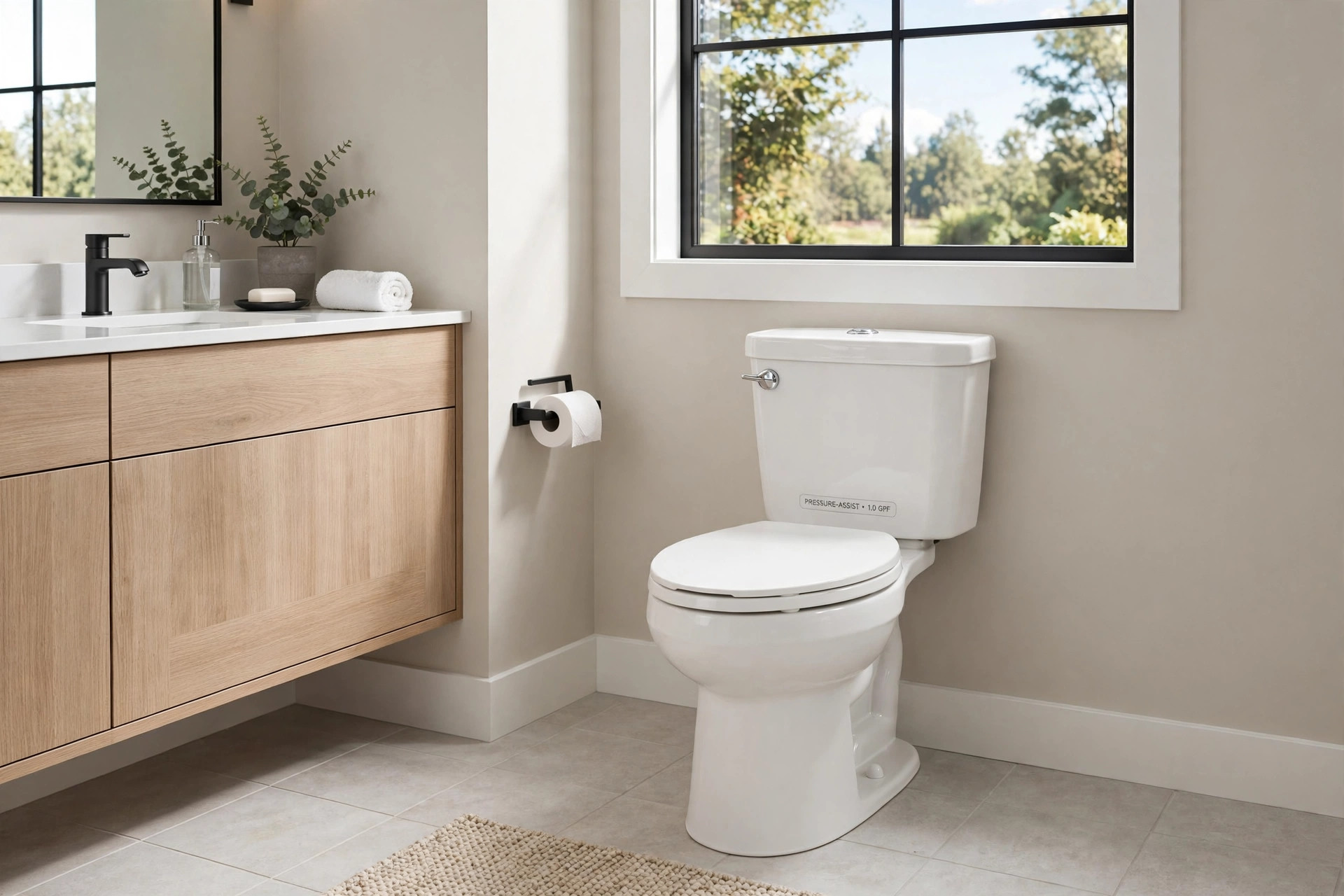

Most toilets in American homes use gravity to move water. The water in the tank falls into the bowl, and that falling water pushes waste down the drain. A pressure assisted toilet works in a different way. Inside its tank sits a sealed plastic vessel. That vessel holds water under air pressure. When you press the handle, the stored air pushes the water out with great force.
The result is a short, strong burst of water. The flush takes less time. It moves waste with more power. These toilets are common in stores, schools, and office buildings. More homeowners now ask about them for their houses. This article walks through the pressure assisted toilet pros cons USA shoppers weigh before they buy.
Why It Matters
Toilet trouble is a common household headache. Clogs waste time. Running water wastes money. Many owners want a toilet that clears the bowl the first time, every time. Pressure assisted models promise that strength.
Water rules also matter. Federal law limits new toilets to 1.6 gallons per flush. Many states and cities favor 1.28 gallons. A pressure assisted toilet can clear a bowl with less water because force does the work, not volume. That helps a home meet local water limits and can trim the water bill.
Noise matters too. These toilets are louder than gravity models. That fact alone shapes where they belong in a house. A basement bath or a busy family bath may suit them. A powder room next to the living room may not.
How a Pressure Assisted Toilet Works: Pressure Assisted Toilet Pros Cons Usa
Inside the tank you will not find a flapper or a fill valve like a standard toilet. You will find a black or gray sealed tank, often made by a firm such as Sloan or Flushmate. Water from the supply line fills this vessel. Air trapped inside gets squeezed. The vessel stores the water under pressure, much like a small tank of compressed air.
When the handle moves, a valve opens. The trapped air pushes the water down into the bowl in one fast burst. The whole flush lasts about two to three seconds. Then the vessel refills, the air compresses again, and the toilet waits for the next use.
No extra power cord is needed. The system runs on water line pressure alone. That keeps the design simple in one sense. But the parts are special. Only matching parts fit inside the vessel.
The Pros of a Pressure Assisted Toilet
A Much Stronger Flush
The main selling point is force. The burst of pressurized water moves waste in one clean shot. Homes that fight constant clogs often find relief with these units. A best toilet for low water pressure usa search often leads buyers to pressure assisted models, since the vessel builds its own pressure even when line pressure is weak.
Less Water per Flush
Because force replaces volume, many models use 1.0 to 1.28 gallons and still clear the bowl. Older gravity toilets from the 1980s used 3.5 gallons or more. Even newer 1.6 gallon models can struggle with heavy loads. A pressure assisted unit can cut water use while improving results. That is a real gain for homes in dry states.
Fewer Clogs and Overflow Calls
Clogs cause the worst toilet moments. An overflowing bowl can ruin a floor and stain a ceiling below. Pressure assisted toilets clog far less often. The forceful push moves paper and waste through the trapway with ease. Fewer clogs mean fewer plunger sessions and fewer calls to the plumber.
Cleaner Bowl Surface
The fast rush of water scours the bowl. Waste has less time to cling to the porcelain. Many owners say the bowl stays cleaner between scrubbings. Less scrubbing means less harsh cleaner and less work.
Smaller Tank Size
The vessel inside holds less water than a gravity tank, so the tank itself can be slimmer. In a small bath, that saves a few inches of room. It also gives the toilet a slightly different look that some owners prefer.
The Cons of a Pressure Assisted Toilet
Noise
This is the top complaint. The flush sounds like a loud whoosh or a small explosion. It is much louder than a gravity flush. In a quiet home, the sound can startle guests and wake children. Thin walls make it worse. Think hard about where the toilet will sit before you choose one.
Higher Price
A pressure assisted toilet costs more than a basic gravity toilet. The vessel and special valves add to the price. Parts also cost more. A replacement vessel can run a large share of the cost of a whole new gravity toilet. Budget buyers should compare totals, not just the price tag on the box.
Harder and Costlier Repairs
A gravity toilet has simple parts. A flapper costs a few dollars. A fill valve costs a little more. Most owners can fix them with a video and a wrench. Pressure assisted parts are different. The vessel is sealed. When it fails, you replace the whole vessel. The parts are brand specific. Not every plumber stocks them. Repair guides from This Old House and Family Handyman note that these units take more skill to service.
Cold or Sweating Tanks
The vessel can sweat in humid weather. Cold supply water cools the plastic, and moisture from warm room air gathers on it. Most models have the vessel inside the outer tank, so sweat may drip inside and drain away. In damp bathrooms, check for moisture now and then.
Limited Style Choices
Gravity toilets come in hundreds of styles, colors, and shapes. Pressure assisted choices are fewer. Most look like standard two piece units. If the design of the bath matters a great deal, the slim selection can disappoint. A one piece vs two piece toilet comparison usa shows how wide gravity choices run, while pressure assisted models lag behind in variety.
Types and Options
Pressure assisted toilets come in a few forms.
Two piece models are the most common. The tank sits on the bowl. They cost less and fit most rough in sizes.
One piece models have the bowl and tank fused into one shape. They cost more but have fewer seams to clean.
Wall hung models mount on a carrier hidden in the wall. They need strong framing and cost more to install. They are rare in the pressure assisted market.
Commercial models are built for heavy use in public restrooms. Some owners install them at home, but they may need higher line pressure than a house can give.
When you shop, check the vessel brand. Sloan Flushmate vessels are the most common in the United States. Kohler and American Standard also sell pressure assisted lines. Replacement parts must match the brand. Read the label inside the tank and keep a photo of it on your phone.
How to Choose the Right Model
Start with your water pressure. Pressure assisted vessels need a minimum line pressure, often 20 to 25 pounds per square inch. Most city homes have plenty. Some well systems run lower. Test your pressure with a cheap gauge from a hardware store. If pressure is too low, the vessel will not fill right.
Next, think about noise. Visit a store display and ask for a flush test if you can. Many big box stores have working models. Stand in the room and listen. Imagine that sound at two in the morning next to a bedroom.
Check the flush rating. Independent tests score toilets on how much solid waste they move. Look for high scores. A high score plus pressure assist gives strong confidence.
Measure the rough in. This is the distance from the wall to the center of the drain pipe. Most homes use 12 inches. Some older homes use 10 or 14. Buy the wrong size and the toilet will not fit.
Look at the warranty. Vessels often carry a separate warranty from the porcelain. Ten years on the vessel is common. Read the fine print so you know what fails are covered.
Think about who will fix it. Ask your plumber if they service pressure assisted models and if they stock parts. If they do not, a future repair could take days while parts ship.
Cost and Price
A pressure assisted toilet for home use often costs between 250 and 600 dollars at retail. Basic gravity toilets can cost under 150 dollars. So the up front gap is real.
Installation costs run about the same as any toilet, often 150 to 400 dollars if a plumber does the work. A handy owner can install one like any other toilet. The wax ring, bolts, and supply line are standard.
Parts change the math over time. A new vessel can cost 100 to 250 dollars. A full gravity rebuild kit costs under 30 dollars. Over ten years, a pressure assisted toilet may cost more to own even if it uses less water.
Water savings help but stay modest. A family that cuts each flush by half a gallon and flushes 20 times a day saves about 3,650 gallons a year. At typical water rates, that may save 20 to 50 dollars a year. It will take many years to pay back the higher purchase price. Buy for the strong flush, not for fast savings.
Rebates can help. Some water utilities offer rebates for high efficiency toilets. Check your local utility before you buy. A dual flush toilet pros and cons reviews usa search can also turn up rebate tips, since dual flush models often qualify for the same programs.
Care and Upkeep
Daily care is simple. Clean the bowl with a mild cleaner. Avoid drop in tank tablets with bleach. Harsh chemicals can harm the vessel seals and void the warranty. Clean inside the tank only when needed, and be gentle around the vessel.
Do not pour drain cleaner into the toilet. It will not fix a pressure vessel problem and can damage parts.
Check the supply line once a year. Look for drips where the line meets the vessel. Tighten by hand only. Over tightening can crack fittings.
Listen to the flush. A healthy unit gives one strong burst. If the flush sounds weak or the vessel takes long to refill, the air charge may be low or a seal may be worn. Note the vessel model number and call for the matching part.
Keep the area around the base dry. A rocking toilet can break the wax seal. If the toilet rocks, shut off the water, drain the tank, and reset the base on a new ring. Guides at Moen and Delta cover basic toilet seating, and the same rules apply here.
Safety
The sealed vessel holds real pressure. Never open it. Never drill into it. Never try to repair the vessel itself. If it fails, replace it as a whole unit with the exact matching part.
Shut off the water supply before any repair. Flush to empty the bowl. Wear gloves. Keep children away from the work area.
Some older Flushmate vessels were recalled years ago for bursting. If you own an older pressure assisted toilet, check the vessel serial number against recall lists. Newer vessels use improved designs. When in doubt, a plumber can check the unit in minutes.
The loud flush can startle small children. Teach them to stand back from the bowl when they press the handle. The burst of water and air is strong enough to splash.
FAQ
Are pressure assisted toilets legal in all states? Yes, in most cases. They meet federal flush volume rules. Some local codes add rules about noise or commercial ratings, so check with your city if you have doubts. The EPA WaterSense program lists models that meet efficiency standards.
Do they work with septic systems? Yes. They use less water per flush, which is kind to septic tanks. Use septic safe paper. Heavy use of wipes, even ones marked flushable, can still harm a septic field.
Can I convert my gravity toilet to pressure assisted? No, not in a safe or practical way. The bowl and tank are built for the system they ship with. Buy a complete pressure assisted unit instead.
How long do they last? The porcelain can last decades, like any toilet. The vessel often lasts 7 to 15 years. Hard water shortens its life. A water softener or whole house filter can help in hard water areas.
Are they good for a main family bathroom? They work well where clogs are common, such as a hall bath used by children. The noise is the main drawback. Many families put one in the busiest bath and keep quiet gravity models near bedrooms.
What if my home has low water pressure? Test first. Below the vessel minimum, the unit will not fill or flush right. In that case, look at gravity models built for low pressure homes instead of forcing a pressure assisted unit to work.
A Short Final Word
A pressure assisted toilet trades quiet comfort for raw flushing power. It clogs less, cleans the bowl well, and sips water. It also costs more, sounds loud, and needs special parts when it breaks. For a busy bath where clogs drive you mad, the trade can be worth it. For a quiet guest bath, a standard gravity model may serve you better. Weigh the pressure assisted toilet pros cons USA homeowners report, test the noise in person, and choose with open eyes.
References
Aquasana. (n.d.). Water filtration systems. https://www.aquasana.com Delta Faucet. (n.d.). Kitchen and bathroom faucets. https://www.deltafaucet.com Family Handyman. (n.d.). DIY home repair and maintenance. https://www.familyhandyman.com Lowe’s. (n.d.). Home improvement products. https://www.lowes.com Moen. (n.d.). Faucets and plumbing fixtures. https://www.moen.com The Home Depot. (n.d.). Home improvement products. https://www.homedepot.com This Old House. (n.d.). Home renovation guidance. https://www.thisoldhouse.com U.S. Environmental Protection Agency. (n.d.). Protecting human health and the environment. https://www.epa.gov
Was this guide helpful?

About Michael Thompson
The My Garden US editorial team writes practical, in-depth home and garden guides for American homeowners — tested advice, no fluff.
You May Also Like

Freestanding Tub Faucet Floor Mount Reviews: A Buyer Guide for 2026
April 20, 2026 0 views
Best Water Dispenser for Home Office USA: A Practical Buyer’s Guide
August 30, 2026 0 views
Best Water Softener for Well Water USA: A Complete Buyer Guide
May 24, 2026 0 views