
Every year, thousands of American homeowners decide to change their kitchen sink. Many of them look for the best farmhouse kitchen sink reviews usa can offer. They want honest answers before they spend good money. This guide gives those answers. It is written in plain English, with short words and short sentences. No hype. No sales talk. Just facts you can use.
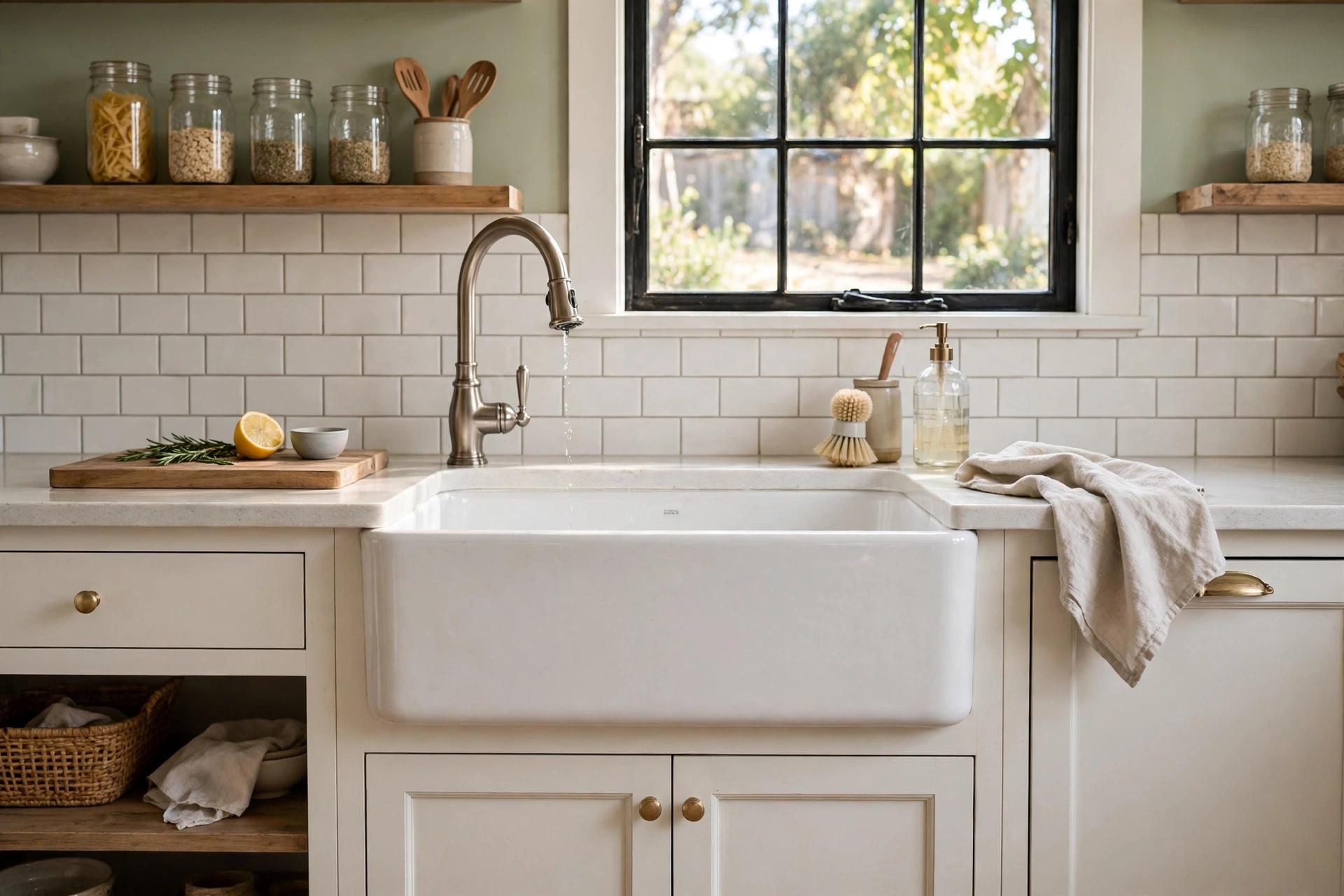
A farmhouse sink is easy to spot. It has a wide front that shows. This front is called the apron. The sink sits in the counter, but the front face stays in view. It looks like the deep sinks found in old country kitchens. That is where the name comes from.
These sinks are popular for two reasons. First, they are deep. You can wash large pots and baking sheets with ease. Second, they look good. The exposed front gives the kitchen a warm, classic feel. It fits both old homes and new ones.
But a farmhouse sink is not a small purchase. Prices run from about two hundred dollars to more than two thousand. The cabinet below must be strong. The plumbing may need to change. So a wise buyer reads the best farmhouse kitchen sink reviews usa provides, and buys once instead of twice.
Why It Matters
The sink is the hardest working part of the kitchen. Cooks use it more than any other fixture. They fill pots there. They rinse vegetables there. They wash hands there. A bad sink makes every meal harder to cook and clean up after.
A farmhouse sink changes how the kitchen works. The front of the sink comes closer to you. You do not have to lean over the counter. This is kinder to the back. Older cooks and people with sore backs notice the difference right away.
The depth also matters. Most farmhouse sinks are eight to ten inches deep. That means less splashing on the floor. It also means you can soak a roasting pan flat. For a family that cooks at home, this is worth real money.
Style matters too, though it should come second. The apron front gives the kitchen a look that never goes out of date. A plain white apron fits a country kitchen. A brushed steel apron fits a modern one. Many buyers choose the farmhouse style for this reason, and they keep it for twenty years or more.
A poor choice, on the other hand, costs money and time. A sink that chips or stains will bother you every day. A sink that does not fit your cabinet will need a carpenter to fix the problem. A review that skips these facts is not worth reading. The best farmhouse kitchen sink reviews usa readers trust all talk about fit, finish, and long term wear.
What to Look For When You Choose: Best Farmhouse Kitchen Sink Reviews Usa
Material
The material decides how the sink feels, how it wears, and how much it costs. There are three main types sold in the United States.
Fireclay is the classic choice. It is made from clay that is fired at very high heat. The result is a hard, glossy white surface. Fireclay resists heat and most stains. It is heavy, which means your cabinet must be strong. Good fireclay sinks cost from four hundred to over a thousand dollars. Cheap fireclay may chip or craze, so the maker matters.
Cast iron with an enamel coating is the old American standard. It is the heaviest of all. The enamel gives it a deep, glassy shine. It holds heat well, which some cooks like. But the enamel can chip if a heavy pot is dropped. Once it chips, rust can start. Prices run from three hundred to fifteen hundred dollars. For a deep dive into the two old-school materials, see our fireclay vs cast iron sink comparison.
Stainless steel is the modern choice. It is light, tough, and low in price. Most models cost from two hundred to eight hundred dollars. A good steel sink uses thick metal, which makers call a low gauge number. Thin steel can dent and make noise. Quality steel sinks add rubber pads to cut the noise down. Steel will not chip. It may scratch over time, but the scratches blend in.
Size and Fit
Farmhouse sinks come in many sizes. The most common widths are thirty and thirty three inches. Measure your cabinet before you buy anything. The sink cabinet is often wider than the sink itself. You need room for the apron to sit flush with the cabinet front.
Check the depth as well. A deep sink holds more water, but it may force you to lower the garbage disposal or the drain pipes. If your kitchen has a disposal, read the mount height on both. The maker guides at Kohler and Moen list these facts in their spec sheets. Measure twice. Cut once.
Single Bowl or Double Bowl
Most farmhouse sinks have one large bowl. This is best for big pots and baking sheets. A few models offer two bowls side by side. Two bowls help when you wash and rinse by hand. But they shrink the working space. For most American kitchens, a single bowl is the better pick.
Finish and Color
White is the classic color for fireclay and cast iron. It matches almost any kitchen. Some makers also sell black, gray, and biscuit tones. Stainless steel comes in brushed or polished finish. Brushed hides scratches better. Pick the color after you look at the whole kitchen, not before.
Drain and Faucet Match
Many farmhouse sinks need a special flange and basket strainer. Check whether these parts are in the box. Some are not. Also look at your faucet. A tall faucet may splash more into a shallow farmhouse sink. A good review tells you which parts are included. The best farmhouse kitchen sink reviews usa buyers write often mention missing parts, because it is a common shock.
Types and Options on the American Market
Fireclay Apron Sinks
Fireclay models are the ones most people picture when they hear the word farmhouse. They have a smooth, bright white front. The apron may be smooth, or it may have a fluted or grooved face. Many are made by European makers and sold here. Others are made by American brands. Reviewers at This Old House and Family Handyman note that fireclay quality varies a lot by maker. Read the warranty. A lifetime warranty means the maker trusts the glaze.
Cast Iron Apron Sinks
Cast iron sinks feel solid under the hand. They do not move when you set a heavy pot down. The enamel is thick and glossy. The main risk is chipping. Cast iron also weighs the most, often over one hundred pounds. Your cabinet and floor must carry that load. If your home has an older floor, ask a carpenter before you order.
Stainless Steel Farmhouse Sinks
Steel farmhouse sinks have the apron front but cost far less. They fit the farmhouse look in a modern kitchen. They are also the easiest to install, because they are light. Look for sixteen gauge steel or thicker. Avoid twenty two gauge in a main sink. It is too thin for daily use.
Workstation Farmhouse Sinks
Some new models come with a built in ledge near the rim. Cutting boards, colanders, and drying racks slide onto the ledge. This turns the sink into a work area. These cost more, often from six hundred to twelve hundred dollars. If you cook a lot, the ledge is worth the price. You can read more in our guide to the best workstation kitchen sink.
Cost and Price: What to Expect
Prices in the United States fall into three clear bands.
The low band runs from about two hundred to five hundred dollars. Most sinks here are stainless steel. A few are simple fireclay models from value brands. These work well for a rental home or a first kitchen. Watch the gauge on steel models. Watch the glaze on cheap fireclay.
The mid band runs from five hundred to one thousand dollars. This is where most buyers shop. You will find strong fireclay sinks, good cast iron models, and thick steel sinks with sound pads. This band gives the best value for most homes. Big box stores like Home Depot and Lowe’s carry many models in this range, and their pages list the key facts.
The high band runs from one thousand to more than two thousand dollars. These are designer models, hand made fireclay, or heavy copper and stone apron sinks. They last for decades. They also need expert installation. Buy here only if you plan to stay in the home for a long time.
Remember the hidden costs. Installation by a plumber runs from one hundred fifty to four hundred dollars. A new cabinet or cabinet work can add two hundred to six hundred. The faucet, strainer, and disposal flange may add another one to three hundred. The sink price is only part of the bill.
Care and Upkeep
A farmhouse sink is easy to keep if you build a few small habits. Rinse the sink after each use. Do not leave coffee grounds or tea in it overnight. Dry the apron front so water spots do not build up.
For fireclay and cast iron, use a soft sponge and a mild cleaner. Avoid steel wool. It can scratch the glaze. For hard water marks, a paste of baking soda and water works well. Rub gently and rinse clean. The cleaning guides at Delta Faucet list safe cleaners for each finish.
For stainless steel, wipe with the grain of the brush lines. A light oil rub once a month keeps the shine. Never use bleach in a steel sink. It can stain the surface. A sink grid on the bottom guards against scratches from pots.
Check the caulk where the sink meets the counter once a year. If it cracks, water can seep into the cabinet. Re-caulk before the wood swells. This small job takes ten minutes and saves big repair bills.
Safety
A farmhouse sink is safe when it is installed right. The main risk is weight. A cast iron or fireclay sink can weigh more than a grown man. The cabinet must be built to carry it. Many installers add a wood frame under the sink. Never hang a heavy sink from the counter alone.
Hot water safety matters too. Farmhouse sinks hold more hot water than shallow sinks. Teach children not to lean on the hot apron. Set the water heater to one hundred twenty degrees. The federal guidance at EPA supports this setting. It cuts scald risk and saves energy.
Sharp knives should never soak in a deep sink. You cannot see them under the water. Wash them by hand and put them away. This rule applies to every deep sink, but it is easy to forget in a farmhouse model where the bowl hides so much.
If you use water filters or softeners, check that the extra parts fit under the new deep sink. A filter housing can crowd the drain. Home water guides at Aquasana show the space most filter kits need. Measure before you buy.
FAQ
Are farmhouse sinks hard to install?
They are harder than a drop in sink. The cabinet front must be cut to fit the apron. The sink needs solid support under it. A handy homeowner can do it, but most people hire a plumber. Plan for extra labor cost.
Which material lasts the longest?
All three main materials can last twenty years or more. Cast iron and fireclay last longest when the glaze stays intact. Stainless steel lasts longest with zero chips, but it may show scratches. The maker and the care routine matter more than the material alone.
Do farmhouse sinks splash more?
They splash less than shallow sinks, because the deep bowl holds the water. Splash comes from a bad match between the faucet and the sink. A high arc faucet in a shallow bowl will splash. Read the faucet height and the bowl depth together before you buy.
Can I put a farmhouse sink in an old cabinet?
Sometimes. The cabinet must be wide enough and strong enough. Many old cabinets are not. A carpenter can add support and cut the front. Get a quote before you order the sink, so the total cost does not shock you.
Are white fireclay sinks hard to keep clean?
No, not with daily rinsing. Fireclay resists most stains. Metal marks from pots can show, but a baking soda paste removes them. Avoid harsh acids and steel wool. The white finish stays bright for years with basic care.
How do I compare farmhouse and standard sink mounts?
Farmhouse sinks use an apron front mount, which is a class of its own. Standard sinks use drop in or undermount fits. Each has trade offs in cost, cleaning, and looks. Our guide to undermount vs topmount sink pros and cons walks through those choices in plain words.
A Short Final Word
The best farmhouse kitchen sink reviews usa shoppers can read all say the same thing in the end. Buy the sink that fits your cabinet, your budget, and your cooking habits. Do not buy the prettiest one first. Check the material. Check the weight. Check what is in the box. Then enjoy a sink that will serve your kitchen for twenty years.
References
Aquasana. (n.d.). Water filtration systems. https://www.aquasana.com Delta Faucet. (n.d.). Kitchen and bathroom faucets. https://www.deltafaucet.com Family Handyman. (n.d.). DIY home repair and maintenance. https://www.familyhandyman.com Kohler. (n.d.). Bathroom and kitchen fixtures. https://www.kohler.com Lowe’s. (n.d.). Home improvement products. https://www.lowes.com Moen. (n.d.). Faucets and plumbing fixtures. https://www.moen.com The Home Depot. (n.d.). Home improvement products. https://www.homedepot.com This Old House. (n.d.). Home renovation guidance. https://www.thisoldhouse.com U.S. Environmental Protection Agency. (n.d.). Protecting human health and the environment. https://www.epa.gov
Was this guide helpful?

About Lisa Anderson
The My Garden US editorial team writes practical, in-depth home and garden guides for American homeowners — tested advice, no fluff.
You May Also Like

Pot Filler Faucet Pros and Cons: A Review for American Homeowners
September 9, 2026 0 views
How Often Should You Pump Your Septic Tank? A Plain Guide for American Homes
July 2, 2026 0 views
RO System Waste Water Ratio Explained USA
January 9, 2026 0 views