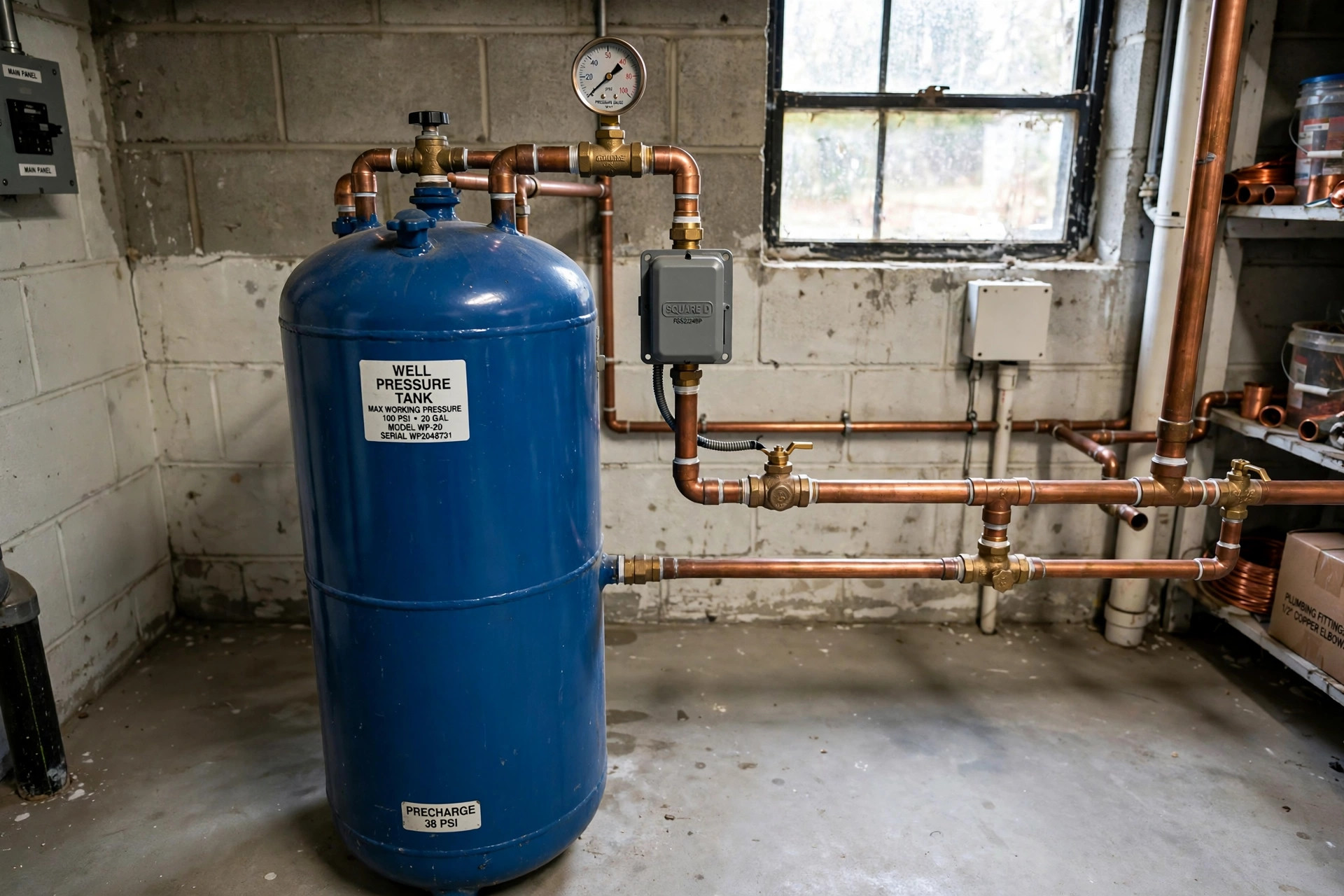

If you live on well water, the pressure tank is the heart of your water system. The best well pressure tank reviews 2026 USA help home owners choose a tank that gives steady water pressure, protects the pump, and lasts for years. A good tank keeps the pump from starting and stopping too often. That simple job saves money and saves wear on the pump. This guide explains what matters, how to choose, and what the top tanks of 2026 do well.
Why a Pressure Tank Matters
Every well pump needs a pressure tank. The pump pushes water into the tank. Inside the tank, a rubber bladder or diaphragm holds the water apart from a cushion of air. When you open a faucet, air pressure pushes water out. The pump rests until the tank level falls to a set point. Then the pump runs again to refill the tank.
Without a good tank, the pump would start each time a glass of water is drawn. That is called short cycling. Short cycling burns out motors. It also gives weak, surging water flow. Reviews of the best well pressure tank reviews 2026 USA models show that a well-sized tank can cut pump cycles by half or more. That adds years to the pump and keeps pressure steady for showers and laundry.
The tank also smooths pressure. A small tank gives you bursts of strong flow, then weak flow. A larger tank gives long, even flow. Home owners who compare submersible well pumps for deep wells know the tank and the pump must work as a team. The pump makes the water flow. The tank decides how often the pump must work.
What to Look for When You Choose: Best Well Pressure Tank Reviews 2026 Usa
Tank Size
Size is the first choice. Tanks are sold by total volume, like 20, 40, or 80 gallons. What counts is drawdown, the gallons you get between pump cycles. A 40-gallon tank may give only 10 to 15 gallons of drawdown. The rest is air.
The rule is simple. The drawdown should let the pump run at least one full minute each time it starts. Most pump makers ask for this. So find your pump flow in gallons per minute. Match drawdown to that number. A pump that moves 10 gallons per minute needs about 10 gallons of drawdown. Home owners with large families or irrigation lines often move up one size. Good home guides from Family Handyman well system projects walk through this math step by step.
Bladder, Diaphragm, or Plain Steel
Most modern tanks use a bladder or a diaphragm. A bladder is a replaceable bag inside the tank. A diaphragm is a fixed sheet of rubber that divides the tank in two. Both keep water away from air. That stops the air cushion from leaking into the water. Both give steady pressure for years.
Plain steel tanks with no bladder are old style. They need air added often. Most home owners now choose bladder or diaphragm tanks. They need less care. When reviewers test the best well pressure tank reviews 2026 USA models, bladder tanks win for ease of care and long life.
Shell and Coating
Tanks are steel, fiberglass, or composite. Steel is strong and common. Look for a tank with a baked enamel or epoxy coating. The coating stops rust. Fiberglass and composite tanks never rust. They cost more. They suit damp basements or homes near salt water.
Pressure Rating
Most home tanks are rated for 125 psi or 150 psi. Check the pump pressure switch settings. A 30/50 switch runs the pump at 30 psi and stops at 50 psi. A 40/60 switch gives stronger pressure. The tank rating must sit above the top number. Leave a good margin. Safety matters here, and the U.S. plumbing codes cited at plumbing fixture makers note that every pressure vessel needs a relief path.
Types and Options in 2026
Vertical Tanks
Vertical tanks stand upright. They take little floor space. They are the common pick for basements and pump houses. Sizes run from small 20-gallon units to large 119-gallon units. Most of the top tanks in the best well pressure tank reviews 2026 USA round-up are vertical.
Horizontal Tanks
Horizontal tanks lie low. They fit under stairs or in crawl spaces. They work the same as vertical tanks. They cost a bit more per gallon. Choose one only when floor height is tight.
In-Line Small Tanks
Small in-line tanks go right on the pipe. They add a small buffer for a point-of-use need. They do not replace a main tank. They help with short cycling in a small branch line.
Constant Pressure Systems
Some makers now sell systems with a variable-speed pump and a small tank. The pump changes speed to hold pressure steady. The small tank only cushions the flow. These cost more up front. They save on space and give city-like pressure. For many homes, a classic larger tank still gives the best value.
Top Names Buyers Rate Well
In 2026 reviews, a few maker names come up again and again. Amtrol Well-X-Trol tanks earn praise for thick steel and long bladder life. Flotec tanks win fans for price and wide size range. Wellmate composite tanks get good marks in damp rooms where steel rusts. When you read the best well pressure tank reviews 2026 USA, check the warranty too. A five-year warranty on the tank shell is common. Some makers offer seven years. A longer warranty often signals a stronger tank. Always buy from a seller that honors the warranty in writing.
Cost and Price
Tank prices in 2026 run wide. A small 20-gallon steel tank costs about 250 to 400 dollars. A 40-gallon tank costs about 400 to 700 dollars. Large 80 to 119-gallon tanks cost 800 to 1,500 dollars. Fiberglass and composite tanks sit at the high end of each size.
Installation adds cost. A simple swap of one tank for another may cost 150 to 400 dollars in labor. A new install with new pipe, a new pressure switch, and wiring can cost 600 to 1,200 dollars or more. Check prices at home improvement retailers and Lowes plumbing departments before you buy. Online prices move often.
The total cost of a well system includes the pump too. If your pump is old, price a new pump at the same time. Home owners who study submersible well pump reviews for deep wells often find that a new pump and a new tank together give the best result.
Care and Upkeep
A bladder or diaphragm tank needs little care. Check the air charge once a year. Turn off the pump. Drain the tank. Check the air pressure at the tank valve with a tire gauge. It should sit 2 psi below the pump cut-in pressure. For a 30/50 switch, set the air to 28 psi. For a 40/60 switch, set it to 38 psi. Add air or let air out as needed. This one job keeps drawdown full and stops short cycling.
Keep the tank dry on the outside. Wipe off dust. Look for rust at welds and legs. Rust spots grow. If you see them, clean and paint them early. Check the pressure gauge. It should move smooth and read true. A stuck gauge hides problems.
Water quality matters. Hard water and sediment wear tanks from the inside. A whole-home filter or softener helps. Many tank makers, like Flotec pump and tank guides, list water treatment as part of good care. Makers of water filtration systems note that clean water also helps every faucet and valve in the house.
If you plan other plumbing work, think of the whole system. A new tank is a good time to look at old valves and fittings. For fixture choices, our look at thermostatic shower valve pros and cons covers what modern valves do well. For bigger underground work, read our piece on trenchless sewer line repair pros and cons before you dig.
Safety
A pressure tank is a pressure vessel. Treat it with respect. Keep the pressure relief valve in place. Test it once a year. It should vent water when you lift the lever. If it does not, replace it.
Never set the pump switch above the tank rating. Never plug or cap the relief valve. Keep children away from the tank area. The pipes can be hot in summer sun. Wear gloves when you work on fittings.
When you replace a tank, turn off power to the pump first. Lock the breaker if you can. Drain all water pressure. A tank under pressure can burst a fitting and hurt you. If you are not sure, call a licensed plumber. Repair guides from This Old House show the steps, but they also say when to stop and call for help.
FAQ
How long does a well pressure tank last?
A good bladder or diaphragm tank lasts 10 to 15 years. Some last 20 years with care. Plain steel tanks last less. Hard water, high pressure, and wrong air charge shorten life. Replace a tank when the bladder fails or the shell rusts through.
What size pressure tank do I need for my house?
Match drawdown to pump flow. Find the pump flow in gallons per minute. Pick a tank whose drawdown equals or tops that number. A family of four with a 10-gallon-per-minute pump does well with a tank that gives 10 to 15 gallons of drawdown. When in doubt, go one size up. A larger tank only helps.
Why does my pump keep turning on and off?
Short cycling has a few causes. The tank air charge may be low. The bladder may be broken. The tank may be too small. The pressure switch may be worn. Check the air charge first. If water comes out of the air valve, the bladder has failed. The tank must be replaced.
Can I install a pressure tank myself?
Many home owners do. The job needs basic plumbing skill. You must size the tank, set the air charge, and wire or rewire the switch safely. Turn off power and drain pressure first. If the pipes are old or the wiring is unclear, hire a plumber.
Do fiberglass tanks beat steel tanks?
Fiberglass tanks never rust. They cost more. Steel tanks with good coatings last long in dry basements. Pick fiberglass for damp crawl spaces or coastal air. Pick steel for the best value in a dry room.
How do I know if my pressure tank is bad?
Watch for signs. The pump runs very often. Water pressure surges and falls. You hear water sloshing in the tank. Water drips from the air valve. The tank feels full and heavy when the pump is off. Any of these mean it is time to check or replace the tank.
A Short Final Word
The best well pressure tank reviews 2026 USA point to a clear truth. The right tank is not always the biggest or the dearest. It is the one sized to your pump, built with a good bladder or diaphragm, and kept at the right air charge. Do that, and your well will give steady water for years. Check the air charge each fall. Write the date on the tank with a marker so you remember. Small care now stops big repair bills later. Fixture makers like Kohler plumbing fixtures and Delta Faucet products build for the same goal: water that flows when you need it, at pressure you can trust.
References
Amtrol. (n.d.). Well-X-Trol well pressure tanks. https://www.amtrol.com Aquasana. (n.d.). Water filtration systems. https://www.aquasana.com Delta Faucet. (n.d.). Kitchen and bathroom faucets. https://www.deltafaucet.com Family Handyman. (n.d.). DIY home repair and maintenance. https://www.familyhandyman.com Flotec. (n.d.). Water pumps and pressure tanks. https://www.flotecpump.com Kohler. (n.d.). Bathroom and kitchen fixtures. https://www.kohler.com Lowe’s. (n.d.). Home improvement products. https://www.lowes.com Moen. (n.d.). Faucets and plumbing fixtures. https://www.moen.com The Home Depot. (n.d.). Home improvement products. https://www.homedepot.com This Old House. (n.d.). Home renovation guidance. https://www.thisoldhouse.com
Was this guide helpful?

About Robert Taylor
The My Garden US editorial team writes practical, in-depth home and garden guides for American homeowners — tested advice, no fluff.
You May Also Like
Whole House Repipe Cost Calculator USA: How to Plan Your Budget
April 10, 2026 0 views
Bidet Attachment vs Bidet Seat Comparison USA: A Simple Guide
February 22, 2026 0 views
Crawl Space Dehumidifier Reviews 2026 USA: A Plain Guide for Homeowners
May 2, 2026 0 views